 Anjali Arora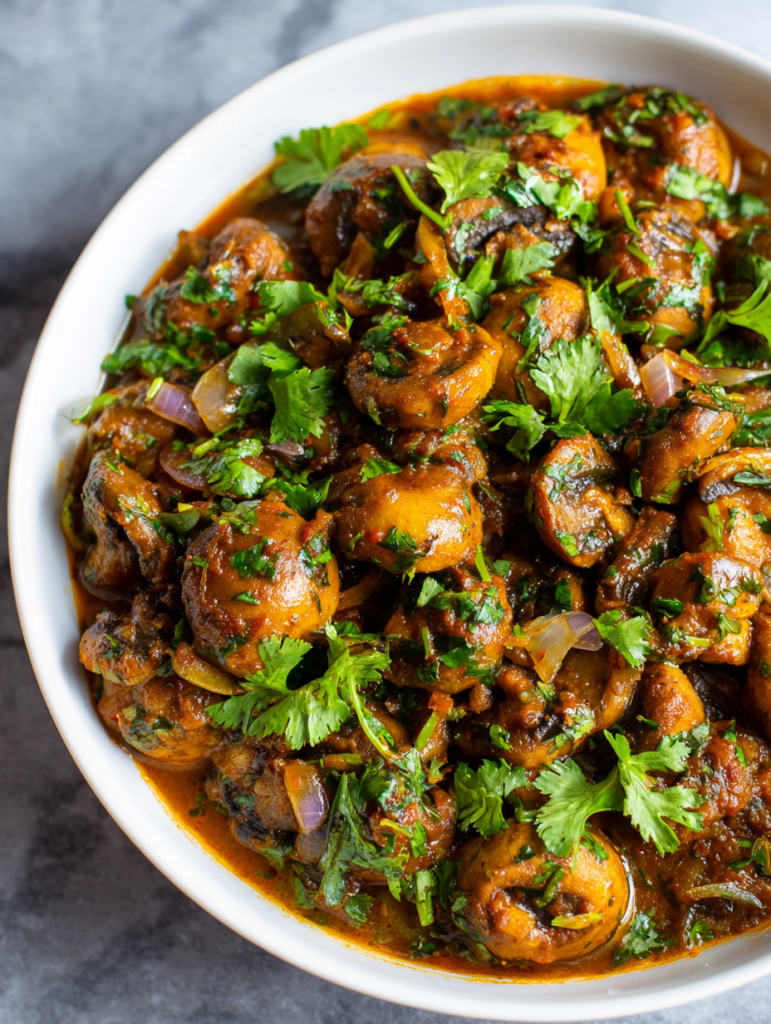
This mushroom masala recipe is a tribute to those days when I accidentally overstuffed my spice jar, turning a simple dish into a flavorful chaos. It’s about making do with what’s in the pantry and turning humble ingredients into something unexpectedly rich and comforting. Every bite reminds me that sometimes, the best meals come from a little improvisation and a lot of love.
Cooking this dish feels like a little culinary rebellion—using everyday mushrooms, a handful of spices, and a splash of tomato to create something soulful. It’s not about perfection but about embracing the messy joy of improvising in the kitchen, especially when time’s tight and ingredients are scarce.
This mushroom masala recipe is a tribute to those days when I accidentally overstuffed my spice jar, turning a simple dish into a flavorful chaos. It’s about making do with what’s in the pantry and turning humble ingredients into something unexpectedly rich and comforting. Every bite reminds me that sometimes, the best meals come from a little improvisation and a lot of love.
Rediscovering Comfort in Simplicity
- I love how this dish turns humble mushrooms into a luxurious, spicy stew that fills the kitchen with warm aromas.
- There’s a rush of pride when I find that perfect balance of spice and creaminess, especially after a long day.
- Cooking this reminds me of lazy weekends at my grandma’s house, where pots simmered with love and a splash of improvisation.
- It’s a bit chaotic, but those accidental spice mixes often turn out to be my favorite discoveries.
- Sharing this with friends always sparks nostalgic stories of simpler, flavorful times in my kitchen.
The story behind this recipe
- This mushroom masala recipe is born from a moment of kitchen chaos—an overfilled spice jar and a handful of mushrooms that needed a rescue. I remember the smell of cumin and smoky paprika filling the air, turning what could have been a simple stir-fry into something memorable. It’s the kind of dish that’s less about precision and more about improvising with what’s available.
- I often think about how a small mistake, like letting the masala simmer a bit too long, can add a charred depth that’s hard to replicate intentionally. It’s become my go-to when I want something hearty but don’t want to fuss over complicated techniques. Every batch feels like a little culinary story, full of surprises and rich flavors.
- heading
- story_type
Historical and Cultural Roots
- Mushroom masala has roots in North Indian cuisine, where mushrooms were historically a humble, yet savory ingredient for rural communities.
- The dish gained popularity in urban kitchens during the 20th century as a hearty vegetarian option, especially among those seeking comfort food with minimal fuss.
- Traditionally, it’s cooked with a blend of spices that trace back to Mughal influences, adding layers of aroma and deep flavor.
- Mushrooms became a favored protein substitute in Indian households during times of meat scarcity, turning this dish into a nourishing staple.
- Today, mushroom masala is celebrated worldwide, often adapted with local spices and ingredients, reflecting its versatile, timeless appeal.
Key Ingredients and Tips
- Mushrooms: I prefer shiitake or cremini for their firm texture and earthy flavor. If you only have button mushrooms, just slice them thicker so they don’t cook to mush.
- Onions: Finely chopped until translucent, they form the sweet, savory base. Skip this step if you’re in a rush, but expect less depth of flavor.
- Tomatoes: Fresh or canned, I like a splash of lemon juice added at the end for brightness. If you prefer creaminess, toss in a dollop of yogurt after cooking.
- Spices: Garam masala, turmeric, cumin—these are my staples. Toast them lightly in oil until fragrant, then add the mushrooms. If you’re missing a spice, a pinch of smoked paprika can add smoky depth.
- Oil: Use a neutral oil like vegetable or sunflower. I love a good drizzle of ghee for richness, but it’s optional. Watch for the oil shimmering—means it’s hot enough to sauté.
- Ginger & garlic: Fresh minced, they release a punchy aroma that wakes up the dish. If you only have powder, use less and add it earlier with the spices to prevent burning.
- Cream or coconut milk: Optional but adds a luscious, velvety finish. If dairy isn’t your thing, a splash of cashew cream works wonders. Keep an eye out for a gentle simmer, not a boil, to prevent curdling.
Spotlight on key ingredients
Mushrooms:
- I prefer shiitake or cremini for their firm texture and earthy flavor. If you only have button mushrooms, just slice them thicker so they don’t cook to mush.
- Onions: Finely chopped until translucent, they form the sweet, savory base. Skip this step if you’re in a rush, but expect less depth of flavor.
- Tomatoes: Fresh or canned, I like a splash of lemon juice added at the end for brightness. If you prefer creaminess, toss in a dollop of yogurt after cooking.
Key spices and aromatics:
- Spices: Garam masala, turmeric, cumin—these are my staples. Toast them lightly in oil until fragrant, then add the mushrooms. If you’re missing a spice, a pinch of smoked paprika can add smoky depth.
- Oil: Use a neutral oil like vegetable or sunflower. I love a good drizzle of ghee for richness, but it’s optional. Watch for the oil shimmering—means it’s hot enough to sauté.
- Ginger & garlic: Fresh minced, they release a punchy aroma that wakes up the dish. If you only have powder, use less and add it earlier with the spices to prevent burning.
Notes for ingredient swaps
- Vegetarian: Swap chicken broth for water or vegetable stock to keep it veggie-friendly without losing depth.
- Dairy-Free: Use coconut cream instead of heavy cream for a rich, velvety finish with a hint of coconut aroma.
- Low-Sodium: Opt for low-sodium soy sauce or omit added salt to keep the salt level in check, especially if using salted spices.
- Gluten-Free: Ensure spices and any pre-made mixes are gluten-free—most pure spices are, but check labels for blends.
- Fresh Herbs: Fresh cilantro brightens up the dish, but dried can work in a pinch—just use half the amount since it’s more concentrated.
- Mushrooms: Use dried shiitake mushrooms rehydrated in warm water if fresh are unavailable; they add a smoky, umami punch.
- Spice Level: Adjust chili powder or fresh chilies to your heat preference—add a pinch at a time until it hits your mark.
Equipment & Tools
- Large skillet: For sautéing and simmering the masala evenly.
- Wooden spoon: To stir ingredients without scratching the pan.
- Sharp knife: For precise chopping of vegetables and aromatics.
- Measuring spoons and cups: To ensure accurate spice and ingredient quantities.
Step-by-step Guide to Mushroom Masala
- Gather your equipment: a large skillet (for even heat), a wooden spoon (for stirring), and a sharp knife (for chopping). Preheat the skillet over medium heat, around 160°C (320°F).
- Prepare ingredients: slice mushrooms thickly, about 1.5 cm (0.6 inches), to maintain texture. Finely chop onions and garlic, grate ginger, and dice tomatoes. Measure spices beforehand.
- Heat 2 tbsp oil in the skillet until shimmering. Add cumin seeds; fry until fragrant, about 30 seconds, and listen for the crackle. If they burn, lower heat immediately.
- Add chopped onions: cook for 8-10 minutes, stirring occasionally, until translucent and slightly golden. They should smell sweet and savory. If they brown too fast, reduce heat.
- Stir in garlic, ginger, and spices: turmeric, garam masala, and paprika (if using). Cook for 1 minute until fragrant, watching for a deepening aroma and slight oil separation at the edges. If spices burn, add a splash of water.
- Add chopped tomatoes: cook for 5-7 minutes, stirring regularly. Tomatoes should break down into a thick sauce, and the mixture will smell bright and tangy. If too watery, increase heat slightly to reduce.
- Toss in mushrooms: stir well to coat with spice mixture. Cook for 10-12 minutes, stirring occasionally. Mushrooms should release some moisture, then absorb flavors and turn darker. If mushrooms release excess water, turn up heat to evaporate it.
- Check for doneness: mushrooms should feel firm but tender, and the sauce should be thick and fragrant. If it appears watery, simmer longer. If mushrooms look shriveled, add a splash of water or a teaspoon of ghee for richness.
- Finish with cream (optional): stir in 2 tbsp of heavy cream or coconut milk. Cook for 2 more minutes, then taste and adjust seasoning with salt or lemon juice for brightness.
- Rest and plate: let the mushroom masala sit for 2 minutes off heat to meld flavors. Serve hot with rice, naan, or your preferred bread, garnished with chopped cilantro if desired.
Let the dish rest off heat for 2 minutes to deepen flavors. Garnish with chopped cilantro if available. Serve immediately with hot rice or bread, freshly steamed or toasted.
How to Know It’s Done
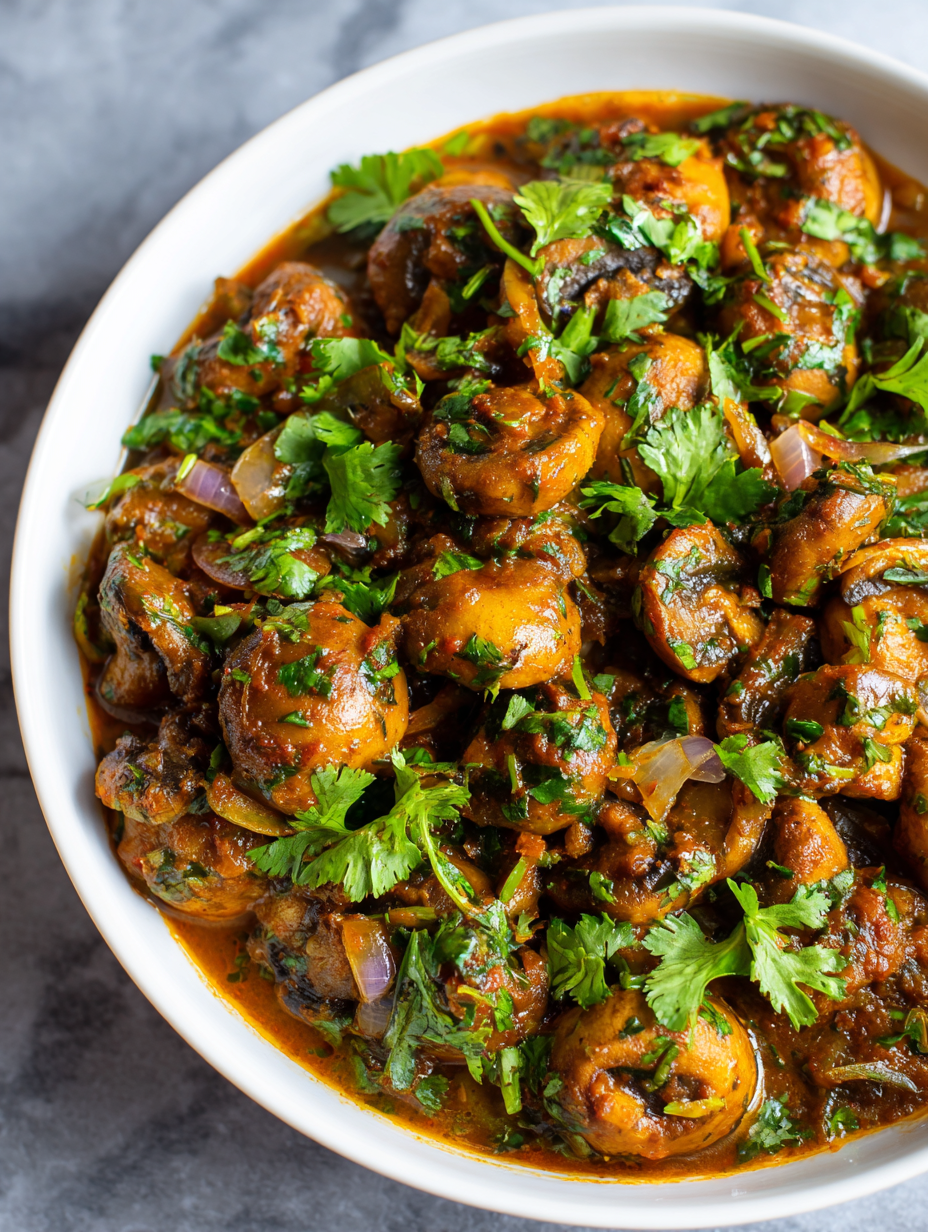
- Mushrooms are tender but still hold shape, with a smoky aroma.
- Sauce is thick, glossy, and coats mushrooms evenly.
- Spices are fragrant and well-incorporated, not burnt or raw.
Improv Mushroom Masala
Ingredients
Equipment
Method
- Heat the oil in a large skillet over medium heat until shimmering. Add the cumin seeds and fry until fragrant, about 30 seconds, listening for a gentle crackle.
- Add the finely chopped onions and cook, stirring frequently, until they turn translucent and start to golden, about 8-10 minutes. You'll smell a sweet aroma as they soften.
- Stir in the minced garlic and grated ginger, cooking for another minute until fragrant. Add the turmeric, garam masala, and smoked paprika (if using), and toast the spices until they release a deep aroma, about 30 seconds to 1 minute.
- Add the diced tomatoes and cook, stirring occasionally, until they break down into a thick sauce and the mixture smells bright and tangy, about 5-7 minutes. If it seems watery, turn up the heat slightly to help it reduce.
- Introduce the sliced mushrooms into the skillet, stirring well to coat them with the spice mixture. Cook for 10-12 minutes, stirring occasionally, until the mushrooms release moisture and then absorb the flavors, turning darker and more tender.
- Check the consistency: if the sauce is too thin, simmer a few more minutes until thickened. If it looks too dry, add a splash of water or sprinkle in a little more oil to keep it luscious.
- Stir in the heavy cream or coconut milk if using, cooking for another 2 minutes until heated through and velvety. Taste and season with salt and a squeeze of lemon juice for brightness.
- Remove from heat and let the mushroom masala rest for a couple of minutes to deepen the flavors. Garnish with chopped cilantro if desired, then serve hot with rice or naan.
Pro tips for mushroom masala
- Use a hot pan — listen for a gentle crackle when oil is shimmering, not smoking.
- Sauté spices until fragrant — about 30 seconds — to unlock full aroma and flavor.
- Keep mushrooms thick — about 1.5 cm (0.6 inches) — to prevent them from turning mushy during cooking.
- Stir regularly — every 2-3 minutes — to prevent sticking and ensure even coating with spices.
- Adjust heat as needed — lower if spices or mushrooms begin to burn, higher to reduce excess moisture.
- Finish with a splash of lemon or lime — brightens the dish and balances spices, add just before serving.
- Let it rest briefly after cooking — 2 minutes — to allow flavors to meld and intensify.
Common mistakes and how to fix them
- FORGOT to adjust heat, mushrooms turn rubbery—reduce heat and cook slowly.
- DUMPED in all spices at once—toast spices first for full flavor.
- OVER-TORCHED the spices—stir constantly to prevent burning.
- FAILED to taste and adjust seasoning—add salt or lemon at the end for balance.
Fast fixes for mushroom masala
- When mushrooms release excess water, splash a little more oil and turn up the heat to evaporate it quickly.
- If spices burn and turn bitter, dump in a splash of water or yogurt to cool the pan and dilute the flavor.
- Splash a few drops of lemon juice when the dish seems dull; it brightens and balances the flavors instantly.
- Patch a burnt sauce by stirring in a teaspoon of tomato ketchup or a dash of sugar to mask the bitterness.
- Shield delicate mushrooms from overcooking by adding them later in the process and cooking briefly until just tender.
Prep, store, and reheat tips
- Prep the mushrooms, onions, and tomatoes up to a day ahead; store in airtight containers in the fridge to keep them fresh and firm, preserving their vibrant textures and earthy aroma.
- The cooked masala keeps well in the fridge for 2-3 days; reheat gently on the stove over low heat, stirring occasionally until it shimmers and smells inviting again.
- For longer storage, freeze in portions up to 3 months; it may deepen in flavor, and the texture might soften slightly upon thawing, but still flavorful.
- Reheating from frozen: thaw overnight in the fridge, then warm gently, watching for bubbling and a fragrant aroma. Add a splash of water or cream if it thickens too much, ensuring it remains luscious and inviting.
Top questions about Mushroom Masala
1. Can I use different mushrooms?
Use firm mushrooms like cremini or shiitake for the best texture. Button mushrooms work fine, just slice them thicker to prevent mushiness.
2. Can I make it vegan or dairy-free?
Yes, you can substitute coconut milk for cream to keep it dairy-free, but it adds a slightly sweeter, tropical flavor.
3. How long should I cook the spice base?
Cook the masala on medium heat until the oil separates slightly from the spices, about 10 minutes, for a richer flavor.
4. My sauce is too thin, what do I do?
If the sauce is too watery, simmer it longer until it thickens and coats the mushrooms. If it gets too thick, add a splash of water.
5. How do I enhance the flavor before serving?
Add a squeeze of lemon or lime at the end to brighten flavors and balance the spices. Taste and adjust as needed.
6. What’s the best way to prepare the aromatics?
Use a sharp knife to finely chop onions and garlic so they cook evenly and release their sweetness quickly.
7. Can I make this ahead of time?
Yes, you can prepare all the ingredients a day ahead, store separately in the fridge, and cook fresh when ready to serve.
8. How should I reheat leftovers?
Reheat gently on the stove over low heat, stirring occasionally until it’s steaming and fragrant again, about 5-7 minutes.
9. What if I burn the spices?
If you accidentally burn the spices, add a splash of water or yogurt to cool and dilute the bitterness, then continue cooking.
10. How spicy is this dish?
Adjust the chili or cayenne to your heat preference—start with a small pinch, then taste and add more if needed.
This mushroom masala is more than just a meal; it’s a reminder that simple ingredients, when treated with patience and a little love, can turn into something truly satisfying. It’s a dish that invites improvisation and celebrates the flavors that bloom from a humble pan. Making it feels like a small act of culinary rebellion, especially when the kitchen fills with that smoky, spicy aroma.
In the end, it’s about those quiet moments of tasting and adjusting, finding that perfect balance of spice, acidity, and creaminess. Every spoonful carries a bit of chaos turned comfort, a little story of improvisation and care. It’s a dish that’s meant to be shared, enjoyed, and remembered long after the last bite.

Hi, I’m Anjali Arora — the curious heart behind Feast Chase.
To be honest, I’ve always felt most at ease in my own company. I’m not exactly a people-person (small talk still makes me cringe), but there are two things I’ve always loved deeply: animals and food.