 Anjali Arora
This recipe started as a challenge: make vegan pizza that isn’t just a quick switch but has its own earthy, grounded appeal. It’s a way to enjoy that familiar comfort while keeping things fresh and honest. I love how it brings a bit of chaos into the kitchen—adjusting spices, experimenting with toppings—yet ends up feeling so rooted. It’s a reminder that even celebrity-favored dishes can be stripped down and reimagined with real ingredients.
Why I Keep Making This Vegan Pizza
It’s a canvas for honest cooking—no fuss, just flavor. The earthy toppings and smoky sauce remind me that simplicity often carries the most depth. Plus, it’s versatile enough to suit every mood, from cozy nights to quick weeknight dinners. It’s messy, it’s real, and it’s always satisfying.
Breaking Down the Ingredients
- Vegan flour: Provides the base; I like a mix of all-purpose and whole wheat for flavor.
- Smoky tomato sauce: Gives that deep umami punch; use chipotle for extra smoky heat.
- Marinated roasted vegetables: Adds earthy sweetness and texture; zucchini, eggplant work well.
- Cashew cheese: Creamy, rich, and neutral; swap with store-bought if pressed for time.
- Fresh basil: Bright, aromatic finish; don’t skip it for the fresh punch.
- Olive oil: For drizzling; use extra virgin for a fruity note.
- Salt & pepper: Essential for seasoning; taste and adjust as you go.
Tools of the Trade for Vegan Pizza Perfection
- Rolling pin: To flatten the dough evenly.
- Baking sheet or pizza stone: To bake the pizza evenly and achieve a crispy crust.
- Silicone spatula: To spread sauce and smooth out toppings.
- Oven thermometer: To ensure accurate baking temperature.
Crafting the Perfect Vegan Pizza from Scratch
Step 1: Preheat your oven to 220°C (430°F).
Step 2: Mix your vegan flour with a pinch of salt and warm water to form a sticky dough.
Step 3: Knead briefly, then let rest for 15 minutes.
Step 4: Roll out the dough on a floured surface to about 0.5 cm thickness.
Step 5: Spread a layer of smoky tomato sauce over the base.
Step 6: Top with generous slices of marinated roasted veggies and dollops of cashew cheese.
Step 7: Bake for 15-20 minutes, until the crust is golden and the toppings are bubbling.
Step 8: Let cool slightly, then slice and serve with fresh basil.
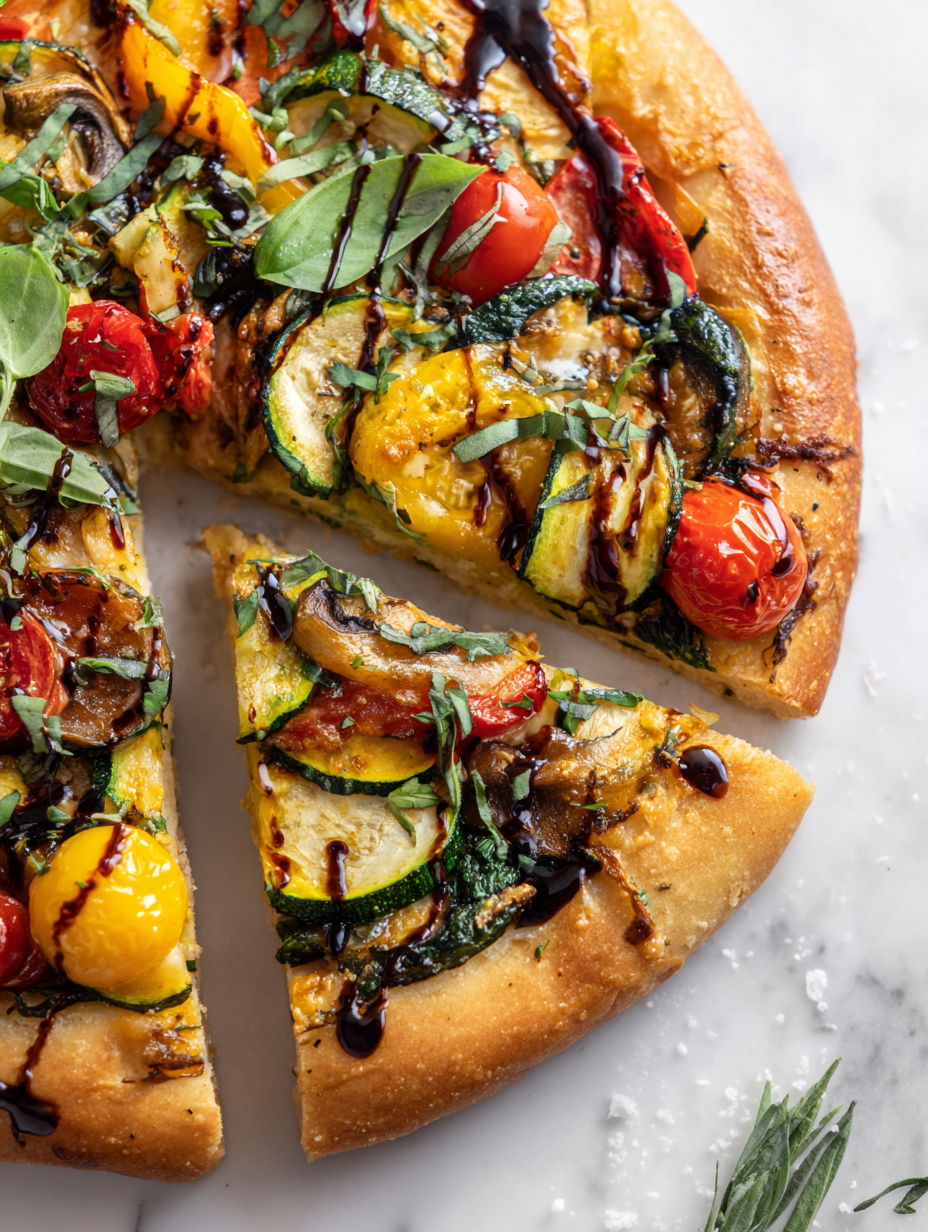
Vegan Earthy Vegetable Pizza
Ingredients
Equipment
Method
- Mix the flour and salt in a large bowl, then slowly add warm water while stirring until a sticky dough forms. Knead briefly on a floured surface until smooth, then cover and let rest for 15 minutes to relax the gluten.
- Preheat your oven to 220°C (430°F) and place a baking sheet or pizza stone inside to heat.
- On a floured surface, roll out the dough into a circle about 0.5 cm thick. Transfer to a piece of parchment paper for easy handling.
- Spread the smoky tomato sauce evenly over the rolled-out dough, leaving a small border around the edges.
- Distribute the marinated roasted vegetables across the sauce, arranging them in a colorful, layered pattern.
- Dollop spoonfuls of cashew cheese over the vegetables, spreading gently with the back of the spoon to create creamy pockets.
- Drizzle olive oil over the entire pizza and season with salt and pepper to taste.
- Transfer the parchment paper with the assembled pizza onto the hot baking sheet or pizza stone. Bake for 15-20 minutes, until the crust is golden and the toppings are bubbling.
- Remove the pizza from the oven and let it cool for a few minutes. Sprinkle freshly chopped basil over the top for a bright aroma.
- Slice the pizza into wedges, revealing the crispy crust, vibrant toppings, and creamy cashew cheese inside. Serve immediately and enjoy the earthy, hearty flavors.
Cooking Checkpoints & Tips for Success
- Dough should be elastic and slightly sticky, not doughy.
- Toppings should be evenly distributed and not overloaded to avoid sogginess.
- Crust should turn a deep golden, with bubbles forming around the edges.
- Toppings are done when cheese (or cashew spread) is bubbly and slightly browned.
Common Mistakes & How to Fix Them
- Overloading toppings, causing a soggy base.? Use less sauce if the crust gets soggy.
- Burnt crust.? Bake at slightly higher temp if edges burn before toppings cook.
- Over-torched toppings.? Cover with foil if toppings brown too fast.
- Dough tearing during rolling.? Ensure dough rests enough to develop elasticity.
This pizza isn’t just about the ingredients; it’s about the process. Each step is a small act of rebellion against the typical, a way to keep the kitchen lively and honest. Enjoy customizing your toppings—maybe a splash of hot sauce or a handful of arugula—whatever makes it yours. It’s a reminder that plant-based can be deeply satisfying, even if you’re not vegan.

Hi, I’m Anjali Arora — the curious heart behind Feast Chase.
To be honest, I’ve always felt most at ease in my own company. I’m not exactly a people-person (small talk still makes me cringe), but there are two things I’ve always loved deeply: animals and food.