 Anjali Arora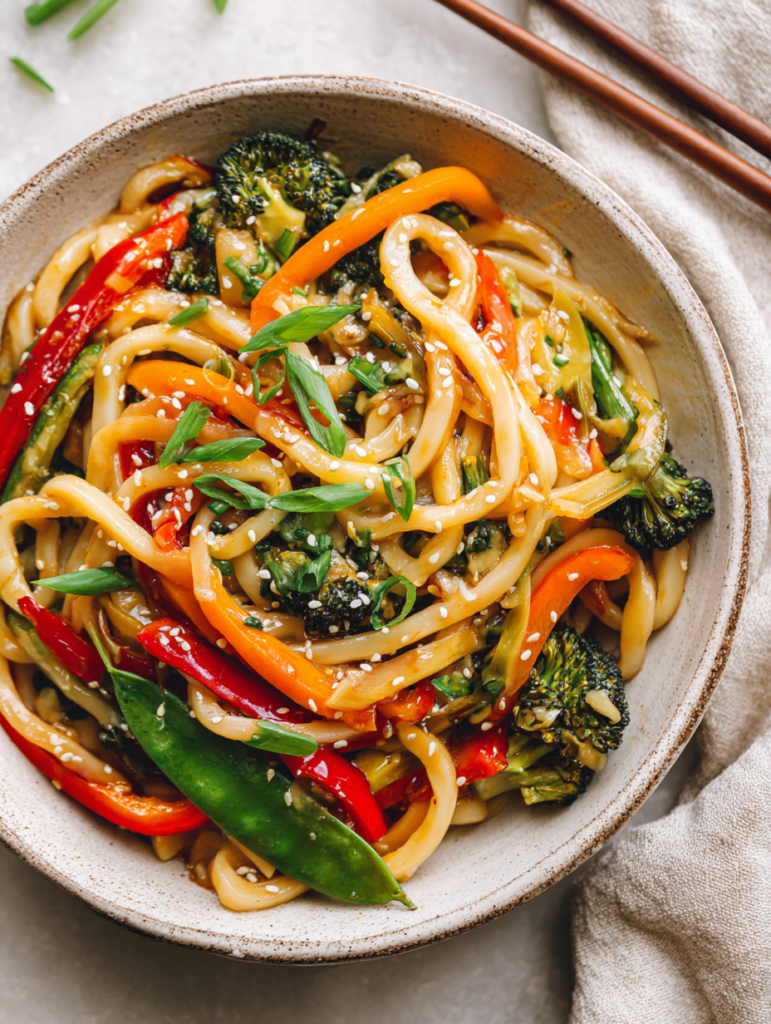
Vegetable udon might seem straightforward, but I’ve always been obsessed with how texture contrast can turn a simple bowl into a revelation. The crispy edge of stir-fried veggies, the chewy bite of the noodles, and the tender, juicy bits of fresh produce all work together in a dance of sensations. It’s not just about taste — it’s about feeling each forkful with different parts of your mouth.
I started playing with this idea when I wanted a quick, satisfying meal that didn’t rely on heavy sauces or overpowering flavors. Instead, I focused on the textural journey, and that’s made all the difference. It’s become my go-to when I need something comforting but also interesting enough to keep me coming back for more, each bite revealing a new layer of crunch or softness.
Focusing on the overlooked power of texture contrast in vegetable udon, highlighting how crispy, chewy, and tender elements combine to elevate simple ingredients into a satisfying, multi-sensory experience.
Texture as the Unexpected Hero
- Cooking this reminds me of the bustling night markets in Tokyo, where every stir and sizzle sparks a memory.
- I love how a simple bowl can hold so much chaos—crisp vegetables clash with chewy noodles in the best way.
- There’s a quiet pride in mastering the perfect stir-fry—getting that balance of heat and crunch just right.
- This dish feels like a small act of rebellion—using everyday ingredients to create something vibrant and satisfying.
- Sometimes, I crave the honest, unpolished joy of a bowl like this after a long day, textures and all.
Texture as the Unexpected Hero
This recipe came together on a lazy Sunday afternoon when I had a handful of vegetables and a craving for something warm and satisfying. I wanted to create a dish that was simple but had a bit of a twist—something that felt both familiar and fresh. Stir-frying the vegetables until just tender, then tossing them with chewy udon noodles, reminded me how much texture can elevate a humble meal. It’s become my little ritual to keep this on hand for busy nights when I want comfort without fuss.
Historical and Cultural Insights
- Vegetable udon has roots in Japan’s quick street food culture, where fresh ingredients and speed mattered.
- The use of chewy udon noodles dates back centuries, originally derived from Chinese wheat noodle traditions.
- In recent years, home cooks worldwide have embraced vegetable udon as a versatile, veggie-packed comfort dish.
- The contrast of textures—crispy vegetables and chewy noodles—mirrors traditional Japanese emphasis on multi-sensory eating.
- Modern twists include experimenting with seasonal vegetables, making each bowl uniquely vibrant and personal.
Ingredient breakdown: key components
- Udon noodles: I love how chewy and hearty they are—make sure to cook them just al dente, or they’ll turn mushy. Swap for soba if you want a nuttier flavor.
- Carrots: I slice them thin so they crisp up nicely, adding a sweet crunch to each bite. Try daikon for a milder, juicy substitute.
- Bell peppers: Their bright, smoky sweetness really pops—slice them thick for crunch or thin for a tender bite. Use zucchini if you prefer a softer texture.
- Green onions: I toss these in at the end for a fresh, sharp bite that cuts through the richness. Chives work well if you don’t have green onions.
- Soy sauce: It’s the umami backbone—use a good quality one for depth. Coconut aminos make a sweeter, milder alternative but alter the saltiness.
- Sesame oil: A tiny splash adds a toasty aroma—don’t overdo it or it’ll overpower. Try toasted avocado oil for a subtler nutty note.
- Garlic and ginger: I chew on the bits as I eat—ensure they’re minced finely so they distribute evenly. Use shallots or galangal for a different aromatic punch.
Spotlight on key ingredients
Udon noodles:
- I love their chewy, substantial bite that holds up well against stir-frying. Cook just al dente to avoid mushiness, and look for a slightly firm texture that gives when bitten.
- Bell peppers: Their smoky sweetness adds a vibrant flavor and crunch. For a subtler alternative, try zucchini, which softens quickly but still adds a tender, juicy bite.
Green onions:
- I toss these in at the end for a sharp, fresh bite that brightens the dish. Their slight crunch and oniony aroma are key to balancing the savory flavors.
- Carrots: Thinly sliced, they crisp up nicely and add a sweet, earthy contrast. They can also be swapped for daikon for a milder, juicy crunch.
Notes for ingredient swaps
- Noodles: Rice noodles are softer and less chewy, offering a different texture that absorbs sauces well.
- Vegetables: Zucchini or snap peas can replace carrots and peppers for a milder, crisp bite.
- Soy Sauce: Coconut aminos provide a sweeter, milder umami, but reduce salt slightly.
- Sesame Oil: Toasted avocado oil gives a subtler nutty aroma if you want less intensity.
- Garlic & Ginger: Shallots or galangal can substitute for a different aromatic punch and flavor profile.
Equipment & Tools
- Large wok or deep skillet: For high-heat stir-frying to develop flavor and texture.
- Slotted spoon: To drain noodles efficiently and toss ingredients.
- Small bowl: To hold sauces and seasonings for quick access.
- Tongs: To toss noodles and vegetables evenly during stir-fry.
- Pot for boiling water: To cook the udon noodles quickly and efficiently.
Step-by-step guide to Vegetable Udon
- Equipment & Tools: Prepare a large wok or deep skillet, a slotted spoon, a small bowl for sauces, and tongs for tossing. Boil water in a separate pot for noodles.
- Cook the udon noodles: Bring a pot of water to 100°C (212°F). Add noodles and cook for 3-4 minutes until just al dente. Drain and rinse with cold water to stop cooking. Set aside.
- Prep the vegetables: Thinly slice carrots, bell peppers, and green onions. Keep the garlic and ginger minced finely. Have all ready before stir-frying.
- Heat the wok: Over medium-high heat, let the wok get hot—look for shimmering surface and faint crackle. Add 1 tbsp sesame oil, swirl to coat.
- Stir-fry the veggies: Toss in carrots and bell peppers. Cook for 2-3 minutes until slightly tender but still crisp. Add garlic and ginger; cook for another 30 seconds until fragrant.
- Add the noodles: Push veggies to the side, add noodles directly into the wok. Use tongs to toss and coat them with residual oil and veggies. Cook for 1-2 minutes, developing a slight smoky aroma.
- Season the dish: Pour in 2-3 tbsp soy sauce, a splash of sesame oil, and a pinch of chili flakes if desired. Toss everything thoroughly for even flavor. Taste and adjust soy or salt as needed.
- Final touches: Add chopped green onions, give a quick toss, and check for flavor balance—salty, savory, bright. Remove from heat when noodles are heated through and edges slightly caramelized.
- Rest and plate: Let sit for 1 minute to settle flavors. Serve immediately, garnished with extra green onions or sesame seeds if you like.
- Checkpoints & How to Know It’s Done: Noodles should be chewy but not mushy; vegetables crisp but cooked through; and the overall dish fragrant with a balanced soy aroma.
Serve immediately while hot, garnished with extra green onions or a sprinkle of sesame seeds. Rest for a minute to meld flavors. If not eating right away, store in an airtight container in the fridge for up to 2 days. Reheat in a hot skillet, tossing gently until steaming and aromatic again.
How to Know It’s Done
- Noodles have a slight bounce and are al dente.
- Vegetables are vibrant, crisp, with a light char.
- The soy sauce mixture is fragrant and coats everything evenly.
Vegetable Udon Stir-Fry
Ingredients
Equipment
Method
- Bring a pot of water to a boil, then cook the udon noodles for 3-4 minutes until just al dente, then drain and rinse with cold water to stop the cooking process. Set aside.
- Slice the carrot thinly and chop the bell pepper into strips. Prepare the green onions by chopping them finely. Mince the garlic and ginger to release their fragrant aroma.
- Heat the wok over high heat until shimmering. Add 1 tablespoon of sesame oil and swirl to coat the surface.
- Toss in the sliced carrots and bell peppers. Stir-fry for 2-3 minutes until they start to develop a slight char and become crisp-tender, making a sizzling sound and releasing a fresh vegetable aroma.
- Add the minced garlic and ginger to the vegetables. Cook for about 30 seconds until fragrant, stirring constantly to prevent burning and to infuse the oil with aromatic notes.
- Push the vegetables to one side of the wok, then add the cooked udon noodles directly into the empty space. Use tongs to toss and combine the noodles with the vegetables, allowing them to heat through and develop a slight smoky aroma.
- Pour the soy sauce over the noodles and vegetables. Toss everything together thoroughly so that the noodles are evenly coated with the savory sauce, and the vegetables are well distributed. Cook for an additional 1-2 minutes.
- Remove the wok from heat. Toss in the chopped green onions and drizzle the sesame oil over the top. Give everything a final quick toss to combine the fresh green bite with the warm, flavorful noodles.
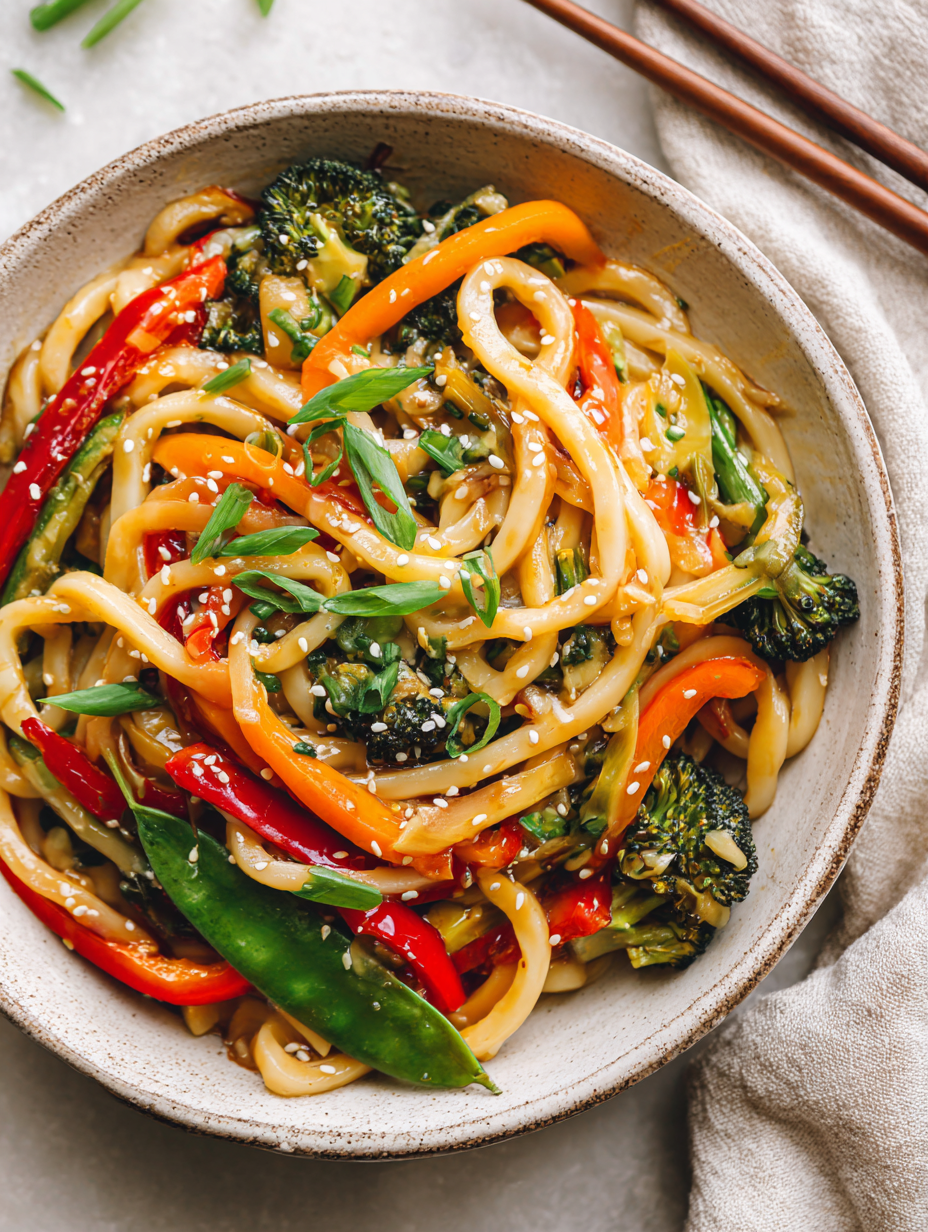
- Serve immediately while hot, garnished with extra green onions if desired. The dish should have a balance of crispy, chewy, and tender textures with a fragrant soy aroma.
Notes
Essential stir-fry techniques
- High heat: Preheat your wok until shimmering to develop a good sear and smoky aroma on the vegetables.
- Quick tossing: Use tongs to toss noodles and veggies rapidly; this prevents sticking and promotes even charring.
- Layer flavors: Add garlic and ginger after veggies start to brown for a fragrant, not bitter, finish.
- Taste as you go: Regularly check seasoning—soy, salt, or acid—to balance umami and brightness.
- Don’t overcook: Remove vegetables when just tender; they crisp up better and retain vibrant color.
- Finish with green: Toss in green onions at the end for a fresh, sharp contrast to the savory stir-fry.
Common mistakes and how to fix them
- FORGOT to preheat wok → heat until shimmering before adding oil.
- DUMPED all ingredients together → cook vegetables first, then noodles for better texture.
- OVER-TORCHED vegetables → stir constantly to prevent burning and achieve even charring.
- FAILED to taste and adjust soy → always taste and tweak seasoning at the end.
Quick Fixes & Pantry Swaps
- When noodles stick, splash hot water over them, then toss to loosen.
- If veggies are overcooked, quickly stir-fry with a splash of soy to refresh texture.
- DUMPED too much soy? Balance with a squeeze of lemon or a dash of honey.
- Splash a little sesame oil at the end for an instant aroma boost.
- Patch a smoky wok smell with a quick toss of fresh green onions and a squeeze of lime.
Prep, store, and reheat tips
- Prep the vegetables: Slice carrots, peppers, and green onions a day ahead; store in an airtight container in the fridge, crisp and ready to toss. They stay fresh for up to 2 days.
- Cook the noodles in advance: Boil and rinse the udon noodles, then toss with a tiny bit of oil to prevent sticking. Keep refrigerated for up to 24 hours, reheating will revive their chewy texture.
- Sauce mixture: Mix soy, sesame oil, and seasonings ahead of time. Store in a small jar in the fridge for up to 3 days. Flavors deepen slightly, so taste and adjust before using.
- Reheating: Gently reheat in a hot skillet or wok, stirring constantly. Expect slightly softer vegetables and noodles, but keep an eye for that smoky aroma to gauge readiness.
- Sensory note: The dish should smell savory and slightly roasted when reheated; the noodles should still have a chewy bite, and vegetables crispy if reheated quickly.
Top questions about vegetable udon
1. How do I prevent the noodles from sticking together?
Choose firm, fresh udon noodles for the best chewy texture. Overcooking makes them mushy, so keep an eye on the timer.
2. Can I use frozen vegetables?
Use vibrant, fresh vegetables like bell peppers and carrots for crunch and color. Thinner slices cook faster and stay crisp.
3. What if I don’t have soy sauce?
Soy sauce provides saltiness and umami, but you can substitute with coconut aminos for a milder, sweeter profile, adjusting the salt.
4. How hot should my pan be?
High heat (around 200°C/390°F) is key for that quick stir-fry, which develops flavor and crispness without burning ingredients.
5. When should I add the green onions?
Add green onions at the end for a fresh bite and bright aroma. Tossing them in early can cause them to wilt and lose flavor.
6. How do I keep the vegetables crisp?
To keep vegetables crispy, stir-fry them just until tender—about 2-3 minutes—then remove from heat to prevent sogginess.
7. Can I make this ahead?
Reheat leftovers quickly in a hot skillet or wok, tossing gently. Expect softer veggies but still flavorful and fragrant.
8. How do I fix bland flavor?
Adjust seasoning by tasting and adding soy or a splash of acid like lemon if needed. Balance savory, salty, and bright notes.
9. What’s the best tool for stir-frying?
Use tongs for tossing noodles and veggies evenly. This prevents sticking and promotes even charring and flavor development.
10. My noodles are sticking—what do I do?
If noodles stick, splash hot water over them and toss gently. This loosens them and prevents tearing.
This vegetable udon isn’t just a quick meal; it’s a reminder that texture is what keeps me coming back. Each bite offers a crunch, a chew, and a tender softness that makes it more than just stir-fried vegetables and noodles. It’s a dish that celebrates the simple joy of contrasting textures, right in my own kitchen.
In times when I need comfort or a burst of flavor, this bowl always delivers. It’s imperfect, honest, and deeply satisfying—proof that sometimes, the simplest ingredients can create the most memorable moments. No matter how often I make it, it still feels like a small victory every time I sit down to eat.

Hi, I’m Anjali Arora — the curious heart behind Feast Chase.
To be honest, I’ve always felt most at ease in my own company. I’m not exactly a people-person (small talk still makes me cringe), but there are two things I’ve always loved deeply: animals and food.