 Anjali Arora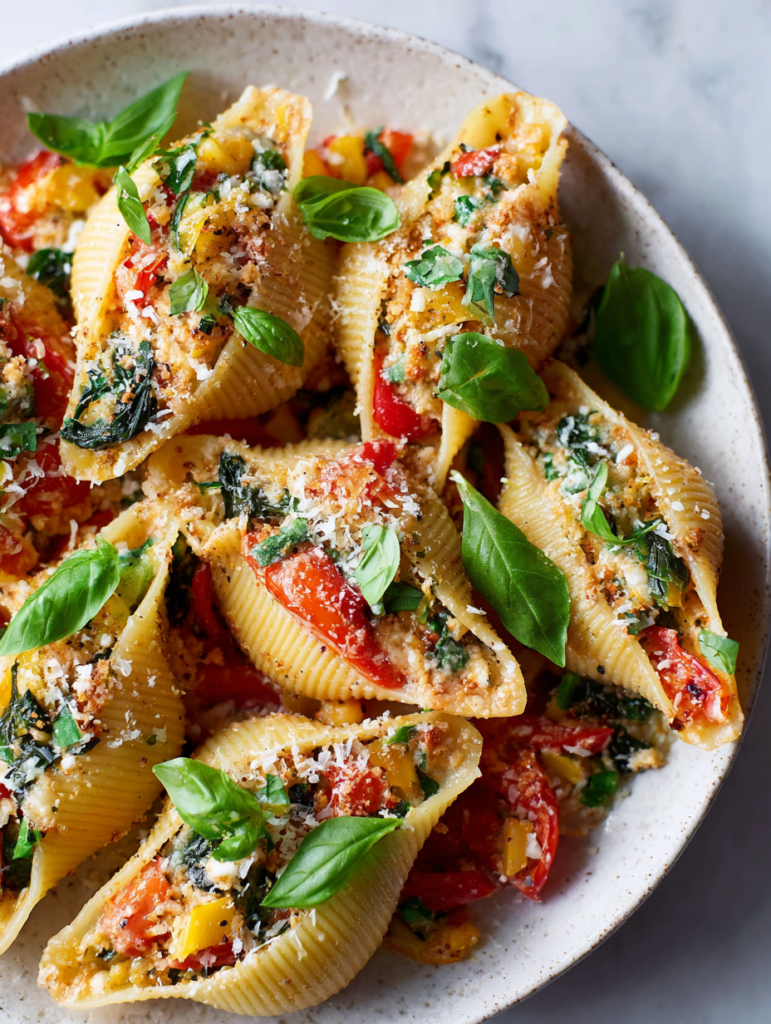
This vegetable stuffed shells recipe is my way of blending childhood nostalgia with the fresh vibrancy of seasonal produce. Growing up, I loved the cheesy, comforting shells, but as I started cooking more from scratch, I realized I could make it brighter and more alive. Using vegetables that are in peak season, I aim to bring a little unexpected color and flavor to a familiar dish.
It’s a no-fuss dish that feels like a warm hug but also celebrates the bounty of what’s fresh right now. Sometimes, I toss in whatever’s left from the market—a bit of zucchini, a handful of cherry tomatoes, maybe some wilted greens. It’s honest cooking, leaning on what’s at its best, and transforming simple ingredients into something special.
Focusing on the nostalgic comfort of childhood favorites, but with a twist—using only seasonal vegetables to make the dish vibrant, fresh, and a little unexpected.
Transforming Classics with Seasonal Veggies
- Making this dish always reminds me of family Sunday dinners, where the kitchen was filled with the smell of roasted vegetables and melted cheese.
- There’s a chaotic joy in chopping a rainbow of seasonal produce and stuffing shells until they’re bursting with color and flavor.
- I love how this recipe turns humble vegetables into a comforting, cheesy centerpiece that even skeptical eaters can’t resist.
- It’s a reminder that simple ingredients, when combined with care, can create something unexpectedly vibrant and satisfying.
The story behind this recipe
- This recipe came together during a slow Sunday afternoon, when I was digging through my pantry and thinking about how comfort food can also be a way to use up odds and ends. I had a box of shells and a handful of vegetables that needed using, and somehow, stuffing them felt like a natural move—like giving new life to something simple.
- The idea of combining the creamy, cheesy shells with the fresh crunch of seasonal vegetables was born out of a desire to make something familiar feel new, without fuss. It’s my go-to when I want a meal that feels homey but also a little bright, a little unexpected, and totally adaptable.
- heading:
Historical & Cultural Tidbits
- Vegetable stuffed shells have roots in Italian-American comfort food, blending traditional pasta with fresh produce.
- The concept of stuffing pasta shells originated in the 1950s, as a way to make baked pasta more appealing and manageable.
- Using seasonal vegetables in this dish is a modern twist, reflecting a shift towards fresher, more sustainable cooking habits.
Ingredient breakdown: key components
- Ricotta cheese: I love its creamy, mild richness that melts beautifully inside the shells; you can swap in cottage cheese for a slightly different texture, but keep it creamy. The oozy, velvety feel is what makes these shells special.
- Spinach: I use fresh, chopped spinach for vibrant color and a mild, earthy flavor that balances the cheese; frozen spinach works, but be sure to squeeze out excess moisture to avoid sogginess, and it’s less vivid in color.
- Bell peppers: I dice sweet, crunchy peppers to add a pop of color and a juicy bite; yellow or orange peppers brighten the dish with their sunny hue, or swap with roasted red peppers for smoky depth.
- Pasta shells: I prefer large, sturdy shells that hold filling well; try whole wheat for nuttier flavor, or use gluten-free shells if needed. The texture should be firm but tender, with a slight chew.
- Marinara sauce: I opt for a rich, homemade-style sauce with bright tomato flavor and a hint of garlic; a good store-bought version works, but avoid overly sweet or watery sauces that dilute the filling’s flavor.
- Seasonings: I keep it simple with salt, pepper, and a pinch of nutmeg to enhance the cheese; fresh basil or oregano can be stirred in for extra herbaceous notes, but don’t overdo it—they should complement the vegetables’ freshness.
Spotlight on key ingredients
Ricotta and Spinach:
- Ricotta cheese: I love its creamy, mild richness that melts beautifully inside the shells; you can swap in cottage cheese for a slightly different texture, but keep it creamy. The oozy, velvety feel is what makes these shells special.
- Spinach: I use fresh, chopped spinach for vibrant color and a mild, earthy flavor that balances the cheese; frozen spinach works, but be sure to squeeze out excess moisture to avoid sogginess, and it’s less vivid in color.
Notes for ingredient swaps
- Dairy-Free: Swap ricotta for blended silken tofu mixed with a pinch of nutritional yeast. Slightly less creamy, but still satisfying.
- Vegan: Use cashew cheese or store-bought vegan ricotta; keep in mind it may have a nuttier flavor and different texture.
- Gluten-Free: Replace wheat pasta shells with gluten-free pasta shells—look for sturdy varieties that won’t fall apart during baking.
- Vegetables: Substitute zucchini or bell peppers with roasted eggplant or mushrooms for a smoky, earthy twist.
- Cheese: Swap Parmesan with nutritional yeast flakes or a sharp, aged vegan cheese for a similar umami kick.
- Tomato Sauce: Use roasted tomato sauce or a spicy arrabbiata for more depth or heat, depending on your taste.
- Herbs: Fresh basil can be replaced with oregano or thyme—just adjust the quantity to keep the flavor balanced.
Equipment & Tools
- Large pot: Cook the pasta shells until al dente.
- Skillet: Sauté vegetables for flavor and texture.
- Mixing bowl: Combine cheese, vegetables, and seasonings.
- 9×13 inch baking dish: Hold assembled shells for baking.
- Spoon or piping bag: Fill shells neatly and efficiently.
- Aluminum foil: Cover dish during baking to retain moisture.
Step-by-step guide to vegetable stuffed shells
- Equipment & Tools: Prepare a large pot for boiling (to cook shells), a skillet for sautéing vegetables, a mixing bowl for filling, a baking dish (about 9×13 inches), and a spoon or spatula for filling.
- Boil the shells: Bring a large pot of salted water (about 4 liters/1 gallon) to a rolling boil at 100°C/212°F. Add shells and cook until just al dente, about 10 minutes. Stir occasionally to prevent sticking. Drain and set aside to cool slightly.
- Sauté vegetables: Heat a tablespoon of olive oil in a skillet over medium heat (around 160°C/320°F). Add diced zucchini, bell peppers, and a pinch of salt. Cook until vegetables are tender and fragrant, about 5-7 minutes. Let cool slightly.
- Mix filling: In a bowl, combine ricotta, chopped spinach (squeeze out excess moisture if frozen), sautéed vegetables, grated Parmesan, a pinch of nutmeg, salt, and pepper. Stir until well combined and creamy.
- Stuff the shells: Using a spoon or piping bag, carefully fill each shell with the vegetable-cheese mixture. Place filled shells into the prepared baking dish, open side up, snugly but not squished.
- Cover and bake: Pour marinara sauce evenly over the shells. Cover with foil and bake in a preheated oven at 180°C/350°F for 25-30 minutes, until bubbly and heated through. Remove foil for the last 5 minutes if you want a slightly browned top.
- Rest and serve: Let the dish rest for 5 minutes after removing from the oven. Garnish with fresh basil or extra Parmesan if desired. Serve warm with a simple green salad.
Let the baked shells rest for 5 minutes to set. Serve with extra sauce and herbs for a fresh finish. Plate carefully to keep shells intact and showcase the vibrant filling.
How to Know It’s Done
- Shells should be al dente with a slight bite, not mushy.
- Vegetables should be tender, fragrant, and slightly caramelized around edges.
- Filling should be creamy and well combined, not runny or dry.
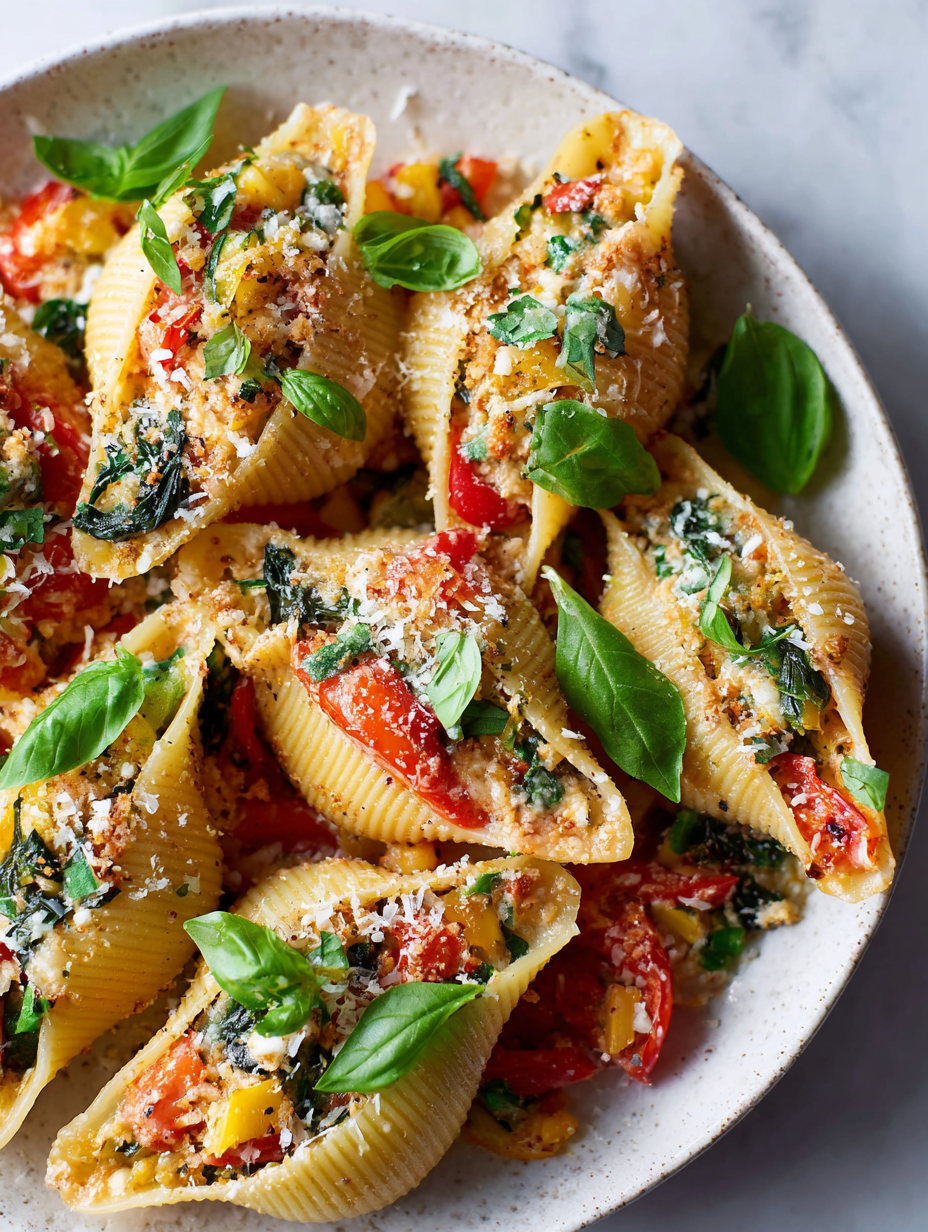
Seasonal Vegetable Stuffed Shells
Ingredients
Equipment
Method
- Bring a large pot of salted water to a boil, then add the pasta shells and cook until just al dente, about 10 minutes. Drain and set aside to cool slightly.
- While the pasta cooks, heat olive oil in a skillet over medium heat. Add minced garlic and cook until fragrant, about 30 seconds. Toss in diced bell peppers and cook until tender and slightly caramelized, about 5 minutes. Remove from heat and let cool.
- In a mixing bowl, combine ricotta cheese, chopped spinach (squeezed dry), sautéed peppers, grated Parmesan, salt, and pepper. Mix until smooth and well integrated. This creamy filling is now ready to stuff the shells.
- Use a spoon or piping bag to carefully fill each cooked shell with the cheese and vegetable mixture. Place the stuffed shells into a greased 9x13 inch baking dish, fitting them snugly without squishing.
- Pour marinara sauce evenly over the filled shells, covering them completely. Cover the dish tightly with aluminum foil to trap moisture and keep everything tender.
- Bake in a preheated oven at 180°C/350°F for 25-30 minutes, until bubbling around the edges and the top is slightly golden. Remove foil during the last 5 minutes if you'd like a more browned appearance.
- Let the dish rest for 5 minutes after baking. Garnish with fresh herbs like basil or oregano if desired, then serve warm, enjoying the colorful, cheesy goodness.
Notes
Tips & Tricks for Perfect Shells
- Salt the pasta water: Add plenty of salt to make the shells flavorful from the inside out, like the sea.
- Drain and cool shells: Rinse cooked shells with cold water after draining to stop the cooking process and prevent sticking.
- Sauté vegetables until fragrant: Cook until they release a sweet aroma and edges start to caramelize for depth of flavor.
- Use a piping bag for filling: Keeps the shells neat and ensures each shell is generously stuffed, without mess.
- Cover with foil during baking: Traps steam and keeps the shells moist, preventing them from drying out or burning on top.
- Rest before serving: Let the dish sit for 5 minutes after baking—this helps everything set and makes plating easier.
- Finish with fresh herbs: Sprinkle basil or parsley right before serving for a bright, aromatic contrast.
Common mistakes and how to fix them
- FORGOT to pre-cook shells thoroughly → Ensure shells are cooked to just al dente, not mushy.
- DUMPED filling into shells without packing → Use a spoon or piping bag for neat, full shells.
- OVER-TORCHED sauce or shells → Keep an eye on baking time; remove when bubbly and edges are golden.
- TOO much moisture in vegetables → Squeeze out excess water from frozen spinach and roasted vegetables.
Quick Fixes and Pantry Swaps
- When shells stick, splash a little olive oil in boiling water before adding them.
- If sauce is too watery, simmer uncovered for a few minutes to thicken and intensify flavors.
- DUMPED filling too dry? Fold in a splash of milk or extra cheese to restore creaminess.
- When shells crack during boiling, gently lower them into water and cook at a gentle simmer.
- Splash lemon juice or vinegar to brighten dull vegetables and add a fresh zing.
Prep, store, and reheat tips
- Prepare the filling and sauté vegetables ahead; store in an airtight container in the fridge for up to 2 days. The flavors meld and intensify overnight, making assembly quicker.
- Cook the pasta shells al dente, drain thoroughly, and layer on a baking sheet to cool. Keep covered with a damp towel to prevent drying out if not using immediately.
- Assembled shells with sauce can be refrigerated up to 24 hours. Cover tightly with foil or plastic wrap to prevent drying and absorption of fridge odors.
- Reheat leftovers gently in a covered dish at 160°C/320°F for about 20 minutes. The shells should be heated through, and the sauce bubbly—watch for over-drying or scorching.
- For best texture, reheat just until warmed—avoid overheating to prevent mushiness or separation of cheese. Fresh herbs added after reheating brighten the flavor.
Top questions about vegetable stuffed shells
1. Can I use frozen spinach in the filling?
Use fresh or frozen spinach; just squeeze out excess moisture to prevent sogginess. It adds a mild, earthy flavor that balances the cheese.
2. Can I substitute ricotta cheese?
Yes, you can swap ricotta with cottage cheese, but the texture will be slightly less creamy and velvety.
3. How long should I boil the pasta shells?
Cook shells until just al dente, about 10 minutes, so they hold shape but don’t become mushy during baking.
4. Should I cover the shells while baking?
Cover the dish with foil while baking to trap moisture; remove the foil in the last 5 minutes for a golden top.
5. How do I stuff the shells evenly?
Use a piping bag or a small spoon to fill shells neatly and avoid mess, ensuring each shell is generously stuffed.
6. How do I reheat leftovers without drying them out?
Reheat leftovers covered at 160°C/320°F for about 20 minutes. Check that it’s bubbling and heated through before serving again.
7. How can I brighten the flavors after baking?
Add extra herbs or a squeeze of lemon after baking to brighten flavors and provide a fresh contrast to the cheesy richness.
8. Any tips for preparing vegetables for stuffing?
Use a sharp knife to dice vegetables uniformly, which helps them cook evenly and look appealing inside the shells.
9. What if my shells crack while boiling?
If shells crack during boiling, lower the heat to a gentle simmer and add shells gradually to prevent breakage.
10. Can I add other herbs or spices to the filling?
Stir a pinch of nutmeg into the cheese mixture for a subtle warmth and depth of flavor that complements the vegetables.
This dish isn’t just comfort food; it’s a way to celebrate seasonal produce and make something familiar feel fresh. Each bite carries the warmth of childhood mixed with the brightness of today’s market finds. It’s simple, honest cooking that feels like a little victory every time.
Whenever I make these stuffed shells, I think about how a few good ingredients and a bit of care can turn into something memorable. It’s not fancy, but it’s real, and that’s enough to keep coming back to. A plate of these, and I’m reminded of how good honest food can be.

Hi, I’m Anjali Arora — the curious heart behind Feast Chase.
To be honest, I’ve always felt most at ease in my own company. I’m not exactly a people-person (small talk still makes me cringe), but there are two things I’ve always loved deeply: animals and food.