 Anjali Arora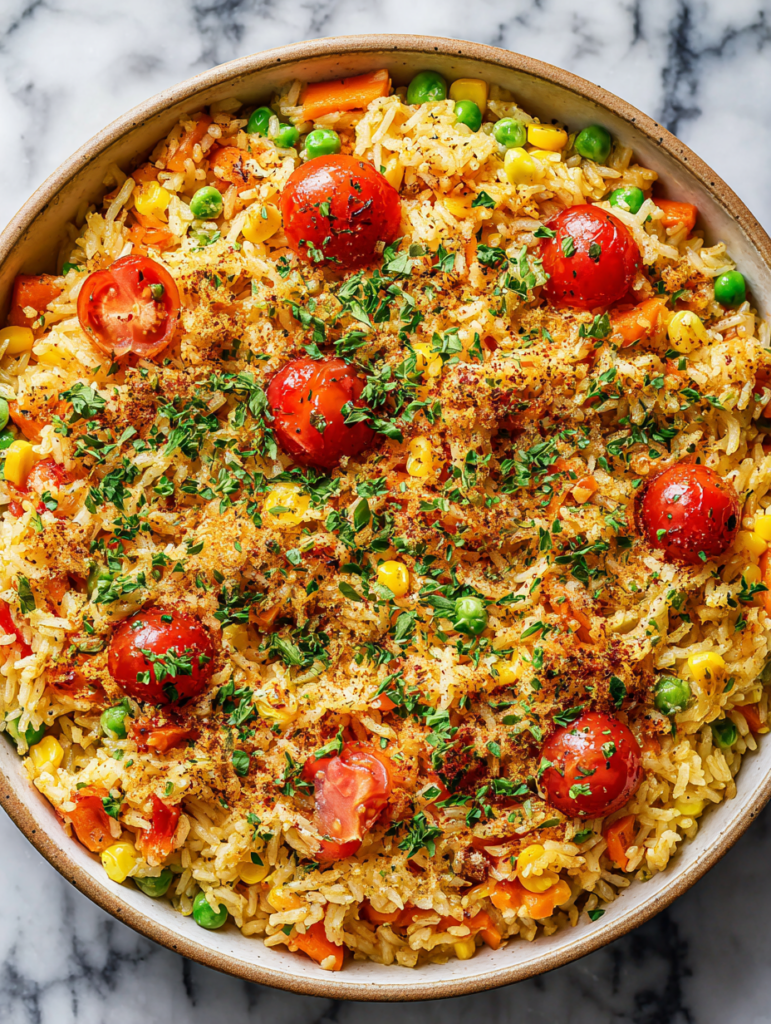
This vegetable rice casserole is my go-to when I need something hearty but don’t want to cook from scratch. It’s about making the most of what’s in the fridge—leftover rice, wilting greens, maybe a stray carrot or two—and turning it into a comforting dish that feels like a warm hug. It’s honest food, quick to pull together, and always satisfying in its simple, unpretentious way.
I’ve found that the real trick is using whatever vegetables are at their peak right now. That burst of freshness and flavor makes every bite feel bright and alive, even if the rest is just pantry staples. It’s a recipe born from chaos, but somehow, it’s exactly what I need after a long day—something nourishing, flexible, and forgiving.
This recipe is about transforming simple leftovers into something comforting and nourishing, especially on busy weeknights when time and energy are limited. I’ve learned to keep a stash of cooked rice and seasonal vegetables in the fridge, so I can toss together this casserole quickly, without fuss. It’s a reminder that a humble, well-seasoned dish can feel like a warm hug after a hectic day.
Turning leftovers into comfort
- This dish always feels like a small victory, turning odds and ends into something warm and real.
- There’s a quiet pride in how a handful of veggies can become the centerpiece of comfort food.
- Sometimes I just need this casserole after a chaotic day—no-fuss, honest, filling.
- It’s funny how a simple recipe can evoke childhood memories of sitting around the table, full and content.
- Every time I make it, I’m reminded that good food doesn’t need to be complicated to be meaningful.
The story behind this recipe
- This vegetable rice casserole was born out of a lazy Sunday afternoon, when I had a fridge full of odds and ends but no big plan. I remember the smell of roasting vegetables mingling with warming spices, a kind of cozy chaos that somehow turned into this dish. It’s a little like making peace with the week’s leftovers and turning them into something comforting without much fuss.
- I often think about how this dish came together when I was trying to use up the last bits of rice and whatever veggies I had left in the crisper. It’s become my fallback for busy nights, a reminder that simple ingredients can be transformed into something hearty with a bit of seasoning and patience. It’s honestly more of a feeling—practical, unpretentious, and unexpectedly satisfying.
- heading: ‘The story behind this recipe’
Historical and Cultural Roots
- This casserole has roots in resourcefulness, common in rural communities where leftovers were a precious commodity.
- It echoes a mid-20th-century era when casseroles became a staple for quick, hearty family meals.
- The use of seasonal vegetables in this dish reflects a time when farmers’ markets dictated what was fresh and available.
- Many versions of this dish have evolved across cultures, each adding local spices or grains, making it a truly adaptable comfort food.
Ingredient breakdown: key components
- Bell peppers: I love their sweet, smoky aroma when roasted; skip if you dislike the crunch, but adding a splash of smoked paprika can mimic that flavor.
- Frozen peas: They add a pop of color and freshness, and their sweet burst when heated is unbeatable—thaw or cook briefly to avoid sogginess.
- Cheddar cheese: I prefer sharp cheddar for a punch of flavor, but a milder cheese can mellow out the dish if you want it less bold.
- Cooked rice: Using day-old rice gives a better texture—if fresh rice is all you’ve got, spread it out to cool before mixing to prevent clumping.
- Olive oil: A drizzle of good-quality oil brings a subtle richness and helps everything meld—don’t skimp, but avoid overpowering the veggies’ natural sweetness.
- Seasonings: I keep it simple with salt, pepper, and a pinch of thyme; feel free to add a dash of cayenne if you want a spicy kick.
- Fresh herbs: Chopped parsley or cilantro brightens the dish at the end—skip if you’re out, but it really lifts the flavors with a fresh, herbal note.
Spotlight on key ingredients
Bell peppers:
- Their sweet, smoky aroma when roasted makes every bite lively; skip or use roasted red pepper for depth.
- During cooking, they soften and release a sugary fragrance, adding a vibrant color and a slight crunch if not overcooked.
Frozen peas:
- They keep their bright green color and burst with sweetness when heated; thaw briefly or add directly to hot ingredients.
- Their small, tender shape pops in your mouth, adding freshness and a hint of sweetness that balances savory flavors.
Notes for ingredient swaps
- Dairy-Free: Swap cheese for nutritional yeast or a dairy-free cheese alternative. It won’t melt as smoothly but adds a cheesy umami boost.
- Gluten-Free: Use certified gluten-free rice and check seasoning blends—most are naturally gluten-free, but always good to confirm.
- Vegetarian: Keep the cheese, or add a bit of smoky paprika or chipotle for a smoky flavor that mimics bacon bits or ham. Adds depth without meat.
- Vegan: Replace cheese with a plant-based cheese or a creamy cashew sauce. The texture will be creamier, and you’ll get a nutty flavor.
- Fresh vs Frozen: Fresh vegetables are crisper and brighter, but frozen veggies are more convenient and still retain good flavor—just adjust cooking time slightly.
- Rice: Use brown rice or wild rice for a nuttier flavor and extra fiber. They’ll take a bit longer to cook and may need more liquid.
- Seasonings: Fresh herbs are brighter, but dried herbs work well if added earlier in cooking. Adjust quantities—use half the amount if dried.
Equipment & Tools
- 9×13 inch baking dish: Holds and bakes the casserole evenly.
- Large skillet: Cook and sauté the vegetables.
- Chef’s knife: Chop vegetables and herbs.
- Cutting board: Provide a stable surface for chopping.
- Measuring cups and spoons: Accurately measure rice, cheese, and seasonings.
- Oven: Bake the casserole to perfection.
- Aluminum foil: Cover the dish during initial baking to prevent drying out.
Step-by-step guide to vegetable rice casserole
- Preheat your oven to 180°C (355°F). Gather a 9×13 inch (23×33 cm) baking dish and a large skillet. Chop vegetables: bell peppers, zucchini, carrots, and onions into bite-sized pieces. Cook 1 cup of rice according to package instructions—preferably using day-old rice for better texture. Have shredded cheese, herbs, and seasonings ready.
- In the skillet, heat 2 tablespoons of olive oil over medium heat (around 160°C/320°F). Add onions and carrots first, sauté for 3-4 minutes until they start softening. Then, stir in bell peppers and zucchini, cook another 5 minutes until vegetables are tender and fragrant. Season with salt, pepper, and a pinch of thyme. Let cool slightly.
- Mix the cooked rice into the skillet with vegetables, stirring to combine. Taste and adjust seasoning if needed. Transfer this mixture into your prepared baking dish, spreading evenly. Sprinkle generously with shredded cheese—about 1-1.5 cups—covering the top well.
- Cover the dish with foil and bake for 20 minutes. Remove foil and continue baking for another 10 minutes until cheese is bubbly and golden. Meanwhile, chop fresh herbs for garnish—parsley or cilantro work well.
- Once out of the oven, let sit for 5 minutes to settle. Garnish with fresh herbs. Serve hot with a side salad or crusty bread for a complete meal. The casserole should be bubbling around the edges, with a cheesy, slightly crispy top and fragrant, roasted vegetables inside.
Let the casserole rest for 5 minutes out of the oven before serving. Garnish with freshly chopped herbs for a bright finish. Slice into squares and serve hot—cheese will be melty and the vegetables tender, with a crispy top that invites you in.
How to Know It’s Done
- Vegetables are tender and fragrant after sautéing.
- Cheese is melted and golden on top, bubbling around the edges.
- Rice is heated through and slightly crisp at the edges if you peek underneath.
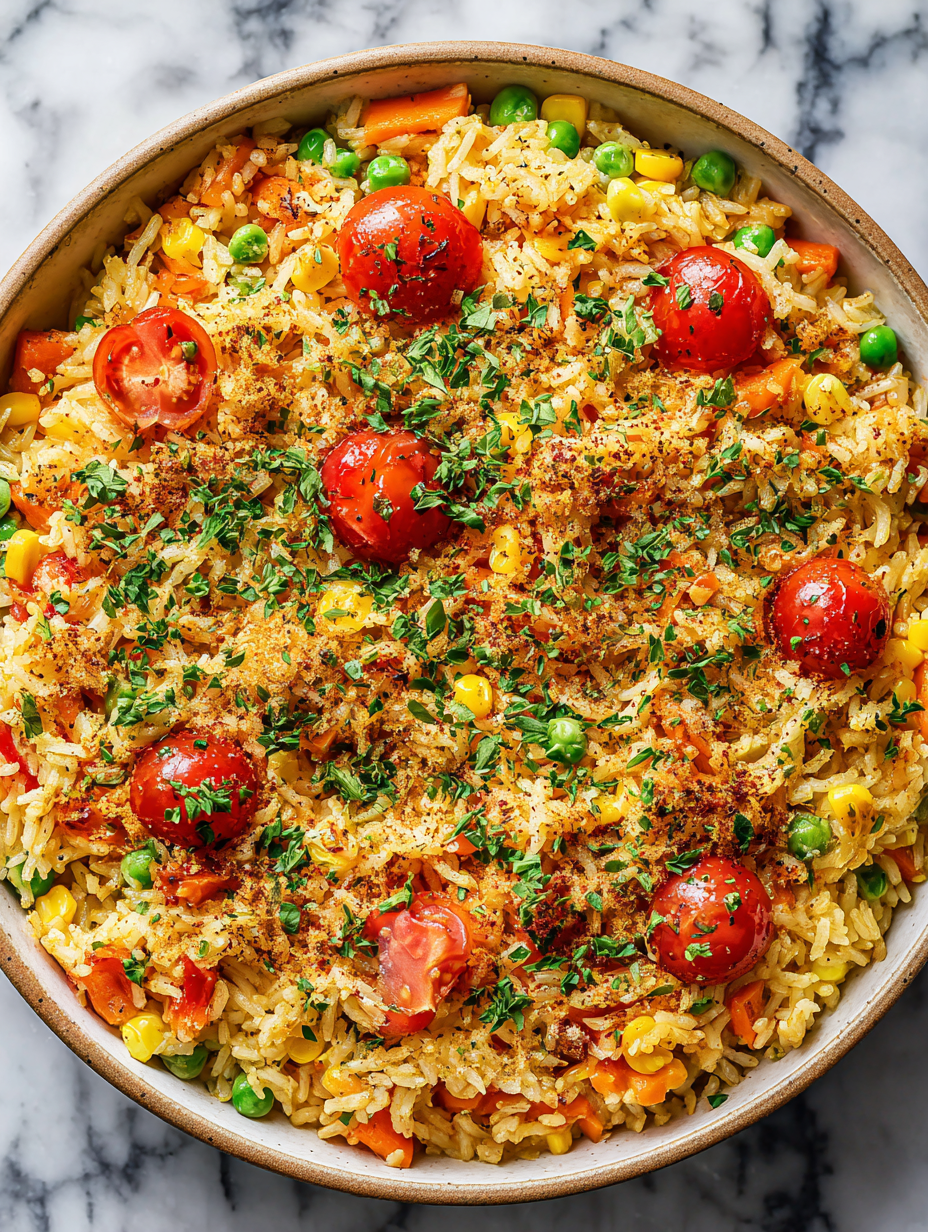
Vegetable Rice Casserole
Ingredients
Equipment
Method
- Preheat your oven to 180°C (355°F). Gather a baking dish and a large skillet. Chop the onion, carrots, bell pepper, and zucchini into bite-sized pieces. Measure out the cooked rice and thaw the peas slightly if frozen.
- Heat 2 tablespoons of olive oil in the skillet over medium heat until it shimmers and begins to sizzle. Add the chopped onion and diced carrots. Sauté for about 3-4 minutes, listening for a gentle sizzle as they soften and become fragrant.
- Add the chopped bell pepper and zucchini to the skillet. Cook for another 5 minutes, stirring occasionally, until the vegetables are tender and fragrant. Season with salt, pepper, and thyme, and cook for another minute to meld the flavors.
- Remove the skillet from heat and stir in the cooked rice and thawed peas. Mix thoroughly to combine all ingredients evenly. Taste and adjust seasoning if needed.
- Transfer the rice and vegetable mixture into your prepared baking dish, spreading it out evenly. Sprinkle the shredded cheddar cheese generously over the top, covering the entire surface.
- Cover the dish with aluminum foil and bake in the oven for 20 minutes. This traps moisture and helps the cheese melt evenly.
- After 20 minutes, remove the foil and continue baking for another 10 minutes, or until the cheese is bubbly and golden brown around the edges. Listen for a bubbling sound and watch for a crispy, browned top.
- Take the casserole out of the oven and let it rest for about 5 minutes. This helps everything settle and makes serving easier.
- Just before serving, sprinkle freshly chopped herbs over the top for brightness and freshness. Serve hot, with a side salad or bread if you like.
Notes
Pro tips for vegetable rice casserole
- Bolded mini-head: Use a hot skillet → Achieve a good sizzle to start softening vegetables quickly.
- Bolded mini-head: Season as you go → Layer flavors by adjusting salt and spices at each step.
- Bolded mini-head: Keep rice dry → Fluff and spread rice out before mixing to prevent clumping.
- Bolded mini-head: Cover while baking → Trap moisture for a tender, cheesy top without drying out.
- Bolded mini-head: Add herbs at the end → Brighten the dish with fresh herbs after baking for maximum flavor.
- Bolded mini-head: Taste before serving → Adjust seasoning right out of the oven for a balanced finish.
- Bolded mini-head: Broil if needed → For a crispy cheese topping, broil for 1-2 minutes, watching closely.
Common mistakes and how to fix them
- FORGOT to preheat oven → Preheat oven before assembling to ensure even cooking.
- DUMPED too much liquid → Drain excess moisture from vegetables to prevent a soggy casserole.
- OVER-TORCHED cheese → Cover with foil if cheese browns too quickly, then remove to finish melting.
- MISSED checking doneness → Use a probe thermometer or check for bubbling cheese and tender vegetables.
Quick Fixes and Pantry Swaps
- When rice is mushy, splash in a little vinegar to brighten the flavor.
- If vegetables are undercooked, patch with a quick sauté before baking again.
- Over-browned cheese? Shield with foil and bake longer for a melty top.
- Forgot to thaw peas? DUMP them into hot water briefly to quick-thaw.
- When sauce shimmers and crackles, it’s ready—rescue with a sprinkle of fresh herbs.
Prep, store, and reheat tips
- Prep the vegetables and cook the rice a day in advance; store in airtight containers in the fridge for up to 24 hours, keeping them cool and dry so flavors stay fresh.
- Assembled casserole can be made a day ahead, covered tightly with foil, and kept in the fridge for up to 24 hours. The flavors meld better overnight, and it’s a real timesaver.
- Refrigerated leftovers are best enjoyed within 3 days. Reheat in the oven at 180°C (355°F) for 15-20 minutes until bubbling and hot, with a fragrant aroma and crispy top.
- For freezer storage, wrap the cooled casserole tightly in plastic wrap and foil. Freeze for up to 2 months. Thaw overnight in the fridge before reheating. Expect a slightly softer texture but still flavorful.
Top questions about vegetable rice casserole
1. Can I use freshly cooked rice?
Use leftover cooked rice for the best texture; fresh rice can turn mushy if overmixed.
2. Can I substitute fresh vegetables?
Frozen mixed vegetables work perfectly; just thaw them slightly to prevent excess moisture.
3. What cheese works best?
Cheddar adds a sharp, savory flavor, but mozzarella or Monterey Jack can make it milder.
4. How do I know it’s done?
Bake until bubbling and cheese is golden, usually about 30 minutes at 180°C (355°F).
5. Can I prepare this ahead?
Yes, simply assemble, cover tightly, and refrigerate up to 24 hours before baking.
6. How do I reheat leftovers?
Reheat in the oven at 180°C (355°F) for 15-20 minutes until steaming and crispy on top.
7. How can I fix bland casserole?
Adjust seasoning by tasting before serving; a pinch more salt or herbs can brighten the dish.
8. Can I make it vegan?
Use olive oil or butter to sauté vegetables for richer flavor and better browning.
9. How can I spice it up?
Add a splash of hot sauce or smoked paprika for extra flavor and smoky notes.
10. What if the cheese burns?
If cheese over-browns, cover with foil partway through baking to prevent burning.
This casserole is a reminder that simple, honest ingredients can come together in a way that feels both nourishing and familiar. It’s perfect for those nights when you want comfort without fuss, especially when vegetables are at their peak and need using up.
In the end, it’s about the little moments—smelling roasted peppers, bubbling cheese, that first bite—that make this dish worth making again and again. It’s not fancy, but it’s honest food that feeds both body and soul in the most straightforward way.

Hi, I’m Anjali Arora — the curious heart behind Feast Chase.
To be honest, I’ve always felt most at ease in my own company. I’m not exactly a people-person (small talk still makes me cringe), but there are two things I’ve always loved deeply: animals and food.