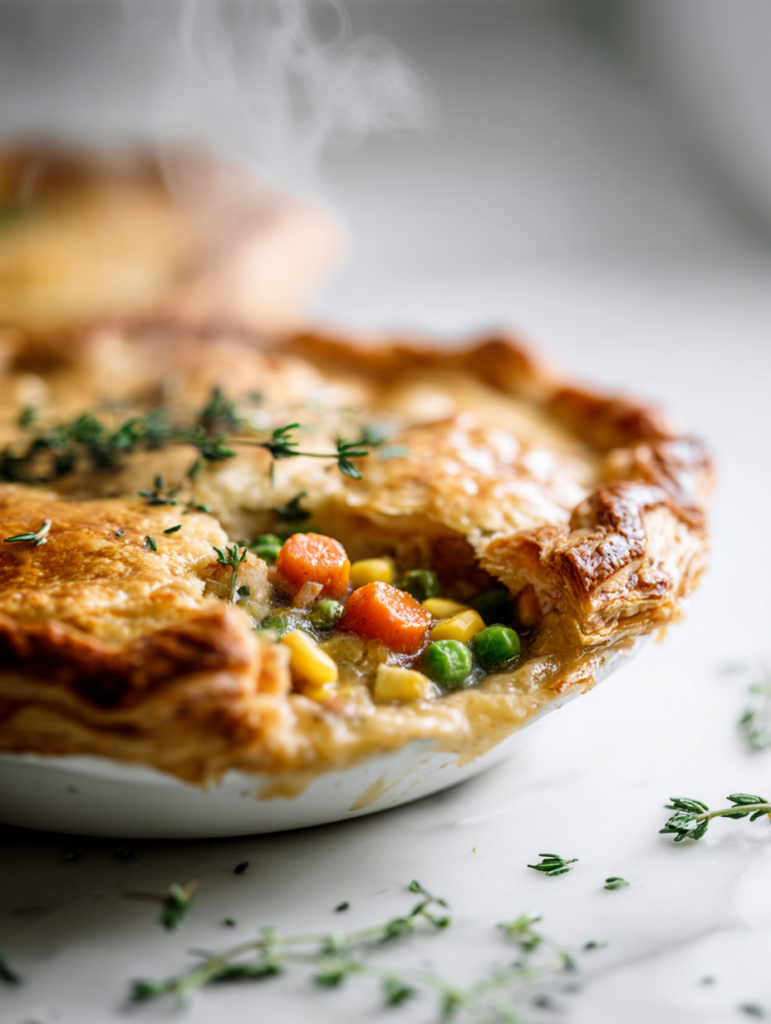
This vegetable pot pie is my go-to when I want something warm and unpretentious. It’s not about perfect crust or fancy ingredients, but about that first bite—crust flaky, filling bursting with earthy vegetables, all wrapped up in a cozy, homemade hug.
I love making it on busy weeknights when I need comfort that doesn’t require hours in the kitchen. It’s a bit rough around the edges, but that’s part of the charm, right? The smell of baked vegetables mingling with buttery pastry always makes the house feel like a little sanctuary.
There’s something honest about this dish. It’s straightforward, filling, and reminds me of family dinners—messy, imperfect, but full of love. Plus, it’s easy to swap in whatever veggies I have on hand, making it a flexible, no-fuss meal that still feels special.
Focusing on a cozy, rustic approach that highlights the homemade, imperfect charm of vegetable pot pie, emphasizing the comforting, nostalgic feel of a dish made with love amidst a busy week.
Rustic Comfort in Every Bite
- Making this dish feels like wrapping myself in a warm blanket after a long day.
- The smell of bubbling vegetables and buttery pastry always takes me back to family dinners.
- I love how forgiving this recipe is—whatever veggies I have turn into something cozy and satisfying.
- There’s a quiet pride in pulling this together from scratch, even if it’s imperfect.
The story behind this recipe
- This recipe was born out of a late-night craving for something hearty but simple, using whatever vegetables I had lingering in the fridge. I wanted a dish that felt like a warm hug after a long day, not fussed with perfect presentation but full of honest flavor. The first time I made it, I was surprised how forgiving and cozy it turned out — like a little piece of comfort I could share with friends or keep for myself.
- Over the years, I’ve tweaked it to include my favorite seasonal veggies and a splash of something smoky or bright, depending on my mood. It’s become my go-to for chilly weekends and busy weeknights when I need something nourishing fast. Its rustic charm reminds me that good food doesn’t have to be complicated — just honest, warm, and made with love.
- heading: ‘The story behind this recipe’
Historical Tidbits
- Vegetable pot pie has roots in European peasant cooking, where hearty, affordable ingredients were baked into comforting pies.
- The concept of encasing vegetables in pastry dates back to medieval times, evolving into the classic dish we enjoy today.
- This dish became popular in early American kitchens as a way to stretch seasonal vegetables into a filling, portable meal.
Ingredient breakdown: key components
- Carrots: I like slicing them thin for a tender bite, but chunky pieces add a rustic feel and more texture—you do you.
- Onions: Sauté until they’re golden and smell sweet—this builds flavor and fills the kitchen with that comforting aroma.
- Vegetables: I prefer a mix of hearty and tender—think peas, mushrooms, and maybe some corn—use what’s seasonal; it’s more flavorful.
- Butter: It’s the secret to flaky, rich pastry, but for a dairy-free version, olive oil gives a slightly different, earthy note.
- Pastry: I make my own, but store-bought works fine—look for a flaky, buttery type that crisps up nicely in the oven and gets golden.
- Herbs: Fresh thyme or rosemary brighten up the filling—if you only have dried, use half as much so it doesn’t overpower.
- Broth: Vegetable broth adds a deep, savory background—swap for water if you’re out, but you’ll lose some richness.
Spotlight on key ingredients
Carrots & Onions:
- Carrots: I like slicing them thin for a tender bite, but chunky pieces add a rustic feel and more texture—you do you.
- Onions: Sauté until they’re golden and smell sweet—this builds flavor and fills the kitchen with that comforting aroma.
Notes for ingredient swaps
- Dairy-Free: Swap butter for olive oil or vegan margarine. The crust will be slightly less flaky but still delicious.
- Gluten-Free: Use a gluten-free pie crust or a mixture of almond and oat flour. Expect a nuttier flavor and a denser texture.
- Vegetable Broth: Replace with mushroom or miso broth for a richer, umami punch that enhances earthy flavors.
- Fresh Herbs: Use dried thyme or rosemary if fresh isn’t available. Use half as much to avoid overpowering the filling.
- Peas & Corn: Frozen works great, but fresh adds a brighter sweetness—try in season for best flavor.
- Mushrooms: Swap for zucchini or eggplant for different textures—softer and milder, but still hearty.
- Pastry: Store-bought puff pastry can work in a pinch—just watch for puffiness and adjust baking time accordingly.
Equipment & Tools
- 9-inch (23 cm) deep-dish pie pan: Holds the assembled pie for baking
- Large skillet: Sautéing vegetables and building flavor
- Sharp knife: Chopping vegetables and pastry trimming
- Rolling pin: Rolling out pastry evenly
- Pastry brush: Egg washing for golden crust
Step-by-step guide to vegetable pot pie
- Equipment & Tools: Prepare a 9-inch (23 cm) deep-dish pie pan for baking, a large skillet for sautéing, a sharp knife for chopping, a rolling pin for pastry, and a pastry brush for egg wash.
- Preheat your oven to 200°C (400°F). Roll out your pastry on a floured surface to about 0.5 cm thick. Line the pie pan, trimming excess edges. Chill in the fridge for 15 minutes.
- In the skillet, melt 2 tbsp (30 ml) butter over medium heat (about 160°C / 320°F). Add 1 diced onion and cook for 5 minutes until translucent and fragrant, stirring occasionally.
- Add 2 cups chopped carrots and 1 cup sliced mushrooms to the skillet. Cook for another 8 minutes, until vegetables are tender and slightly caramelized. Season with salt, pepper, and a pinch of thyme.
- Stir in 1 cup frozen peas and ½ cup corn kernels. Pour in 1 cup vegetable broth and simmer for 5 minutes. Thicken with 1 tbsp cornstarch mixed with cold water if needed. Remove from heat and let cool slightly.
- Transfer the vegetable filling into the chilled pastry-lined pie pan. Spread evenly with a spatula. Cover with a second rolled-out pastry sheet, trim edges, and crimp to seal. Cut a small vent in the center.
- Brush the top crust with beaten egg for a golden finish. Bake on the middle rack for 35–40 minutes, or until crust is deep golden and filling is bubbling.
- Once out of the oven, let rest for 10 minutes to settle. Serve warm, slices holding their shape, with a side of greens or just as is.
Let the pie rest for 10 minutes outside the oven before slicing. Serve directly from the pan or transfer to a plate. The filling will thicken slightly as it cools, making slices neat and manageable.
How to Know It’s Done
- Crust golden and flaky, with even color and no sogginess.
- Filling bubbling around edges and vegetables tender but not mushy.
- Probe temperature of filling reaches at least 75°C (165°F).
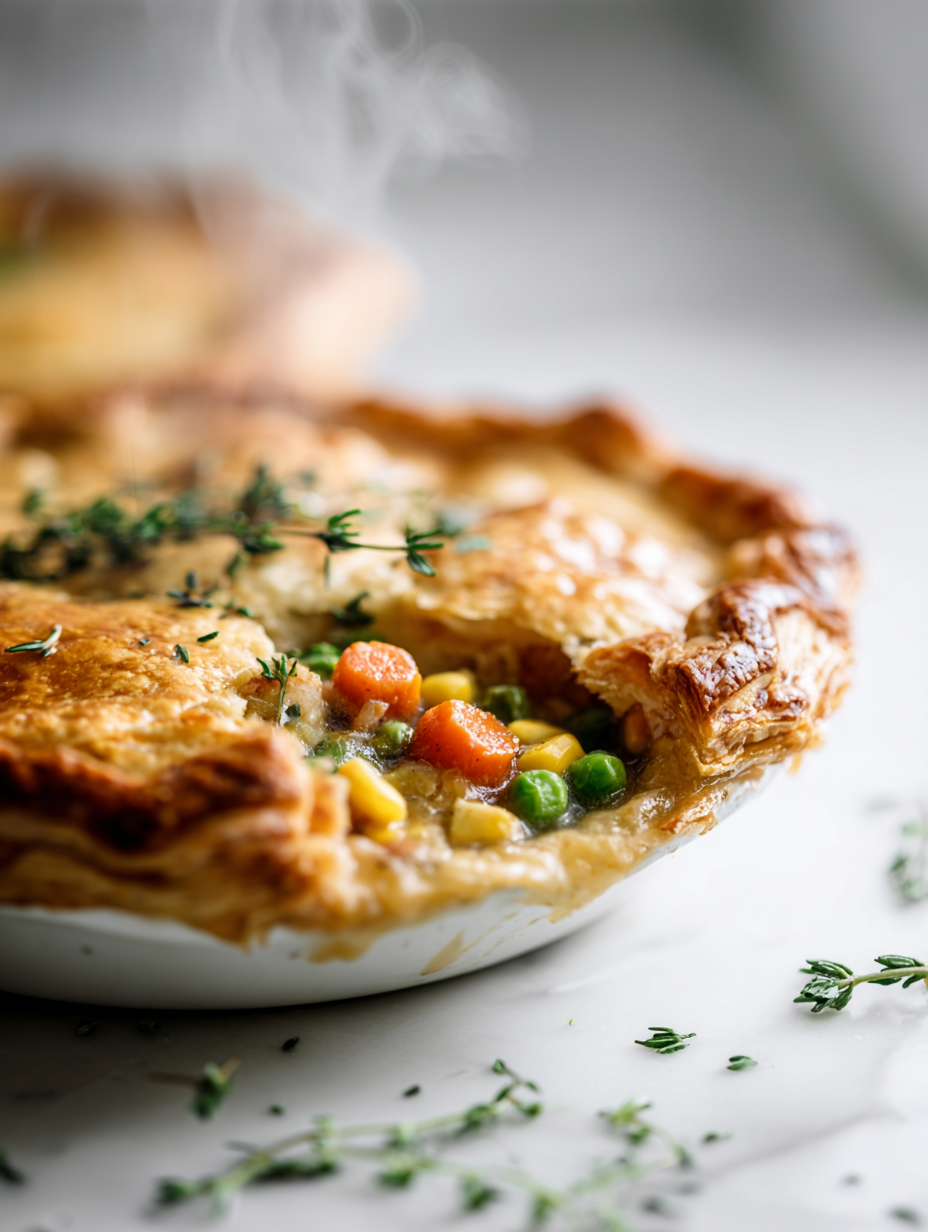
Vegetable Pot Pie
Ingredients
Equipment
Method
- Preheat your oven to 200°C (400°F). Roll out one piece of pastry on a floured surface to about 0.5 cm thick, then gently lay it into a deep-dish pie pan, trimming excess edges. Chill in the fridge for 15 minutes.
- Melt butter in a large skillet over medium heat until it sizzles softly. Add diced onion and sauté for 5 minutes until translucent and fragrant, stirring occasionally.
- Add sliced carrots and mushrooms to the skillet. Cook for about 8 minutes, stirring often, until vegetables are tender and slightly caramelized, filling the kitchen with a savory aroma.
- Stir in frozen peas and corn kernels. Pour in vegetable broth and bring to a gentle simmer for 5 minutes, allowing flavors to meld. If the mixture seems too watery, stir in cornstarch mixed with a little cold water to thicken slightly.
- Transfer the vegetable mixture into the chilled pastry-lined pie pan, spreading it out evenly with a spatula. Roll out a second piece of pastry to cover the filling, then trim and crimp the edges to seal. Cut a small vent in the center to let steam escape.
- Brush the top crust with beaten egg for a glossy, golden finish. Place the pie on the middle rack of the oven and bake for 35–40 minutes, until the crust is deeply golden and bubbling around the edges.
- Remove the pie from the oven and let it rest for at least 10 minutes. This helps the filling set up and makes slicing easier without losing its shape.
- Slice into wedges and serve warm, enjoying the flaky crust and hearty vegetable filling that bubbles invitingly. Pair with a simple green salad if desired.
Pro tips for perfect vegetable pot pie
- Keep your butter cold to ensure flaky, layered pastry—don’t rush to soften it.
- Use a light hand when rolling out pastry—avoid pressing too hard to keep it tender and flaky.
- Sauté vegetables until they just start to caramelize—this deepens their flavor and adds richness.
- Pierce the top crust with a fork or vent with a knife—this prevents steam build-up and crust bursting.
- Brush the crust with egg wash before baking—this gives that irresistible golden, shiny finish.
- Rest the pie for at least 10 minutes after baking—this helps filling set and slices neat.
- Use a sharp knife to serve—clean cuts mean a prettier presentation and fewer crumbles.
Common mistakes and how to fix them
- FORGOT to preheat oven → Always preheat to avoid soggy crusts.
- DUMPED filling too early → Let it cool slightly for a better crust seal.
- OVER-TORCHED crust → Cover edges with foil to prevent burning.
- MISSED vent holes → Pierce top crust to release steam and prevent bursting.
Quick Fixes and Pantry Swaps
- When sauce is too thick, splash in a bit of hot water and stir gently.
- If crust cracks while shaping, patch with a small piece of dough and press gently.
- Splash a bit of lemon juice if filling tastes flat or dull.
- Patch soggy spots on crust with a dab of extra butter and bake a few minutes longer.
- Shield edges with foil if they brown too quickly during baking.
Prep, store, and reheat tips
- You can prepare the vegetable filling a day ahead; store it in an airtight container in the fridge for up to 24 hours. The flavors meld and intensify overnight, making for an even richer taste.
- Assemble the pie (crust and filling) a few hours before baking, cover loosely with plastic wrap, and keep in the refrigerator. The cold helps keep the crust crisp and prevents sogginess.
- Leftover slices can be stored in an airtight container in the fridge for up to 3 days. Reheat in the oven at 180°C (350°F) for about 15 minutes until bubbling and warm—look for that flaky crust and steamy filling.
- For longer storage, freeze the assembled unbaked pie tightly wrapped in foil and plastic wrap for up to 2 months. Thaw overnight in the fridge, then bake as usual, adding 5-10 minutes to baking time. Expect a slightly softer crust after freezing, but still delicious.
Top questions about vegetable pot pie
1. Can I use frozen vegetables?
Use fresh or frozen, but frozen veggies save time and still cook quickly, adding a tender bite.
2. Can I freeze leftovers?
Yes, just thaw and drain excess water before mixing into the filling to prevent sogginess.
3. Can I prepare this in advance?
Pre-cooked filling can be made a day ahead; assemble and bake fresh for the best crust texture.
4. How long should I let it rest?
Use a sharp knife to cut, and let the pie rest for at least 10 minutes for clean slices.
5. How do I get a shiny crust?
Brush crust with egg wash before baking for a shiny, golden appearance and extra crispness.
6. How do I prevent the crust from burning?
Adjust oven racks to avoid crust burning and cover edges with foil if they brown too fast.
7. Can I make it vegan?
For a vegan version, swap butter with olive oil and use plant-based broth. Expect slightly different texture.
8. My filling is too runny, what do I do?
If filling is too watery, stir in a bit of cornstarch or flour to thicken before baking.
9. What vegetables work best?
Use a variety of seasonal vegetables to keep flavors bright and textures interesting each time.
10. Why does my crust burst during baking?
Ensure the top crust is pierced or vented to allow steam to escape, preventing bursting or sogginess.
This vegetable pot pie feels like a warm hug on a chilly day, a reminder that simple, honest ingredients can create real comfort. It’s imperfect, just like life, but that’s part of its charm—crust flaky, filling bursting with earthy flavor, and made with love in every step.
In a world that’s constantly rushing, this dish offers a moment to slow down and enjoy the process. It’s more than just a meal; it’s a little ritual that reconnects me with home, with family, and with the joy of sharing something homemade.

I’m Mayank, the creator, cook, and writer behind this blog. FeastChase is not just a collection of recipes — it’s a journey through tastes, memories, and moments that bring people together at the table.