 Anjali Arora
This vegetable paella is my go-to for when I want something lively and honest, but still simple enough to throw together after a long day. What I love most is how it celebrates what’s in season—bright peppers, tender zucchini, sweet peas—each adding their own splash of flavor and color. It’s a dish that feels like a small celebration, even if you’re just cooking for yourself late on a weeknight.
I started making this version because I was tired of the usual chicken or seafood paella and wanted something that felt more flexible, more forgiving. It’s funny how a bowl of rice and vegetables can suddenly turn into a full, satisfying meal with just a few good ingredients and some patience. Plus, it kind of reminds me that good food doesn’t have to be complicated or fancy to be memorable.
Focusing on how a vibrant mix of seasonal vegetables can transform traditional paella into a celebration of fresh flavors and textures, making it adaptable for any time of year.
Celebrating Seasonal Bounty
- Cooking this dish feels like a small act of rebellion against heavy, meat-centric meals.
- There’s a quiet pride in transforming humble seasonal vegetables into something vibrant and filling.
- It reminds me that simple ingredients, treated well, can create a surprisingly complex flavor profile.
- I love how the smell of saffron and roasted peppers fills the kitchen, making everything feel warmer.
- This recipe always sparks nostalgia for summer evenings spent with friends, sharing a big pan of something colorful.
The story behind this recipe
- Making this vegetable paella was a happy accident one rainy afternoon. I had a fridge full of odds and ends, and instead of letting them go to waste, I threw them into a pan with rice and saffron. The result was surprisingly bright and comforting, like a warm hug in a bowl. It’s become my go-to when I want something nourishing but not heavy.
- This dish reminds me that good food doesn’t need fancy ingredients or long hours. Sometimes, it’s just about using what’s fresh, letting the natural flavors shine, and trusting that simple techniques will do the rest. It’s a reminder to keep it honest, keep it seasonal, and enjoy the process of turning everyday vegetables into something special.
- It’s also a dish that invites improvisation—swap in whatever vegetables are at their peak, and you’re golden. No stress, just a honest celebration of what’s around. That’s why I keep coming back to it—no fuss, no fussiness, just good, vibrant food.
Historical and Cultural Notes
- Vegetable paella has roots in Valencia, Spain, where rice dishes have been a staple for centuries, traditionally made with meats or seafood.
- The shift towards vegetable versions gained momentum during the mid-20th century, reflecting growing vegetarian movements and local seasonal produce.
- Saffron, a key ingredient, was historically so valuable that it was often called ‘red gold,’ influencing the dish’s luxurious reputation.
- In recent years, vegetable paella has become a popular plant-based comfort food, emphasizing sustainability and the beauty of seasonal vegetables.
Vegetable Paella Ingredient Breakdown
- Bell peppers: I love the sweetness and crunch they bring, especially when roasted slightly smoky. Swap with poblano for a milder heat or use cherry peppers for more punch.
- Zucchini: Its tender bite and bright flavor make the dish lively. If you’re out, eggplant slices work well, just cook longer until soft and slightly caramelized.
- Peas: Fresh peas add a burst of sweetness and vibrant color. Frozen peas are a good stand-in, just toss them in at the end so they stay bright and fresh.
- Saffron: The golden hue and aromatic depth it offers are irreplaceable. If you’re in a pinch, smoked paprika can add warmth, though it won’t replicate saffron’s floral note.
- Tomatoes: Juicy and bright, they help build the savory base. Use canned tomatoes in winter for convenience—just drain excess liquid to avoid sogginess.
- Rice: Short-grain rice gives the best texture—plump and tender with a slight chew. Arborio or bomba rice is ideal, but jasmine can work if you prefer a lighter bite.
- Vegetable broth: I prefer homemade or a rich store-bought version, which makes every spoonful deeply flavorful. Use water with a splash of soy or miso if broth isn’t available.
Spotlight on key ingredients
Bell peppers and zucchini:
- Bell peppers: I love how they bring a sweet, smoky crunch when roasted. Use poblano for milder heat or cherry peppers for extra punch.
- Zucchini: Its tender, bright flavor adds freshness. If out, try eggplant slices—soft and caramelized after longer cooking.
Notes for ingredient swaps
- Dairy-Free: Use coconut milk instead of creamy sauces for richness, though it’ll add a subtle sweetness. Almond or soy milk can also work for a lighter touch.
- Gluten-Free: Ensure your broth and spices are certified gluten-free. Most rice varieties are naturally gluten-free, but double-check labels if sensitive.
- Low-Sodium: Opt for low-sodium broth and skip added salt to keep the dish gentle on salt levels, then season to taste at the end.
- Vegan: Replace any cheese or animal-based broths with plant-based options. Nutritional yeast can add a cheesy depth without dairy.
- Nut Allergies: Avoid nut-based oils or toppings. Stick to olive oil and fresh herbs to keep it safe and bright.
- Fresh Herbs: If you don’t have fresh, use dried herbs but reduce the quantity—dried is more concentrated, so a teaspoon is enough.
- Vegetables: Swap in seasonal or leftover vegetables you have—carrots, mushrooms, or even kale can add unexpected layers of flavor.
Equipment & Tools
- Wide paella pan: Ensures even heat and proper rice distribution.
- Wooden spoon: Stirs ingredients without damaging the pan surface.
- Measuring cups and spoons: Accurate ingredient portioning.
- Ladle or small pot: For adding hot broth gradually.
- Lid or clean towel: Resting the paella to finish cooking and develop flavors.
Step-by-step guide to vegetable paella
- Gather all your ingredients. Use a wide, shallow paella pan for even heat distribution.
- Heat 2 tbsp olive oil over medium heat (about 160°C/320°F). Add chopped onions and garlic; sauté for 5 minutes until translucent and fragrant.
- Stir in diced bell peppers and zucchini. Cook for another 5-7 minutes, stirring occasionally, until vegetables start to soften and smell sweet.
- Add 1½ cups short-grain rice, stirring to coat each grain in oil and veggies. Toast for 2 minutes until slightly translucent at the edges.
- Pour in 3 cups vegetable broth, infused with saffron threads (a pinch). Bring to a gentle simmer, then lower heat to medium-low (about 130°C/265°F).
- Arrange the vegetables evenly, avoiding overcrowding the pan. Do not stir after this point to develop a crust at the bottom.
- Cook uncovered for 15 minutes. Check if rice is tender and liquid is mostly absorbed. If not, cook for another 5 minutes, adding a splash more broth if needed.
- Add frozen peas and chopped tomatoes in the last 3 minutes. They should heat through but retain their brightness.
- Once the rice is tender and the bottom has formed a golden crust (socarrat), remove from heat. Cover loosely with a clean towel and let rest for 5 minutes.
- Serve directly from the pan, garnished with fresh herbs if desired. The rice should be plump, with a slight smoky aroma and a crispy bottom.
Once off heat, cover the pan with a clean towel and let rest for 5 minutes. This allows flavors to meld and the socarrat to settle. Serve directly from the pan, garnished with fresh herbs if you like. The texture should be tender rice with a crispy bottom and vibrant vegetables.
How to Know It’s Done
- Check rice tenderness; it should be soft but not mushy.
- Look for a golden crust at the bottom of the pan (socarrat).
- Vegetables should be tender but still vibrant, not overcooked or mushy.
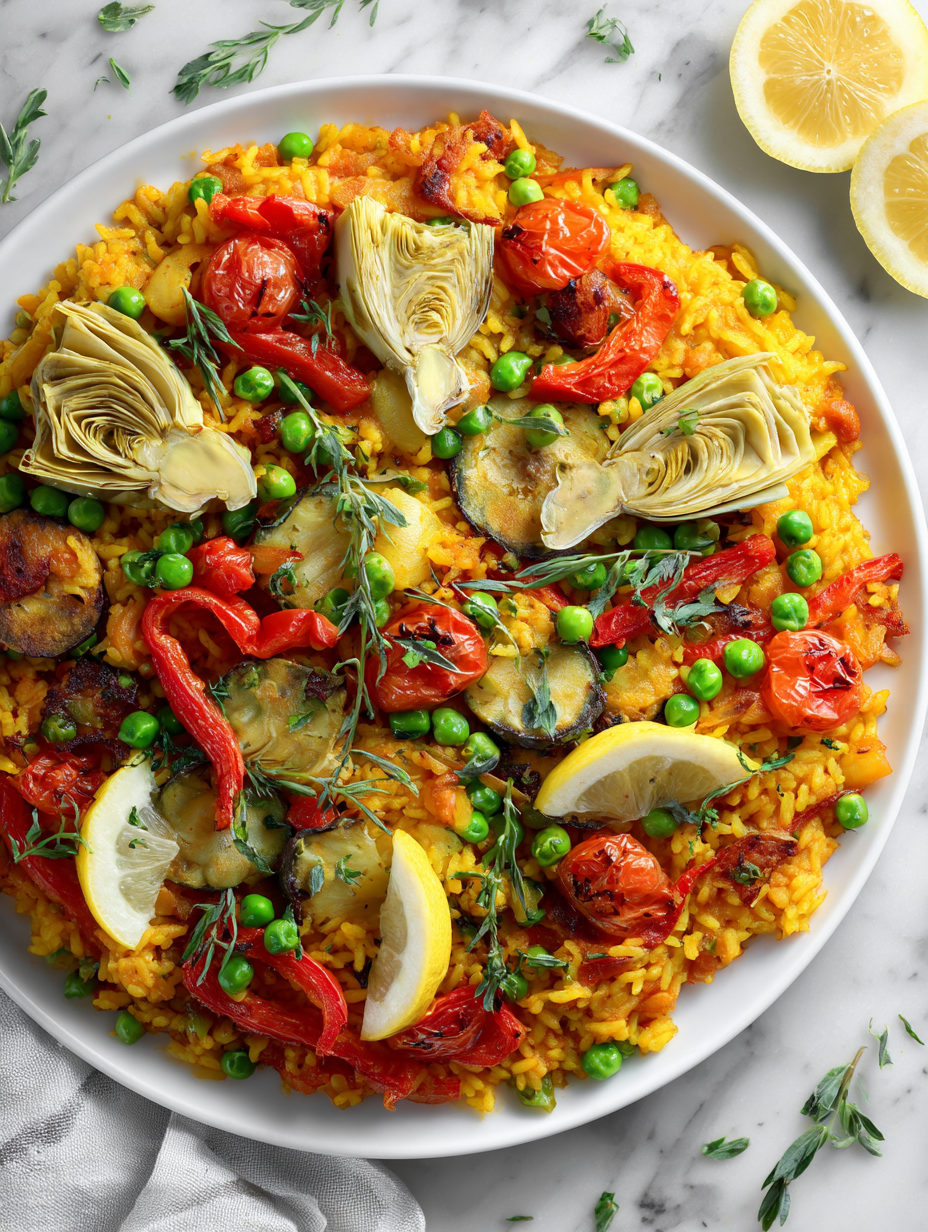
Vegetable Paella
Ingredients
Equipment
Method
- Heat olive oil in a wide paella pan over medium heat until shimmering. Add the chopped onion and minced garlic, sautéing for about 5 minutes until the onion becomes translucent and fragrant.
- Add the diced bell pepper and sliced zucchini to the pan. Cook for another 7 minutes, stirring occasionally, until the vegetables soften and start to develop some color.
- Stir in the short-grain rice, coating each grain with the oil and vegetables. Toast the rice for about 2 minutes until it becomes slightly translucent and releases a nutty aroma.
- Pour in the warm vegetable broth infused with saffron threads, stirring gently to distribute the rice evenly. Bring the mixture to a gentle simmer, then lower the heat to medium-low.
- Arrange the halved cherry tomatoes evenly on top of the rice. Do not stir after this point to help develop the socarrat, the crispy bottom crust.
- Allow the paella to cook uncovered for about 15 minutes, maintaining a gentle simmer. Check that the rice is tender and most of the liquid is absorbed, adding a splash more broth if necessary.
- After the liquid is mostly absorbed and the rice is tender, sprinkle the thawed peas evenly over the top. Cook for an additional 3 minutes to heat through.
- Once the rice has a golden crust at the bottom (socarrat) and the vegetables are vibrant, remove the pan from heat. Cover loosely with a clean towel and let rest for 5 minutes to allow flavors to meld.
- Uncover the pan, give it a gentle stir, and serve straight from the pan. Enjoy the fragrant, colorful dish with a crispy bottom and tender vegetables.
Notes
Tips & Tricks for Perfect Paella
- Bolded Mini-Head: Use a wide pan → Ensures even heat and better rice crust formation.
- Bolded Mini-Head: Toast the rice briefly → Releases nutty aroma and prevents sticking.
- Bolded Mini-Head: Add broth gradually → Keeps rice from boiling over and promotes a tender texture.
- Bolded Mini-Head: Crank up heat at the end → Develops the coveted socarrat—the crispy bottom layer.
- Bolded Mini-Head: Rest before serving → Resting helps flavors meld and prevents the rice from being mushy.
- Bolded Mini-Head: Keep vegetables vibrant → Add delicate veggies near the end to preserve color and texture.
- Bolded Mini-Head: Adjust seasoning last → Tastes can change as ingredients meld, so season at the end.
Common mistakes and how to fix them
- USED TOO MUCH OIL: Keep it moderate to avoid greasy paella, about 2 tbsp is enough.
- SKIPPED THE REST: Resting is crucial; don’t skip the 5-minute pause for flavor development.
- OVERCOOKED VEGETABLES: Watch for tenderness; vegetables should be vibrant, not mushy.
- MISSED SOCCARAT: If bottom isn’t crispy, increase heat slightly at the end and listen for crackle.
Quick Fixes for Vegetable Paella
- If the rice isn’t tender, add a splash more broth and cook a few minutes longer.
- When the socarrat isn’t forming, increase heat slightly and listen for crackling at the bottom.
- Splash a little lemon juice or vinegar if the dish tastes flat or dull.
- Patch over dried-out spots with a drizzle of olive oil and cover to steam for 5 minutes.
- Shield burning spots by removing the pan from heat immediately and adding a bit of cold broth.
Prep, store, and reheat tips
- Prep vegetables like peppers, zucchini, and tomatoes a day in advance; store in airtight containers in the fridge to keep them fresh and vibrant. The flavors will deepen overnight.
- Cook and cool the rice ahead of time; store in a sealed container in the fridge for up to 24 hours. Reheat gently to avoid mushiness, adding a splash of broth to refresh texture.
- Saffron-infused broth can be made ahead and kept refrigerated for 2-3 days or frozen for up to a month. Warm gently before using to release full aroma and flavor.
- Reheating leftover paella: warm in a skillet over medium heat, covered, until steaming hot. The rice may lose some crispness, but the flavors will still shine through. Add a little more broth if it feels dry.
- For best sensory results, serve within 24 hours of reheating. The vegetables may soften slightly, but the dish will retain its bright, savory character.
Top questions about vegetable paella
1. Why use a wide pan for paella?
Use a wide, shallow pan to get that good socarrat and even cooking. It helps the rice toast slightly at the bottom, adding texture.
2. Can I use frozen peas instead of fresh?
Frozen peas work perfectly—just toss them in during the last few minutes to keep their bright color and sweetness.
3. Can I skip saffron or use a substitute?
Saffron is key for flavor and color. If you’re out, smoked paprika adds a smoky warmth but won’t replicate saffron’s floral aroma.
4. How do I add broth without ruining the texture?
Add broth gradually, about half a cup at a time, so the rice cooks evenly without boiling over or becoming mushy.
5. Why rest the paella before serving?
Rest the paella off heat under a towel for 5 minutes. This helps the flavors meld and the socarrat to form nicely.
6. What type of rice is best for paella?
Use short-grain rice like bomba or Arborio for the best plump, tender texture with a slight chew. Long grain won’t absorb flavors as well.
7. When should I add the quick-cooking vegetables?
To keep ingredients vibrant, add delicate vegetables like peas and tomatoes near the end of cooking so they don’t overcook.
8. How do I get a crispy socarrat?
If the bottom isn’t crispy enough, turn up the heat at the end and listen for crackling—that’s the socarrat forming.
9. How should I store and reheat leftover paella?
Leftovers can be stored in the fridge for up to 24 hours. Reheat gently in a skillet with a splash of broth to revive the texture.
10. What if my rice isn’t tender enough?
If your rice is too firm, add a bit more warm broth and cook a few more minutes, covered, until tender.
This vegetable paella is more than just a meal; it’s a way to celebrate the seasonal bounty and the simple pleasure of good, honest cooking. Every bite carries the aroma of saffron and roasted peppers, a reminder of how humble ingredients can create something truly satisfying. It’s a dish that invites you to slow down and enjoy the process, even on busy nights.
In the end, what matters most is that this dish feels like a little victory—something vibrant, nourishing, and made with care. It’s perfect for sharing with loved ones or enjoying solo, knowing that each spoonful is a small reminder to keep things honest and seasonal. And honestly, it’s the kind of meal I keep coming back to—simple, flavorful, and full of life.
Hi, I’m Anjali Arora — the curious heart behind Feast Chase.
To be honest, I’ve always felt most at ease in my own company. I’m not exactly a people-person (small talk still makes me cringe), but there are two things I’ve always loved deeply: animals and food.