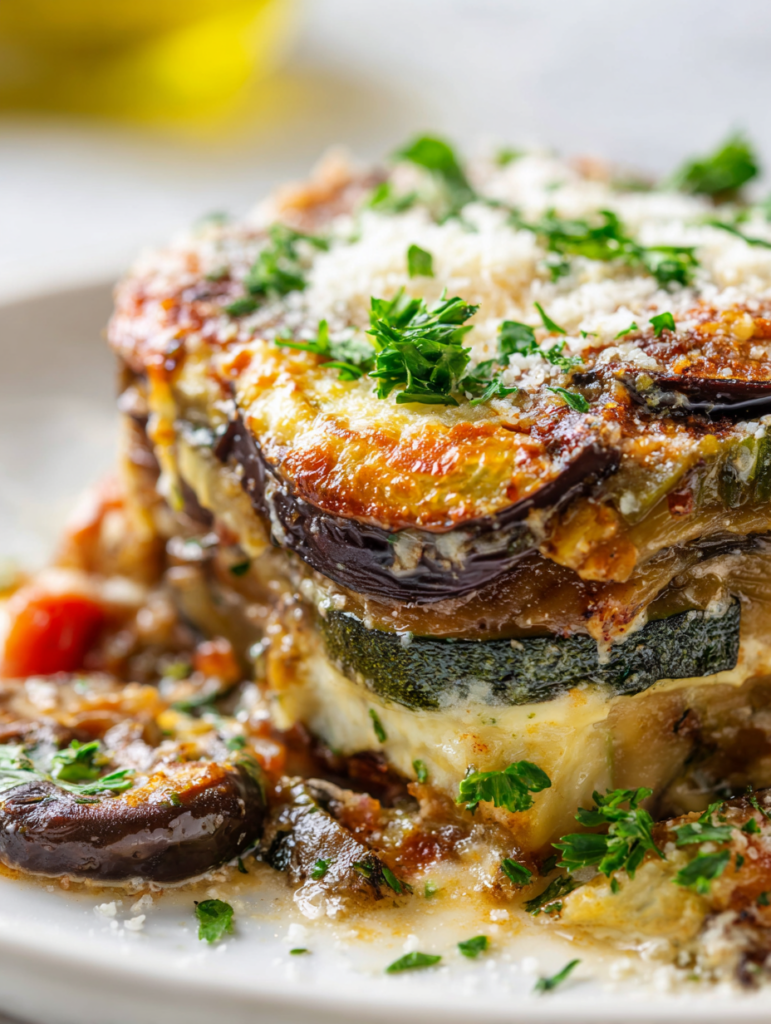
Vegetable moussaka often gets overlooked as a vegetarian main, but it’s a surprisingly hearty dish that can stand up to any meat-heavy plate. The smoky roasted eggplant, tender zucchini, and rich tomato sauce come together in layers that feel almost decadent, even without the beef or lamb traditionally used. It’s a comfort food that surprises with its depth of flavor and satisfying texture.
When I first started making this dish, I was after something that felt indulgent but still light enough for weeknights. I love how the roasted vegetables soak up the spicy tomato, and the creamy béchamel on top adds just the right richness. It’s a dish that feels like a warm hug, but with a bit of a smoky, savory edge that keeps it interesting. No one misses the meat—just good, honest vegetables that take center stage.
Focusing on how vegetable moussaka can be a hearty, comforting dish that even meat-eaters won’t miss, emphasizing its rich layers and smoky flavors.
Rediscovering Comfort in Vegetables
- Making this dish reminds me of my grandmother’s kitchen, where smoky eggplant and spiced tomato were staples, filling the house with warmth.
- I love how vegetable moussaka feels like a cozy rebellion—piling layers of tender veggies and creamy sauce, all in one baking dish.
- There’s a quiet pride in serving up this hearty, veggie-forward meal that surprises even my most skeptical friends.
The story behind this recipe
- This vegetable moussaka came from a summer trip to Greece that turned into a culinary revelation. I was struck by how simply roasted vegetables could be layered with spices and baked into something so hearty and comforting, yet so fresh and vibrant. It made me rethink what a main course could be—vegetables as the star, not just side dishes.
- Back home, I started experimenting with my own twist—adding smoky eggplant, tender zucchini, and a tangy tomato sauce. The real magic happened when I topped it with a creamy béchamel, which brought everything together in a rich, golden crust. Now, it’s my go-to for cozy dinners that feel special but are straightforward enough for a weeknight.
- heading: Rediscovering Comfort in Vegetables
Historical & Cultural Insights
- Vegetable moussaka is thought to have originated in Greece, where the layered baking style is a traditional comfort food.
- Historically, moussaka was a meat-based dish, but regional adaptations led to many vegetarian versions, especially in modern times.
- The smoky roasted eggplant, a key component, was likely introduced as a way to deepen flavor in an era before easily available spices.
- In Greece, moussaka symbolizes family gatherings and seasonal festivities, often made with local vegetables at their peak.
Ingredient breakdown: key components
- Eggplant: I love how the smoky flesh turns silky after roasting, adding depth—skip the salt and let it char for that irresistible flavor.
- Zucchini: Tender and juicy when cooked just right, but if it gets mushy, lower the oven temperature or cook for less time.
- Tomato sauce: Bright and tangy, I use canned crushed tomatoes with a splash of red wine; if too thin, simmer to thicken and concentrate the flavor.
- Béchamel: Creamy and rich, I prefer using whole milk for depth, but a splash of nutmeg really lifts it—don’t skip that.
- Herbs & spices: Oregano, cinnamon, and a pinch of allspice—these make the layers fragrant and complex, so don’t skimp on the cinnamon—it’s the secret.
- Olive oil: The foundation for roasting, I opt for a good extra virgin—imparts a fruity aroma that’s unmistakable and essential.
- Cheese (optional topping): A sprinkle of Parmesan or kefalotyri adds a salty crunch—if you want it dairy-free, skip cheese or try nutritional yeast for umami.
Spotlight on key ingredients
Eggplant:
- I love how the smoky flesh turns silky after roasting, adding depth—skip the salt and let it char for that irresistible flavor.
- Zucchini: Tender and juicy when cooked just right, but if it gets mushy, lower the oven temperature or cook for less time.
Tomatoes & Béchamel:
- Tomato sauce: Bright and tangy, I use canned crushed tomatoes with a splash of red wine; if too thin, simmer to thicken and concentrate the flavor.
- Béchamel: Creamy and rich, I prefer using whole milk for depth, but a splash of nutmeg really lifts it—don’t skip that.
Notes for ingredient swaps
- Dairy-Free: Use coconut milk or cashew cream instead of béchamel for a rich, dairy-free sauce that still offers creamy comfort.
- Vegan: Swap eggs in the béchamel with a plant-based milk and a tablespoon of flour or cornstarch to thicken.
- Low-Sodium: Opt for no-salt-added canned tomatoes and reduce added salt; enrich flavor with herbs and lemon zest.
- Gluten-Free: Replace all-purpose flour in béchamel with rice flour or gluten-free all-purpose blend for a smooth, thick sauce.
- Soy-Free: Use olive oil instead of butter in béchamel and ensure seasoning is free of soy-based ingredients.
- Extra Smoky: Add smoked paprika or a dash of chipotle powder to the tomato sauce to enhance the smoky vibe.
- Herb Variations: Swap oregano for thyme or basil depending on your preference, or add fresh parsley on top before serving.
Equipment & Tools
- Baking dish: To layer and bake the moussaka evenly.
- Sharp knife: For slicing vegetables precisely.
- Saucepan: To cook the tomato sauce and béchamel.
- Spoon: For layering sauces and spreading béchamel.
- Pastry brush: To lightly oil vegetables before roasting.
Step-by-step guide to vegetable moussaka
- Equipment & Tools: Line a large baking dish with parchment; use a sharp knife for slicing; have a pastry brush ready for oil; a small saucepan for béchamel; a spoon for layering.
- Roast Vegetables: Preheat oven to 200°C (390°F). Slice eggplant and zucchini about 1 cm thick. Toss with olive oil, salt, and pepper. Roast on a baking sheet for 25-30 minutes until tender and slightly charred, flipping halfway. The smoky aroma should fill your kitchen.
- Make Tomato Sauce: In a saucepan, heat a tablespoon of olive oil over medium heat. Add chopped onion and garlic; cook until translucent, about 5 minutes. Stir in crushed tomatoes, a pinch of cinnamon, oregano, and a splash of red wine. Simmer for 15 minutes until thickened. It should smell bright and spiced.
- Prepare Béchamel: In a small saucepan, melt butter over low heat. Whisk in flour, cook for 1-2 minutes until bubbly. Gradually add warm milk, whisking constantly. Add a pinch of nutmeg and salt. Cook on low, stirring, until thick enough to coat the back of a spoon, about 8 minutes. The sauce should be smooth and creamy.
- Assemble Layers: Spread a thin layer of tomato sauce in the dish. Layer roasted eggplant slices, then zucchini, then more sauce. Repeat until ingredients are used, ending with a layer of vegetables. Top with béchamel, smoothing it out with a spoon. The layered stack should look inviting and colorful.
- Bake the Moussaka: Place in the oven, bake at 180°C (355°F) for 35-40 minutes until the top is golden and bubbling. The béchamel should be set and slightly crispy at the edges. The smell of roasted vegetables and baked cheese will fill the air.
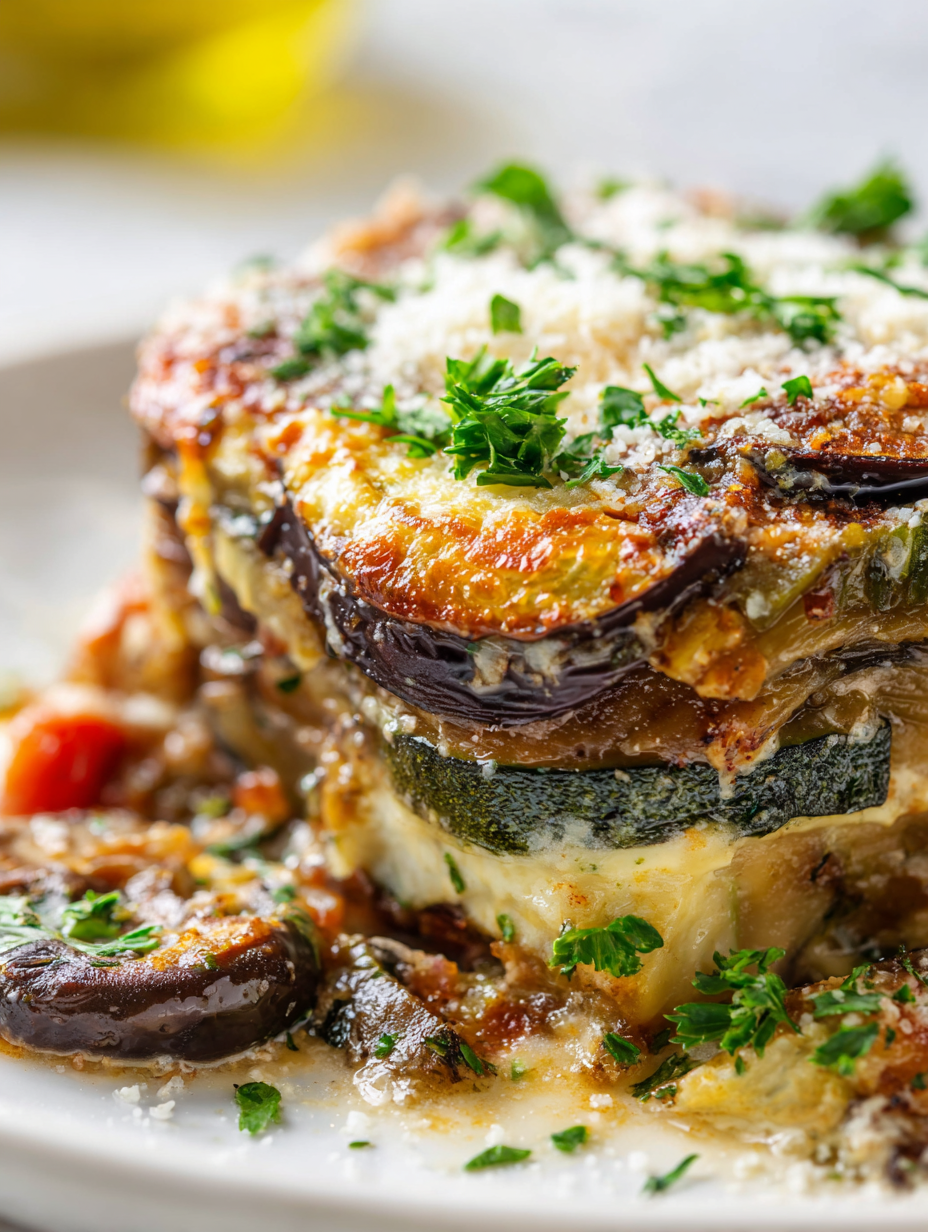
- Rest & Serve: Allow the dish to rest 10 minutes before slicing. Resting helps the layers set, making it easier to serve neat slices. Garnish with fresh herbs if desired. The final look should be a golden crust with rich layers of veggies and sauce.
Let the moussaka rest for 10 minutes after baking. This allows the layers to set, making slices neater. Serve warm, perhaps with a simple green salad or crusty bread. The crust should be crisp, and the inside rich and tender.
How to Know It’s Done
- Eggplant and zucchini are tender and slightly caramelized, with smoky aroma.
- Tomato sauce is thickened and fragrant, with a balanced spiced scent.
- Béchamel is smooth, creamy, and coats the back of a spoon, with a faint nutmeg aroma.
Vegetable Moussaka
Ingredients
Equipment
Method
- Preheat your oven to 200°C (390°F). Line a baking sheet with parchment paper. Slice the eggplant and zucchini into 1 cm thick rounds. Brush them lightly with olive oil and sprinkle with salt and pepper. Roast in the oven for 25-30 minutes until golden and slightly charred, flipping halfway through. The smoky aroma should fill your kitchen as they caramelize.
- While the vegetables roast, heat a tablespoon of olive oil in a saucepan over medium heat. Add the chopped onion and cook until translucent and fragrant, about 5 minutes. Stir in the minced garlic and cook for another minute until aromatic.
- Add the crushed tomatoes and splash in the red wine if using. Stir in a pinch of salt, pepper, and a dash of cinnamon or oregano if desired. Let the sauce simmer gently for about 15 minutes until thickened and fragrant, stirring occasionally. It should turn a vibrant red and smell warmly spiced.
- In a separate small saucepan, melt the butter over low heat. Whisk in the flour and cook for 1-2 minutes, until bubbly and slightly golden. Gradually pour in the warm milk, whisking constantly to avoid lumps. Add the ground nutmeg, salt, and pepper.
- Continue cooking and whisking until the sauce thickens enough to coat the back of a spoon, about 8 minutes. Remove from heat and set aside. The béchamel should be smooth, creamy, and slightly thickened.
- Once the vegetables are roasted and cooled slightly, start assembling the moussaka. Spread a thin layer of tomato sauce at the bottom of your baking dish. Layer roasted eggplant slices over the sauce, followed by a layer of zucchini. Repeat the layers, finishing with a top layer of vegetables.
- Pour the creamy béchamel evenly over the layered vegetables, smoothing it out with the back of a spoon to cover all surfaces. This will create a luscious, golden crust once baked.
- Bake the assembled moussaka in the preheated oven at 180°C (355°F) for 35-40 minutes until the top is bubbling and golden brown. The aroma of baked cheese and roasted vegetables will fill your kitchen, signaling that it's ready.
- Remove from the oven and let it rest for at least 10 minutes. This helps the layers set and makes slicing easier, resulting in neat, beautiful portions.
- Garnish with fresh herbs like parsley if desired, then serve warm. Enjoy the rich layers of smoky vegetables topped with creamy béchamel and a crispy crust for a comforting, veggie-packed meal.
Pro tips for vegetable moussaka
- Bolded mini-head: Use a hot pan for roasting vegetables—aim for caramelization that adds smoky depth.
- Bolded mini-head: Salt eggplant generously before roasting—this draws out bitterness and enhances flavor.
- Bolded mini-head: Layer vegetables while still warm—this helps them meld together better during baking.
- Bolded mini-head: Keep béchamel slightly thick—if too runny, cook a few extra minutes until it coats a spoon.
- Bolded mini-head: Rest the moussaka for at least 10 minutes—this helps the layers set for cleaner slices.
- Bolded mini-head: Broil for a minute at the end—watch closely for a golden, bubbly crust without burning.
- Bolded mini-head: Use a wide spatula to serve—this prevents breaking the delicate layers when plating.
Common mistakes and how to fix them
- FORGOT to adjust oven temperature → keep an eye on browning, lower temp if burning.
- DUMPED too much salt in sauce → balance with a splash of lemon juice or a pinch of sugar.
- OVER-TORCHED the béchamel top → cover with foil if it starts to darken too quickly.
- MISTAKENLY layered vegetables unevenly → distribute evenly for consistent baking and presentation.
Quick fixes and pantry swaps
- When sauce is too thin → splash in a little tomato paste and simmer until thick.
- If vegetables are undercooked → return to oven for a few extra minutes, checking for color and softness.
- Splash extra virgin olive oil before roasting → adds smoky aroma and prevents sticking.
- Patch burnt béchamel with a dollop of fresh cream or milk, then whisk vigorously to smooth.
- Shield the top with foil if it over-browns during baking → preserves the creamy crust.
Prep, store, and reheat tips
- Prep the roasted vegetables and tomato sauce a day in advance; store in airtight containers in the fridge for up to 2 days. The smoky aroma deepens overnight.
- Assemble the layers a few hours before baking, cover with plastic wrap, and refrigerate. The flavors meld and the dish becomes more cohesive.
- Reheat leftovers gently in the oven at 160°C (320°F) for 20-25 minutes until heated through, with the top bubbling and slightly crisp.
- The baked moussaka keeps well in the fridge for 3-4 days. For longer storage, freeze portions wrapped tightly—defrost in fridge overnight before reheating.
- Reheated moussaka develops a richer, more concentrated flavor, but the texture may soften; the top might lose some crispness. Reheat until hot and the aroma is inviting.
Top questions about vegetable moussaka
1. How do I pick the best eggplant?
Look for firm eggplants with shiny skin. If it feels soft or dull, it might be past its prime.
2. Should I cook the vegetables before layering?
Roasting the vegetables until slightly charred adds a smoky flavor that deepens the dish’s richness.
3. Can I use fresh tomatoes instead of canned?
Use canned crushed tomatoes for convenience; fresh tomatoes work too if you prefer a brighter, more vibrant sauce.
4. How long should I let it rest before serving?
Allow the moussaka to rest for at least 10 minutes after baking. It helps the layers set and makes slicing neater.
5. Can I use other vegetables instead of zucchini?
You can substitute zucchini with yellow squash or bell peppers for variation, but be mindful of cooking times.
6. How do I make this dairy-free?
For a dairy-free version, swap béchamel with a thick coconut milk sauce or cashew cream, which still feels rich.
7. What’s the best way to tell when it’s done?
Bake at 180°C (355°F) until the top is golden and bubbling, usually about 35-40 minutes. The crust should be crisp and the filling hot.
8. How do I serve neat slices?
Use a wide spatula to serve, ensuring clean slices without breaking the layers apart.
9. Can I reheat leftovers?
Reheat in the oven at 160°C (320°F) for 20 minutes, until hot and the top is slightly crisp again.
10. How do I fix a burnt top?
If the top starts to over-brown, loosely cover with foil to prevent burning while the inside heats through.
Making this vegetable moussaka felt like reconnecting with a childhood memory of smoky, roasted vegetables filling the kitchen. It’s a dish that’s simple but layered, with flavors that deepen overnight and textures that hold just right. Sometimes, the best comfort food is just a hearty, veggie-packed bake that makes you pause and appreciate the humble ingredient.
If you give it a try, I think you’ll find it’s more than just a vegetarian option—it’s a satisfying, soulful meal that can stand proudly on any table. No fuss, just good ingredients and a little patience. It’s a dish that feels like a quiet celebration of vegetables, layered into something unexpectedly rich and memorable.

I’m Mayank, the creator, cook, and writer behind this blog. FeastChase is not just a collection of recipes — it’s a journey through tastes, memories, and moments that bring people together at the table.