 Anjali Arora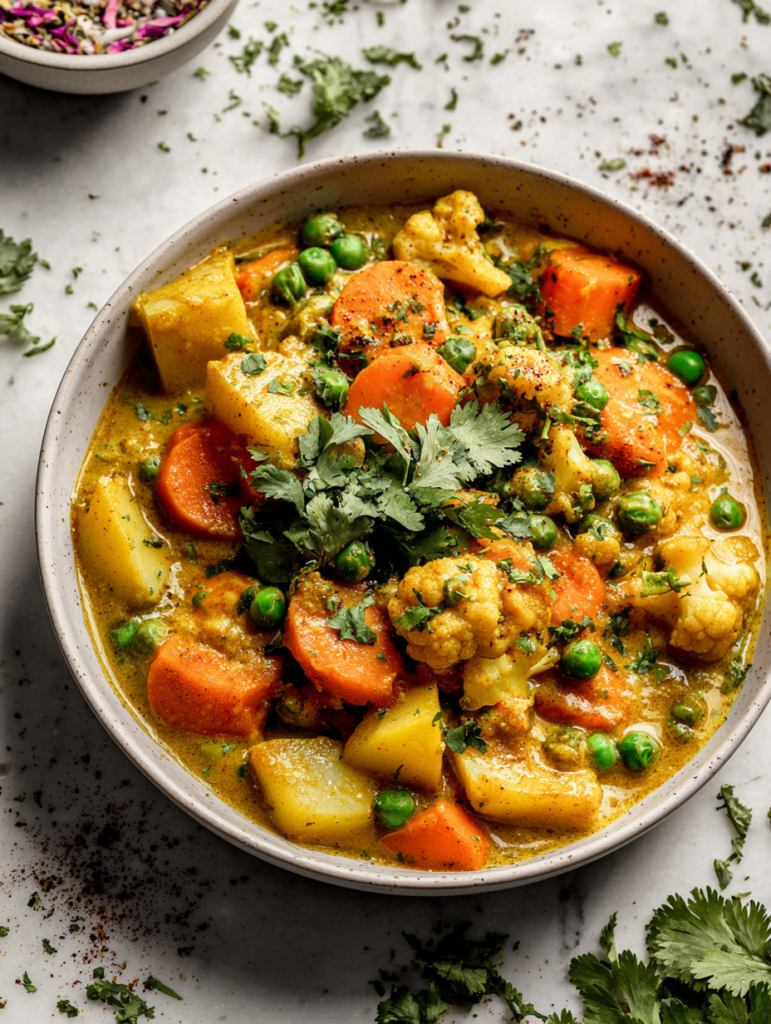
This vegetable korma is my go-to for when I want something comforting but not complicated. It’s forgiving, with gentle spices that build warmth without overwhelming. Perfect for those days when I need a cozy, nourishing bowl that I can put together without fuss.
What I love about this dish is how adaptable it is—use what’s in your fridge, tweak the spice level, and still end up with something rich and satisfying. It’s a kind of culinary hug, especially when the weather turns cooler or I need a little extra comfort. It’s simple, honest cooking that doesn’t ask for perfection, just good ingredients and a little patience.
Focusing on how this vegetable korma can be a forgiving, cozy dish for beginner cooks who want to build confidence with Indian flavors without feeling overwhelmed by spice levels or complex techniques.
A Cozy, Forgiving Vegetarian Classic
- This dish reminds me of my grandma’s kitchen—warm, fragrant, full of gentle spices that wrap around you.
- I love how forgiving this recipe is; it’s my comfort food on hectic days, always turns out cozy and flavorful.
- There’s a quiet joy in stirring this simmering pot, smelling the coconut and cardamom swirl together—pure calm.
- Sharing this with friends feels special, like passing on a little piece of my kitchen’s quiet magic.
- Sometimes I throw in whatever veggies I have, and it still turns into something so satisfying—no fuss, just good eating.
The story behind this recipe
This vegetable korma came about during a chilly weekend when I was craving something warm and easy to throw together after a long week. I wanted a dish that felt indulgent but didn’t demand too much fuss—just honest, flavorful ingredients simmered into something comforting. It’s a bit of a pantry love letter, using what I always keep around but elevating it with those fragrant spices that remind me of quiet afternoons in my kitchen. Every time I make it, I think about how simple ingredients can turn into a little bowl of warmth, no matter how rushed or tired I am.
Historical & Cultural Insights
- Vegetable korma has roots in Mughlai cuisine, blending Persian and Indian flavors in royal kitchens centuries ago.
- This dish was traditionally a slow-cooked feast for Mughal emperors, emphasizing rich sauces and fragrant spices.
- Korma’s name likely derives from the Turkish word ‘kavurma,’ meaning roasted or braised meat, adapted here into a vegetarian version.
- Over time, regional variations emerged across India—some with coconut, others with yogurt or nuts, reflecting local ingredients.
- Modern adaptations often make it quicker and milder, but authentic recipes still cherish slow simmering for deep flavor.
Ingredient breakdown: key components
- Onions: I use a yellow onion, which sweetens beautifully as it cooks—aim for a translucent look, not browned, to keep the flavor gentle for the sauce. You can swap in shallots for a milder touch.
- Coconut milk: I love the richness it brings—look for full-fat, creamy cans, and shake to check for separation. If you want a lighter version, dilute with a splash of water, but you’ll miss that lush texture.
- Spices (cumin, coriander, garam masala): I toast my spices first to wake up their aroma—smell that nutty, warm scent? If you’re in a rush, use pre-ground, but freshly toasted and ground spices deliver a brighter punch.
- Vegetables (cauliflower, carrots, peas): I prefer fresh, but frozen works fine. For a softer bite, add tougher veg first and cook longer. The crunch of fresh carrots is a lovely contrast, so don’t overdo it.
- Ginger & garlic: I grate these fresh for maximum punch—if you only have paste, use about half the amount to avoid overwhelming the sauce. The zing brightens the entire dish with a zesty, fragrant note.
- Nuts (cashews or almonds): I toast them lightly before blending into the sauce for a subtle smoky aroma. If you’re allergic, skip or swap with toasted sunflower seeds—they add a nice depth.
- Yogurt (optional): I stir in a dollop at the end for tang, but you can skip it for a fully coconut-based sauce. If using yogurt, keep the heat low when adding to prevent curdling—stir quickly.
Spotlight on key ingredients
Coconut Milk:
- I use full-fat canned coconut milk, which becomes creamy and slightly sweet as it simmers. Shake the can to check for separation—this indicates freshness and richness. For a lighter touch, dilute with water, but it’ll lose some lushness.
- Onions: I prefer yellow onions—they sweeten beautifully during cooking and add a gentle base to the sauce. Cook until translucent; avoid browning too much to keep the flavor mellow. Shallots can be a milder alternative, if you like.
Spices & Vegetables:
- Spices (cumin, coriander, garam masala): I toast my spices first until fragrant—smell that warm, nutty aroma? Toasting awakens their flavors and adds depth. Use freshly ground or pre-ground, but freshly toasted delivers a brighter, more vibrant spice note.
- Vegetables (cauliflower, carrots, peas): I love using fresh, crunchy carrots for a pop of sweetness and texture. Cauliflower should be tender but not mushy—test with a fork. Frozen peas work well, just add a few minutes before serving so they stay bright and plump.
Notes for ingredient swaps
- Dairy-Free: Swap coconut milk for cashew cream or almond milk. You lose some richness but keep the creaminess.
- Vegetarian: Use cauliflower florets or hearty mushrooms instead of tougher root vegetables for varied texture.
- Low-Spice: Reduce garam masala and omit chili powder. The flavor will be milder but still fragrant.
- Fresh Herbs: Cilantro can be replaced with chopped mint for a cooling contrast or omitted altogether.
- Sweetness: Add a touch of honey or maple syrup if you prefer a slightly sweeter korma, balancing the spices.
- Nuts: Use toasted sunflower or pumpkin seeds if you have nut allergies—adds crunch without overpowering flavor.
- Oil: Swap coconut oil for ghee or a neutral oil like canola—each adds a subtly different aroma and richness.
Equipment & Tools
- Large heavy-bottomed pan: Ensures even heat distribution for sautéing and simmering.
- Wooden spoon: For stirring without scratching the pan.
- Blender or immersion blender: To purée part of the sauce for a silky texture.
- Sharp knife & cutting board: Prepping vegetables and aromatics efficiently.
Step-by-step guide to Vegetable Korma
- Equipment & tools: Use a large, heavy-bottomed pan for even heat. Have a wooden spoon for stirring and a blender or immersion blender for smooth sauce. A sharp knife and cutting board are essentials for prep.
- Warm your pan over medium heat (~160°C / 320°F). Add a splash of oil, then sauté chopped onions until translucent, about 5 minutes. They should smell sweet and turn a soft, golden hue.
- Toss in grated ginger and minced garlic; cook until fragrant, about 1-2 minutes. Be careful not to burn the garlic—if it starts to brown too fast, turn down the heat.
- Add spices (cumin, coriander, garam masala) to the pan. Toast for 30 seconds until they release a warm aroma. If they smoke or turn bitter, reduce the heat immediately.
- Pour in coconut milk and stir to combine, scraping up any bits from the bottom. Bring to a gentle simmer, about 3 minutes, until the sauce thickens slightly and the spices meld.
- Add chopped vegetables—cauliflower florets, sliced carrots, peas. Stir well, cover, and simmer on low (~120°C / 250°F) for 15-20 minutes. Check that the cauliflower is tender and the carrots are soft but not mushy.
- Taste and adjust seasoning—add salt, a squeeze of lemon, or more spices if needed. Stir in chopped cilantro or fresh herbs for brightness just before serving.
- For a silkier sauce, blend part of the mixture with an immersion blender directly in the pan. Be cautious of hot splashes. Return to heat for 2 minutes to meld flavors.
- Resting & Finishing: Let the korma sit off heat for 5 minutes. Serve hot with rice or naan, garnished with extra herbs or toasted nuts for crunch.
Allow the korma to rest off heat for 5 minutes to let flavors meld. Serve warm, garnished with fresh herbs or toasted nuts for added texture and aroma.
How to Know It’s Done
- Vegetables are tender but not mushy, with a slight bite.
- Sauce is fragrant, rich, and coats the vegetables evenly.
- The dish smells warm and inviting, with no raw spice or onion aroma.
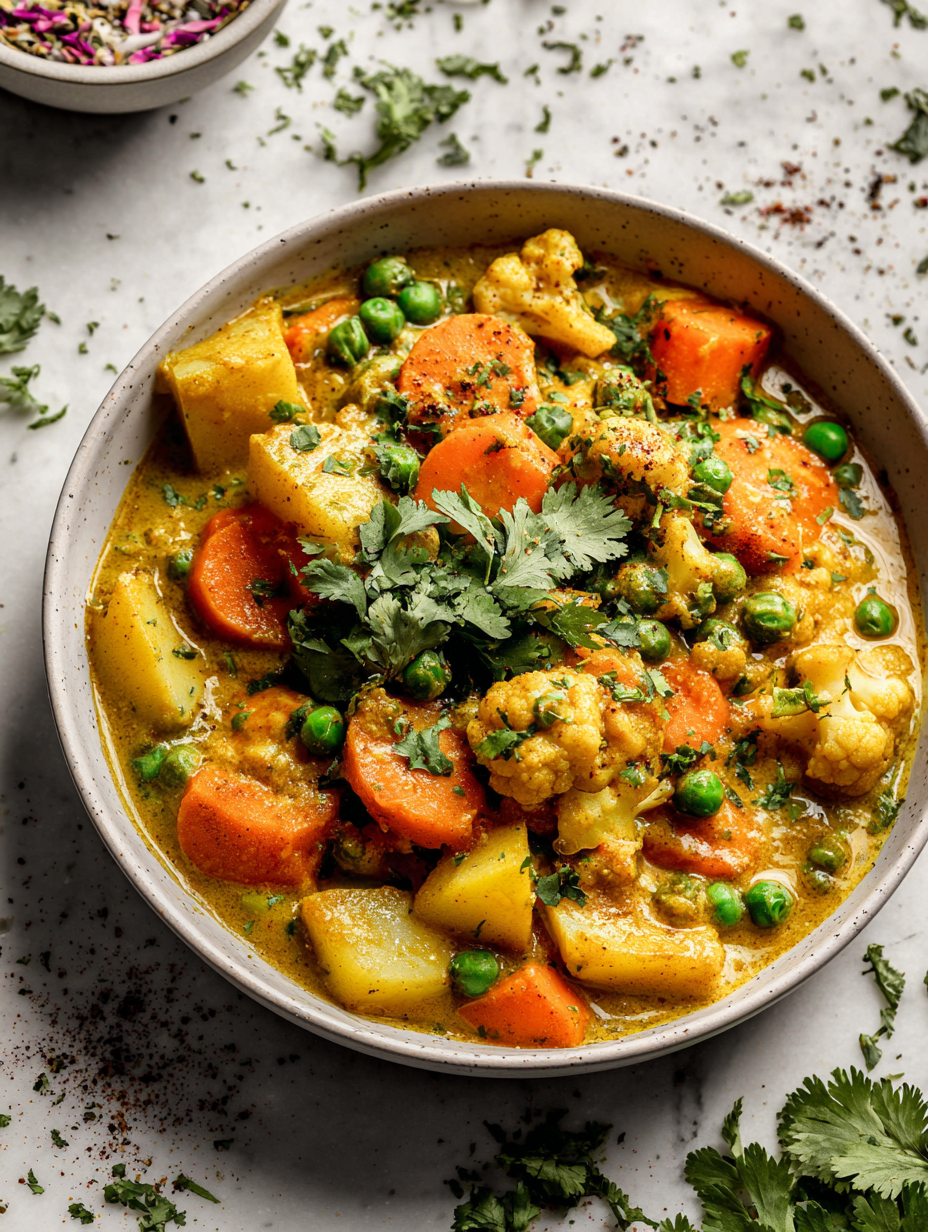
Vegetable Korma
Ingredients
Equipment
Method
- Heat the oil in a large heavy-bottomed pan over medium heat until it shimmers. Sauté the chopped onion until it becomes translucent and soft, about 5 minutes, filling your kitchen with a sweet aroma.
- Add the grated ginger and minced garlic to the pan. Cook for about 1-2 minutes until fragrant, stirring constantly to prevent burning. You’ll notice the mixture bubbling gently and smelling warm and spicy.
- Toast the cumin and coriander seeds in a dry skillet until fragrant, about 30 seconds, then grind them to a powder using a mortar and pestle or spice grinder. Add the ground spices and garam masala to the pan, stirring well to coat the onions and release their aroma.
- Pour in the coconut milk, stirring to combine and scraping up any flavorful bits from the bottom of the pan. Bring the mixture to a gentle simmer and cook for 3 minutes, allowing the flavors to meld and the sauce to thicken slightly.
- Add the cauliflower florets and sliced carrots to the pan. Stir well, then cover and simmer over low heat for 15-20 minutes, or until the vegetables are tender but not mushy. The sauce should be bubbling gently and coating the vegetables evenly.
- Stir in the peas and cook for another 3-5 minutes until they are heated through and bright in color. Taste the curry and add salt as needed, along with a squeeze of lemon for a fresh, tangy brightness.
- If you prefer a silky sauce, blend a portion of the curry using an immersion blender until smooth, then return it to the pan. Be careful of the hot steam and splashes.
- Toast the nuts lightly in a dry skillet until golden, then chop and sprinkle over the curry for added crunch and flavor. Garnish with freshly chopped cilantro for a burst of freshness.
- Remove from heat and let rest for a few minutes. Serve your vegetable korma hot with rice or naan, enjoying the warm, fragrant, and creamy texture with every bite.
Notes
Pro tips for vegetable korma
- Toast spices first to unlock their aroma—smell that warm, nutty scent and add depth.
- Use a gentle simmer (around 120°C / 250°F) for vegetables—preserves texture and flavor.
- When sautéing onions, aim for a translucent, soft glow—not browned— for sweet, mellow flavor.
- For silky sauce, blend part of the mixture carefully with an immersion blender—caution hot splashes!
- Add lemon juice or fresh herbs at the end to brighten and freshen the rich, coconutty base.
- Keep an eye on coconut milk—if it starts to separate or curdle, lower heat immediately and stir vigorously.
- When cooking tough vegetables like carrots or cauliflower, extend simmer time slightly for perfect tenderness.
Common mistakes and how to fix them
- FORGOT to sauté onions thoroughly → Cook until deeply golden for richer flavor.
- DUMPED in all spices at once → Toast spices first to enhance aroma and prevent bitterness.
- OVER-TORCHED the coconut milk → Add slowly over medium heat, stirring constantly.
- SKIMMED off the green layer from coconut milk → Stir well to incorporate all cream and water.
Quick fixes and pantry swaps
- When sauce separates, splash in a little hot water and stir vigorously.
- If curry is too thick, add a splash of warm coconut milk or water to loosen.
- Splash lemon juice to brighten flavors if the dish seems dull.
- Patch over over-spiced sauce with a dollop of yogurt for creaminess.
- Shield burnt spices by removing from heat immediately and starting fresh with new spices.
Prep, store, and reheat tips
- Chop vegetables and prepare spices a day ahead; store in airtight containers in the fridge for up to 24 hours. The kitchen will smell gently fragrant, ready for quick assembly.
- Cook the sauce partially and refrigerate for up to 2 days. Reheat gently on low, stirring often until warm and bubbling—watch for separation, stir to reincorporate.
- Leftovers keep well for 3-4 days in the fridge. The flavors deepen over time, especially the coconut and spice meld, giving it a richer, more layered taste.
- To freeze, store cooled korma in freezer-safe containers for up to 3 months. Thaw overnight in the fridge, then reheat on low, adjusting with a splash of water or coconut milk for consistency. Expect a slightly thicker, more concentrated flavor after freezing.
Top questions about vegetable korma
1. Can I make vegetable korma in one pot?
Use a deep skillet or wide pan to allow even simmering and prevent overcrowding. It helps the flavors meld better.
2. Can I substitute coconut milk?
Yes, you can swap coconut milk for almond or cashew cream, which adds richness but a slightly different flavor and texture.
3. How do I know when onions are ready?
Cook the onions until translucent, about 5 minutes; they should smell sweet and look soft, not browned.
4. When should I add different vegetables?
Add tougher vegetables first, like carrots and cauliflower, and simmer longer until tender. Peas go in later for freshness.
5. What if my korma is too thick?
If the sauce is too thick, stir in warm water or coconut milk until it reaches your desired consistency.
6. How should I store my spices?
Use fresh, toasted spices for maximum flavor. Store leftover spices in a cool, dark place to keep their potency.
7. Can I prepare this dish ahead?
You can prepare the chopped vegetables and spice mix a day ahead, storing them refrigerated for quick assembly later.
8. How do I reheat leftovers?
Reheat gently on the stove over low heat, stirring often, until steaming hot. Add a splash of coconut milk if it thickens too much.
9. My sauce has separated—what now?
If the sauce separates or curdles, whisk in a bit of warm water or coconut milk to smooth it out.
10. How can I adjust the flavor after cooking?
Adjust spice levels by adding more garam masala for warmth or a squeeze of lemon for brightness just before serving.
Making this vegetable korma is a small act of comfort in a chaotic world. The warm aroma of spices and the creamy, tender vegetables offer a quiet moment of satisfaction. It’s a dish that reminds me how simple ingredients can come together into something genuinely nourishing.
Every time I serve it, I feel a little more grounded, a little more connected to the act of cooking. It’s not just food—it’s a gentle, forgiving ritual that feeds both the body and the soul, especially when the days get busy or the weather turns colder.

Hi, I’m Anjali Arora — the curious heart behind Feast Chase.
To be honest, I’ve always felt most at ease in my own company. I’m not exactly a people-person (small talk still makes me cringe), but there are two things I’ve always loved deeply: animals and food.