 Anjali Arora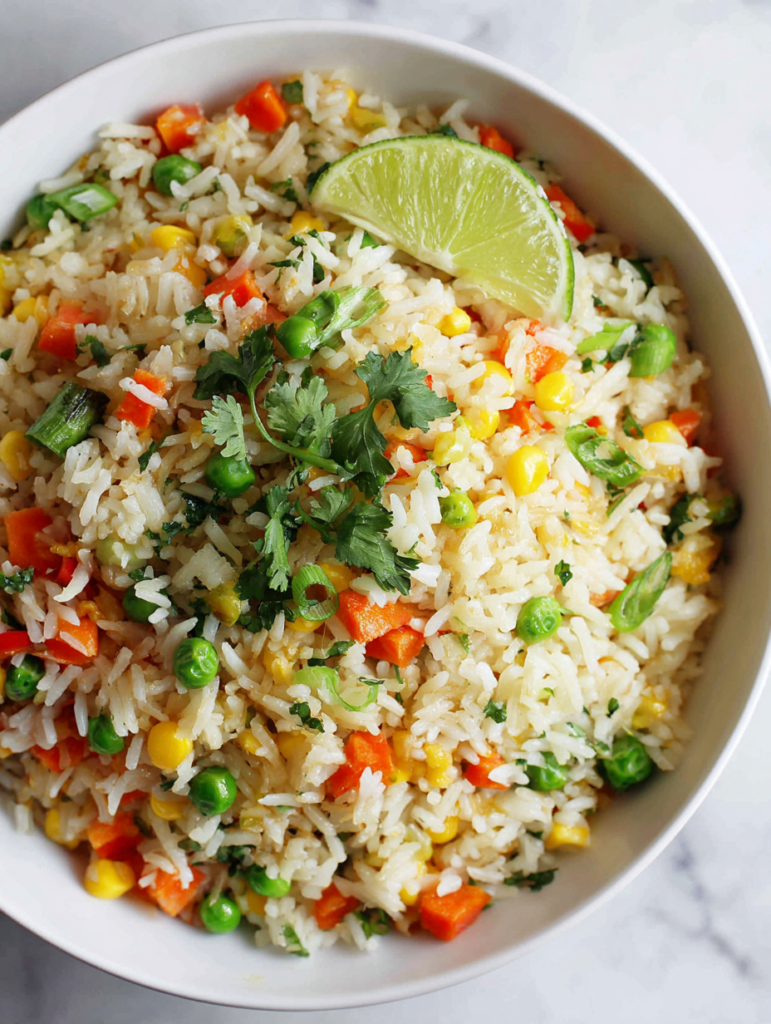
This vegetable fried rice is all about layering flavors—caramelized onions, roasted carrots, and fresh snap peas come together in a way that makes each bite feel like a little celebration of vegetables. I love how the process of roasting and caramelizing brings out sweetness and depth, even in the simplest ingredients. It’s a way to turn everyday produce into something more satisfying, more complex.
Honestly, I started making this dish on busy weeknights when I wanted something quick but still packed with flavor. It’s messy in the best way—stirring, tasting, adjusting, and tasting again. The goal isn’t perfection but a bowl that’s bright, savory, with just a hint of smoky caramel. It’s the kind of meal that feels nourishing and honest, no fancy tricks, just good ingredients treated right.
Focusing on how to maximize vegetable flavors in fried rice by using a mix of caramelized, roasted, and fresh ingredients for a complex, satisfying bite.
Maximizing Vegetable Flavors
- I love how this dish turns humble vegetables into a symphony of textures and flavors, especially when the edges get just a little charred.
- There’s a nostalgic rush every time I cook this—reminds me of family dinners, bustling and full of life, with the air thick with garlic and soy.
- Honestly, I feel a quiet pride in knowing how simple ingredients can come together in such a satisfying, balanced way without much fuss.
- Sometimes, I get a little chaotic trying to keep all the vegetables moving—yet, that messiness is exactly what makes it feel real and lively.
- This recipe feels like a little act of rebellion against takeout—easy, honest, and a bit more personal every time I make it.
The inspiration behind this dish
- This vegetable fried rice was born out of late-night fridge raids and a need to use up whatever was lingering. I wanted something quick, hearty, and flexible enough to adapt to whatever vegetables I had on hand. Over the years, I’ve tweaked it to balance smoky, sweet, and fresh flavors—making it a go-to when I need comfort without fuss.
- I remember one evening, I threw together a batch with leftover roasted carrots and snap peas, and the result was unexpectedly vibrant and satisfying. That moment made me realize that the best fried rice isn’t about perfection, but about the joy of improvising with ingredients that tell their own story. Now, I keep a mental note of how caramelized bits and crispy edges bring everything alive, even in a simple dish.
- heading:
Contextual origin, trivia, or history
- Vegetable fried rice has roots in Chinese cuisine, dating back centuries as a way to use leftover rice and vegetables efficiently.
- In many Asian households, it’s a go-to comfort food, often cooked on busy weeknights or for impromptu family dinners.
- The dish evolved as a versatile, economical meal—adapting to seasonal vegetables and available ingredients across different regions.
- During the 20th century, fried rice became a global phenomenon, with each culture adding its own twist—like Indian spiced versions or Hawaiian pineapple variants.
- Today, it’s often considered a canvas for creativity—an easy way to showcase what’s fresh and in season, right from your fridge.
Key ingredients and tips
- Long-grain rice: I prefer jasmine for its fragrant aroma and fluffy texture, but basmati works well too—just cook it a bit firmer to avoid mushiness.
- Mixed vegetables: I love a combo of bell peppers, carrots, and snap peas—crisp and sweet, they add color and texture. Feel free to swap in whatever’s fresh or leftover.
- Garlic and ginger: These are the backbone of flavor—peel, mince, and sauté until fragrant. Don’t rush this step; it’s where the magic begins.
- Soy sauce: It’s the salty, umami punch—go for a good-quality, naturally brewed one. Light soy is milder; dark adds richness and color.
- Sesame oil: Just a splash at the end, it’s nutty and fragrant. Toast the seeds separately if you want an extra layer of smoky depth.
- Eggs (optional): I like scrambling eggs right in the pan—adds richness. Skip if vegan or prefer a lighter crunch.
- Green onions: Fresh, chopped on top—brightens everything and adds a sharp, fresh bite. Use both green and white parts for variety.
Spotlight on Key Ingredients
Vegetables:
- Long-grain rice: I prefer jasmine for its fragrant aroma and fluffy texture, but basmati works well too—just cook it a bit firmer to avoid mushiness.
- Mixed vegetables: I love a combo of bell peppers, carrots, and snap peas—crisp and sweet, they add color and texture. Feel free to swap in whatever’s fresh or leftover.
- Garlic and ginger: These are the backbone of flavor—peel, mince, and sauté until fragrant. Don’t rush this step; it’s where the magic begins.
Sauces & oils:
- Soy sauce: It’s the salty, umami punch—go for a good-quality, naturally brewed one. Light soy is milder; dark adds richness and color.
- Sesame oil: Just a splash at the end, it’s nutty and fragrant. Toast the seeds separately if you want an extra layer of smoky depth.
Notes for ingredient swaps
- Rice: I prefer jasmine for its fragrant aroma and fluffy texture, but basmati works well too—just cook it a bit firmer to avoid mushiness.
- Mixed vegetables: I love a combo of bell peppers, carrots, and snap peas—crisp and sweet, they add color and texture. Feel free to swap in whatever’s fresh or leftover.
- Garlic and ginger: These are the backbone of flavor—peel, mince, and sauté until fragrant. Don’t rush this step; it’s where the magic begins.
- Soy sauce: It’s the salty, umami punch—go for a good-quality, naturally brewed one. Light soy is milder; dark adds richness and color.
- Sesame oil: Just a splash at the end, it’s nutty and fragrant. Toast the seeds separately if you want an extra layer of smoky depth.
- Eggs (optional): I like scrambling eggs right in the pan—adds richness. Skip if vegan or prefer a lighter crunch.
- Green onions: Fresh, chopped on top—brightens everything and adds a sharp, fresh bite. Use both green and white parts for variety.
Equipment & Tools
- Wok or wide skillet: For high-heat stir-frying and even cooking.
- Spatula: To toss and stir ingredients quickly.
- Rice paddle: Gently mix rice without breaking grains.
- Small bowl: For beating eggs.
- Measuring spoons & cups: To measure soy sauce and sesame oil accurately.
Step-by-step guide to vegetable fried rice
- Equipment & Tools: Use a large wok or wide skillet for even heat distribution and quick stir-frying; spatula for tossing ingredients; rice paddle for mixing; small bowl for eggs; measuring spoons and cups for accuracy.
- Prep your ingredients: Cook 2 cups of jasmine rice a day ahead, cool, and refrigerate. Mince 3 cloves garlic, grate 1 inch ginger, chop 1 cup mixed vegetables, slice green onions, and beat 2 eggs.
- Heat your wok over high heat until nearly smoking (around 200°C/392°F). Add 1 tbsp oil, swirl to coat, then add garlic and ginger. Stir until fragrant, about 30 seconds—be careful not to burn.
- Toss in vegetables: Carrots, bell peppers, snap peas. Cook, stirring vigorously, until vegetables are crisp-tender and edges start caramelizing, about 2-3 minutes. Adjust heat if veggies burn or stick.
- Push vegetables to the side, add a little more oil if needed. Pour in beaten eggs, scramble gently until just set, about 1 minute. Mix eggs with vegetables, ensuring everything is evenly coated and fragrant.
- Add rice: Break up clumps and stir into the vegetable-egg mixture. Spread rice evenly across the pan, then stir-fry, pressing down occasionally, until rice is hot, grains are slightly toasted, and some edges are charred, about 4-5 minutes.
- Season: Drizzle 2 tbsp soy sauce and 1 tsp sesame oil over rice. Toss well to distribute. Check for seasoning and salt; add more soy if needed. Continue stir-frying until everything looks glossy and fragrant, about 1 minute.
- Finish and serve: Remove from heat, sprinkle with sliced green onions. Let rest for 1 minute to allow flavors to settle. Serve immediately, hot and crispy around the edges.
- Checkpoints & How to Know It’s Done: Rice should be hot and slightly crispy on edges; vegetables crisp-tender; soy sauce evenly coated; aroma fragrant and smoky.
Sprinkle sliced green onions on top. Serve immediately while hot and crispy. Let sit for a minute to settle flavors, then dig in.
How to Know It’s Done
- Edges of rice are slightly charred and crispy.
- Vegetables are vibrant and crisp-tender.
- Aromatic smell of garlic, ginger, and soy permeates the air.
Vegetable Fried Rice
Ingredients
Equipment
Method
- Preheat your wok or wide skillet over high heat until it shimmers slightly, then add a tablespoon of oil to coat the surface. Once hot and fragrant, add minced garlic and grated ginger, stirring quickly for about 30 seconds until fragrant and just starting to turn golden.
- Add the mixed vegetables to the pan, spreading them out to maximize contact with the hot surface. Stir vigorously for 2-3 minutes, until they become crisp-tender and start to develop lightly charred edges, releasing a sweet aroma.
- If using eggs, push the vegetables to one side of the pan. Pour the beaten eggs into the cleared space and scramble gently, cooking for about 1 minute until just set. Mix the eggs into the vegetables, creating a colorful scramble.
- Add the cooked rice to the pan, breaking up any clumps with your spatula. Stir constantly, pressing down and spreading the rice evenly across the pan, allowing it to toast slightly and develop some crispy bits, about 4-5 minutes.
- Pour the soy sauce evenly over the rice and toss thoroughly to coat all grains. Continue stir-frying for another minute until everything is glossy and fragrant, adjusting seasoning if needed.
- Finish by drizzling sesame oil over the hot rice, tossing once more to distribute the nutty aroma. Remove from heat, sprinkle sliced green onions on top, and give everything a final toss.
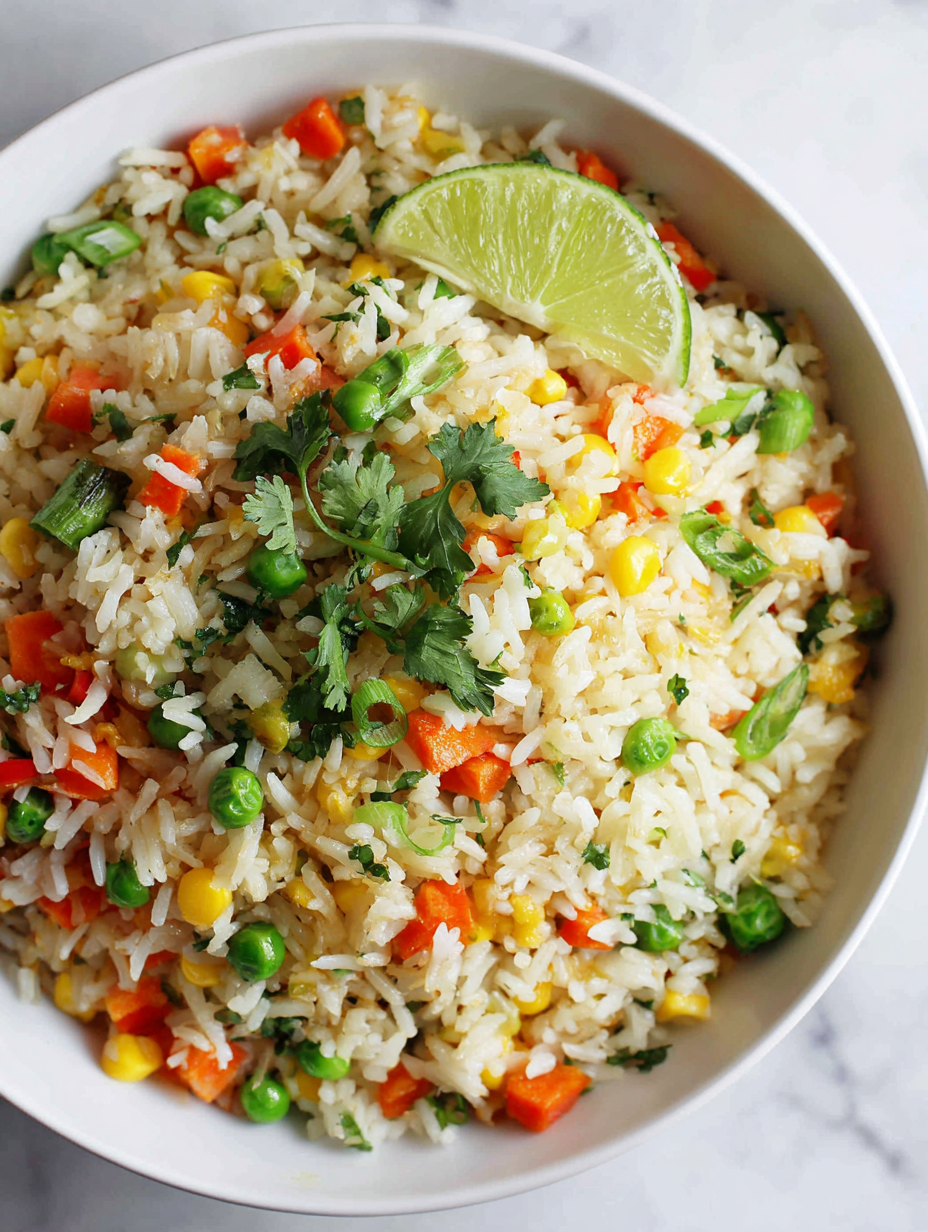
- Serve the vegetable fried rice immediately, hot and crispy around the edges, with bright green onions adding a fresh bite. Enjoy this flavorful, textured dish that’s perfect for a quick weeknight dinner.
Notes
Pro tips for perfect vegetable fried rice
- High heat is key → Preheat your wok until it shimmers, then add oil for quick, crisp stir-fry.
- Dry rice is better → Use rice cooled from the fridge to prevent clumping and sogginess.
- Don’t overcrowd the pan → Cook vegetables in batches if needed, so they caramelize instead of steaming.
- Season gradually → Add soy sauce in stages, tasting as you go for balanced saltiness and umami.
- Add sesame oil last → Drizzle at the end for a fragrant, nutty finish that won’t burn during cooking.
- Keep ingredients moving → Constant stirring prevents sticking and encourages even charring.
- Adjust for taste → Correct seasoning after cooking—more soy, a splash of vinegar, or a pinch of sugar can elevate.
Common mistakes and how to fix them
- FORGOT to preheat pan → Always heat your wok until nearly smoking before adding ingredients.
- DUMPED too much soy → Use soy sparingly at first; adjust to taste after stir-frying.
- OVER-TORCHED vegetables → Keep stirring and lower heat if vegetables burn or start to blacken.
- MISSED resting time → Let fried rice sit for a minute to meld flavors before serving.
Quick Fixes and Pantry Swaps
- When rice clumps, splash a little water and toss to loosen grains.
- If veggies burn, turn down heat and add a splash of broth for moisture.
- DUMPED too much soy? Fix with a squeeze of lemon to brighten flavors.
- When edges are soggy, increase heat and stir to crisp them up within 30 seconds.
- Splash some rice vinegar if rice turns flat or dull—adds a fresh shimmer.
Prep, store, and reheat tips
- Cook and cool rice a day in advance; store in an airtight container in the fridge for up to 24 hours. The drier the rice, the better it stir-fries without clumping.
- Chop vegetables, garlic, and ginger ahead of time; keep in separate sealed containers. Fresh ingredients maintain crispness for about 1-2 days in the fridge.
- Refrigerated fried rice keeps well for up to 2 days; reheating can make it slightly softer. To revive crispy edges, reheat in a hot wok or skillet with a splash of oil until sizzling.
- For best flavor, reheat rice until steaming hot—around 75°C/165°F—while stirring constantly. The aroma of garlic and soy should be vibrant, and edges should shimmer with a slight crunch.
Top questions about vegetable fried rice
1. Can I use fresh rice for fried rice?
Use day-old, refrigerated rice for the best texture. Fresh rice can be too moist and sticky, making the dish clumpy.
2. Is fresh rice okay for this recipe?
Yes, but it may be a bit wetter and clumpier. Spread freshly cooked rice on a tray and chill for at least 30 minutes first.
3. What oil is best for stir-frying vegetables?
Use a high-smoke-point oil like vegetable or peanut oil to prevent burning and for quick stir-frying at high heat.
4. How much soy sauce should I add?
Add soy sauce gradually, tasting as you go. Too much can overpower the dish and make it overly salty.
5. How do I know when vegetables are done?
Vegetables should be crisp-tender, with bright colors and a slight crunch. Overcooked veggies turn mushy and lose their vibrancy.
6. When should I add sesame oil?
Use sesame oil sparingly at the end of cooking for aroma. Too much can be overwhelming and greasy.
7. Can I make this vegan?
Scramble eggs in the same pan before adding rice for extra richness and flavor. Skip if vegan or avoiding eggs.
8. How do I prevent sticking or burning?
Stir-fry over high heat and keep ingredients moving constantly to prevent burning and sticking.
9. How should I reheat leftovers?
Reheat fried rice in a hot skillet or wok until steaming hot, about 2-3 minutes, stirring frequently to revive crisp edges.
10. Can I customize the vegetables?
Feel free to customize with your favorite seasonal vegetables or add a dash of chili for heat. Keep in mind cooking times may vary.
Making this vegetable fried rice feels like a small act of rebellion against takeout—more honest, more satisfying, and adaptable to whatever vegetables you have. It’s a reminder that good flavors come from simple techniques and a bit of patience at the stove. Plus, the aroma of garlic, soy, and toasted rice drifting through the kitchen is hard to beat.
Whenever I cook this, I think about how vegetables can be the star, not just side notes. It’s a dish that’s quick to throw together but rich in flavor, perfect for busy nights or when I want something wholesome. Honestly, it’s become one of those recipes I turn to when I need comfort, a little chaos in the pan, and a bowl full of honest, crunchy, fragrant goodness.

Hi, I’m Anjali Arora — the curious heart behind Feast Chase.
To be honest, I’ve always felt most at ease in my own company. I’m not exactly a people-person (small talk still makes me cringe), but there are two things I’ve always loved deeply: animals and food.