 Anjali Arora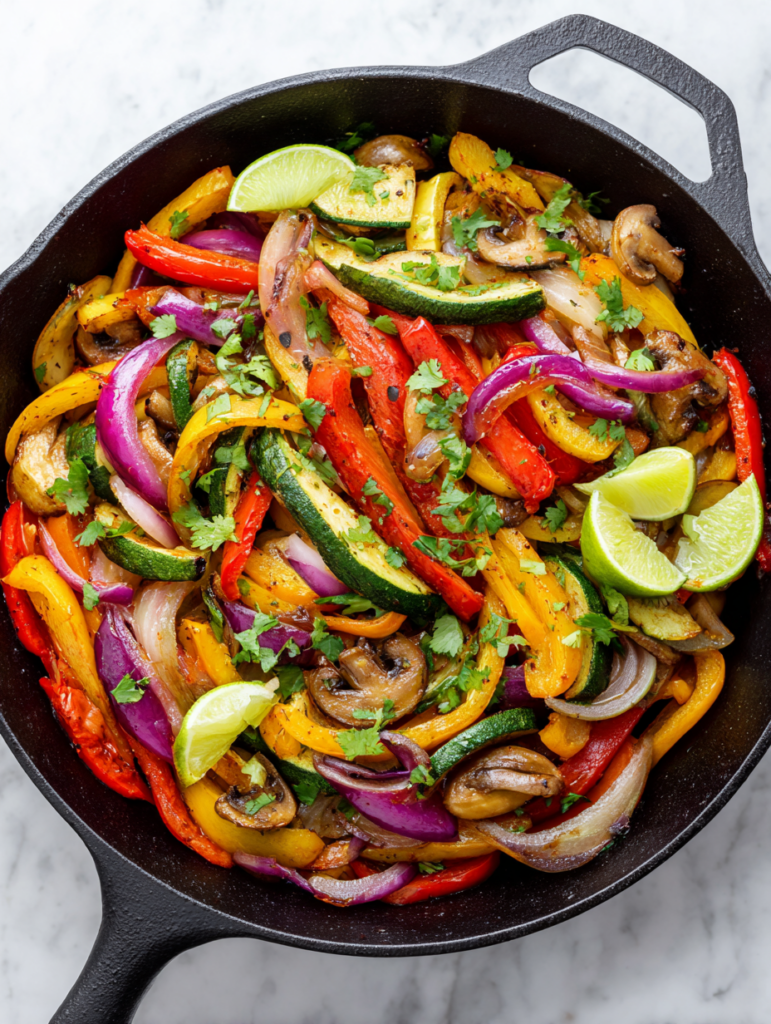
I’ve always loved how vegetables can take on a new life when cooked over high heat in a cast-iron skillet. There’s something about that smoky, slightly charred edge that makes even the simplest peppers and onions feel special, almost indulgent, despite being entirely plant-based. It’s a process I find honest and satisfying—listening for that first crackle, watching for blistered skins, and smelling the sweet, smoky aroma that signals perfection.
This recipe became my go-to when I wanted something quick, vibrant, and packed with flavor without fussing too much. It’s a reminder that you don’t need fancy ingredients or complicated techniques—just good veggies and a hot skillet. Plus, it’s a meal that feels like a celebration of the humble, everyday vegetable, turned into something a little more memorable.
Making vegetable fajitas this way reconnects me with the simple joy of cooking—paying attention to the little moments, like the sizzle and the smell, that tell you everything’s coming together. It’s honest food, meant to be enjoyed in those small, imperfect, flavorful bites.
This recipe highlights how using a cast-iron skillet transforms humble vegetables into smoky, caramelized bites that feel indulgent, even though it’s all plant-based. It’s about embracing the process—listening for that initial crackle, watching the peppers blister, and smelling the sweet char that signifies the perfect sear.
The smoky charm of cast-iron
- Cooking these fajitas reminds me how simple ingredients can burst with flavor when treated right—nothing fancy needed.
- I love the chaos of the sizzling peppers and onions, it’s almost meditative, watching the caramelization happen.
- There’s a nostalgic joy in chopping fresh veggies, the bright colors making the kitchen feel alive.
- This dish is my fallback when I want something quick but satisfying, a real reminder that good food doesn’t have to be complicated.
- Sharing these fajitas with friends always sparks a sense of warmth and connection, even in the busiest times.
The smoky charm of cast-iron
- This dish was born out of a lazy Saturday attempt to make something flavorful without turning on the oven. I wanted smoky, caramelized veggies that felt indulgent but required minimal fuss. The cast-iron skillet was a game changer—those high, even heats bring out the best in peppers and onions, making them blister and sweet in ways I hadn’t expected.
- It’s a kind of cooking I find honest—listening to the crackle, adjusting heat just right, and savoring the smell of char that signals everything’s coming together. Over the years, this recipe has become my go-to for quick, vibrant meals that make me feel like I’ve really captured something special from simple ingredients.
- heading
- story_type
Fascinating tidbits about vegetable fajitas
- Vegetable fajitas originated in Tex-Mex cuisine, blending Mexican spices with American fast-food sensibilities.
- The dish became popular in the 1980s as a quick, colorful vegetarian option that could be assembled easily.
- Traditionally served with warm flour tortillas and a squeeze of lime, it’s a vibrant, customizable meal.
- The idea of roasting or caramelizing vegetables for flavor dates back centuries, but fajitas made it portable and casual.
- Today, vegetable fajitas are a staple for weeknight dinners, embracing plant-based eating with bold, smoky flavors.
Ingredient breakdown: key components
- Bell peppers: I use a mix of red and yellow for sweetness and color—watch for blistering, it’s the sign they’re charred and flavorful enough to slice. Swap for poblano if you want a deeper smoky note.
- Onions: Thinly sliced so they cook quickly and caramelize evenly, releasing that sweet, pungent aroma. If you prefer milder, go for sweeter varieties like Vidalia, but don’t skip the slow sizzle.
- Garlic: Minced fresh for punch and aroma—smells incredible as it hits the hot skillet. If pressed for time, garlic powder works, but it’s not quite the same burst of flavor.
- Spices: A blend of cumin, smoked paprika, and chili powder—makes the aroma warm and inviting. Adjust chili for heat, or use smoked paprika for extra smoky depth. Ground coriander adds a citrusy brightness, try it if you like a lift.
- Lime juice: Brightens everything with a zing—squeeze right before serving for that fresh, tangy kick. If fresh isn’t available, a splash of bottled lime juice still keeps the vibrancy.
- Olive oil: Use a good-quality, flavor-rich oil for searing—helps veggies blister and develop that smoky edge. For a nuttier flavor, try avocado oil, which handles high heat well.
- Tortillas: Warm them just before serving to soften and bring out the toasty smell—wrapped in foil in a warm oven or skillet for a quick revive.
Spotlight on key ingredients
Bell peppers:
- I love the way red and yellow peppers blister and sweeten as they char—look for deep, blackened edges that signal perfect caramelization. Swap for poblano if you want a deeper smoky flavor.
- Onions: Thin slices cook quickly and develop a rich, sweet aroma with a slight translucence. Use sweeter varieties like Vidalia for milder taste, but don’t skip the slow, gentle sizzle.
Spices:
- Garlic: Minced fresh garlic adds a pungent, aromatic punch that intensifies as it hits the hot skillet—smells like heaven in those first 30 seconds. If pressed for time, garlic powder works, but misses that fresh, sharp brightness.
- The blend of cumin, smoked paprika, and chili powder creates a warm, inviting aroma—smoke and earthiness that deepen with cooking. Adjust chili for spice level, and try coriander for a citrusy lift.
Notes for ingredient swaps
- Dairy-Free: Use avocado slices or a drizzle of tahini instead of cheese or sour cream. It adds creaminess without dairy, but the flavor will be nuttier and less tangy.
- Gluten-Free: Ensure your tortillas are labeled gluten-free or switch to lettuce wraps for a crisp, fresh crunch that’s completely grain-free.
- Vegetarian/Vegan: Skip the cheese or sour cream, or replace with vegan cheese or cashew cream for that cheesy, tangy kick.
- Lower Sodium: Use fresh herbs and spices liberally instead of salt to keep flavor vibrant without the extra sodium.
- Extra Heat: Add a dash of hot sauce or sliced jalapeños if you like it fiery—be mindful of the heat level, and start small.
- Sweetness Boost: A splash of honey or agave can enhance the caramelization of peppers, but use sparingly to avoid sweetness overpowering the smoky flavor.
- Oil Swap: Switch olive oil for avocado or coconut oil if you prefer a different flavor profile or more stable high-heat cooking.
Equipment & Tools
- Cast-iron skillet: For even high-heat searing and smoky flavor development.
- Sharp knife: To slice vegetables thinly and precisely for quick cooking.
- Tongs: To flip and toss vegetables without breaking them apart.
Step-by-step guide to fajitas
- Equipment & Tools: Gather a large cast-iron skillet for even heat, a sharp knife for prep, and tongs for flipping.
- Heat the skillet over medium-high heat (about 200°C/390°F) until hot and shimmering—listen for a faint crackle.
- Slice the bell peppers and onions into thin strips, about 1/4 inch thick, for quick caramelization.
- Add 2 tablespoons olive oil to the skillet, swirling to coat, then toss in the sliced peppers and onions.
- Cook for about 8-10 minutes, stirring occasionally, until veggies blister and soften—watch for charred edges and sweet aroma.
- While veggies cook, mince 3 cloves garlic and prepare your spice mix: 1 tsp cumin, 1 tsp smoked paprika, 1/2 tsp chili powder.
- Add garlic to the skillet in the last 2 minutes, stirring until fragrant—be careful not to burn, it should smell pungent and inviting.
- Sprinkle the spice blend over the vegetables, stirring well to coat—cook for another 2-3 minutes until fragrant.
- Squeeze fresh lime juice over the cooked veggies, tossing gently to brighten the flavors—just a quick splash.
- Warm your tortillas in a dry skillet or wrapped in foil in the oven at 180°C/355°F for about 5 minutes, until soft and toasted.
Once cooked, transfer the veggies to a warm plate. Rest for a minute to let flavors settle. Serve with warm tortillas, and garnish with fresh cilantro or extra lime if desired.
How to Know It’s Done
- Color & char: Vegetables should be blistered and slightly charred, with a smoky aroma.
- Aromas: Garlic and spices should be fragrant and spicy-sweet, not burnt or bitter.
- Texture: Veggies should be tender yet still have a slight bite, with caramelized edges for flavor.
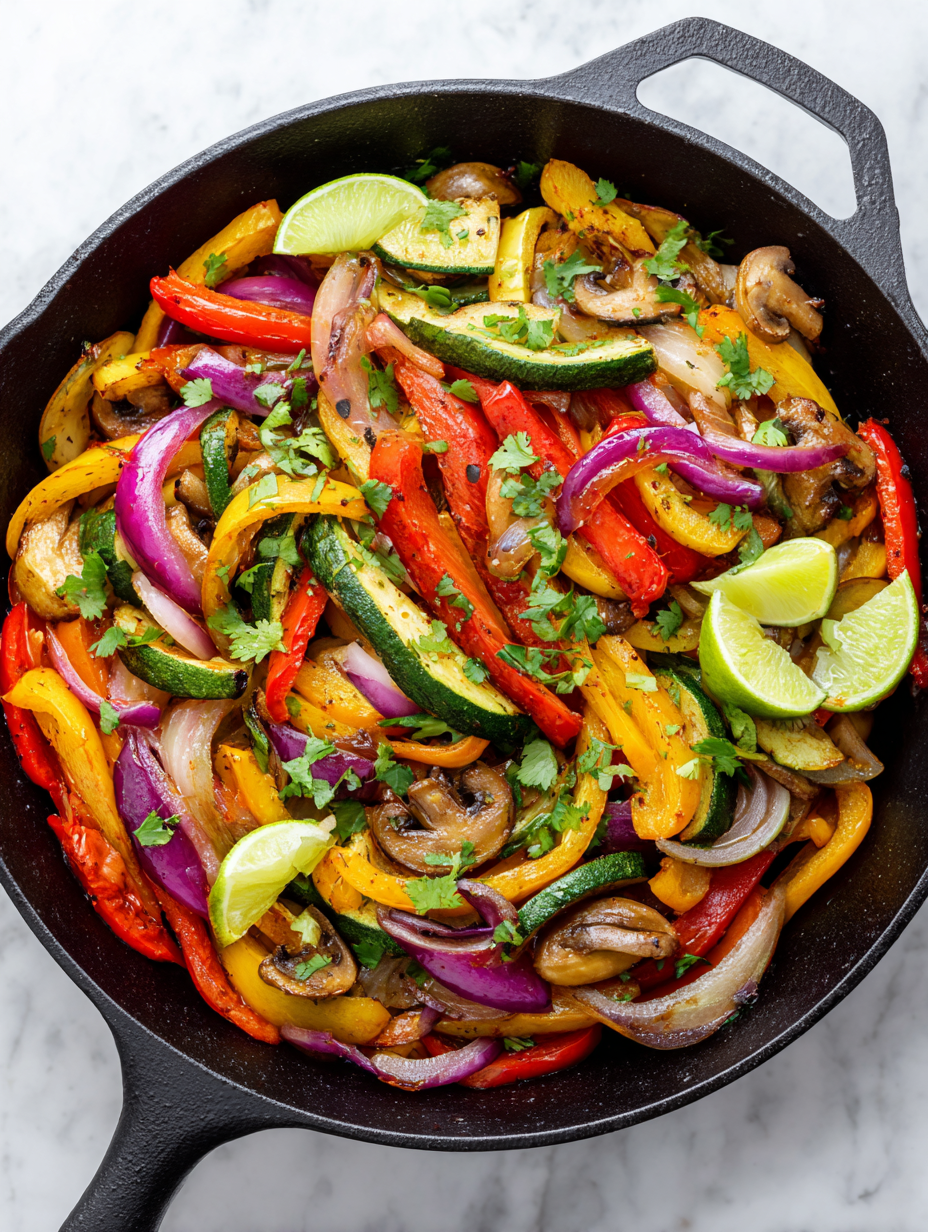
Cast-Iron Vegetable Fajitas
Ingredients
Equipment
Method
- Gather your cast-iron skillet, a sharp knife, and tongs. Slice the bell peppers and onion into thin strips, aiming for uniform pieces that will caramelize evenly.
- Heat the cast-iron skillet over medium-high heat until it shimmers and you hear a faint crackle—this is the sign it's ready to sear.
- Add olive oil to the hot skillet, swirling to coat the surface evenly. Toss in the sliced peppers and onions, spreading them out in a single layer.
- Cook the vegetables undisturbed for about 4-5 minutes, then toss with tongs to flip and promote blistering. Continue cooking, stirring occasionally, until they blister, soften, and develop rich, charred edges—about 8-10 minutes total.
- While the veggies cook, mince the garlic and prepare your spice blend: cumin, smoked paprika, and chili powder.
- Add the minced garlic to the skillet in the last 2 minutes of cooking, stirring quickly until fragrant—smells should be pungent and inviting, not burnt.
- Sprinkle the spice mixture over the vegetables, stirring well to coat evenly. Cook for another 2-3 minutes until the spices release their aroma and the veggies are well seasoned.
- Squeeze fresh lime juice over the sizzling vegetables, tossing gently to brighten the flavors and add a tangy kick.
- Meanwhile, warm the tortillas in a dry skillet or wrapped in foil in a preheated 180°C oven for about 5 minutes until soft and slightly toasted.
- Transfer the cooked vegetables to a warm serving platter. Serve immediately with the warm tortillas, allowing everyone to assemble their own fajitas.
- Enjoy the smoky, caramelized peppers and onions with a squeeze of lime and your favorite toppings or garnishes.
Tips for perfect vegetable fajitas
- High heat: Preheat your cast-iron until it shimmers to develop that smoky char quickly.
- Thin slices: Cut peppers and onions into uniform, thin strips for even caramelization and quicker cooking.
- Timing garlic: Add minced garlic in the last 2 minutes to keep it fragrant and prevent burning.
- Spice bloom: Toast spices in the hot skillet with veggies for a minute to release their full aroma.
- Check for char: Look for blistered, blackened edges on peppers; that’s the sweet spot for flavor.
- Lime splash: Squeeze fresh lime just off the heat to brighten flavors and prevent bitterness.
- Tortilla warmth: Wrap tortillas in foil and warm in the oven or skillet for soft, toasted bites.
Common mistakes and how to fix them
- FORGOT to preheat the skillet → Always heat pan until shimmering before adding vegetables.
- DUMPED too much oil → Use just enough to coat veggies; excess makes them soggy, not smoky.
- OVER-TORCHED the peppers → Keep an eye; char just enough to blister, not burn and taste bitter.
- MISSED the resting step → Let cooked veggies sit briefly off heat for better flavor absorption.
Quick fixes and pantry swaps
- When vegetables burn, splash with a bit of water to cool and stop charring.
- If peppers are undercooked, turn up heat and cook for a few more seconds until blistered.
- Dumped too much oil? Pat veggies with a paper towel and reduce oil next time.
- Over-salted? Rinse veggies quickly under cold water to tone down saltiness.
- Shield delicate garlic slices with a lid if they start to scorch and turn bitter.
Prep, store, and reheat tips
- Slice peppers and onions a day ahead; keep in an airtight container in the fridge for up to 24 hours. The veggies stay crisp and fresh, just wait to blister them until cooking.
- Prepare spice mix and garlic in advance; store separately in a small jar or container for up to a week. The aroma of ready-to-go spices makes flipping dinner on busy nights easier.
- Cooked vegetables can be stored in the fridge for 2-3 days. Reheat in a hot skillet until sizzling and fragrant—look for that initial crackle and smoky aroma to ensure freshness.
- For freezer storage, sautéed peppers and onions freeze well for up to 1 month. Thaw overnight in the fridge and reheat thoroughly, expecting slightly softer veggies but still vibrant flavor.
Top questions about vegetable fajitas
1. Can I use a different pan?
Use a cast-iron skillet for the best smoky flavor and even sear. It helps develop that charred, caramelized exterior.
2. How thin should I slice the vegetables?
Slice peppers and onions thinly so they cook quickly and evenly, developing a sweet, smoky caramelization.
3. When should I add garlic and spices?
Add garlic and spices towards the end of cooking to prevent burning and maintain their vibrant aroma.
4. How do I keep tortillas warm?
Warm tortillas just before serving—wrap in foil and heat in a 180°C/355°F oven for about 5 minutes until soft and toasted.
5. Should I add lime before or after cooking?
Use fresh lime juice right before serving to brighten the flavors with a zesty, tangy kick.
6. How can I make it spicier or milder?
Adjust spice levels by varying chili powder or adding hot sauce; taste as you go to achieve your preferred heat.
7. Can I prepare the veggies ahead?
Store sliced vegetables in an airtight container in the fridge for up to 24 hours; reheat in a hot skillet for best results.
8. What if my peppers are burnt?
Over-charred peppers taste bitter. Remove from heat immediately and reduce cooking time next batch.
9. How do I prevent soggy vegetables?
If veggies are too soggy, cook them at higher heat and avoid overcrowding the pan to promote blistering.
10. Can I make this vegan?
For a vegan option, skip cheese or sour cream, or replace with cashew cream or sliced avocado for creaminess.
Cooking these vegetable fajitas reminds me how simple ingredients can turn into something flavorful when treated with care—smoky, sweet peppers and caramelized onions with that punch of lime. It’s honest, unpretentious food that feels right for any season or time of day.
Sharing this dish keeps me grounded—an easy reminder that good, vibrant meals don’t need to be complicated. Sometimes, the best bites are just simple vegetables, charred and bright, coming together in a skillet that’s seen it all.

Hi, I’m Anjali Arora — the curious heart behind Feast Chase.
To be honest, I’ve always felt most at ease in my own company. I’m not exactly a people-person (small talk still makes me cringe), but there are two things I’ve always loved deeply: animals and food.