 Anjali Arora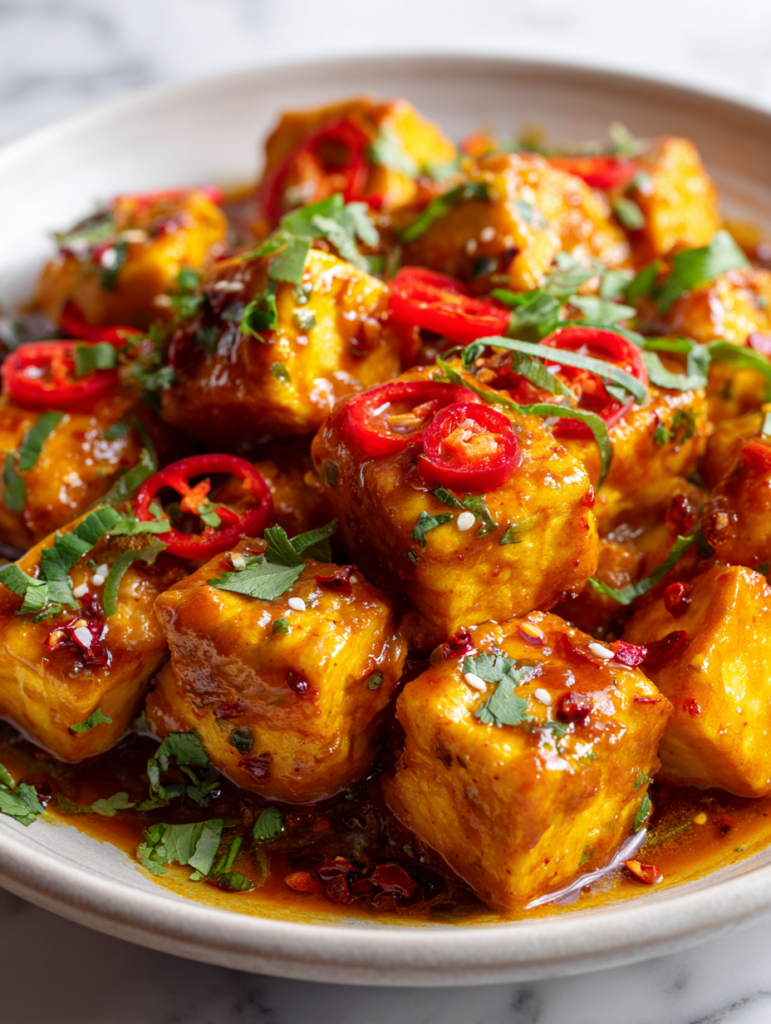
This tofu curry is my quietly proud attempt at balancing sweet and spicy in a way that surprises the palate. I’ve played around with the heat, trying to keep it gentle enough for everyday, but with enough depth to keep you coming back for more. It’s not fancy, just honest, with a little extra care in the seasoning that makes all the difference.
I first made this when I was craving comfort but also wanted to challenge my taste buds. The key was finding the right touch of sweetness—just enough to mellow the fiery spices without dulling the punch. Over time, I learned that the secret lies in how you cook the tofu and how you layer your flavors, making each spoonful a tiny revelation.
This recipe isn’t just about the ingredients; it’s about the rhythm of balancing, tasting, tweaking. It’s a reminder that sometimes, the simplest dishes—done with a little thought—can turn into something memorable. It’s a humble bowl, but one that feels like a little victory in the kitchen.
Focusing on the overlooked art of balancing spice and sweetness in tofu curry for a harmonious bite that surprises with each spoonful.
The overlooked art of balancing spice and sweetness
- This dish reminds me of rainy Sundays spent experimenting in the kitchen, chasing that perfect balance of spice and sweetness.
- I love how the tofu soaks up all the flavors—sometimes I get a little lost in the process, but the result is worth every minute.
- There’s a quiet pride in mastering a recipe that feels both simple and complex, like a little secret I keep in my back pocket.
- Cooking this curry always brings back memories of cozy nights with friends, sharing bowls and stories over steaming plates.
- It’s the kind of meal that makes me slow down and really taste what’s in the pot, savoring the layers of flavor with each bite.
The story behind this recipe
- This tofu curry came from a night of flipping through old cookbooks and craving something warm but not heavy. I wanted to make a dish that highlighted the tofu’s ability to soak up flavors, but with a twist—balancing spice and sweetness in a way that surprised me every time I made it. It’s become a go-to when I need comfort but also a little challenge in the kitchen.
- I remember experimenting with different spice blends and finally hitting on that perfect harmony—something fragrant, with just enough heat, and a gentle touch of honey or sugar to round it out. The process reminded me that cooking is often about fine-tuning, not reinventing, and that simple ingredients can surprise you when combined thoughtfully.
- Now, this recipe feels like a small victory, especially when I serve it to friends and watch their faces light up with that first taste. It’s honest, straightforward, but somehow feels special—like a secret handshake between me and my spice cabinet.
Cultural and historical nuggets
- Tofu curry has roots in both Southeast Asian and Indian cuisines, blending fragrant spices with plant-based protein traditions.
- This dish gained popularity among vegetarians in the 20th century, especially in urban areas seeking hearty, flavorful meat alternatives.
- The balance of spice and sweetness in tofu curry reflects a culinary philosophy of harmony, common in many traditional Asian cooking styles.
Breakdown of key ingredients
- Extra-firm tofu: I press out the moisture until it’s firm and slightly squeaky—this helps it crisp up. Skip this step if you’re short on time, but the texture won’t be as satisfying.
- Coconut milk: I use full-fat because it creates a rich, velvety sauce with a mild sweetness that balances the spices. Light coconut milk can work, but the sauce will be thinner and less luscious.
- Spice blend: I prefer a mix of turmeric, cumin, and coriander—ground to a fragrant powder that smells like a warm hug. Feel free to adjust the amounts for more heat or earthiness.
- Sweetener: I add a splash of honey or a pinch of brown sugar to mellow the heat and add depth. If you’re vegan, maple syrup works just as well, giving a slightly different, but lovely, flavor.
- Onions and garlic: I cook these until soft and golden, which makes the base fragrant and sweet. Skipping this step makes the sauce flat—don’t rush this part.
- Fresh lime juice: I squeeze it at the end for a bright, lemon-bright burst that lifts all the flavors. Don’t skip it, or the curry might feel a bit dull on the finish.
- Cilantro: I add chopped leaves just before serving for freshness and a little herbal bite. If you’re not into cilantro, fresh basil can be a surprising substitute.
Spotlight on key ingredients
Tofu:
- Extra-firm tofu: I press out the moisture until it’s firm and slightly squeaky—this helps it crisp up. Skip this step if you’re short on time, but the texture won’t be as satisfying.
- Coconut milk: I use full-fat because it creates a rich, velvety sauce with a mild sweetness that balances the spices. Light coconut milk can work, but the sauce will be thinner and less luscious.
- Spice blend: I prefer a mix of turmeric, cumin, and coriander—ground to a fragrant powder that smells like a warm hug. Feel free to adjust the amounts for more heat or earthiness.
Lime and cilantro:
- Fresh lime juice: I squeeze it at the end for a bright, lemon-bright burst that lifts all the flavors. Don’t skip it, or the curry might feel a bit dull on the finish.
- Cilantro: I add chopped leaves just before serving for freshness and a little herbal bite. If you’re not into cilantro, fresh basil can be a surprising substitute.
Notes for ingredient swaps
- Protein: Tofu works best here, but tempeh can add a nuttier bite. If you’re avoiding soy, chickpeas are a good plant-based alternative.
- Coconut Milk: Use almond milk or cashew cream for a lighter, nutty flavor. It won’t be as rich, but still tasty.
- Sweetener: Honey adds depth, but maple syrup or agave nectar are vegan swaps that bring their own subtle notes.
- Spice Mix: If you don’t have curry powder, blend turmeric, cumin, coriander, and a pinch of cinnamon for a similar warmth.
- Aromatics: Shallots instead of onions can add a delicate sweetness. Mince finely so they cook evenly.
- Lime Juice: Lemon juice gives a similar brightness if you don’t have lime. Adjust to taste, but don’t skip the acid.
- Herbs: Cilantro can be replaced with Thai basil or mint for a different herbal punch, depending on your mood.
Equipment & Tools
- Non-stick skillet or wok: Cooks the tofu and sauce evenly without sticking.
- Spatula: Stirs ingredients and helps in frying the tofu.
- Knife: Prepares vegetables and tofu.
- Cutting board: Provides a safe surface for chopping.
- Measuring spoons: Ensures accurate spice and seasoning quantities.
- Small bowl: Mixes curry spices and paste.
Step-by-step guide to tofu curry
- Gather all equipment: a large non-stick skillet or wok, a spatula, a sharp knife, a cutting board, a measuring spoons, and a small bowl for mixing the curry paste. Preheat your skillet over medium heat (around 160°C/320°F).
- Press the tofu: cut into 1-inch cubes. Wrap in a clean towel and gently press for 10 minutes to remove excess moisture. This helps it crisp up nicely later.
- Prepare the aromatics: finely dice one onion and mince 3 cloves of garlic. Set aside. In a small bowl, mix 1 tbsp of curry powder, 1 tsp of turmeric, and 1 tsp of cumin to create your spice blend.
- Cook the tofu: add 1-2 tbsp of oil to the hot skillet. Once shimmering, add tofu cubes in a single layer. Fry for 4-5 minutes, turning occasionally, until golden and crispy. Remove and set aside.
- Sauté aromatics: in the same skillet, add a bit more oil if needed. Cook the onions until they turn translucent and start to caramelize (about 5 minutes). Add garlic and cook for another 30 seconds until fragrant.
- Build the sauce: stir in the prepared spice blend. Cook for 1 minute until fragrant. Pour in 400ml of full-fat coconut milk and stir well to combine. Add 1 tbsp honey or brown sugar and stir to dissolve.
- Simmer and infuse: bring the mixture to a gentle simmer (around 80°C/176°F). Add the fried tofu back to the pan. Cook uncovered for about 10 minutes, stirring occasionally, until the sauce thickens slightly and flavors meld.
- Finish the curry: squeeze in the juice of half a lime. Taste and adjust seasoning—add more salt, sweetener, or lime as needed. Chop fresh cilantro and sprinkle on top just before serving.
- Rest and serve: let the curry sit off heat for 2 minutes to settle. Serve hot over steamed rice or your favorite grain, garnished with extra cilantro if desired.
Let the curry rest for 2 minutes off heat to meld flavors. Serve hot, garnished with fresh cilantro over rice or grains. Squeeze extra lime if desired for brightness.
How to Know It’s Done
- Crispy tofu: golden-brown and firm, not soggy or pale.
- Aromatics: onions are caramelized and fragrant, garlic is tender.
- Sauce: velvety and slightly thickened, with a fragrant, spicy-sweet aroma.
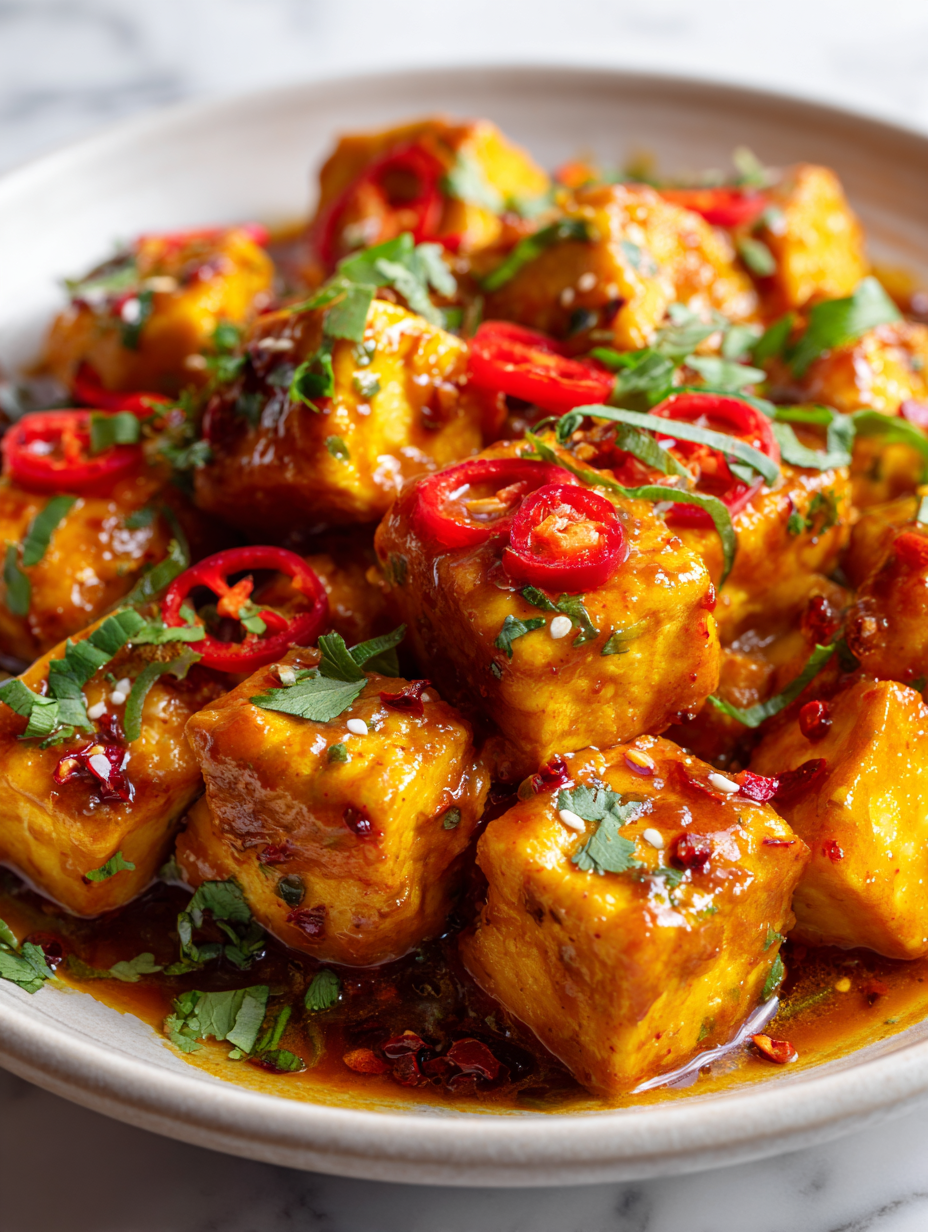
Sweet and Spicy Tofu Curry
Ingredients
Equipment
Method
- Press the tofu between paper towels or a clean kitchen towel for about 10 minutes to remove excess moisture. Then, cut it into 1-inch cubes.
- Dice the onion finely and mince the garlic cloves. Set aside for later.
- In a small bowl, mix the curry powder, turmeric, and cumin to create your spice blend. This fragrant mixture will be added to the aromatics later.
- Heat a tablespoon of oil in a non-stick skillet or wok over medium heat. Once shimmering, add the tofu cubes in a single layer. Fry for about 4-5 minutes, turning occasionally, until they are golden and crispy on all sides. Remove and set aside.
- In the same skillet, add a little more oil if needed. Sauté the diced onion until it turns translucent and starts to caramelize, about 5 minutes. The kitchen will fill with a sweet, fragrant aroma.
- Add the minced garlic to the skillet and cook for about 30 seconds until fragrant, stirring constantly to prevent burning.
- Stir in your spice blend and cook for 1 minute, allowing the spices to toast slightly and release their aroma.
- Pour in the coconut milk, stirring well to combine with the spices and aromatics. Add the honey or brown sugar and stir until dissolved. Bring the mixture to a gentle simmer.
- Return the crispy tofu to the skillet, stirring gently to coat each piece with the flavorful sauce. Let it simmer uncovered for about 10 minutes, until the sauce thickens slightly and the flavors meld.
- Squeeze the juice of half a lime into the curry, stirring to brighten the flavors. Taste and adjust with extra lime, salt, or sweetener if needed.
- Chop fresh cilantro and sprinkle over the top just before serving. Serve hot over steamed rice or your favorite grain, garnished with extra herbs if desired.
Pro tips for tofu curry
- Bolded Tip: Press the tofu thoroughly to remove excess moisture. A dry surface crisps better during frying.
- Bolded Tip: Use full-fat coconut milk for a rich, velvety sauce that clings to every bite.
- Bolded Tip: Sauté aromatics until golden and fragrant—this builds a deep flavor base for your curry.
- Bolded Tip: When frying tofu, do not overcrowd the pan; cook in batches if needed to achieve crispy edges.
- Bolded Tip: Finish with a squeeze of lime to brighten the dish and balance the spices with a fresh zing.
- Bolded Tip: Add chopped cilantro just before serving for a burst of herbal freshness that elevates the curry.
Common mistakes and how to fix them
- TOO MUCH LIQUID: If curry is too thin, simmer longer until it thickens and coats the tofu.
- SOGGY TOFU: Ditch pressing? Tofu stays softer and less crispy—press or bake to fix.
- OVER-SPICED: Too fiery? Add a splash of coconut milk or a squeeze of lime to mellow it out.
- UNDERSALTED: Missing salt makes flavors dull; taste and adjust before serving for best balance.
Quick fixes and pantry swaps
- If the curry is too thin, simmer longer until it thickens and coats the tofu.
- When the tofu isn’t crispy enough, increase heat and cook in smaller batches for better contact.
- Splash a bit of coconut milk or lime juice if the dish feels too spicy or dulls the heat.
- Patch over-salted curry by adding a splash of water or more coconut milk to dilute flavors.
- Shield over-torched spices by removing from heat immediately and adding fresh herbs for freshness.
Prep, store, and reheat tips
- You can prepare the curry sauce and chop the aromatics a day ahead. Store in an airtight container in the fridge for up to 2 days. The flavors will deepen overnight, making the final taste richer and more layered.
- Press and cube the tofu a few hours before cooking. Keep it covered in the fridge to prevent drying out. The firm texture will hold up better during frying and will absorb flavors more effectively when cooked fresh.
- Refrigerated curry should be reheated gently over low heat, stirring often. The sauce thickens slightly upon standing—add a splash of water or coconut milk to loosen it. It reheats well for up to 2 days, but the tofu is best eaten fresh for crispness.
- For longer storage, freeze the cooled curry in airtight containers for up to 2 months. Thaw in the fridge overnight, then reheat slowly. Expect some change in texture—coconut sauce may separate slightly, but a good stir restores it.
Top questions about tofu curry
1. How do I get crispy tofu?
Press the tofu for at least 10 minutes to remove excess moisture; this helps it crisp up better when frying.
2. Can I use light coconut milk?
Use full-fat coconut milk for a richer, creamier sauce with a velvety texture and more flavor.
3. How do I make it milder or spicier?
Adjust the spice level by adding more or less curry powder or chili, tasting as you go for your perfect heat.
4. When should I add lime juice?
Add a squeeze of lime at the end to brighten the flavors and add a fresh, tangy contrast to the rich sauce.
5. My curry is too watery, what now?
If the curry is too thin, simmer it longer until it thickens and coats the tofu nicely—about 10 minutes more.
6. Can I replace tofu with something else?
You can substitute tofu with chickpeas or tempeh if you prefer other plant-based proteins or don’t like soy.
7. How long does it last in the fridge?
Store leftovers in an airtight container in the fridge for up to 2 days. Reheat gently on the stove, stirring often.
8. How do I reheat without losing crispness?
To keep the tofu crispy, reheat it in a hot skillet for a few minutes instead of microwaving, which makes it soggy.
9. How do I avoid overcooking the tofu?
Overcooking the tofu makes it rubbery. Fry it until golden and crispy, then remove from heat promptly.
10. Any tips for chopping onions and garlic?
Use a sharp knife to finely dice aromatics; this ensures they cook evenly and release full flavor during sautéing.
This tofu curry feels like a quiet victory—simple ingredients coming together in a way that surprises me every time. The balance of spice and sweetness isn’t just a flavor trick; it’s a little reminder that cooking is about patience and tuning. It’s a dish that’s both humble and layered, perfect for those nights when you want something honest but with a touch of complexity.
Sharing this bowl with friends or enjoying it alone—either way, it’s a small act of care. It’s also a reminder to keep experimenting, to trust your palate, and to savor each step. Sometimes, the best meals are the ones made with a little love and a lot of taste testing along the way.

Hi, I’m Anjali Arora — the curious heart behind Feast Chase.
To be honest, I’ve always felt most at ease in my own company. I’m not exactly a people-person (small talk still makes me cringe), but there are two things I’ve always loved deeply: animals and food.