 Anjali Arora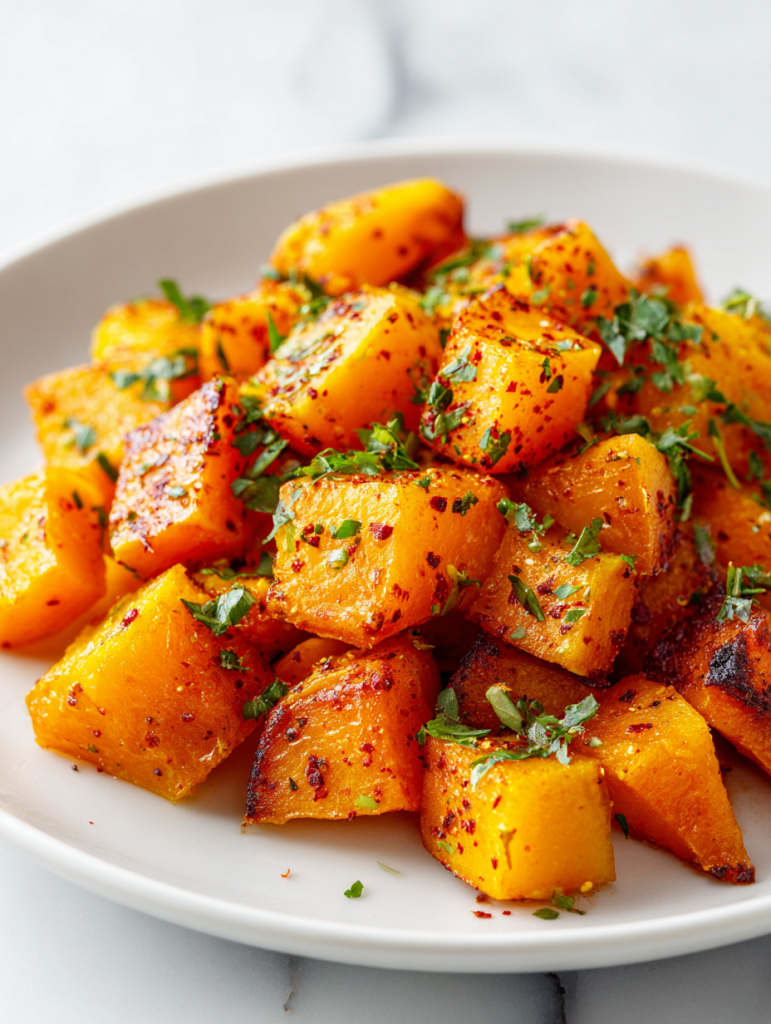
I’ve always been drawn to how butternut squash transforms in the oven. Its natural sweetness intensifies, and the dark caramelized edges tell a story of patience and heat. It’s a humble vegetable that, when roasted properly, rivals the richness of more decadent dishes. This recipe is a quiet ode to those dark, slightly charred edges that make every bite memorable.
Why I keep roasting this simple veg
It’s almost impossible to screw up, and the flavor payoff is big. The smell alone—sweet and smoky—makes the kitchen feel warm. Plus, it’s flexible; great on its own or as part of a bigger dish. That caramelized crunch is a reminder that simple ingredients can surprise you.
What’s in that squash, really?
- Butternut squash: Sweet, dense flesh that caramelizes beautifully. Look for a firm, heavy squash with no soft spots.
- Olive oil: Brings out the roasted flavor; use good quality. A splash helps with browning and adds richness.
- Salt: Enhances sweetness and depth. Don’t skimp—it’s essential for flavor.
- Smoked paprika: Adds a subtle smoky depth, balancing the natural sweetness.
- Optional herbs or spices: Rosemary or thyme can add a fresh note, if you like.
- Balsamic vinegar (optional): A splash after roasting intensifies sweetness and adds brightness.
- Pepper: A grind of black pepper adds a gentle heat and contrast.
Tools of the trade for perfect roasted squash
- Vegetable peeler: To peel the tough skin easily.
- Sharp chef’s knife: To cut the squash into even cubes.
- Baking sheet: To roast evenly in the oven.
- Parchment paper: To prevent sticking and make cleanup easier.
Step-by-step guide to roasting butternut squash
Step 1: Preheat your oven to 200°C (390°F).
Step 2: Peel the butternut squash carefully; a sharp vegetable peeler helps. Slice into 2.5 cm (1-inch) cubes.
Step 3: Toss the cubes with olive oil, salt, and a pinch of smoked paprika. Spread evenly on a baking sheet lined with parchment.
Step 4: Roast for 25-30 minutes, flipping halfway. Look for deep amber edges and a fragrant sweetness.
Step 5: Remove from oven and let rest for 5 minutes before serving.
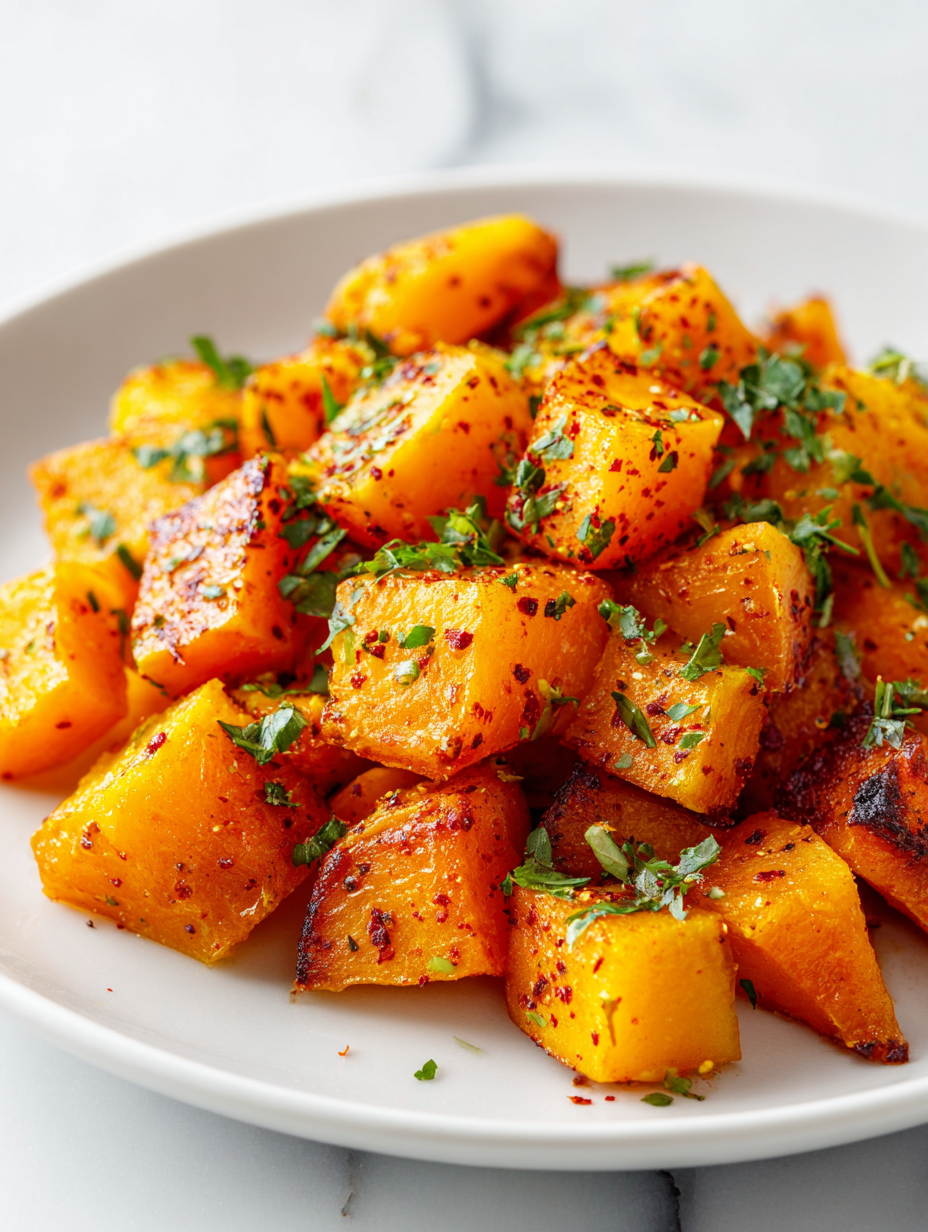
Roasted Butternut Squash with Smoked Paprika
Ingredients
Equipment
Method
- Preheat your oven to 200°C (390°F). Line a baking sheet with parchment paper for easy cleanup.
- Peel the butternut squash carefully using a vegetable peeler. Once peeled, slice off the stem and bottom ends for stability.
- Slice the squash in half lengthwise, then scoop out the seeds with a spoon. Cut the flesh into roughly 2.5 cm (1-inch) cubes, keeping the pieces uniform for even roasting.
- Place the cubes in a large bowl, then drizzle with olive oil. Sprinkle with salt, smoked paprika, and freshly ground pepper. Toss gently to coat each piece evenly.
- Spread the seasoned squash cubes in a single layer on the prepared baking sheet, ensuring they aren't crowded to promote caramelization.
- Place the baking sheet in the oven and roast for about 25-30 minutes, flipping the cubes halfway through. You'll see deep amber edges forming and hear a gentle caramelizing sound.
- Once roasted, remove the sheet from the oven and let the squash rest for 5 minutes. The edges should be crispy, and the flesh tender and fragrant.
- If using, drizzle the balsamic vinegar over the warm squash for an extra burst of sweetness and brightness. Toss lightly to combine.
- Garnish with chopped fresh herbs like rosemary or thyme for a fresh, aromatic finish, if desired.
- Serve the roasted butternut squash warm as a side dish or enjoy it on its own for a sweet, smoky treat with a satisfying crunch.
Notes
Cooking checkpoints to watch for
- Edges should be deeply golden and slightly crispy.
- Smell should be sweet and smoky, not raw or burnt.
- Squash should be soft through but still hold its shape when pierced.
Common mistakes and how to fix them
- Squash is unevenly cooked or too mushy.? Use a sharp knife to prevent slipping and uneven cuts.
- Squash turns out bland or soggy.? Ensure even spacing on the baking sheet; overcrowding causes steaming.
- Edges burn before the centers soften.? Check oven temperature with an oven thermometer for accuracy.
- Caramelization is uneven.? Flip the cubes halfway through roasting to avoid burning and promote even caramelization.
This dish is all about those caramelized bits that stick to the pan, offering a smoky-sweet burst with every bite. It’s simple but transforms a humble vegetable into something unexpectedly rich in flavor. Feel free to toss in some herbs or a splash of balsamic to make it your own. Once roasted, it’s perfect for salads, soups, or just a forkful straight from the pan.

Hi, I’m Anjali Arora — the curious heart behind Feast Chase.
To be honest, I’ve always felt most at ease in my own company. I’m not exactly a people-person (small talk still makes me cringe), but there are two things I’ve always loved deeply: animals and food.