 Anjali Arora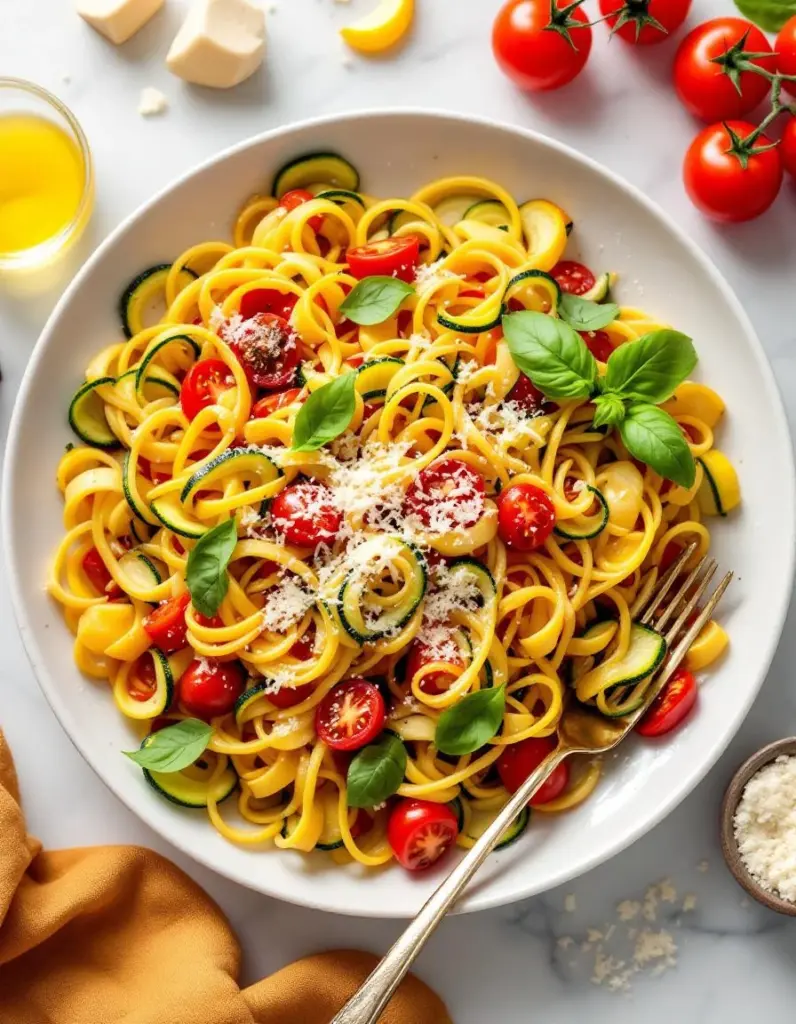
Chopping the vegetables is a messy affair, with seeds and bits flying everywhere, no matter how careful I try to be. The water’s boiling over before I get the pasta in, and I have to fish out the noodles quickly to avoid sogginess.
The whole process is a flurry of steam, sizzling sounds, and the smell of garlic hitting hot oil. It’s a race against time to toss everything together before the veggies wilt too much or the pasta sticks.
The sounds of chopping the vegetables—each crunch echoing through the quiet kitchen—mix with the gentle sizzle as the garlic hits the hot oil, filling the air with a fragrant, slightly smoky aroma that signals the start of something fresh and simple.
What goes into this dish
- Bell peppers: I love the sweet, smoky aroma of roasting red and yellow peppers; skip if you’re not into the extra prep, but their charred bits add a gorgeous flavor contrast.
- Zucchini: Sliced thin, it cooks quickly and adds a tender, fresh bite; if you don’t have zucchini, chopped summer squash works just as well—just keep an eye on the cooking time.
- Cherry tomatoes: Bright, juicy bursts of flavor that soften and release their sweet tang when cooked; use canned diced tomatoes in a pinch, but the fresh ones are way more vibrant.
- Garlic: I smash and mince it until fragrant, letting it fill the kitchen with that pungent, inviting aroma; if you’re sensitive, reduce the amount, but don’t skip it entirely for depth.
- Parmesan: I sprinkle it in at the end for that salty, umami punch, with a slightly gritty texture; skip or substitute with nutritional yeast for a vegan twist, but it won’t have that umami kick.
- Olive oil: Extra virgin for that fruity, peppery flavor that coats everything; if you only have light olive oil, it’s fine—just don’t expect the same depth of flavor.
- Pasta: I prefer a good-quality spaghetti or penne, cooked al dente; if you’re in a pinch, whole wheat works but will be a bit sturdier and nuttier in flavor.
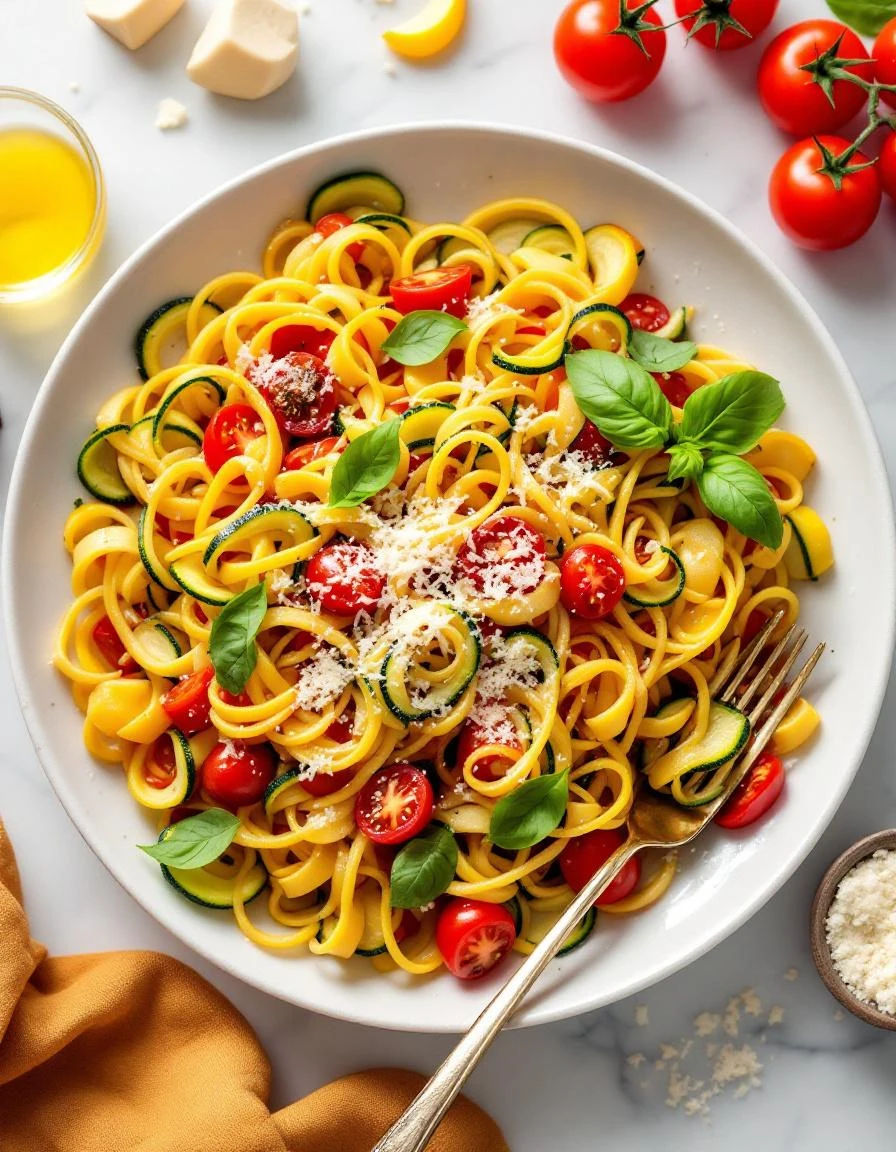
Colorful Vegetable Pasta
Ingredients
Equipment
Method
- Bring a large pot of salted water to a rolling boil. Add the pasta and cook until just al dente, following package instructions. Drain and set aside.
- While the pasta cooks, chop the bell peppers into strips and thinly slice the zucchini. Halve the cherry tomatoes and mince the garlic cloves.
- Heat the olive oil in a large skillet over medium heat until shimmering and fragrant. Add the minced garlic and sauté for about 30 seconds until fragrant and slightly golden.
- Add the chopped bell peppers and zucchini to the skillet. Cook, stirring occasionally, until the vegetables are tender and slightly charred around the edges, about 5-7 minutes.
- Stir in the halved cherry tomatoes and cook for another 2-3 minutes, just until they soften and release their juices, filling the kitchen with a sweet, tangy aroma.
- Add the cooked pasta directly to the skillet with the vegetables. Toss everything together gently to combine and coat the noodles evenly with the flavorful oil and vegetables.
- Sprinkle grated Parmesan cheese over the pasta, then toss again until the cheese melts slightly and the dish becomes fragrant and well combined.
- Serve immediately, garnished with additional Parmesan and fresh herbs if desired, for a vibrant, colorful, and flavorful vegetable pasta.
Common mistakes and how to fix them
- FORGOT to taste for salt early, fix by adding a pinch during cooking, not at the end.
- DUMPED the pasta water without reserving, fix by saving some for the sauce to loosen it up.
- OVER-TORCHED the garlic, fix by lowering heat immediately and stirring constantly.
- MISSED the timing on veggies, fix by prepping all ingredients first and adding in stages.
Make-Ahead and Storage Tips
- Chop all vegetables the night before to save time and keep them crisp in the fridge for up to 24 hours.
- Cook the pasta al dente, then toss with a little olive oil, and store in an airtight container for up to 2 days in the fridge.
- Prepare the sauce components — garlic, herbs, and lemon zest — ahead, kept in separate containers for freshness.
- Frozen cooked vegetables can be kept for up to 3 months, but their texture may soften upon reheating.
- Reheat gently in a skillet over medium-low, adding a splash of water or broth; watch the colors brighten as they warm.
- Flavors may deepen or soften after storage, so taste and adjust seasoning before serving again.
FAQs
1. How do I keep basil fresh in the dish?
Fresh basil adds a fragrant, slightly spicy aroma that brightens each bite. Use it just before serving to keep that vibrant scent.
2. How do I prevent veggies from becoming mushy?
Overcooking the vegetables makes them soggy and dull in flavor. Keep an eye on their color and texture, and remove from heat promptly.
3. Should I add salt to the boiling water?
Salting the water is key—salty water seasons the pasta from inside out, making every strand flavorful and tender.
4. How do I reheat leftovers without losing flavor?
Reheating gently in a skillet with a splash of olive oil or broth restores some of the original texture and flavor, with a fresh aroma of garlic and herbs.
5. Can I substitute ingredients without losing flavor?
Using a mix of colorful peppers and cherry tomatoes makes the dish visually vibrant and adds layers of sweet, smoky, and tangy flavors that excite the senses.

Hi, I’m Anjali Arora — the curious heart behind Feast Chase.
To be honest, I’ve always felt most at ease in my own company. I’m not exactly a people-person (small talk still makes me cringe), but there are two things I’ve always loved deeply: animals and food.