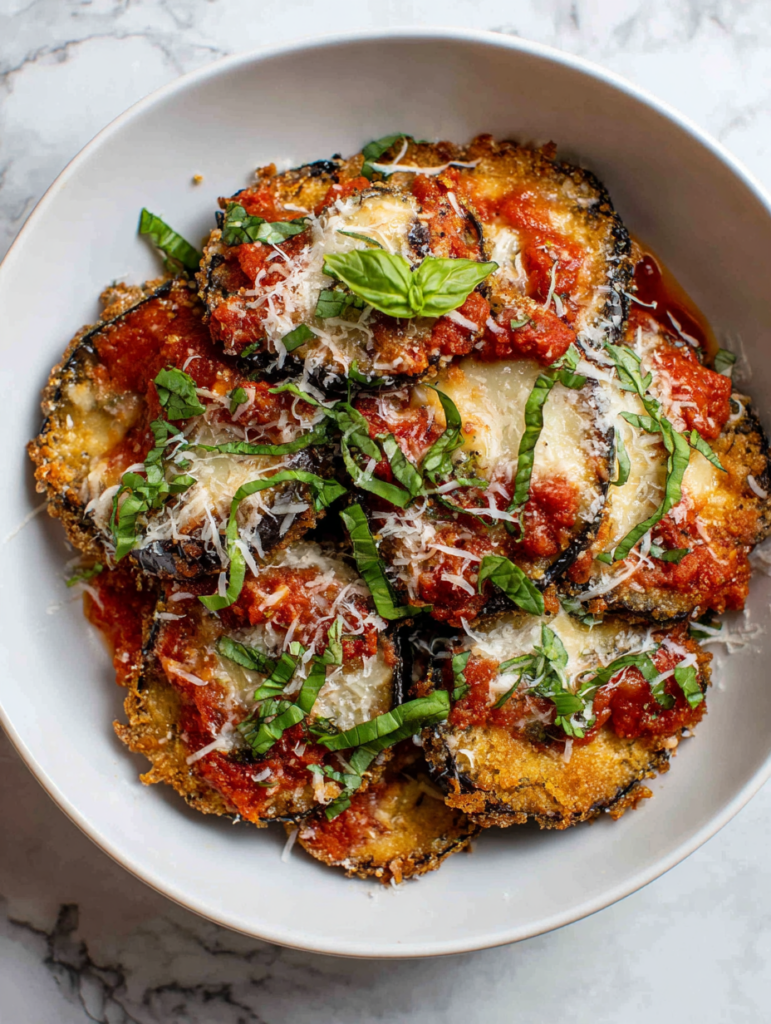
Eggplant Parmesan has a way of stirring up memories of Sunday dinners at my grandma’s place — the smell of tomato sauce bubbling, the crisp edges of fried eggplant, and the gooey cheese melting just right. But lately, I’ve been tinkering with that classic, trying to keep it rooted in nostalgia while giving it a fresh, crispy life. It’s about balancing that cozy familiarity with a texture that’s satisfying in every bite.
This dish feels like a hug, but I want it to crunch and crackle like the best fried food you crave on a lazy weekend. Using modern tricks, I aim to elevate the eggplant—less soggy, more vibrant, and downright addictive. It’s a little rebellion against the usual, a reminder that comfort food can also be exciting and new.
Focusing on the nostalgic comfort of eggplant Parmesan with a modern twist that emphasizes crispy textures and fresh, vibrant flavors, making it feel both timeless and fresh.
Rediscovering Comfort with a Crispy Twist
- Eggplant Parmesan reminds me of lazy Sunday dinners, the aroma filling the house with nostalgia.
- I love how a crispy crust can turn this dish into a crunchy, satisfying bite every time.
- There’s a quiet pride in perfecting the sauce—rich, tangy, and just enough sweetness.
- Nothing beats the simple joy of layering eggplant, cheese, and sauce for that classic comfort.
- It’s a dish that feels like a warm hug, yet still excites with every crispy, cheesy forkful.
The story behind this recipe
- Eggplant Parmesan has always been a dish I turn to when I want something familiar but with a little twist. One summer, I was experimenting with different ways to make it crunchier, inspired by fried chicken and crispy tempura. I remember biting into a particularly well-baked slice, the crust crackling under my fork, and feeling that nostalgic warmth mixed with satisfaction. That moment made me realize how much texture can elevate comfort food, making it feel fresh and exciting again.
- Since then, I’ve been chasing that perfect crispy coating—less soggy, more vibrant, and full of flavor. It’s about balancing the richness with a touch of brightness, so every bite feels like a little celebration of both tradition and innovation.
- heading: ‘The story behind this recipe’
Historical & Cultural Trivia
- Eggplant Parmesan likely originated in Southern Italy, where eggplants were abundant and cheese was a staple ingredient.
- The dish became popular in America in the mid-20th century, especially among Italian-American communities seeking hearty, comforting meals.
- Ancient recipes used simple ingredients like eggplant, tomato, and cheese, but the modern crispy coating is a relatively recent invention.
- The layering technique mimics lasagna, but the crispy eggplant adds a different texture and flavor profile.
- Traditionally, the dish was baked, but frying and then baking became common to achieve that irresistible crunch.
Key Ingredients & Tips
- Eggplant: I pick firm, shiny eggplants with a deep purple hue—when sliced, they should be dense and not spongy. If yours feels soft, skip it; a better one awaits.
- Breadcrumbs: I use a mix of panko and regular breadcrumbs for crunch—add a pinch of herbs or garlic powder to the mix. Skip this step if you prefer a softer crust, but the crunch is worth it.
- Tomato sauce: I love a rich, slightly sweet sauce with a hint of basil—fresh or good-quality jarred works. If your sauce is thin, simmer it down a bit for more flavor and body.
- Cheese: I mix mozzarella and Parmesan for that gooey, salty kick—using freshly grated cheese makes a noticeable difference. If you’re dairy-free, try a nut-based cheese, but the melt won’t be the same.
- Olive oil: I use a good-quality extra virgin for frying—its fruity aroma really boosts flavor. For a lighter version, olive oil can be replaced with a neutral oil, but don’t skip it entirely.
- Herbs: I add fresh basil and oregano—bright, aromatic, and essential for that classic flavor. Dried herbs work in a pinch, but fresh herbs really elevate the dish’s vibrant notes.
Spotlight on key ingredients
Eggplant:
- I look for shiny, firm eggplants with a deep purple hue; soft or dull ones lack texture and flavor. When sliced, they should feel dense and not spongy.
- During cooking, it becomes tender and silky, absorbing flavors beautifully. Watch for a slight browning on edges—this adds flavor and texture.
Breadcrumbs:
- I prefer panko for that extra crunch—when toasted, they turn a light golden and smell toasty. Mix in herbs or garlic for flavor layers.
- During frying, they crackle and turn crisp, creating that satisfying crust. Use seasoned ones if you want more flavor without extra effort.
Notes for ingredient swaps
- Battered Eggplant: I use a light tempura batter for extra crispness—if you prefer less fuss, just skip it and fry plain slices.
- Cheese: I love a mix of mozzarella and Parmesan for gooeyness and sharpness—vegan cheeses can work, but expect less melt and flavor complexity.
- Breadcrumbs: Panko gives the crunch I crave—if you want a softer crust, opt for finer, seasoned breadcrumbs or crushed crackers.
- Oil: I fry in olive oil for flavor—neutral oils like canola work, but they won’t add that fruity aroma. Use what you have.
- Tomato Sauce: I prefer a bright, tangy sauce with fresh basil—store-bought is fine, but make sure it’s thick enough to not make the dish soggy.
- Herbs: Fresh basil and oregano lift the dish—dried herbs are fine if fresh aren’t available, just use a bit more for flavor punch.
- Eggplant: Firm, shiny, deep purple—if your eggplant feels spongy or dull, pick a fresher one for better texture and flavor.
Equipment & Tools
- Shallow dish: For coating flour
- Deep bowl: For dipping in eggs
- Plate: For breadcrumb coating
- Large skillet: For frying eggplant slices
- Cooling rack: To drain excess oil
- Baking dish: For assembling and baking
Step-by-step guide to Eggplant Parmesan
- Equipment & Tools: Prepare a shallow dish for flour, a deeper bowl for eggs, and a plate with seasoned panko breadcrumbs. Use a large baking sheet for frying and a rack for draining.
- Slice eggplants into 1/2-inch thick rounds. Lay them out and sprinkle with salt. Let sit for 20 minutes to draw out excess moisture and bitterness.
- Rinse eggplant slices and pat dry thoroughly. Preheat oven to 190°C (375°F).
- Set up your dredging station: flour, beaten eggs, seasoned panko. Dip each slice: first in flour, then eggs, then panko, pressing gently to adhere.
- Heat about 1/4 inch of olive oil in a large skillet over medium heat (about 160°C/320°F). When shimmering, add eggplant slices in batches.
- Fry for 2-3 minutes per side until golden brown and crispy. Maintain oil temperature; adjust heat if slices burn or aren’t crisp enough. Drain on rack.
- Spread a thin layer of tomato sauce in a baking dish. Layer fried eggplant slices over sauce, then top with more sauce and cheese. Repeat layers if needed.
- Finish with a generous layer of cheese on top. Bake in oven for 20-25 minutes until bubbly and golden. Watch for cheese to melt and edges to crisp.
- Remove from oven and let rest for 10 minutes to set. This helps the layers hold together and enhances flavor melding.
- Checkpoints & How to Know It’s Done: Look for bubbling sauce and golden cheese top. Eggplant should be tender but hold shape. Crust should be crisp and crackle when sliced.
Let the baked eggplant Parmesan rest on the counter for 10 minutes before slicing. This helps the layers set and prevents gooey messes. Serve with a sprinkle of fresh basil or extra Parmesan for that final touch.
How to Know It’s Done
- Golden brown crust with crackling edges
- Bubbly, slightly caramelized sauce topping
- Tender but firm eggplant slices
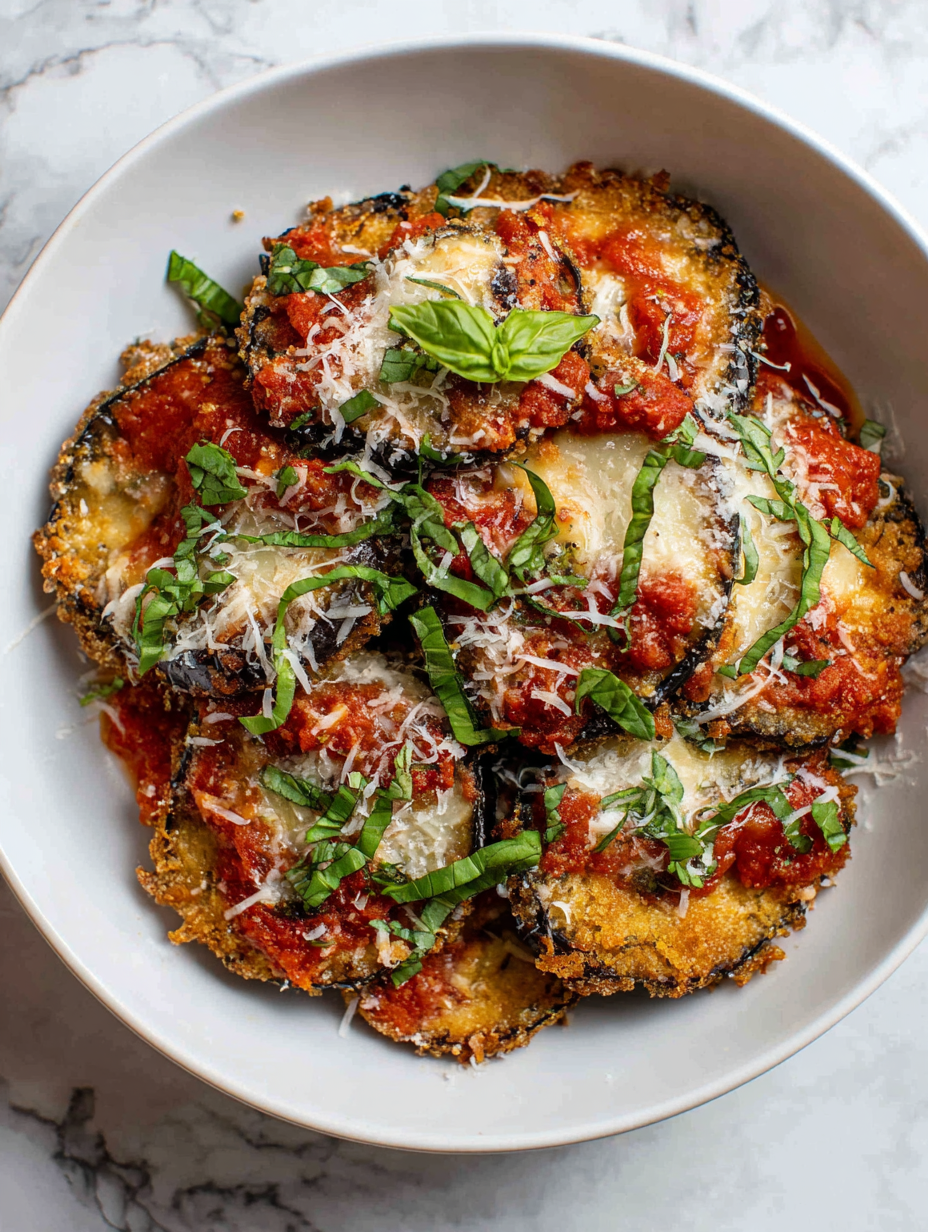
Crispy Eggplant Parmesan
Ingredients
Equipment
Method
- Slice the eggplants into 1/2-inch thick rounds and lay them on a platter. Sprinkle with salt and let sit for 20 minutes to draw out excess moisture and bitterness.
- Rinse the salted slices under cold water and pat thoroughly dry with paper towels. Preheat your oven to 190°C (375°F) and set up your dredging station: a shallow dish with flour (not listed here), a bowl with beaten eggs, and a plate with combined panko and regular breadcrumbs mixed with chopped garlic and herbs if desired.
- Dip each eggplant slice into the flour, then the beaten eggs, and finally coat evenly in the breadcrumb mixture, pressing lightly to adhere.
- Heat olive oil in a large skillet over medium heat until shimmering. Fry the coated eggplant slices in batches for about 2-3 minutes per side until golden brown and crispy, listening for that satisfying crackle. Drain on a cooling rack set over paper towels.
- Spread a thin layer of tomato sauce in the bottom of a baking dish. Layer the crispy fried eggplant slices over the sauce, then spoon more sauce on top, followed by a generous sprinkle of mozzarella and Parmesan cheese. Repeat the layering if needed, finishing with a layer of cheese on top.
- Bake in the preheated oven for 20-25 minutes until the cheese is bubbly and golden around the edges. The sauce should be bubbling and fragrant.
- Remove from the oven and let rest for about 10 minutes to allow the layers to set, making slicing easier and preventing gooey messes.
- Garnish with freshly chopped basil and serve hot, enjoying the crispy edges, melty cheese, and vibrant sauce in every bite.
Tips for perfect Eggplant Parmesan
- Parmesan: Grate your cheese fresh for the best melt and flavor, avoiding that grainy texture from pre-shredded varieties.
- Crispy Coating: Use Panko breadcrumbs for a crunchier crust, and toast them lightly before dredging for extra flavor and golden color.
- Oil Temperature: Keep your frying oil at around 160°C (320°F); if it’s too hot, coating burns before crispy, too cold and it gets greasy.
- Eggplant Prep: Salt slices and let sit 20 minutes to draw out bitterness and excess moisture, then rinse and pat dry for better crisping.
- Layering: Spread sauce evenly on each layer—this prevents soggy spots and ensures every bite is flavorful and moist.
- Rest Before Serving: Let baked eggplant Parmesan sit for 10 minutes after removing from oven; it helps the layers set and makes slicing easier.
- Cheese Topping: Finish with a generous layer of cheese and broil for 2-3 minutes until bubbly and golden—keep a close eye to prevent burning.
Common mistakes and how to fix them
- FORGOT to dry eggplant slices thoroughly, resulting in soggy coating—pat dry to fix.
- DUMPED the oil too hot, burning breadcrumbs—adjust heat to medium for even frying.
- OVER-TORCHED the cheese, making it rubbery—watch closely and remove once golden.
- MISSED flipping eggplant slices, leading to uneven crispness—flip after 2-3 minutes for even color.
Quick fixes and pantry swaps
- When oil shimmers, splash a breadcrumb—if it sizzles, you’re ready to fry.
- If eggplant slices are soggy, pat dry thoroughly before breading.
- Splash cold water on burnt breadcrumbs, then start over with fresh coating.
- Patch greasy eggplant by placing slices on paper towels to absorb excess oil.
- Shield delicate cheese with foil if it starts to over-torch or brown too quickly.
Prep, store, and reheat tips
- Prepare eggplant slices and salt them a day ahead; store covered in the fridge for up to 24 hours. The salt draws out moisture, making the coating crispier when fried.
- You can bread the eggplant slices a few hours before frying; keep them on a plate covered with plastic wrap in the fridge. This saves time during cooking and keeps them fresh.
- Cook the sauce and assemble the layered dish a day in advance. Cover tightly and refrigerate for up to 24 hours. The flavors meld and intensify overnight, making reheating even better.
- Reheat in the oven at 180°C (350°F) for about 20 minutes, until bubbling and hot through. The top cheese should melt and turn slightly golden, and the eggplant should be tender.
- For extra crispness after reheating, broil for 2–3 minutes—watch closely so the cheese doesn’t burn. The dish should crackle slightly and smell fragrant, with a warm, cheesy aroma.
Top questions about Eggplant Parmesan
1. How do I pick the best eggplant for this recipe?
Choose firm, shiny eggplants with deep purple skin. If slices are spongy, they’re past their prime.
2. What breadcrumbs work best for crispy coating?
Use panko breadcrumbs for extra crunch. If you prefer softer crust, opt for seasoned fine breadcrumbs or crushed crackers.
3. How hot should the oil be for frying?
Fry eggplant slices in medium heat oil (around 160°C/320°F) until golden and crispy, about 2-3 minutes per side.
4. How do I keep the eggplant crispy after frying?
Let fried eggplant rest on a rack to drain excess oil and keep the crust crispy before layering.
5. How do I prevent the dish from getting soggy?
Layer sauce and eggplant evenly to avoid soggy spots. Let the assembled dish rest 10 minutes before slicing.
6. Can I use store-bought sauce?
Use a good-quality tomato sauce, simmered down if thin, with fresh basil for vibrant flavor.
7. How do I know when it’s fully baked?
Bake at 190°C (375°F) for 20-25 minutes until bubbly and cheese is golden. Look for bubbling and crisp edges.
8. How should I reheat leftovers?
Reheat in the oven at 180°C (350°F) for 20 minutes until hot and bubbling, then broil briefly for a crisp top.
9. Can I substitute ingredients?
Use fresh basil and grated cheese for the best flavor and melt. Dried herbs and pre-shredded cheese work but less vibrant.
10. Why should I let it rest before serving?
Rest the baked dish for 10 minutes before slicing, to let layers set and avoid gooey messes.
This dish isn’t just about comfort; it’s about reconnecting with simple, honest flavors that remind us of home. The crispy eggplant, bubbling cheese, and vibrant sauce come together in a way that feels both nostalgic and fresh, especially when you take that first crackling bite. It’s a reminder that sometimes, the best meals are the ones that take a little time and a lot of love.
In a world that’s constantly moving, this recipe offers a moment to slow down and enjoy something genuinely satisfying. Whether it’s for a weeknight dinner or a cozy weekend project, eggplant Parmesan has a way of making everyone feel a little more grounded, a little more at home. And that’s what really matters—good food, shared and savored.

I’m Mayank, the creator, cook, and writer behind this blog. FeastChase is not just a collection of recipes — it’s a journey through tastes, memories, and moments that bring people together at the table.