 Anjali Arora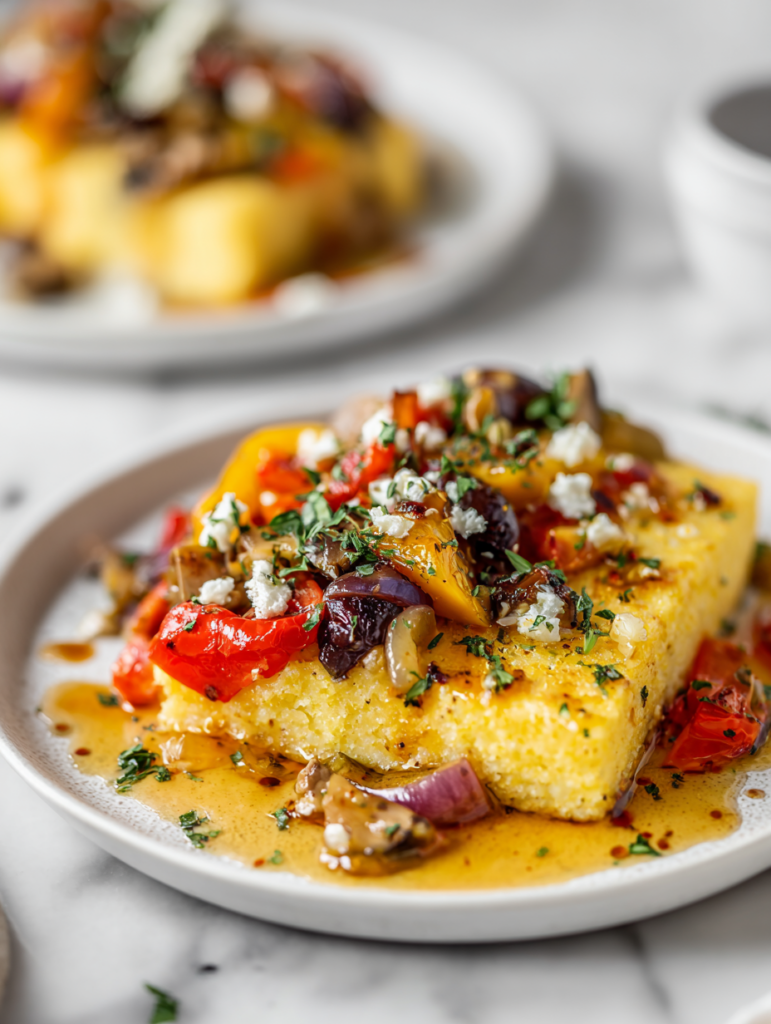
Baked polenta is one of those dishes that feels like a blank slate—perfect for experimenting with seasonal toppings or leftovers. I love how it starts with humble, coarse cornmeal, but ends up with a crispy crust and a creamy interior that’s just waiting for a splash of olive oil or a handful of fresh herbs. It’s deceptively simple, but it’s the kind of comfort food that makes me want to keep a bag of polenta in the pantry at all times.
What drew me to this recipe was its versatility—no two batches are the same. Sometimes I top it with roasted cherry tomatoes and basil, other times I melt some cheese and drizzle honey for a sweet-salty combo. It’s a forgiving canvas, and I find it’s one of those dishes that tastes better the next day, once the flavors have had a chance to mingle. Plus, it’s easy enough to make on a busy weeknight but fancy enough to serve for weekend guests.
Focusing on how baked polenta can serve as a versatile canvas for seasonal toppings and condiments, transforming it from a simple side into a personalized, comforting dish that adapts to whatever is in the fridge or garden.
Unexpected Comfort of Crispy Edges
- I love how baking turns humble polenta into something crispy and comforting, like a blank canvas for toppings.
- There’s a nostalgic rush when I slice into the golden crust and see the creamy interior—reminds me of Sunday brunches.
- Sometimes I get impatient waiting for it to cool enough to slice, but that crispy edge makes it worth the wait.
- Baked polenta feels like a cozy hug on a chilly evening, especially when topped with melted cheese and fresh herbs.
- I’ve had moments where I thought I’d mess it up, but the forgiving nature of this dish always saves me.
The story behind this recipe
- This recipe came from a lazy Sunday afternoon when I had a bag of leftover polenta and a craving for something warm and satisfying. I remember the first time I baked it in my tiny oven, the smell of toasty corn and melted cheese filling the kitchen, making everyone gather around. It’s become a go-to, a way to turn simple ingredients into something special without much fuss.
- I’ve always loved how baking transforms humble polenta into a crispy, golden crust with a creamy center—a little bit rustic, a little bit fancy. It reminds me of childhood comfort food but with a modern twist. Now, it’s my happy fallback when I want something cozy and customizable, especially with seasonal toppings that make each batch feel new.
- I like how it’s forgiving—overbake a little, and it’s still delicious. The crispy edges and soft middle make it perfect for slicing and sharing, whether for a quiet dinner or a casual gathering. It’s a dish that feels like a hug, simple yet deeply satisfying.
Historical and Cultural Notes
- Polenta has roots in Italian peasant cuisine, dating back over a thousand years in Northern Italy.
- Originally, it was a humble dish, made with coarse grains, cooked slowly over an open fire.
- Baking polenta as a firm, sliceable dish became popular in Italy in the 20th century, blending rustic and modern styles.
- The technique of baking allows the polenta to develop a crispy crust while keeping the inside creamy and tender.
- Today, baked polenta is a versatile canvas, embraced worldwide for its simplicity and adaptability.
Key ingredients and tips
- Coarse cornmeal: I love the gritty texture and nutty flavor it brings. If you want a smoother finish, try a finer grind, but the coarse stuff adds that satisfying bite.
- Water or broth: The liquid helps hydrate the polenta and develop flavor. Using broth makes it more savory, while water keeps it neutral—choose based on your toppings.
- Salt: I always add a good pinch to enhance the corn flavor. If you’re watching sodium, reduce slightly, but don’t skip it—it’s essential for balance.
- Butter or olive oil: I prefer butter for richness, but olive oil adds a fruity note. Use generously for a glossy, tender crust that crackles when baked.
- Cheese (optional): Parmesan or Pecorino gives a sharp, salty kick. Skip it for a dairy-free version, but consider a sprinkle of nutritional yeast for umami.
- Toppings (seasonal vegetables, herbs): Fresh herbs or roasted veg make every batch unique. Bright basil or smoky roasted peppers add a lively contrast to the creamy base.
Spotlight on key ingredients
Coarse cornmeal:
- I love its gritty texture and nutty flavor. It adds a satisfying bite and rustic charm to the dish.
- When cooked, it becomes tender yet retains a slight chew, offering a pleasant contrast to the crispy crust. The aroma is warm and toasty, inviting every time.
Butter or olive oil:
- I prefer butter for richness, but olive oil adds a fruity, slightly grassy note. It helps develop that irresistible crispy exterior.
- During baking, it melts into the surface, creating a glossy, crackling crust that signals perfection. The fat also enhances the creamy interior’s velvety texture.
Notes for ingredient swaps
- Dairy-Free: Coconut milk or cashew cream can replace butter and cheese, adding richness without dairy, though expect a slightly sweeter or nuttier flavor.
- Gluten-Free: Stick with pure cornmeal; avoid mixes that contain added wheat flour, which can alter texture and consistency.
- Vegetarian/Vegan: Skip cheese or use plant-based cheese alternatives. Use olive oil instead of butter for a fully plant-based crust.
- Low-Sodium: Use reduced-sodium broth or water, and skip added salt; enhance flavor with herbs and spices instead.
- Herb Variations: Fresh thyme or rosemary can swap for basil or parsley, giving different aromatic notes—try what’s fresh or seasonal.
- Liquid Substitutes: Use vegetable or chicken broth instead of water for a deeper, savory flavor; for a brighter taste, add a splash of lemon juice.
- Add-Ins: Mix in sautéed mushrooms, caramelized onions, or roasted peppers for more flavor and texture variation.
Equipment & Tools
- Medium saucepan: To cook the polenta mixture evenly.
- Baking dish (20x20cm): To bake and set the polenta into a firm, sliceable shape.
- Whisk: To stir the cornmeal into boiling water smoothly, avoiding lumps.
- Spatula: To spread and smooth the polenta in the dish.
Step-by-step guide to baked polenta
- Gather your equipment: a medium saucepan, a baking dish (about 20x20cm), a whisk, and a spatula. Preheat your oven to 200°C (392°F).
- In the saucepan, bring 4 cups of water (or broth for more flavor) to a boil over medium heat, about 5 minutes. Add a pinch of salt.
- Gradually whisk in 1 cup of coarse cornmeal, stirring constantly to prevent lumps. Reduce heat to low, and cook, stirring often, until the mixture thickens and pulls away from the sides, about 10 minutes. The smell should be toasty and inviting.
- Pour the hot, thick polenta into the prepared baking dish. Use a spatula to spread it evenly and smooth the surface. Let it cool slightly, about 10 minutes, so it firms up enough to handle.
- Transfer the dish to the oven. Bake for 40-45 minutes, until the top is golden and slightly crispy. If you notice uneven browning, rotate the dish halfway through.
- Once baked, remove from oven and let it rest for at least 10 minutes. This helps it set further, making slicing easier and cleaner.
- Slice into squares or rectangles. To serve, you can top with herbs, cheese, or your favorite seasonal toppings. Drizzle with olive oil or a squeeze of lemon for brightness.
- For a crispy finish, broil the slices for 2-3 minutes until edges are bubbling and golden. Keep a close eye to avoid burning.
- Serve warm, with toppings of your choice. The inside should be creamy and tender, with a crispy, golden crust on the outside.
Let the baked polenta rest for at least 10 minutes before slicing. Finish with a drizzle of olive oil, fresh herbs, or cheese. Serve warm, and enjoy the crispy edges contrasted with the creamy interior.
How to Know It’s Done
- The top is golden and crisp, with bubbling edges.
- The slices hold together firmly when lifted, not falling apart.
- The interior jiggles slightly but is mostly set, with a creamy texture.
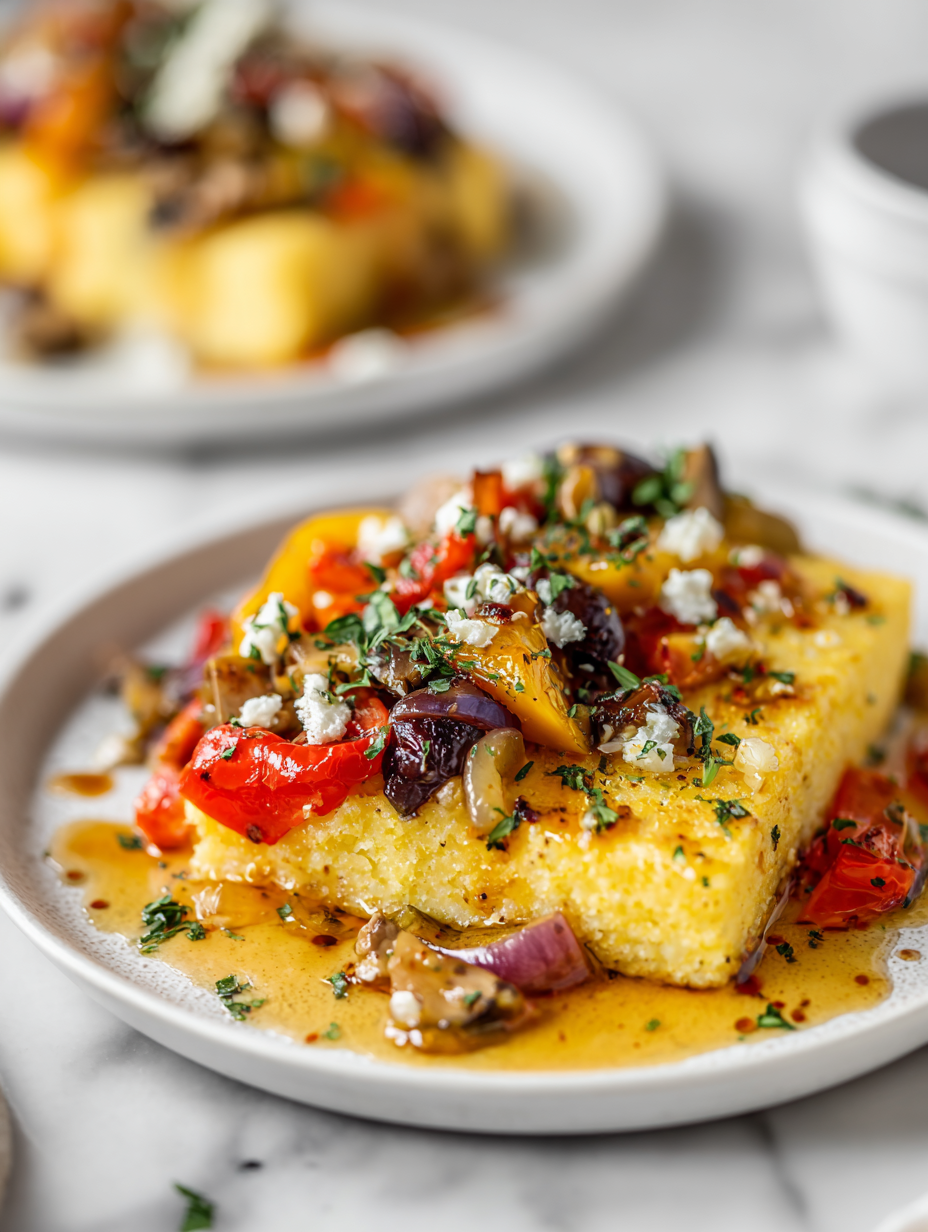
Baked Polenta with Seasonal Toppings
Ingredients
Equipment
Method
- Bring water or broth to a gentle boil in a medium saucepan over medium heat, and stir in a pinch of salt. The liquid should be bubbling softly and smelling warm and savory.
- Gradually pour in the cornmeal while whisking constantly to prevent lumps, creating a smooth, thick mixture. Continue stirring as it thickens and starts to pull away from the sides, about 8-10 minutes, filling your kitchen with a toasty aroma.
- Remove the saucepan from heat and stir in the butter or olive oil, along with the grated cheese if using, until melted and well incorporated. The mixture should be creamy and slightly glossy.
- Pour the hot polenta into your prepared baking dish, spreading it out evenly with a spatula. Let it sit for about 10 minutes to cool and firm up, which helps it set for easier slicing.
- Preheat your oven to 200°C (392°F). Transfer the dish to the oven and bake for 40-45 minutes, until the top turns golden brown and develops a crispy crust. You might hear a gentle crackle as it bakes, signaling crisping perfection.
- Remove the baked polenta from the oven and let it rest for about 10 minutes. This resting period allows the slices to firm up further, making them easier to cut and serve without falling apart.
- Slice the polenta into squares or rectangles using a sharp knife, revealing a crispy golden crust and a creamy, tender center. Serve warm with your favorite seasonal toppings, like fresh herbs, roasted vegetables, or a drizzle of olive oil.
- If desired, finish with a quick broil for 2-3 minutes to enhance the crispness of the edges, watching carefully to prevent burning. The result is a beautifully crackling crust that contrasts with the soft interior.
- Enjoy your baked polenta warm, topped with herbs, cheese, or seasonal vegetables for a comforting and customizable dish that’s perfect for any occasion.
Notes
Pro tips for perfect baked polenta
- Boldly whisk: Constant stirring while adding cornmeal prevents lumps and creates a silky texture.
- Use hot liquid: Pour boiling water or broth into the cornmeal for a smooth, cohesive mixture.
- Adjust baking time: Keep an eye on the crust; 40-45 minutes usually yields a golden, crispy top.
- Rest before slicing: Allow the baked polenta to cool for at least 10 minutes for cleaner cuts and better structure.
- Broil for crispness: Finish with a 2-3 minute broil to enhance the crust’s crunch and deepen flavor.
- Season generously: Don’t skimp on salt and herbs; they build flavor and balance the creamy bite.
- Experiment with toppings: Fresh herbs, cheese, or seasonal vegetables add personality and brightness to each slice.
Common mistakes and how to fix them
- FORGOT to watch oven temperature → Use an oven thermometer for accuracy.
- DUMPED the mixture too quickly → Whisk steadily to prevent lumps and ensure smoothness.
- OVER-TORCHED the edges → Cover with foil if edges brown too fast.
- MISSED the resting step → Rest baked polenta for better slicing and texture.
Quick fixes and pantry swaps
- If the polenta is too soft, splash in a bit more water and bake a few extra minutes.
- When edges burn quickly, patch with foil and lower oven temperature slightly.
- Splash a dash of lemon juice if the flavor is dull after baking.
- DUMPED too much cheese? Use a dollop of sour cream on top to mellow the richness.
- When in doubt, swap out broth for water to tone down saltiness and add a splash of oil for shine.
Prep, store, and reheat tips
- Prepare the baked polenta up to two days in advance; store it covered in the fridge to keep it fresh and prevent drying out. It will develop a slightly firmer texture but still holds well for slicing.
- Refrigerated baked polenta can last for 2-3 days. When reheating, it may be a bit softer; a quick broil or oven bake at 180°C (350°F) for 10 minutes restores some crispness and warmth, with a fragrant, toasty smell.
- For longer storage, freeze slices tightly wrapped for up to a month. Thaw in the fridge overnight, then reheat as above. Expect a slightly denser texture, but it still tastes comforting and familiar.
- Reheating releases a warm, toasted aroma, and the edges will crisp up again if baked or broiled. The interior remains creamy, with a satisfying bite that hints at the original texture, especially if crisped at the edges.
Top questions about baked polenta
1. How do I know when baked polenta is done?
Baked polenta should be firm enough to hold its shape but still tender inside. If it feels too soft, it might need a longer bake or a cooler temperature to crisp the crust without drying out the interior.
2. What visual cues tell me it’s ready to eat?
Look for a golden-brown, crispy top with bubbling edges. When you insert a knife or skewer, it should come out clean, and the slices should hold together but still be creamy inside.
3. Can I make baked polenta in advance?
Yes, you can prepare the polenta mixture ahead, pour it into the dish, and store it covered in the fridge for up to two days. Bake it straight from cold, adding a few extra minutes if needed.
4. How do I reheat baked polenta without losing texture?
Reheat slices in the oven at 180°C (350°F) for about 10 minutes until warmed through. Broiling for 2-3 minutes will restore crispness and bring back that toasty aroma.
5. What if my baked polenta isn’t crispy enough?
If the edges burn too quickly, cover with foil and lower the oven temperature slightly. If the polenta is too soft, give it a few extra minutes in the oven or broil for extra crunch.
6. Can I substitute ingredients in baked polenta?
Use vegetable or chicken broth instead of water for more flavor. For a dairy-free version, substitute with coconut milk or a splash of olive oil to keep it rich and moist.
7. Why is coarse cornmeal important in this recipe?
Coarse cornmeal adds a satisfying gritty texture and nutty flavor. During baking, it develops a toasted aroma and a pleasantly chewy bite that contrasts with the crispy crust.
8. What’s the trick to a perfect crust?
Olive oil or butter helps create a glossy, crackly crust. When baking, it melts into the top, giving a fragrant, golden finish that crackles when sliced.
9. How should I serve baked polenta?
Avoid overbaking or rushing the cooling process, which can cause cracks or uneven slices. Rest the baked polenta for at least 10 minutes to set fully before slicing.
10. What’s the best way to slice baked polenta?
Use a sharp knife to cut into clean slices. Top with fresh herbs, cheese, or seasonal toppings to add brightness and contrast to the creamy interior.
Baked polenta is one of those dishes that feels like a little victory—crispy edges, soft center, and endless topping options. It’s a humble ingredient turned into a comforting, customizable plate that’s perfect for any season or mood.
There’s something satisfying about slicing into that golden crust and seeing the creamy, tender interior. It’s a simple pleasure that makes even busy nights feel a bit more special, even if I’m just throwing leftovers on the table.

Hi, I’m Anjali Arora — the curious heart behind Feast Chase.
To be honest, I’ve always felt most at ease in my own company. I’m not exactly a people-person (small talk still makes me cringe), but there are two things I’ve always loved deeply: animals and food.