 Anjali Arora
Making steak fajitas starts with the sizzle of thinly sliced peppers and onions hitting a screaming hot skillet. You hear that sharp crackle as they begin to soften and caramelize, filling the kitchen with a smoky, savory aroma.
The steak itself is a quick sear, just long enough to get a rich brown crust and keep the inside juicy. Once cooked, the meat gets a rest before slicing—no fuss, just practical, honest cooking.
The sizzling sound of peppers and onions hitting the hot skillet, the way they crackle and soften together, filling the kitchen with a smoky aroma that signals everything’s coming together.
Key Ingredients and Substitutes
- Bell peppers: I love using a mix of red and yellow for color and sweetness, but green works just fine if that’s what you have; their crispness and smoky char add a punch of texture and aroma.
- Onions: Thinly sliced red or yellow onions cook down sweet and soft, releasing a pungent aroma, but skip if you’re not a fan of the tear-jerker or want a milder flavor.
- Skirt steak: I prefer a well-marbled cut like skirt or flank for flavor, but sirloin can stand in; slice against the grain for tenderness and get that crusty sear with high heat.
- Lime juice: Brightens everything with a splash of acidity, but lemon can be a zesty swap if lime isn’t handy; add at the end to keep that fresh, citrus punch.
- Seasonings: Basic salt, pepper, cumin, and smoked paprika are my go-tos; if you like heat, toss in a pinch of cayenne—just adjust to your spice threshold.
- Tortillas: Small corn or flour tortillas, toasted lightly before serving, really soak up the juices and flavors. Skip if gluten-free isn’t a concern; try lettuce wraps for a fresh crunch.
- Oil: High-smoke point oil like canola or vegetable for searing—skip if you want less fat, but you’ll miss that crispy, caramelized exterior.
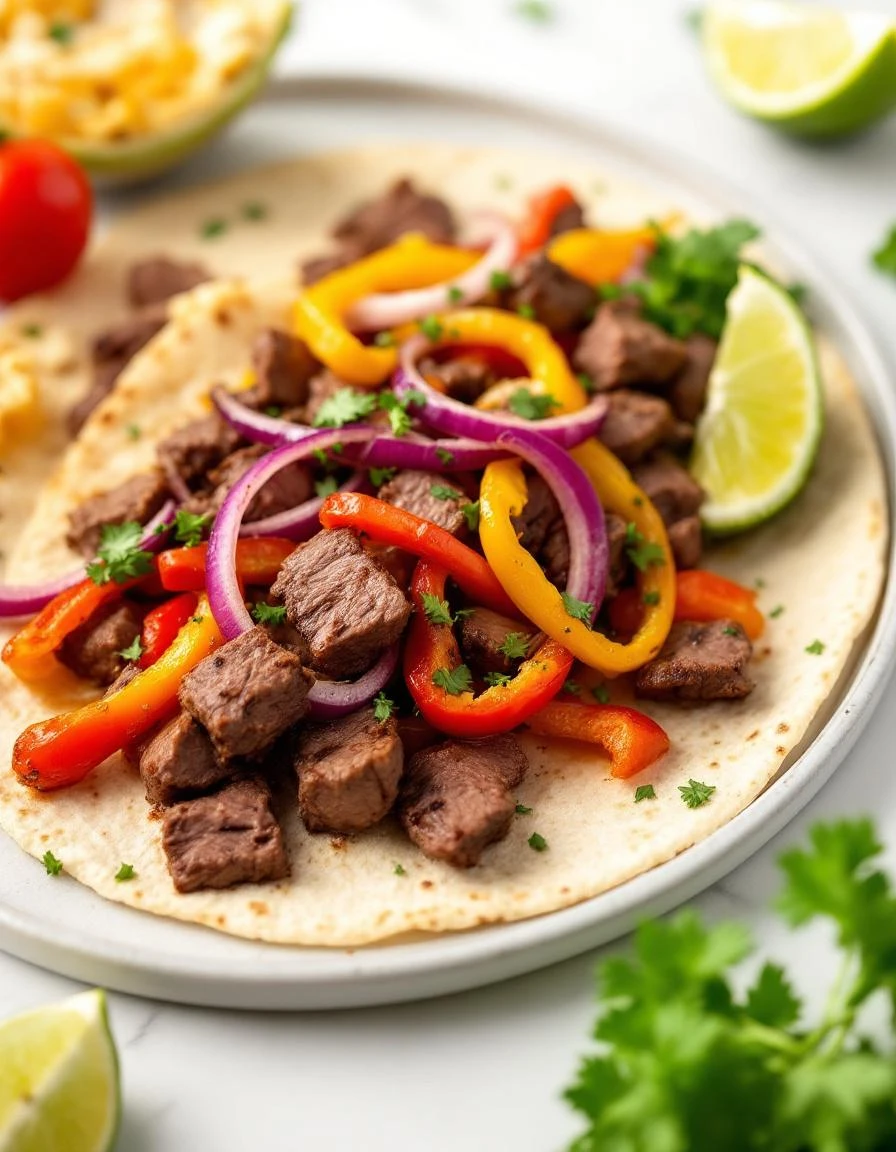
Steak Fajitas
Ingredients
Equipment
Method
- Start by patting the sliced steak dry with paper towels, then season with salt, pepper, cumin, and smoked paprika to enhance the flavor.
- Heat your skillet over high heat until shimmering, then add a tablespoon of oil and swirl to coat the bottom.
- Once the oil is hot and slightly smoking, carefully place the steak slices in the pan in a single layer. Sear for about 2-3 minutes without moving, until a deep brown crust forms, then flip and sear the other side.
- Remove the seared steak from the skillet and let it rest on a plate for a few minutes to retain juices, then slice into thin strips against the grain.
- In the same skillet, add another splash of oil if needed, then toss in sliced peppers and onions. Cook, stirring occasionally, until they soften, char slightly, and release a smoky aroma—about 5-7 minutes.
- Squeeze fresh lime juice over the vegetables and stir to combine, brightening the flavors and deglazing the pan for extra flavor.
- Warm the tortillas in a dry skillet over medium heat until lightly toasted and pliable, about 30 seconds per side.
- Assemble the fajitas by spooning some of the cooked peppers and onions onto a tortilla, then topping with sliced steak.
- Serve your steak fajitas immediately, with extra lime wedges on the side for an added zing.
Common Mistakes and How to Fix Them
- FORGOT to let the steak rest after cooking—rest for 5 minutes to keep juices inside.
- DUMPED the peppers and onions in a cold pan—preheat the skillet for better caramelization.
- OVER-TORCHED the tortillas—toast quickly over medium heat until lightly browned, then serve.
- SKIPPED the seasoning step—don’t forget salt and spices for flavor that really pops.
Make-Ahead and Storage Tips
- You can prep the sliced peppers, onions, and marinade a day ahead. Keep in an airtight container in the fridge for up to 24 hours to preserve freshness and brightness.
- Cooked steak can be stored in the fridge for 2-3 days. Slice it cold and reheat quickly in a hot skillet to revive that crusty exterior.
- The seasoned vegetables can be refrigerated for up to 24 hours. Reheat in a skillet until warmed through and slightly charred for best texture.
- For freezer storage, assemble components in separate airtight containers. Freeze cooked steak for up to 3 months, and peppers/onions for 1-2 months. Thaw overnight in the fridge before reheating.
- Flavors mellow and deepen over time, especially if marinated overnight. Expect a more concentrated, slightly less crisp vegetable bite after reheating.
- Reheat fajitas on the stovetop or in a hot skillet—look for sizzling sounds and fragrant aromas. Avoid steaming to maintain that crispy, smoky edge.
FAQs
1. What kind of steak works best?
Use a good quality steak like skirt or flank. Slice against the grain for tenderness. It should be juicy and slightly charred.
2. How do I know when the steak is done?
Cook the steak to medium-rare or medium. Use a meat thermometer or press gently to check doneness. Look for a warm red center.
3. How should I slice the steak?
Slice the steak thinly against the grain. This keeps it tender and easy to bite through, with a satisfying chew.
4. How do I reheat fajitas without losing flavor?
Reheat leftovers quickly in a hot skillet until sizzling. The edges should crisp up again, and the flavors will brighten.
5. What are good accompaniments for fajitas?
Serve with warm tortillas, fresh lime, and salsa. The smell of grilled peppers and sizzling steak makes the first bite irresistible.

Hi, I’m Anjali Arora — the curious heart behind Feast Chase.
To be honest, I’ve always felt most at ease in my own company. I’m not exactly a people-person (small talk still makes me cringe), but there are two things I’ve always loved deeply: animals and food.