 Anjali Arora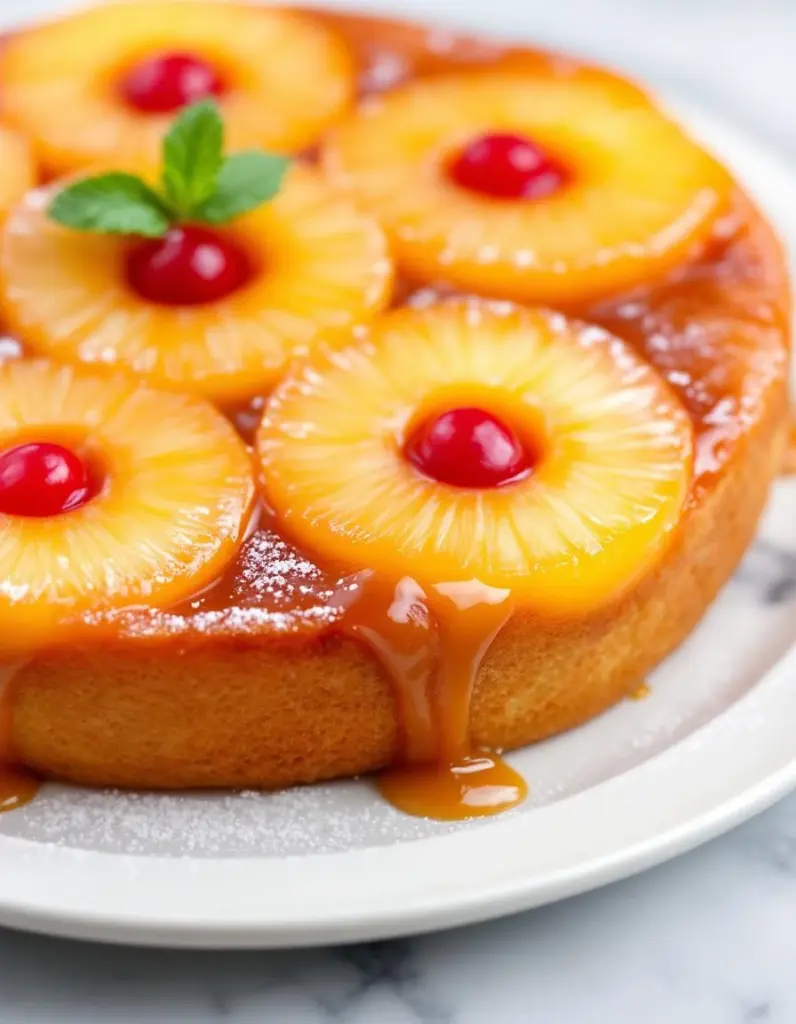
Making a pineapple upside down cake starts with prepping the fruit and melting butter in the pan, which can bubble over if you’re not careful. The pineapple rings and maraschino cherries sit in that buttery caramel, sticky and bright with juice.
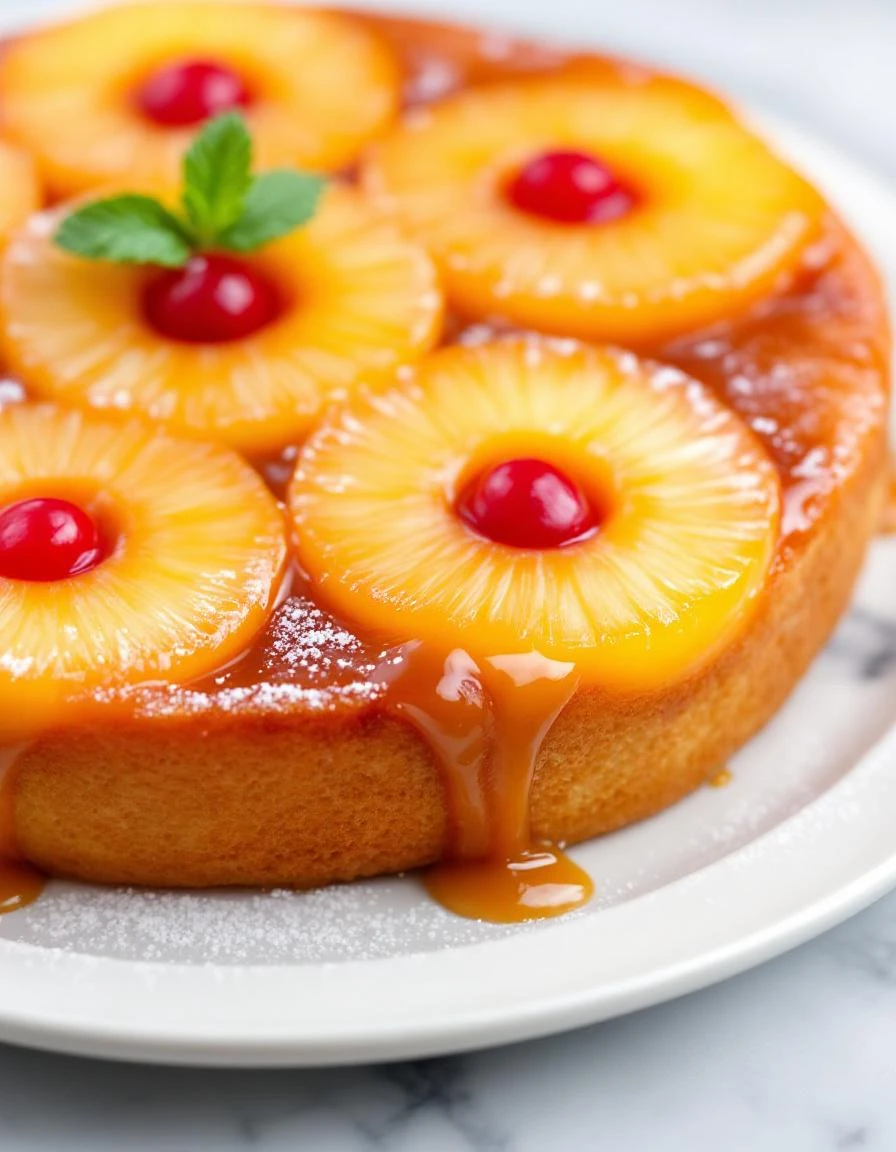
Once the batter is poured over, the whole thing bakes in the oven, filling your kitchen with a warm, sweet aroma. Flipping it out onto a plate reveals the caramelized fruit on top, that crackly, gooey layer that’s a mess to get just right.
The caramel topping bubbling and crackling as it hits the hot cake pan, filling the kitchen with a smoky-sweet aroma that makes you pause and breathe it all in before flipping.
What goes into this dish
- Pineapple slices: I like using canned pineapple in juice for ease, but fresh pineapple gives a brighter, juicier flavor with a hint of tang—just watch out for the extra prep. The oozy, sweet juice adds a vibrant pop to each bite.
- Maraschino cherries: They add a splash of color and a slight candy sweetness, but feel free to skip or swap for fresh berries if you want a more natural look and flavor. The cherry’s syrupy brightness contrasts nicely with caramel.
- Brown sugar: I rely on dark brown sugar for that deep, molasses-rich caramel note, but light brown works if you prefer a milder, less intense sweetness. It melts into the butter, creating that sticky, smoky aroma.
- Butter: Unsalted butter is my go-to for control over salt, but salted butter is fine if you want a slightly more seasoned flavor. It forms the base for the caramel layer and should be melted until bubbling for that crackly topping.
- All-purpose flour: Standard flour is perfect, but if you’re gluten-sensitive, a gluten-free blend works. Just keep an eye on the batter’s texture, which should be smooth but not runny. The flour keeps the cake tender and moist.
- Vanilla extract: I add a splash for warmth and depth, but a hint of almond extract can lift the flavor with a slightly nutty note. It’s subtle but makes a big difference in the aroma.
- Baking powder: A small amount helps the cake rise and stay fluffy, but skip if you’re making a denser, pound-style cake. Make sure it’s fresh so your cake doesn’t turn out flat or dense.
Pineapple Upside Down Cake
Ingredients
Equipment
Method
- Preheat your oven to 350°F (175°C). Grease your skillet or cake pan generously with butter to ensure easy release later.
- In the skillet, melt the butter over medium heat, then sprinkle the dark brown sugar evenly over the melted butter. Stir gently until the sugar dissolves and the mixture bubbles, creating a caramel that coats the bottom of the pan.
- Arrange the pineapple slices in a single layer over the caramel, placing a cherry in the center of each ring for a pop of color. Carefully spoon any leftover juice over the fruit, then remove from heat.
- In a mixing bowl, whisk together the eggs, vanilla, and milk until well combined and slightly frothy. In a separate bowl, sift the flour and baking powder together.
- Gradually add the dry ingredients to the wet mixture, folding gently with a spatula until just combined; the batter should be smooth but not overmixed.
- Pour the batter evenly over the pineapple and caramel, spreading gently to fill the pan and cover the fruit.
- Bake in the preheated oven for about 40 minutes, or until the cake is golden and a toothpick inserted into the center comes out clean. The kitchen will fill with a sweet, buttery aroma.
- Remove the cake from the oven and let it cool in the pan for 10 minutes. Then, place a serving plate over the top and carefully invert the cake onto the plate, revealing the caramelized fruit on top.
- Gently lift the pan, allowing the caramel to drip over the fruit. Let the cake cool slightly before slicing and serving to enjoy its sweet, sticky topping and tender crumb.
Notes
Common Mistakes and How to Fix Them
- FORGOT to level the sugar before caramelizing? Use a flat surface to spread evenly.
- DUMPED in too much pineapple juice? Pat slices dry to prevent soggy cake layers.
- OVER-TORCHED the caramel? Lower the heat and keep a close eye to avoid bitter flavors.
- MIXED the batter too vigorously? Gentle folds keep the cake tender and airy.
Make-Ahead and Storage Tips
- You can prep the pineapple slices and cherries a day ahead—just drain and pat dry, then keep covered in the fridge.
- Assemble the caramel layer and cake batter up to 24 hours in advance; store separately, then pour and bake when ready.
- Cake keeps well covered at room temperature for a day, but for longer storage, refrigerate for up to 3 days—bring to room temp before serving.
- Freezing the fully assembled cake is an option, up to 1 month—wrap tightly and thaw in the fridge overnight, then warm slightly before serving.
- Reheating the cake in a low oven (around 300°F) for 10-15 minutes restores some of the fresh-baked texture—check for gooey caramel warmth and tender crumb.
FAQs
1. How do I pick good pineapple slices?
The pineapple should be juicy and fragrant, with a sweet-tart aroma. When biting into it, it should feel tender but not mushy, with a slight snap in the texture.
2. What indicates the caramel is ready?
The caramel should be bubbling and golden-brown, giving off a rich, smoky-sweet smell. It’s sticky yet pourable, with a slight crackle when you stir it.
3. How do I know when the cake is done?
Use well-baked cake that’s golden and pulls away from the sides of the pan. It should smell buttery and vanilla, with a moist, tender crumb when tested with a toothpick.
4. How do I reheat leftovers?
Reheat in a low oven or microwave until warm and fragrant, feeling the steam release and the edges softening. The caramel warms up and becomes glossy, adding a fresh aroma.
5. How should I flip the cake?
Invert the cake onto a plate while still warm to prevent sticking. The caramel will be gooey and fragrant, and the fruit will sit beautifully on top, with a slight sticky sheen.

Hi, I’m Anjali Arora — the curious heart behind Feast Chase.
To be honest, I’ve always felt most at ease in my own company. I’m not exactly a people-person (small talk still makes me cringe), but there are two things I’ve always loved deeply: animals and food.