 Anjali Arora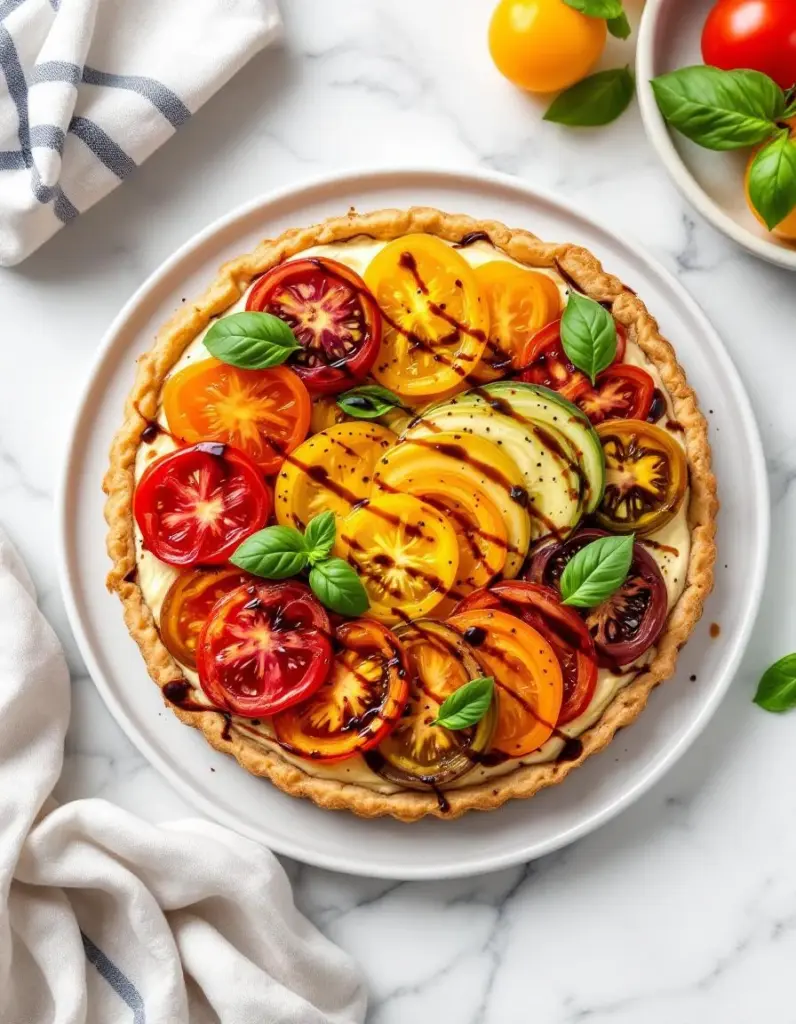
Getting this tart together means handling flaky pastry and stacking slices of heirloom tomatoes without them sliding off. It’s a bit of a mess—tomato juice drips everywhere, and the crust gets soggy if you’re not quick enough.
You’ll want to work fast once the tomatoes are sliced, brushing the pastry with mustard or cheese, then layering the tomatoes in a tight circle. The oven’s hot, the smell of baking pastry fills the kitchen, and you’ll be reaching for paper towels to clean up the juice splatters.
The crisp snap of the heirloom tomato skin as you slice through it, revealing the juicy, oozy interior that spills out with a satisfying squish.
What goes into this dish
- Heirloom tomatoes: I love the mix of colors and flavors here, from sweet to tart. If you can’t find heirlooms, a good-quality cherry or beefsteak works, just slice them thick enough to hold their shape and avoid sogginess.
- Pie crust: I prefer a flaky, butter-heavy crust that crisps up nicely, but a store-bought puff pastry can save time. Keep it chilled until ready, and blind bake a bit if you worry about sogginess.
- Mustard or cheese layer: I brush a thin layer of Dijon for a zing, but you could skip or replace with ricotta for creaminess. This keeps the crust from getting soggy and adds flavor.
- Fresh herbs: Basil and thyme are my go-tos, but oregano or chives add a different note. Chop them finely so they distribute evenly and don’t overwhelm the delicate tomato slices.
- Olive oil: A drizzle of good fruity olive oil just before serving is a must. If you don’t have it, a splash of balsamic vinegar can add a nice tang, but skip if you prefer pure tomato flavor.
- Salt and pepper: Don’t skimp—they enhance the tomato’s brightness. Sea salt flakes are a nice touch for crunch and flavor, but regular kosher salt works fine.
- Optional toppings: A sprinkle of grated Parmesan or crumbled feta can boost umami. Skip if you want a pure, simple tomato experience or need to keep it dairy-free.
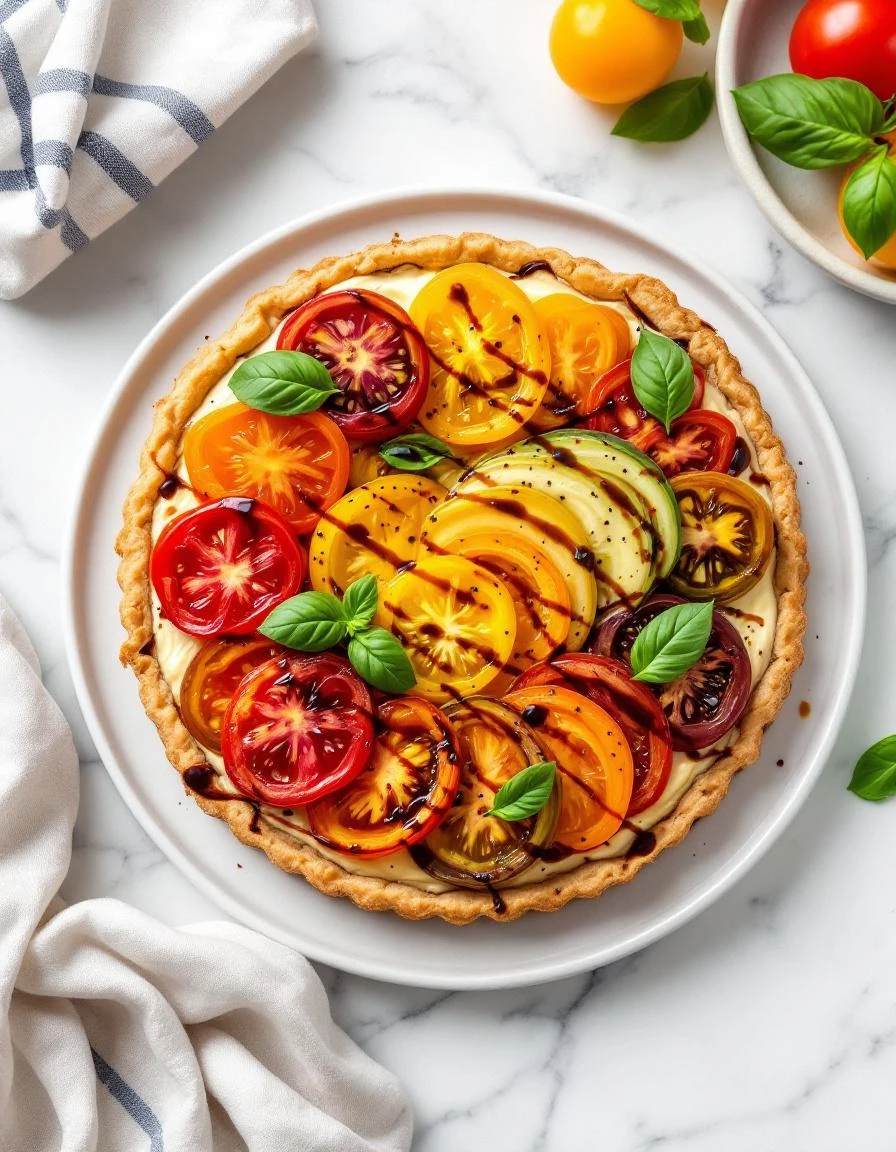
Heirloom Tomato Tart
Ingredients
Equipment
Method
- Preheat your oven to 400°F (200°C). Roll out the chilled pastry on a lightly floured surface into a 12-inch circle, then transfer it to a baking sheet lined with parchment paper. Prick the crust all over with a fork to prevent puffing up during baking.
- Spread a thin layer of Dijon mustard or cheese spread over the surface of the crust, leaving about a 1-inch border around the edges. This creates a flavorful base and helps prevent sogginess.
- Bake the crust in the preheated oven for about 8-10 minutes, or until it just starts to turn golden and crisp around the edges. Remove from the oven and let it cool slightly.
- While the crust cools, prepare the tomatoes by slicing them into thick rounds and sprinkling them with a bit of salt. Let sit for a few minutes, then blot excess juice with paper towels to minimize sogginess.
- Arrange the tomato slices in a tight, circular pattern over the crust, working from the outside in. Overlap slices generously, and press them lightly into the spread layer to help them stay in place.
- Sprinkle the chopped basil over the tomatoes, then drizzle with a little olive oil. Season with salt and pepper to taste, then finish with a sprinkle of grated Parmesan or feta if desired.
- Place the assembled tart back into the oven and bake for an additional 10-12 minutes, until the crust is golden and crisp, and the tomato juices are bubbling gently.
- Remove the tart from the oven and let it rest for a few minutes. Drizzle with a bit more olive oil if desired, then slice and serve while warm or at room temperature.
Common mistakes and how to fix them
- FORGOT to chill the pastry dough; the crust becomes greasy. FIX by refrigerating for at least 30 minutes.
- DUMPED the tomatoes directly from the fridge; cold tomatoes release more juice. FIX by letting them sit at room temp briefly.
- OVER-TORCHED the crust; it turns bitter. FIX by covering edges with foil if they brown too fast.
- MISSED to drain excess liquid from tomatoes; soggy crust results. FIX by salting tomatoes and blotting with paper towels.
Make-Ahead and Storage Tips
- You can prepare the tart shell and blind bake it a day ahead. Keep covered at room temperature or in a cool place.
- Slice and arrange the heirloom tomatoes up to 2 hours before serving. Store at room temp to prevent sogginess.
- Assemble the tart just before baking to keep the crust crisp and tomatoes fresh tasting.
- The baked tart can be refrigerated for up to 1 day. Reheat in a 350°F oven until warmed through and crust is still flaky.
- Tomato flavors intensify after a day in the fridge, so the tart tastes richer but slightly less vibrant. Best eaten within 24 hours.
- Reheat checkpoint: look for the crust to regain crispness and the tomatoes to be heated through, with juices bubbling slightly.
FAQs
1. How do heirloom tomatoes taste?
Heirloom tomatoes have a tender, juicy flesh with a slightly oozy texture and a bright, complex flavor. They can be a bit messy to slice, but their flavor makes it worth the effort.
2. How can I pick good heirloom tomatoes?
Choose firm, brightly colored tomatoes with a slight give when pressed. Ripe ones smell sweet and earthy, with a hint of vine. Avoid any that are mushy or have dark spots.
3. How do I keep the tart from getting soggy?
To prevent sogginess, drain excess juice from sliced tomatoes by sprinkling with salt and letting them sit for a few minutes, then blot with paper towels. Keep slices thick to hold shape.
4. How do I know when the tart is done?
A hot oven will make your pastry flaky and crisp. Expect the edges to turn golden within 15-20 minutes. The tomatoes release fragrant juices that should bubble gently when finished.
5. Can I reheat leftovers?
Serve the tart warm or at room temperature. The flavors deepen, and the crust stays crisp longer. If reheating, do so in a 350°F oven until just warm and the crust regains some crunch.

Hi, I’m Anjali Arora — the curious heart behind Feast Chase.
To be honest, I’ve always felt most at ease in my own company. I’m not exactly a people-person (small talk still makes me cringe), but there are two things I’ve always loved deeply: animals and food.