 Anjali Arora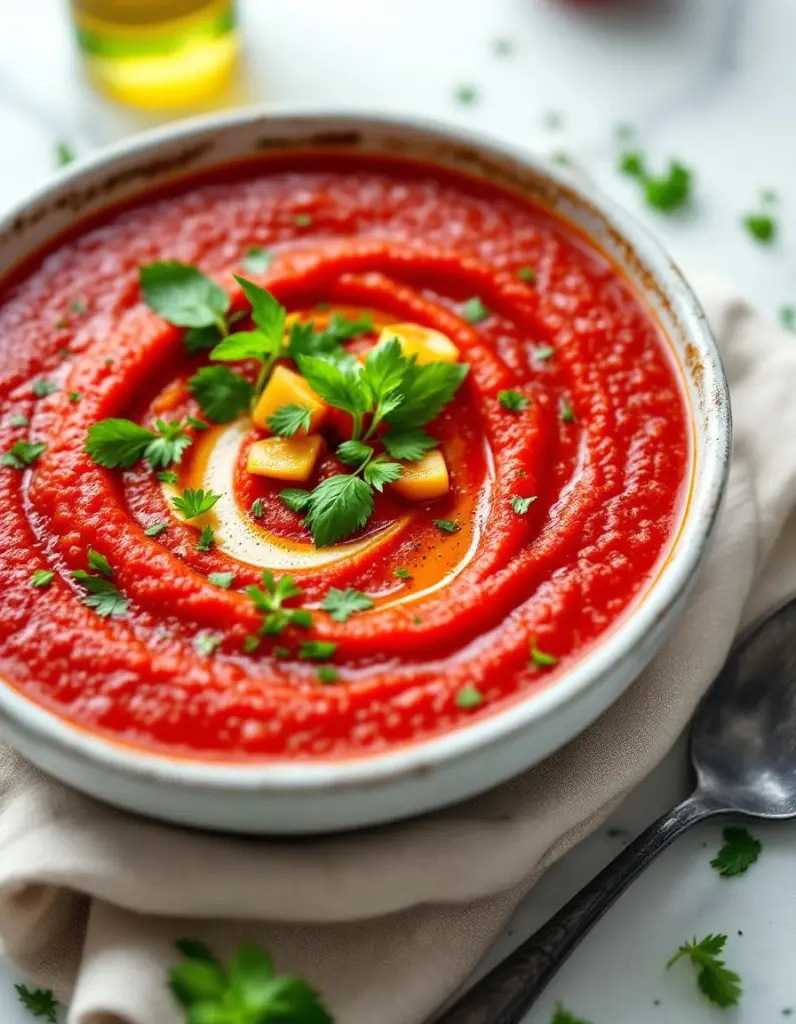
Starting with ripe tomatoes, I peel and crush them, feeling the skins give way under my fingers and releasing that fresh, almost grassy smell. The mess on the board is part of the process—juices running, seeds spilling, but it all gets blended anyway.
Chopping cucumbers, peppers, and garlic feels rough and satisfying, each slice making a crunchy sound that echoes in the kitchen. It’s messy, loud, and tactile, grounding you in the act of making something raw and real before blending it smooth.
The gritty scrape of peeling ripe tomatoes, the rough texture of cucumber skins, and the rhythmic chopping of bell peppers—each step makes a satisfying, tactile mess on the cutting board, grounding you in the freshness and simplicity of the ingredients.
What goes into this dish
- Ripe tomatoes: I like plump, juicy heirlooms that smell like summer. If you only have standard grocery store tomatoes, add a splash of tomato juice for extra flavor and brightness.
- Cucumber: Cool, crisp, and mildly sweet—peel if you’re avoiding bitterness, but I keep the skin for texture and a splash of color. Skip if you prefer a smoother soup or use zucchini instead.
- Bell peppers: I go for red or yellow for sweetness, but green works if you want a sharper bite. Remove seeds and membranes to keep the broth clear and vibrant.
- Garlic: Fresh and pungent, it wakes up the whole bowl. If you’re sensitive, halve the amount or roast it first for a mellow, smoky flavor.
- Sherry vinegar: Adds a bright, tangy kick that balances the sweetness. Apple cider vinegar can stand in if you’re out, but skip balsamic—too heavy and sweet.
- Olive oil: Drizzle in good-quality extra virgin for richness and a fruity aroma. Lightly toast the garlic beforehand if you want a toastier depth.
- Salt and pepper: I season generously—taste as you go. Kosher salt brings out the best flavors, but fine sea salt works fine if that’s what you have.
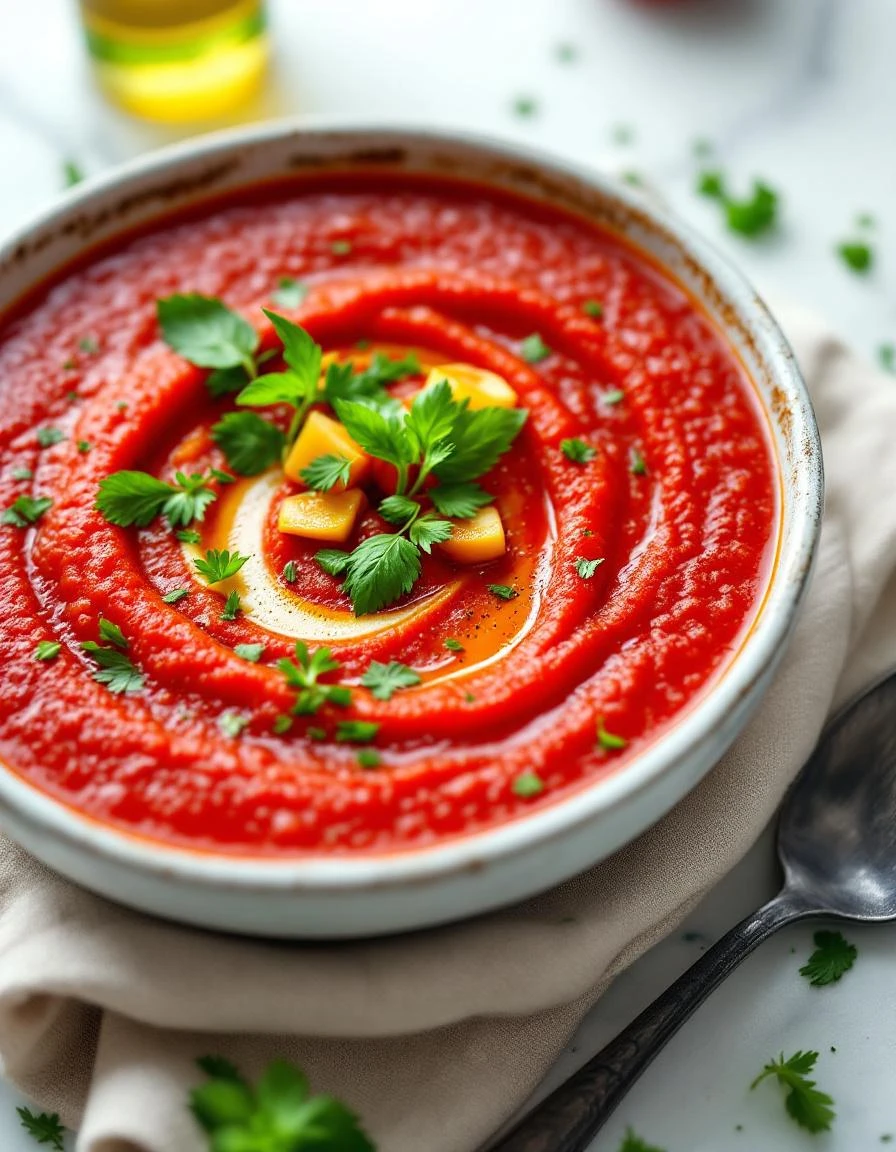
Fresh Tomato Gazpacho
Ingredients
Equipment
Method
- Peel the tomatoes by scoring a small X on the bottom of each, then blanching in boiling water for 30 seconds before transferring to ice water. Once cooled, peel off the skins to reveal the juicy flesh.
- Core the cucumber and chop it into rough chunks, leaving the skin on for added texture and color.
- Remove seeds and membranes from the bell pepper, then chop it into small pieces.
- Peel the garlic cloves and give them a rough chop to prepare for blending.
- In a blender, combine the peeled tomatoes, chopped cucumber, bell pepper, and garlic. Add the sherry vinegar, olive oil, and a pinch of salt and pepper.
- Blend on high until the mixture is completely smooth and silky, about 30-45 seconds. Taste and adjust seasoning with more salt, pepper, or vinegar if needed.
- Pour the gazpacho into a large bowl, cover, and chill in the refrigerator for at least 2 hours to let flavors meld and the texture firm up.
- Once chilled, give the soup a gentle stir and taste again, adjusting seasoning if necessary.
- Serve the gazpacho cold, garnished with fresh herbs or a drizzle of olive oil if desired.
Notes
Common Gazpacho mistakes and how to fix them
- FORGOT to taste before blending? Add salt gradually and adjust after blending.
- DUMPED too much vinegar? Balance with a touch of honey or extra tomato for sweetness.
- OVER-TORCHED the garlic? Rinse quickly and remove burnt bits, then re-season.
- SKIPPED peeling cucumbers? Use a spoon to gently scrape skins if bitterness shows.
Make-Ahead and Storage Tips
- Chopped vegetables can be prepared a day ahead—store in airtight containers in the fridge. They’ll keep crisp for about 24 hours.
- Pureed gazpacho tastes brighter and more refreshing if chilled at least 2 hours before serving, ideally overnight in the fridge.
- Flavors meld and mellow over time—keep the soup covered and refrigerated for up to 24 hours. Stir before serving.
- Freezing isn’t ideal for this, but if you must, freeze in portions for up to 1 month. Thaw overnight in the fridge, then stir well.
- Reheating isn’t necessary—serve it cold or slightly chilled. If it’s too thick, thin with a splash of cold water or ice, tasting for balance.
FAQs
1. Should gazpacho be hot or cold?
Gazpacho should be served cold, around 50-60°F, so it feels refreshing as you sip it, with a slight chill that wakes up your palate.
2. Can I use canned tomatoes?
Use ripe, fragrant tomatoes—they’ll release a juicy, bright flavor and smell almost sweet as you blend. If they’re mealy, the soup can taste dull and flat.
3. How long should I chill gazpacho?
Chill the soup for at least two hours. The flavors deepen, and the texture becomes smoother—plus, the cold hits just right on a hot day.
4. My gazpacho is too tangy, what do I do?
If it tastes too sharp or vinegary, stir in a pinch of sugar or a drizzle of honey. It helps mellow the acidity and balances out the brightness.
5. How long does gazpacho last?
Leftovers keep well in the fridge for up to 24 hours. Keep it in an airtight container, and stir before serving—sometimes it thickens or separates overnight.

Hi, I’m Anjali Arora — the curious heart behind Feast Chase.
To be honest, I’ve always felt most at ease in my own company. I’m not exactly a people-person (small talk still makes me cringe), but there are two things I’ve always loved deeply: animals and food.