 Anjali Arora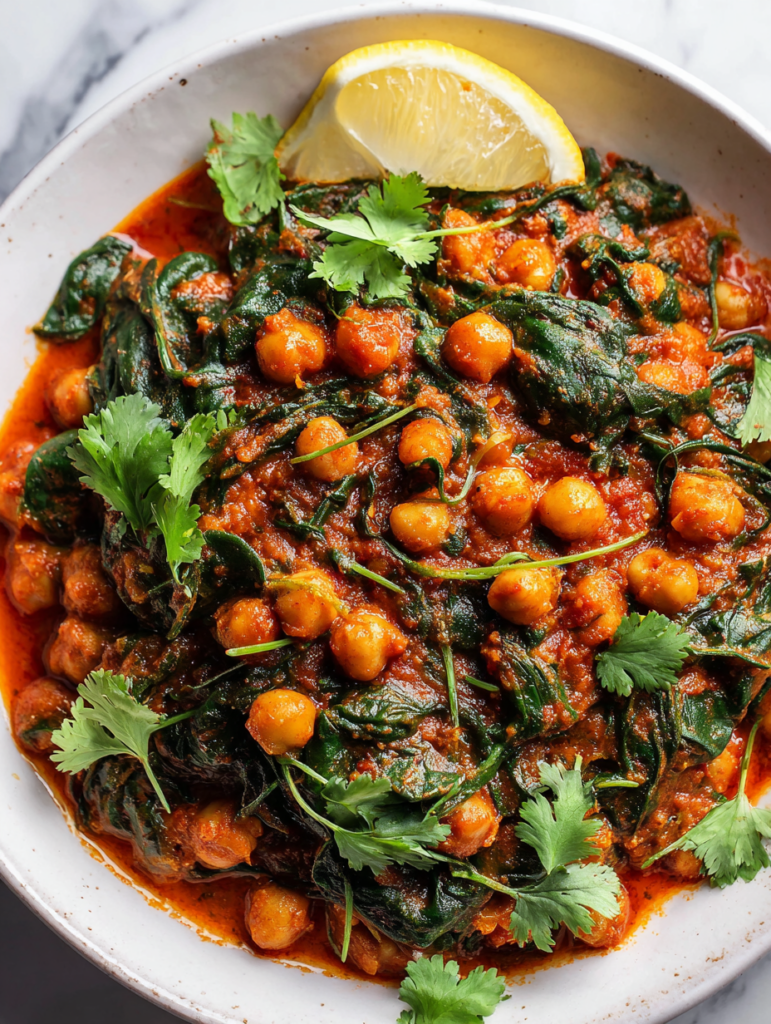
This spinach and chickpea curry is my go-to when I want something warm, filling, and effortless. It’s a dish that turns humble pantry ingredients into a bowl of comfort, especially on busy nights when I need something quick but satisfying. The smell alone—garlic, cumin, and simmering spinach—makes the kitchen feel cozy, even if I’m just throwing it together after work.
What I love about this recipe is how flexible it is. No fancy ingredients needed—just canned chickpeas, frozen spinach, and spices you probably already have. It’s a no-fuss, one-pot kind of meal that tastes like you put extra effort into it, but really, it’s about embracing simplicity and bold flavors. Plus, it’s perfect for making ahead and reheating without losing its soul.
This recipe is inspired by the idea of turning everyday pantry staples into a comforting, nourishing dish that feels like a warm hug on a busy weeknight. It’s about embracing simplicity and bold flavors without fuss, making it perfect for those nights when you need something hearty yet quick.
The story behind this recipe
- This curry stems from a rainy weekend when I rummaged through my pantry and found a bag of frozen spinach and a can of chickpeas. The smell of garlic and cumin filled the kitchen, instantly bringing back memories of my grandmother’s simple, hearty stews. I realized that with just a few pantry staples, I could whip up something nourishing and satisfying without any fuss.
- It’s a dish I keep coming back to when life feels chaotic but I still want something warm and grounding. The way the spinach wilts into the sauce, releasing a vibrant green color and fresh aroma, always feels like a small victory. It’s become a way to make peace with busy days, turning humble ingredients into a meal that feels like a hug.
- story_type
- paragraph
Key ingredients and tips
- Spinach: I use frozen, it’s a bit more forgiving—no wilting fuss. When it hits the hot oil, it releases a fresh, earthy aroma that signals it’s time to stir. Feel free to swap in kale if you prefer a sturdier leaf, but remember, it takes a bit longer to soften.
- Chickpeas: Canned chickpeas are my go-to—convenient and tender, with a creamy mouthfeel. Rinse them well to remove that metallic tinge. If you’re feeling adventurous, roasted chickpeas sprinkled on top add a smoky crunch, but skip if you want a smoother curry.
- Onion and garlic: The base of flavor—sauté until the onion is golden and fragrant, about 5-7 minutes. If the garlic starts to burn, turn down the heat; burnt garlic turns bitter fast. Fresh is best, but jarred garlic works in a pinch.
- Spices: Cumin and turmeric are my staples—they fill the kitchen with warm, toasted notes. Toast the spices briefly in oil until fragrant; if they smell stale, toss in fresh. A pinch of chili flakes adds a gentle heat—adjust to your taste.
- Coconut milk: I prefer full-fat for richness—when it hits the simmer, it’s silky and slightly sweet. If you want lighter, substitute with a splash of vegetable broth, but beware, the sauce will be less lush and more broth-like.
- Lemon juice: Brightens everything up, especially after simmering. Add just before serving, then taste and adjust. It’s the small squeeze that makes the flavors pop—think of it as a fresh wake-up call for the dish.
- Oil: I use a neutral oil like vegetable or canola for sautéing. It’s subtle but necessary for that initial sizzle. If you want a nuttier flavor, swap in ghee or toasted sesame oil—just add a splash at the end for aroma.
Spotlight on key ingredients
Spinach and Chickpeas:
- Spinach: I use frozen because it’s more forgiving—no wilting fuss. When it hits hot oil, it releases a fresh, earthy aroma that signals it’s ready to stir. Swap in kale if you prefer a sturdier leaf, but it takes longer to soften.
- Chickpeas: Canned chickpeas are my go-to—tender, with a creamy texture. Rinse well to remove that metallic tinge. Roasted chickpeas sprinkled on top add a smoky crunch, but skip if you want a smoother curry.
Notes for ingredient swaps
- Fresh Spinach: I often swap with kale or chard when I want a sturdier texture. Kale takes longer to wilt but adds a slightly bitter, earthy note.
- Canned Chickpeas: Roasted chickpeas give a smoky crunch if you prefer texture over creaminess. Rinse well to remove any metallic tinge.
- Coconut Milk: Light coconut milk works if you want a less rich sauce, but it won’t be as luscious and may thin out more during simmering.
- Oil: Ghee adds a nutty depth—use it instead of neutral oils for richer flavor. For a neutral option, stick with vegetable oil.
- Lemon Juice: Lime juice can replace lemon for a slightly different citrus brightness. Add gradually and taste, as lime can be sharper.
- Spices: Ground coriander can be added for a citrusy warmth, but skip if you prefer a simpler spice profile. Toast spices briefly for best flavor.
- Fresh Herbs: Cilantro adds a fresh, herbal brightness—if unavailable, parsley can work but offers a milder, less distinctive flavor.
Equipment & Tools
- Large skillet or saucepan: For even cooking and simmering the curry.
- Wooden spoon or spatula: To stir ingredients and prevent sticking.
- Measuring cup: For accurate liquid measurements.
Step-by-step guide to spinach and chickpea curry
- Gather equipment: a large deep skillet or saucepan (for even heat distribution), a wooden spoon or spatula (for stirring), and a measuring cup (for accuracy).
- Heat 2 tbsp oil over medium heat (~160°C / 320°F). Add 1 chopped onion. Sauté for 5 minutes until golden and fragrant, stirring occasionally.
- Add 3 minced garlic cloves and 1 tsp ground cumin. Cook for 30 seconds until fragrant, being careful not to burn the garlic. If it smells bitter, reduce heat.
- Stir in 1 tsp turmeric and a pinch of chili flakes. Toast spices for 1 minute until aromatic, stirring constantly. Watch for a warm, toasted smell.
- Pour in 1 can (15 oz) chickpeas, rinsed and drained. Stir to coat with spices, cook for 2 minutes until heated through. If chickpeas seem dry, add a splash of water.
- Add 1 cup frozen spinach directly from the freezer. Stir well; it will wilt quickly. Cook for 3-4 minutes until spinach is tender and vibrant green, with a slight crackle.
- Pour in 1 cup coconut milk (full-fat preferred). Bring to a gentle simmer, about 5 minutes, stirring occasionally. The sauce should thicken slightly and turn a rich, opaque yellow.
- Check the seasoning. Squeeze in fresh lemon juice (about 1 tbsp). Adjust salt and pepper if needed. Let simmer for another 2 minutes, allowing flavors to meld.
- Turn off heat. Rest the curry for 2-3 minutes to let the flavors settle. Serve hot, garnished with a drizzle of extra coconut milk or a squeeze of lemon if desired.
- Plate the curry in bowls. Pair with rice or naan. Enjoy the aroma of spices and the creamy, savory sauce with tender chickpeas and wilted spinach.
Let the curry rest off-heat for a few minutes to deepen flavors. Serve immediately, garnished if desired, with rice or bread.
How to Know It’s Done
- Spinach is wilted and vibrant green, with a slight crackle when stirred.
- Sauce is thickened, rich, and coats the chickpeas evenly.
- A bright citrus smell from lemon juice, with a fragrant, toasted spice aroma.
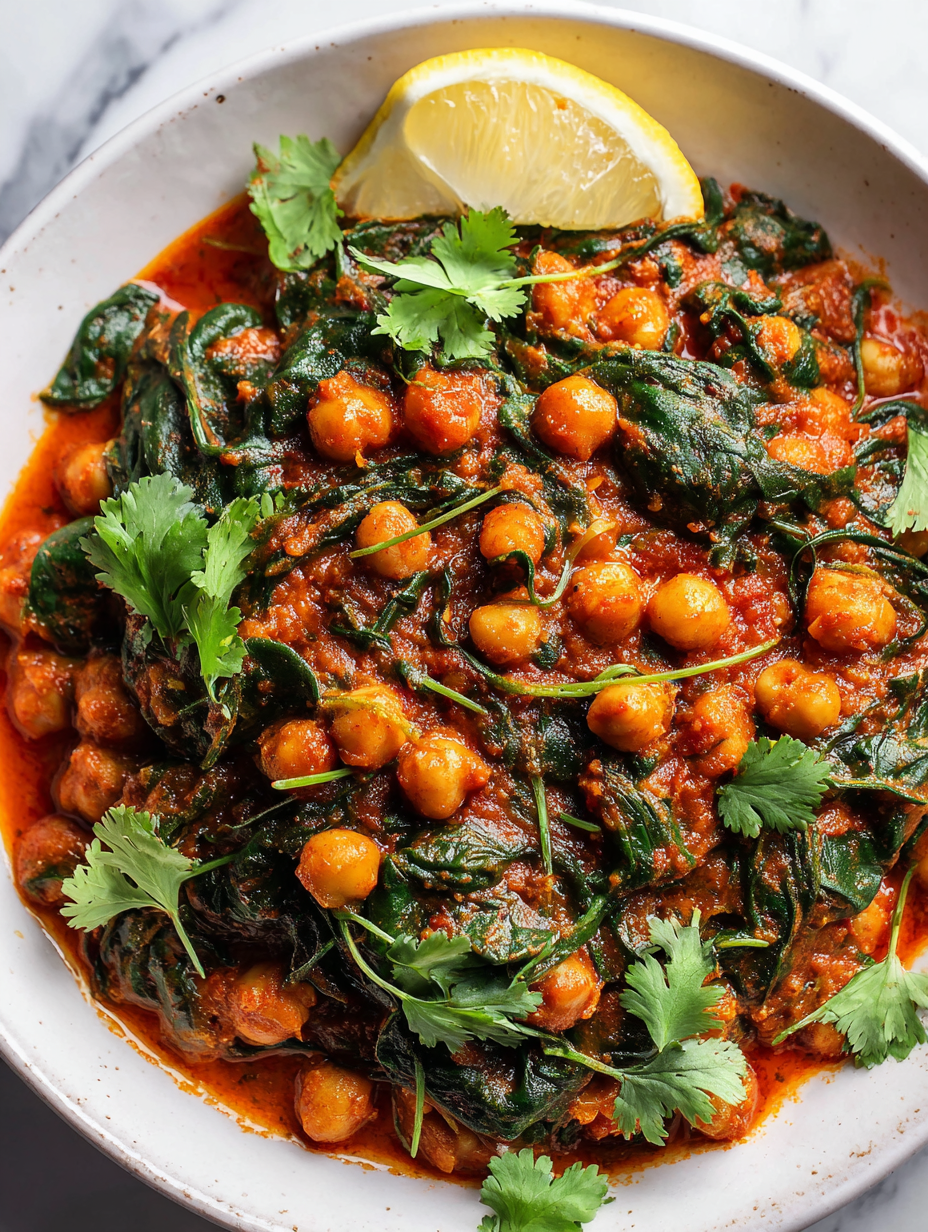
Spinach and Chickpea Curry
Ingredients
Equipment
Method
- Heat the oil in a large skillet over medium heat until it shimmers and starts to smell nutty.
- Add the chopped onion and sauté for about 5 minutes, stirring occasionally, until it turns golden and fragrant with a slightly caramelized aroma.
- Stir in the minced garlic and cook for about 30 seconds until it releases a warm, fragrant aroma, being careful not to let it burn.
- Add the cumin and turmeric, then toast the spices for 1 minute, stirring constantly until they become fragrant and slightly darker in color.
- Mix in the rinsed chickpeas and cook for another 2 minutes, coating them evenly with the spice mixture and heating through.
- Add the frozen spinach directly from the freezer and stir well; cook for about 4 minutes until the spinach has wilted completely and turned a vibrant green.
- Pour in the coconut milk, stirring to combine, then bring the mixture to a gentle simmer. Let it cook for about 5 minutes until the sauce thickens slightly and coats the chickpeas and spinach.
- Remove the skillet from heat, then squeeze in the lemon juice and stir well. Taste and add salt and pepper as needed to balance the flavors.
- Let the curry rest for a couple of minutes to allow flavors to meld, then give it a gentle stir before serving.
- Serve hot over rice or with naan, garnished with fresh herbs if desired, and enjoy the warm, flavorful, and creamy curry.
Tips for perfect curry
- Bolded mini-head: Sizzle and smell → Let spices toast briefly until fragrant for maximum flavor release.
- Bolded mini-head: Spinach addition → Add frozen spinach directly from the freezer; it wilts quickly and retains vibrant color.
- Bolded mini-head: Coconut milk thickening → Simmer gently until the sauce coats the back of a spoon; avoid boiling vigorously to prevent curdling.
- Bolded mini-head: Lemon brightness → Add lemon juice off the heat; it brightens flavors without losing freshness.
- Bolded mini-head: Stir to the end → Finish with a gentle stir after resting to evenly distribute flavors and prevent settling.
- Bolded mini-head: Spice to taste → Toast spices briefly and taste before adding salt; adjust seasoning gradually for balanced flavor.
- Bolded mini-head: Proper seasoning → Taste at the end and adjust with salt and acid; it’s the small tweaks that make it sing.
Common mistakes and how to fix them
- FORGOT to check spinach color—should be vibrant green, not dull or wilted.
- DUMPED too much water from chickpeas—rinse thoroughly to prevent watery curry.
- OVER-TORCHED spices—toast briefly until fragrant, not burnt, or flavor turns bitter.
- MISSED adjusting seasoning—taste as you go, especially after adding lemon for brightness.
Quick fixes and pantry swaps
- If spinach looks dull, splash in a bit of lemon juice for a fresh pop.
- When curry is too thick, stir in a splash of water or broth to loosen it up.
- Splash some extra oil if spices stick or burn during toasting.
- Patch a watery curry by simmering longer until it thickens and flavors concentrate.
- Shield burnt spices by removing the pan from heat immediately and starting anew with fresh spices.
Prep, store, and reheat tips
- Prepare the curry base: sauté onions, garlic, and spices up to a day ahead; store in an airtight container in the fridge for up to 24 hours. The aroma deepens overnight.
- Cook and cool chickpeas: rinse canned chickpeas thoroughly, then store in a sealed container for up to 3 days. Reheat briefly in the microwave or on the stove, smelling nutty and warm.
- Freeze leftovers: if you have extra curry, portion into freezer-safe containers. It keeps well for 2-3 months and develops a richer flavor after a couple of days in the freezer.
- Reheat with care: gently warm in a saucepan over low-medium heat (~150°C / 300°F), stirring occasionally. The sauce should shimmer slightly and smell fragrant, with the spinach vibrant again.
- Flavor intensifies overnight: the spices and lemon meld, making the curry taste even better the next day. Reheat until steaming hot and taste for seasoning adjustments.
Top questions about spinach and chickpea curry
1. Can I use fresh spinach instead of frozen?
Use frozen spinach directly from the freezer; it retains vibrant color and flavor. Thaw or cook from frozen.
2. Should I rinse the chickpeas before adding?
Rinse canned chickpeas thoroughly to remove metallic taste and excess salt. Rinsed chickpeas are tender and less salty.
3. When should I add lemon juice?
Adding lemon juice at the end brightens the curry, making flavors pop. Adjust quantity for desired zing.
4. My curry is too thick, what can I do?
If the sauce is too thick, stir in a splash of water or broth and simmer until it loosens up.
5. How do I know when the curry is done?
Simmer the curry gently (around 150°C / 300°F) until the sauce coats the back of a spoon and flavors meld.
6. Can I use light coconut milk?
Use full-fat coconut milk for a richer, creamier sauce. Light coconut milk makes it lighter but less luscious.
7. How should I toast the spices?
Toast spices briefly in oil until fragrant—about 30 seconds to 1 minute—to unlock their full flavor.
8. Do I need to thaw the spinach first?
Add frozen spinach directly into the hot oil and spices; it wilts quickly, releasing a vibrant aroma and color.
9. How long can I store leftovers?
Leftovers can be stored in the fridge for 2-3 days or frozen for up to 3 months. Reheat gently until steaming.
10. Can I add extra flavor at the end?
Mix in a splash of ghee or toasted sesame oil at the end for added depth and aroma.
This simple curry has a way of making me feel grounded, even on the busiest days. The gentle aroma of garlic, cumin, and spinach simmering together always reminds me of home, of those quiet evenings when a meal is more than just fuel. It’s a dish that’s honest, forgiving, and quietly satisfying.
Whenever I make it, I’m reminded that comfort food doesn’t need to be complicated. Sometimes, the best meals come from humble ingredients and a little patience. It’s a reminder to keep things simple, yet full of flavor—something I keep coming back to, especially now.

Hi, I’m Anjali Arora — the curious heart behind Feast Chase.
To be honest, I’ve always felt most at ease in my own company. I’m not exactly a people-person (small talk still makes me cringe), but there are two things I’ve always loved deeply: animals and food.