 Anjali Arora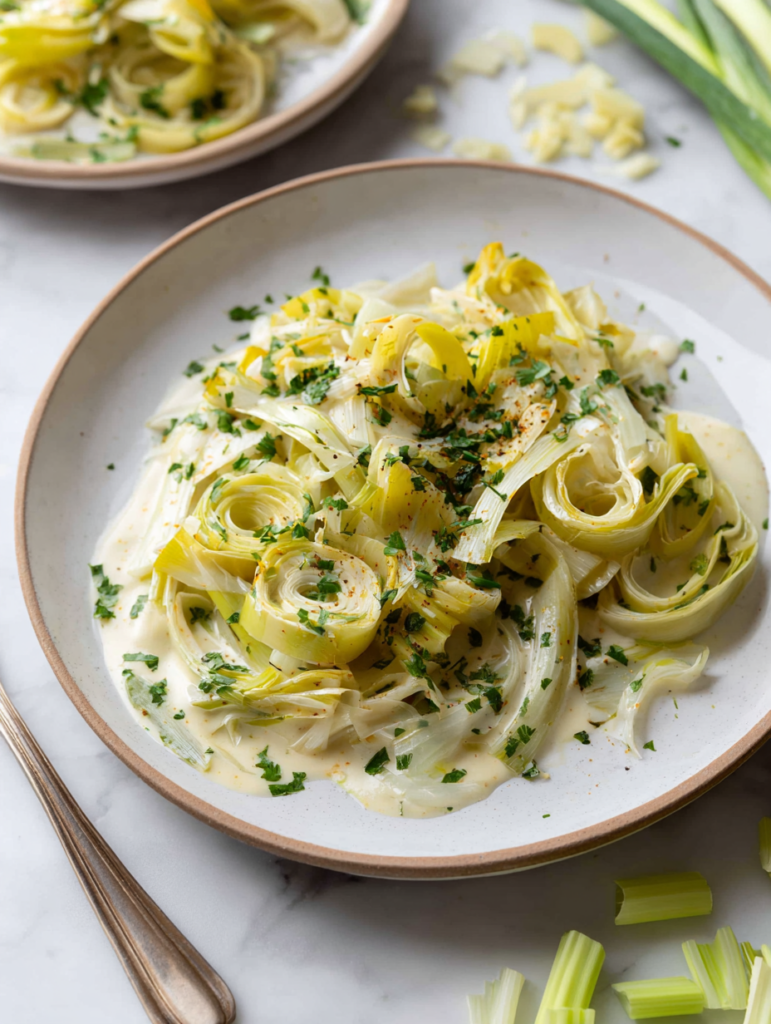
Cooking leeks slowly in butter isn’t just about the taste; it’s almost a meditative act. Each slice releases a gentle, sweet aroma that fills the kitchen with a quiet promise of comfort. It’s a ritual that encourages you to slow down and truly savor the moment, turning humble ingredients into something rich and soothing.
There’s a certain mindfulness in watching leeks soften and turn translucent, their layers unfolding with patience. It’s a simple process, but one that demands attention—letting the butter and leek work together, transforming into a tender, flavorful base. This isn’t just a side dish; it’s a small practice in presence, a reminder to enjoy the slow, tactile rhythm of good cooking.
Focusing on the meditative process of cooking leeks slowly in butter, highlighting the mindful act of transforming humble vegetables into something rich and comforting, almost like a small ritual to slow down and savor the moment.
The story behind this recipe
- This recipe came about during a quiet weekend when I was craving something warm and simple, but with a touch of elegance. I remember the first time I let leeks slowly cook in butter—how their sweet, mellow aroma filled the kitchen and made everything feel a little more relaxed. It’s become a small ritual for me, a way to slow down and reconnect with the basics.
- Leeks have a way of transforming in that gentle heat—softening into silky strands that seem to melt on the tongue. I love how the process is almost meditative, focusing on patience and the subtle magic of butter. It’s not just about eating; it’s about savoring each step, each moment of warmth and calm that this dish offers.
- heading
- story_type
Ingredient breakdown: key components
- Leeks: Their gentle sweetness is what elevates this dish; I prefer using fresh, firm leeks that smell slightly sweet and earthy. If yours are wilted or smell off, swap for fresh ones or skip.
- Butter: The rich, creamy base that melts into the leeks, making everything mellow. I like European-style butter for extra flavor, but regular works fine—just watch for burning if you use too high heat.
- Salt: A pinch of salt enhances the natural sweetness. I often add a little at the start and finish to balance the butter’s richness. Adjust based on your taste and whether you’re serving with salty sides.
- Pepper: Freshly ground black pepper adds a subtle kick. I love cracking it over just before serving for that sharp aroma and contrast, but skip if you prefer milder flavor.
- Lemon juice (optional): A squeeze brightens the dish, especially if the leeks are a bit too mellow. Use fresh lemon for that zing, but a splash of vinegar can work in a pinch for acidity.
- Herbs (like thyme or parsley): Fresh herbs bring a touch of freshness. I add chopped parsley at the end for color and life—if you’re out, a sprinkle of chives works too.
- Oil (optional): A tiny drizzle of neutral oil can help if the butter starts to brown too quickly. Use a light oil like grapeseed or sunflower for a subtle, non-intrusive background.
Spotlight on key ingredients
Leeks:
- Their tender, sweet layers soften into silky strands, releasing a mild, earthy aroma that deepens as they cook. Watch for grit hiding between the layers—rinse thoroughly.
- During sautéing, they become translucent and slightly caramelized at the edges, adding a gentle sweetness and a melt-in-your-mouth texture that’s crucial for richness.
Butter:
- Melts into a fragrant, golden pool that coats the leeks, imparting a rich, creamy flavor with a nutty undertone. The aroma of browned butter signals perfect caramelization.
- During cooking, it foam slightly, creating a luscious base that enhances the leeks’ mellow sweetness. Be attentive to prevent burning, especially at higher heats.
Notes for ingredient swaps
- Dairy-Free: Use coconut oil or olive oil instead of butter. The flavor shifts to a more herbal, slightly fruity note, but still rich and satisfying.
- Vegan: Swap butter for a plant-based margarine or oil blend. It keeps the dish creamy without dairy, though the richness may be a tad lighter.
- Salt Alternatives: Use sea salt or Himalayan pink salt for a more nuanced, mineral-rich flavor. Be mindful of quantity—fewer flakes, more flavor.
- Pepper Variations: White pepper offers a milder, less visually invasive spice, perfect for a softer look but still delivering gentle heat.
- Acid Brightness: Lemon juice adds a fresh, zingy punch. For a different twist, try a splash of apple cider vinegar—brings a subtle fruity tang.
- Herb Swaps: Chopped chives or tarragon can replace parsley, introducing a different aroma and flavor profile—more anise or onion-like.
- Oil Choices: Grape seed or sunflower oil can replace butter for frying, providing a neutral background without the richness, ideal if you want less fat.
Equipment & Tools
- Wide skillet or sauté pan: Provides enough space for even cooking and prevents overcrowding.
- Sharp knife: Slices the leeks uniformly for even cooking.
- Cutting board: Prepares the leeks safely and efficiently.
- Spatula or wooden spoon: Stirs the leeks gently during cooking.
- Measuring spoons: Ensures accurate butter and seasoning amounts.
Step-by-step guide to sautéed leeks
- Gather a wide skillet or sauté pan. You want enough space for the leeks to cook evenly without crowding, so opt for a 25-30 cm (10-12 inch) pan. Keep the heat on medium-low to low; this isn’t a rush job.
- Slice the leeks lengthwise, then chop into half-moon rings about 1 cm (0.4 inches) thick. Rinse thoroughly in cold water to remove grit hidden between the layers. Drain well and pat dry.
- Melt 2-3 tablespoons of butter over the pan. When it’s just melted and starts to foam lightly, add the leeks in an even layer. Don’t overcrowd—if needed, cook in batches.
- Cook gently, stirring occasionally. After about 8-10 minutes, the leeks should start to turn translucent and soften. You want a gentle crackle from the butter—if it browns too quickly, turn the heat down.
- Continue to cook, stirring every few minutes, for another 10-15 minutes. The leeks should become tender, silky, and slightly caramelized at the edges. If they start to brown too fast, reduce heat or add a splash of water.
- If the leeks seem dry or sticking, splash in a teaspoon of water or a little more butter. Watch for a mild, sweet aroma and soft texture. They should jiggle slightly when ready but not be mushy.
- Taste and season with a pinch of salt and freshly ground black pepper. For a bright note, squeeze a little lemon juice if you like. Remove from heat and let rest for a minute before serving.
- Plate the sautéed leeks in a warm dish, maybe with a sprinkle of chopped herbs. Serve immediately, or keep warm covered if waiting before eating.
Let the leeks rest for a minute after cooking to allow flavors to settle. Serve in warm bowls, drizzled with any remaining butter from the pan, garnished with herbs if desired.
How to Know It’s Done
- Leeks are translucent and soft, with slightly caramelized edges.
- Butter should be lightly browned but not burnt, with a fragrant aroma.
- Leeks jiggle gently but hold their shape without being mushy.
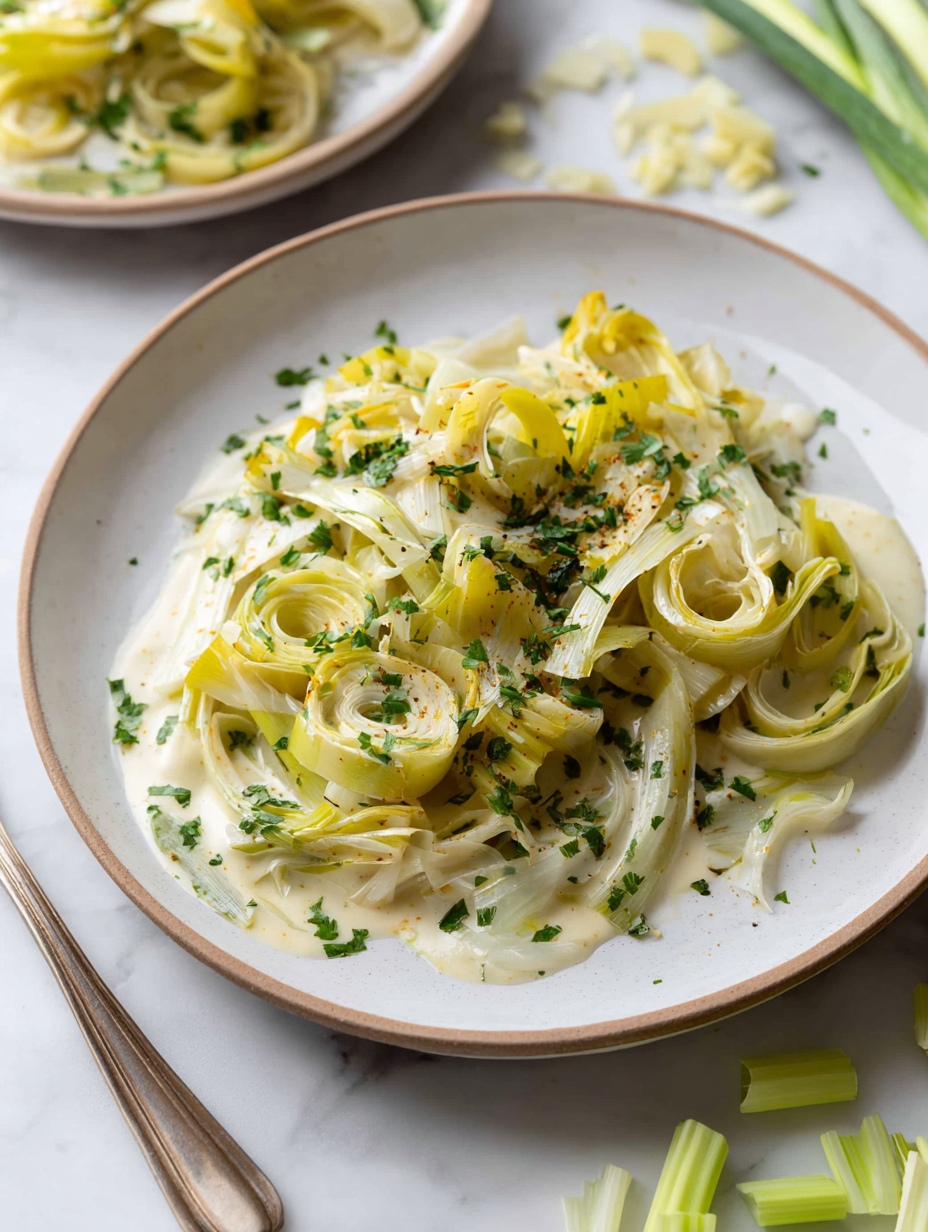
Creamy Sautéed Leeks in Butter
Ingredients
Equipment
Method
- Trim the root ends and dark green tops from the leeks, then slice them lengthwise and chop into half-moon rings about 1 cm thick. Rinse thoroughly under cold water to remove any grit hidden between the layers. Drain well and pat dry.
- Heat the wide skillet over medium-low heat and add the butter. Let it melt gently until it starts to foam lightly, releasing a warm, nutty aroma.
- Add the sliced leeks to the pan in an even layer. Stir them gently to coat with the melted butter, then reduce the heat to low. Let the leeks cook slowly, stirring every 8-10 minutes, until they become translucent and soft, about 15-20 minutes total.
- As the leeks soften, they will start to turn a light golden at the edges and release a sweet aroma. If they begin to brown too quickly, lower the heat further and add a teaspoon of water to cool the pan slightly.
- Continue cooking gently, stirring occasionally, until the leeks are silky, tender, and slightly caramelized around the edges. When they reach this point, remove the pan from heat.
- Season the leeks with a pinch of salt and freshly ground black pepper. If desired, squeeze over a little lemon juice to add brightness. Toss gently to combine.
- Transfer the sautéed leeks to a serving dish, sprinkle with chopped parsley, and serve warm. Drizzle any remaining butter from the pan over the top for extra richness.
Notes
Tips and tricks for perfect sautéed leeks
- Gentle heat: Keep the burner on medium-low to low to prevent burning the butter and overcooking the leeks.
- Even slices: Use a sharp knife for uniform slices; uneven pieces cook at different rates, affecting texture.
- Stir occasionally: Gentle stirring helps leeks cook evenly and prevents sticking or burning at the edges.
- Watch the butter: When butter begins to foam and turn golden, it’s perfect—don’t let it brown too much or smell burnt.
- Timing is key: After 8-10 minutes, leeks should be translucent and tender—test with a fork for softness.
- Add water if needed: If leeks stick or brown too quickly, splash a teaspoon of water to loosen and cool the pan.
- Finish with seasoning: Season at the end with salt, pepper, and optional lemon for a bright, balanced flavor.
Common mistakes and how to fix them
- FORGOT to monitor heat; leeks burn easily, fix by lowering temperature immediately.
- DUMPED too much butter; keep it moderate for even cooking and avoid greasy leeks.
- OVER-TORCHED butter; reduce heat once butter foams to prevent browning or burning.
- MISSED to rinse leeks thoroughly; grit hides between layers, rinse until water runs clear.
Quick fixes and pantry swaps
- When leeks stick, splash a teaspoon of water to loosen and cool the pan.
- If butter burns, lower the heat immediately and add a touch more butter or water.
- Splash in a little lemon juice when leeks finish for a fresh, bright flavor.
- Patch over over-browned butter with a splash of cold water to stop the burning.
- Shield from drafts or open windows to prevent rapid cooling and uneven cooking.
Prep, store, and reheat tips
- You can prepare the leeks in advance by slicing and rinsing them the day before. Store in an airtight container in the fridge for up to 24 hours; they’ll stay fresh and grit-free, ready for quick cooking.
- Cooked leeks can be stored in the fridge for 2-3 days. Keep them in a sealed container, and reheat gently in a skillet over low heat, watching for the butter to melt and the aroma to revive, about 2-3 minutes.
- Refrigerated leeks will lose some of their delicate sweetness and aroma over time, so best enjoyed fresh, but reheated they still offer a soft, buttery richness with a mild onion-y note.
- For longer storage, freeze cooked leeks in a freezer-safe bag for up to 2 months. Thaw overnight in the fridge before reheating. Expect a slightly softer texture but still flavorful, with the butter’s mellow richness fading slightly.
Frequently Asked Questions about Sautéed Leeks with Butter
1. How do I choose good leeks?
Use fresh leeks with a mild, sweet aroma. Rinse thoroughly to remove grit. Avoid wilted or off-smelling ones.
2. What kind of butter should I use?
Use high-quality butter for richer flavor. European-style butter adds a nutty depth, but regular works fine—just watch the heat.
3. How long do I sauté the leeks?
Slice leeks evenly to ensure uniform cooking. Cook on low heat, stirring occasionally, until translucent and tender, about 15-20 minutes.
4. How should I season the leeks?
Add a pinch of salt early to enhance sweetness, and finish with more salt and pepper. A squeeze of lemon brightens the flavor.
5. What if the butter burns?
If butter starts to brown too quickly, lower the heat and add a splash of water or more butter to cool the pan.
6. Can I prepare leeks in advance?
Leeks can be prepped up to a day ahead. Store sliced and rinsed in the fridge, covered, for up to 24 hours.
7. How do I reheat leftovers?
Reheat gently in a skillet over low heat. Expect a slight softening, but the buttery aroma and flavor will revive quickly, about 2-3 minutes.
8. How do I know when the leeks are done?
Avoid overcooking; leeks should be soft but not mushy. Look for a translucent appearance and a gentle, sweet aroma.
9. What quick fixes if the dish goes wrong?
If leeks stick or burn, splash a teaspoon of water. If butter is too dark, lower heat or remove from stove briefly.
10. How can I add more flavor?
For a vibrant twist, add a squeeze of lemon or a sprinkle of fresh herbs right before serving to brighten the dish.
Sautéed leeks with butter isn’t just a side; it’s a small act of mindfulness, a moment to slow down and appreciate simple things. The gentle aroma of butter melting into tender leeks feels like a quiet celebration of seasonal flavors.
This dish reminds me that good cooking doesn’t have to be complicated. It’s about patience, attention, and finding joy in the humble process—something worth savoring, whether as a cozy meal or a delicate start to a larger spread.

Hi, I’m Anjali Arora — the curious heart behind Feast Chase.
To be honest, I’ve always felt most at ease in my own company. I’m not exactly a people-person (small talk still makes me cringe), but there are two things I’ve always loved deeply: animals and food.