 Anjali Arora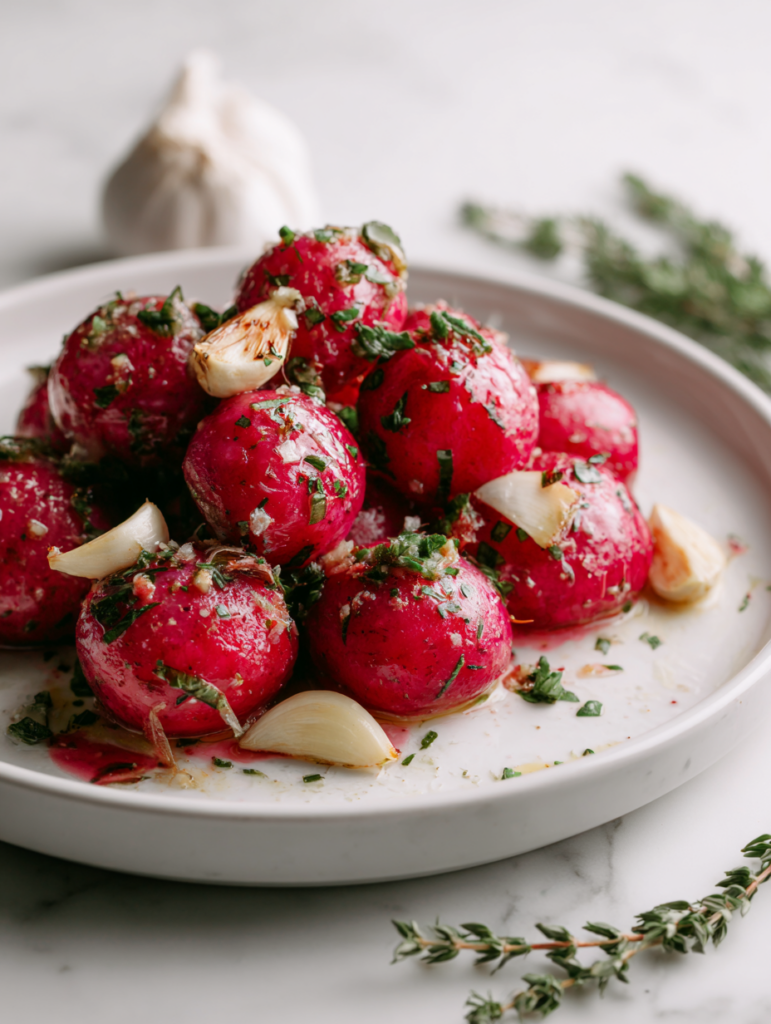
Radishes often get dismissed as a salad garnish or a crunchy snack, but roasting them flips that idea on its head. When you toss them with garlic and herbs and slide them into the oven, their sharp bite mellows into a tender, sweet caramelization that’s oddly satisfying. It’s like discovering a hidden layer of flavor you didn’t know radishes had.
This dish is a simple reminder that vegetables can surprise us when treated with a bit of heat and patience. The transformation from crisp to soft, with smoky edges and a fragrant herbal punch, makes these roasted radishes a cozy, unpretentious side. Plus, they’re quick to pull together — no fuss, just honest, honest flavor.
Radishes often get a bad rap as only a raw snack or salad addition. But roasting transforms their sharp bite into a tender, caramelized sweetness, making them unexpectedly indulgent and complex. This dish reclaims radishes as a warm, savory side that surprises the senses.
The story behind this recipe
I first stumbled upon roasting radishes during a hectic week when I needed to make something quick, flavorful, and different. The idea of transforming that sharp, raw bite into something tender and sweet sounded oddly appealing, especially with garlic and herbs I had on hand. That simple shift in approach made me see radishes in a new light, and I’ve been hooked ever since. It’s a dish that feels like a little secret—unexpected, comforting, and surprisingly elegant.
Ingredient breakdown: key components
- Radishes: I love how their crispness intensifies when roasted, developing a tender, slightly smoky sweetness—try slicing them thinner for faster caramelization.
- Garlic: Fresh garlic turns beautifully fragrant and mellow as it roasts, but if you prefer a milder flavor, add it halfway through cooking to avoid burning.
- Herbs: I use thyme or rosemary for earthy aroma, but basil or parsley added after roasting give a fresh pop—experiment based on your mood.
- Olive oil: A generous drizzle helps radishes caramelize evenly and adds richness, but for a lighter touch, use half oil and half broth to keep it bright.
- Salt: Just enough to enhance sweetness—too much can overpower, but a pinch of flaky sea salt just before serving adds crunch and sparkle.
- Lemon: A squeeze right at the end brightens the dish with a zingy contrast — skip if you want a more mellow, earthy profile.
- Optional extras: A sprinkle of chili flakes or a dash of vinegar can add a lively kick—start small, then adjust to taste.
Spotlight on Radishes and Garlic
Radishes:
- I love how their crispness intensifies when roasted, developing a tender, slightly smoky sweetness—try slicing them thinner for faster caramelization.
- Garlic: Fresh garlic turns beautifully fragrant and mellow as it roasts, but if you prefer a milder flavor, add it halfway through cooking to avoid burning.
Garlic and Herbs:
- Garlic: Its pungency mellows into a fragrant, nutty aroma during roasting, filling the kitchen with a warm, inviting scent—don’t rush the process.
- Herbs: Whether thyme or rosemary, they release a fragrant, earthy aroma that permeates the radishes, adding depth and a hint of rustic charm during roasting.
Notes for ingredient swaps
- Dairy-Free: Use olive oil instead of butter for roasting—still rich but keeps it plant-based and bright.**
- Vegan: Swap honey for a drizzle of maple syrup in the herbs for a subtly sweet, plant-friendly finish.**
- Herb Variations: Swap thyme for sage or oregano—each adds a different aromatic punch, so choose based on your mood.**
- Garlic Alternatives: Use roasted garlic puree or garlic-infused olive oil for a milder, sweeter garlic flavor.**
- Salt Options: Use flaky sea salt for crunch and sparkle, or try smoked salt for a smoky depth.**
- Oil Choices: Avocado oil offers a neutral, high-heat option with a buttery feel, good if you want a subtler taste.**
- Lemon Substitute: Lime juice or a splash of vinegar can brighten the dish if lemon isn’t available, adding a tangy twist.**
Equipment & Tools
- Baking sheet: To hold and roast the radishes in a single layer.
- Mixing bowl: To toss radishes with oil, garlic, and herbs evenly.
- Sharp knife: To trim and halve the radishes safely and precisely.
- Silicone spatula or tongs: To turn radishes during roasting for even caramelization.
Step-by-step guide to roasting radishes
- Preheat your oven to 200°C (400°F). Gather a baking sheet, a mixing bowl, and a sharp knife. The oven needs to be hot enough to caramelize, but not scorch, the radishes.
- Trim the radishes: Cut off the green tops and root ends. Slice them in half lengthwise for even roasting. Aim for uniform thickness, about 1.5 cm (half an inch).
- In a bowl, toss the radishes with 2-3 tablespoons olive oil, 3 minced garlic cloves, and a generous pinch of salt. Add 1 teaspoon chopped fresh thyme or rosemary. Mix until evenly coated.
- Spread the radishes in a single layer on the baking sheet. Make sure they aren’t crowded, so they roast rather than steam. Place in the oven and roast for 20-25 minutes.
- Check after 15 minutes: they should start to turn golden at the edges and smell fragrant. Shake the pan gently to turn the radishes for even caramelization.
- At 20 minutes, inspect the radishes: they should be tender when pierced with a skewer, with caramelized, slightly crispy edges. If not, roast a few more minutes, watching carefully so they don’t burn.
- Once done, remove from oven. Let them rest for 2 minutes. Finish with a squeeze of lemon juice or a sprinkle of fresh herbs if desired. Serve warm as a side or a snack.
Let the radishes rest for a couple of minutes after roasting. Finish with a squeeze of lemon or fresh herbs. Serve warm, allowing the flavors to settle and develop further.
How to Know It’s Done
- Radishes are golden at the edges and tender when pierced with a fork.
- Fragrant smell of garlic and herbs fills the air during roasting.
- Caramelized, slightly crispy edges indicate perfect roasting.
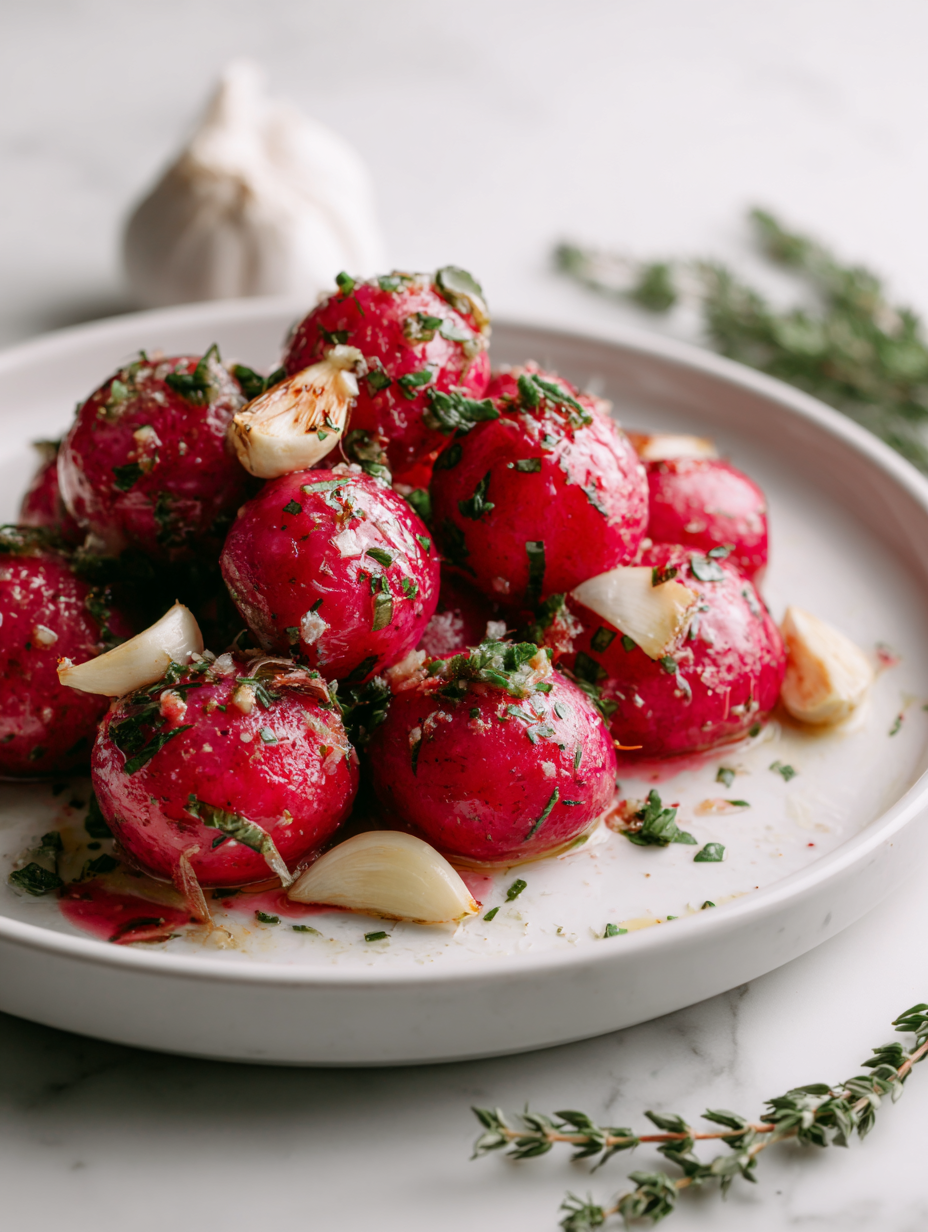
Roasted Radishes with Garlic and Herbs
Ingredients
Equipment
Method
- Preheat your oven to 200°C (400°F). Arrange a baking sheet nearby.
- Trim the green tops and root ends from the radishes, then slice them in half lengthwise, aiming for about 1.5 cm thickness. This helps them roast evenly and caramelize nicely.
- In a mixing bowl, toss the halved radishes with minced garlic, olive oil, chopped herbs, and a pinch of salt until they are well coated. This ensures even flavor distribution and a shiny, crisp surface.
- Spread the coated radishes in a single layer on the baking sheet, making sure they’re not crowded. This allows air to circulate for even roasting and caramelization.
- Place the tray in the oven and roast for 20-25 minutes, shaking the pan or flipping the radishes halfway through. Look for golden edges and fragrant aroma as signs they are nearing readiness.
- Once the radishes are tender and caramelized around the edges, remove the baking sheet from the oven. Let them rest for a couple of minutes to settle and intensify their flavors.
- Squeeze fresh lemon juice over the radishes to brighten their sweet, smoky flavors and add a touch of freshness. Toss gently to combine.
- Transfer the radishes to a serving dish, sprinkle with a bit more salt if desired, and garnish with extra herbs or chili flakes for a spicy kick. Serve warm for a cozy, flavorful side.
Pro tips for roasting radishes
- Bolded edges: Ensure radishes are spread in a single layer to promote even caramelization and prevent steaming.
- Aromatics: Add garlic midway through roasting to prevent burning and keep that sweet, fragrant aroma intact.
- Oil coating: Toss radishes thoroughly with oil to achieve a shiny, crispy exterior and even flavor distribution.
- Herb placement: Sprinkle fresh herbs after roasting for a vibrant, fresh burst, rather than risking burnt, bitter flavors during cooking.
- Temperature check: Keep an eye on the oven’s heat—around 200°C (400°F)—to avoid over-roasting and burnt edges.
- Rest briefly: Let the radishes sit for a couple of minutes after roasting to allow flavors to settle and juices to redistribute.
- Lemon finish: Finish with a squeeze of lemon right before serving for a fresh, bright contrast to the earthy, caramelized radishes.
Common mistakes and how to fix them
- FORGOT to check oven temperature → Use an oven thermometer for accuracy.
- DUMPED all oil at once → Drizzle gradually, tossing radishes to coat evenly.
- OVER-TORCHED radishes → Reduce roasting time or lower oven temperature.
- MISSED flipping radishes → Turn them halfway for even caramelization.
Quick fixes and pantry swaps
- When radishes release too much juice, splash a bit more oil and roast longer for crispness.
- If garlic burns and turns bitter, patch with fresh garlic added later in the roasting process.
- When edges are unevenly caramelized, shield lighter spots with foil for a few minutes.
- Dumped too much salt? Rinse radishes quickly and pat dry before roasting again.
- When radishes seem undercooked, rescue with a quick 5-minute blast at 220°C (425°F) for extra caramelization.
Prep, store, and reheat tips
- Prep the radishes: Trim and halve them up to a day ahead. Store in an airtight container in the fridge—keep them crisp and ready to roast.
- Garlic and herbs: Mince garlic and chop herbs in advance. Keep separately in small jars or bowls, covered tightly, for quick assembly.
- Storage: Roasted radishes are best eaten fresh but can be stored in the fridge for up to 2 days. Reheat gently to avoid sogginess, aiming for a warm, slightly crisp finish.
- Reheating: Warm in a low oven (~150°C / 300°F) for 5-7 minutes. Expect softer texture and milder aroma—avoid high heat to prevent burning the herbs.
- Flavor change: Reheated radishes lose some of their initial caramelized brightness but still make a tasty, mellow side. Add a fresh squeeze of lemon or herbs after reheating for zing.
Top questions about roasted radishes
1. What do roasted radishes taste like?
Roasted radishes develop a tender, caramelized exterior with a slightly smoky, sweet flavor that balances their sharp bite.
2. How do I know when radishes are done roasting?
They should be golden around the edges, tender when pierced, and fragrant with garlic and herbs.
3. Can I use any type of radishes?
Use fresh radishes, preferably small and firm, for the best texture and flavor. Avoid wilted or soft ones.
4. Can I substitute garlic in this recipe?
Yes, you can swap garlic for roasted garlic or garlic powder, but fresh garlic gives a more fragrant aroma.
5. What kind of oil should I use?
A drizzle of olive oil is key for caramelization. Use good quality oil for best flavor and crispiness.
6. Should I add herbs before or after roasting?
Add herbs after roasting to keep their fresh aroma, or include them early for a fragrant infusion during cooking.
7. How long do roasted radishes keep?
Store leftovers in an airtight container in the fridge for up to 2 days. Reheat gently to preserve texture.
8. What temperature and time are ideal for roasting radishes?
Roast at 200°C (400°F) for about 20-25 minutes. Look for caramelized edges and tender insides as signs of readiness.
9. How can I reduce bitterness in radishes?
If radishes are too bitter, toss them with a little lemon juice or vinegar before roasting to brighten the flavor.
10. How can I make the radishes less sharp?
For a milder flavor, add garlic halfway through roasting or use roasted garlic instead of raw.
Radishes might not get the love they deserve, but roasting them with garlic and herbs transforms their sharpness into something tender and deeply savory. This dish is a little reminder that simple vegetables can surprise us with unexpected richness and comfort. It’s a humble, honest way to elevate what’s often seen as just a crunchy snack.
In the end, it’s about embracing those everyday ingredients and giving them a chance to shine. Whether as a side or a quick snack, these roasted radishes offer a burst of flavor that sticks around long after the meal ends.

Hi, I’m Anjali Arora — the curious heart behind Feast Chase.
To be honest, I’ve always felt most at ease in my own company. I’m not exactly a people-person (small talk still makes me cringe), but there are two things I’ve always loved deeply: animals and food.