 Anjali Arora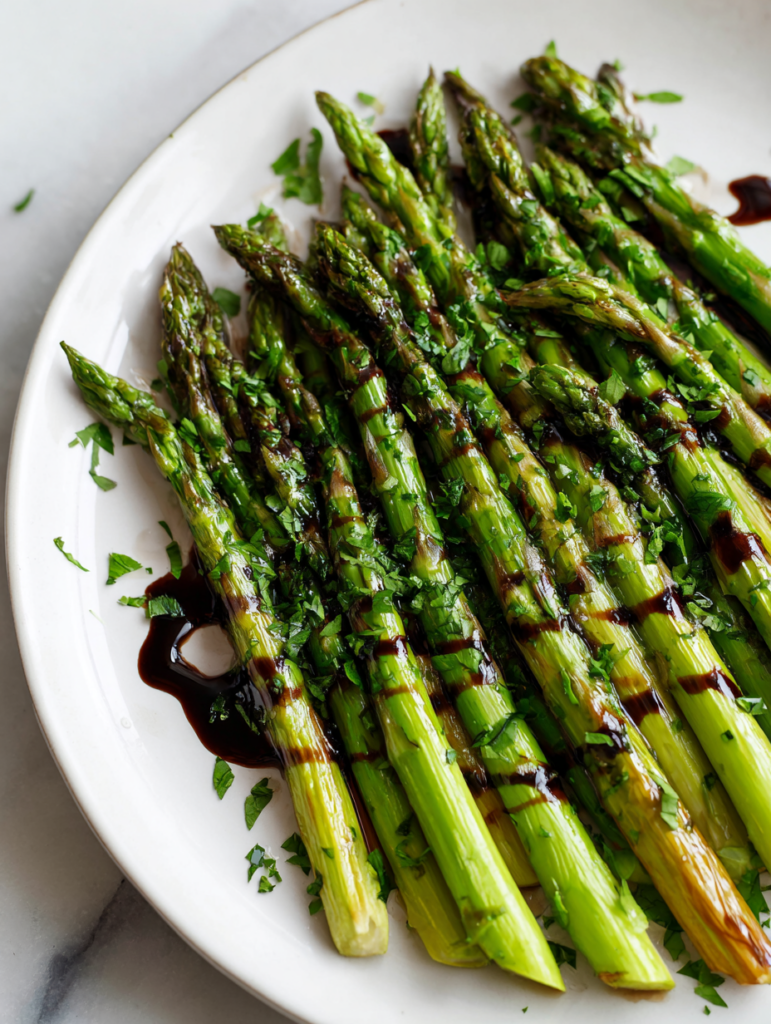
In a world obsessed with complicated dishes, I find myself drawn to the quiet magic of simple ingredients. Roasted asparagus with balsamic glaze is a reminder that even the humblest vegetable can shine when treated with patience and care. The caramelized tips, kissed by high heat, bring out a smoky sweetness that pairs beautifully with the tangy, glossy balsamic drizzle.
This dish isn’t just about flavor—it’s about appreciating the season’s bounty, about the ritual of roasting, and how a few ingredients can come together to create something unexpectedly elegant. It’s a dish I turn to when I want a quick, honest bite that feels like a tiny celebration of spring or early summer’s fleeting greens.
Sometimes, it’s the simplest things that make the biggest impression. I love how the balsamic glaze transforms the tender, slightly charred asparagus into something with depth and shine, a bit like turning a humble sketch into a delicate watercolor. It’s a reminder that beauty can be found in the everyday, on a plate, if we just give it a little time and attention.
This recipe is my go-to for busy weeknights or when I want to impress without fuss. It’s a small ritual—snapping the asparagus, glazing it with balsamic, roasting until the edges are crisp—that feels grounding and satisfying. And honestly, there’s something about the rich aroma of balsamic caramelizing that makes the whole kitchen feel warmer.
Choosing to focus on the overlooked beauty of simple, seasonal ingredients, this recipe elevates humble asparagus into a refined dish that celebrates the magic of caramelization and balance through a glossy balsamic finish.
The story behind this recipe
I first started roasting asparagus because I wanted a method that enhanced its natural sweetness without overcomplicating things. One spring, I had a batch that was particularly tender, and I drizzled it with balsamic just as the edges started to crisp up. The aroma of caramelized vinegar and roasted greens made me realize how simple ingredients could create a moment of real flavor depth. Now, it’s become a go-to for me when I want a quick, elegant side that feels a little special, even on a busy weeknight.
Key ingredients and tips
- Asparagus: I prefer thick spears—they hold up better during roasting and develop a lovely smoky char. Try thinner ones if you want quicker cooking and slightly more delicate texture.
- Balsamic vinegar: I use a good-quality aged balsamic for a rich, sweet-tart glaze that clings beautifully. For a zestier punch, splash in a little lemon juice before glazing.
- Olive oil: I drizzle extra virgin olive oil generously to ensure even roasting and a glossy finish. Use a lighter oil if you want less pronounced flavor but still good color.
- Salt: I sprinkle a good pinch of flaky sea salt before roasting to enhance the natural sweetness. For a more complex flavor, add a touch of smoked salt or finishing sea salt after roasting.
- Optional garlic: I sometimes toss in minced garlic for a fragrant boost, but be careful not to burn it—add it halfway through roasting or afterwards for a fresh punch.
- Optional toppings: I love finishing with toasted pine nuts or a sprinkle of Parmesan for extra texture and flavor, but keep it simple if you want the pure asparagus taste to shine.
- Baking sheet: I line it with parchment to prevent sticking and make cleanup easier—crisp edges are key, so avoid overcrowding the pan.
Spotlight on key ingredients
Asparagus:
- Thick spears hold up better during roasting, develop deep caramelization and a smoky aroma, while thinner ones cook faster and offer a more delicate bite.
- Balsamic vinegar: Aged balsamic provides a rich sweetness and tang, thickening beautifully into a glossy glaze that clings to the asparagus—look for one with a deep, oaky scent.
Balsamic glaze:
- The slow reduction concentrates the tart-sweet flavor and creates a shiny, syrupy finish, adding a complex tang that balances the earthy greens.
- High-quality balsamic is crucial—it transforms simple roasted veggies into something with depth and a hint of smoky sweetness that lingers.
Notes for ingredient swaps
- Dairy-Free:
- Skip cheese toppings like Parmesan for a clean, vegetable-forward flavor. You’ll miss a bit of saltiness, but the asparagus still shines.
- Vinegar Alternatives:
- Use red wine vinegar or apple cider vinegar if balsamic isn’t available. They bring tang but lack the sweet depth of balsamic.
- Oil Choices:
- Swap in avocado oil or toasted sesame oil for different smoky or nutty notes. Keep in mind, sesame oil is potent—use sparingly.
- Herb Additions:
Equipment & Tools
- Oven: To roast the asparagus evenly at high heat.
- Baking sheet with parchment: To hold the asparagus and prevent sticking.
- Small bowl: To whisk the balsamic mixture.
- Tongs or spatula: To toss and turn the asparagus during roasting.
- Knife or snapper: To trim the woody ends of the asparagus.
Step-by-step guide to roasted asparagus
- Preheat your oven to 220°C (430°F). Line a baking sheet with parchment paper to prevent sticking and make cleanup easier.
- Trim the woody ends off the asparagus. Snap or cut them, aiming for about 2 inches from the bottom. Aim for thick spears for better caramelization.
- In a small bowl, whisk together 2 tablespoons of good-quality balsamic vinegar and 2 tablespoons of olive oil. Add a pinch of flaky sea salt and, if desired, a crushed garlic clove for extra aroma.
- Arrange the asparagus on the prepared baking sheet in a single layer. Drizzle the balsamic mixture evenly over the spears, tossing gently to coat all sides.
- Roast in the oven for 12-15 minutes. Check after 10 minutes; the tips should start to brown, and the stalks should be tender when pierced. Shake the pan halfway through for even roasting.
- Once roasted, transfer the asparagus to a serving platter. Drizzle with an additional splash of balsamic glaze if desired for extra shine and tang.
- Let rest for 2 minutes. Finish with a sprinkle of flaky sea salt or freshly cracked black pepper. Serve immediately to enjoy the caramelized edges and vibrant aroma.
Transfer the roasted asparagus to a serving platter. Let sit for 2 minutes to allow flavors to settle. Drizzle with extra balsamic glaze if desired, then sprinkle with flaky sea salt or black pepper. Serve hot for best flavor and texture.
How to Know It’s Done
- Tips are golden brown and slightly charred at the edges.
- Stems are tender when pierced with a fork but still firm.
- Balsamic glaze has thickened slightly and coats the spears evenly.
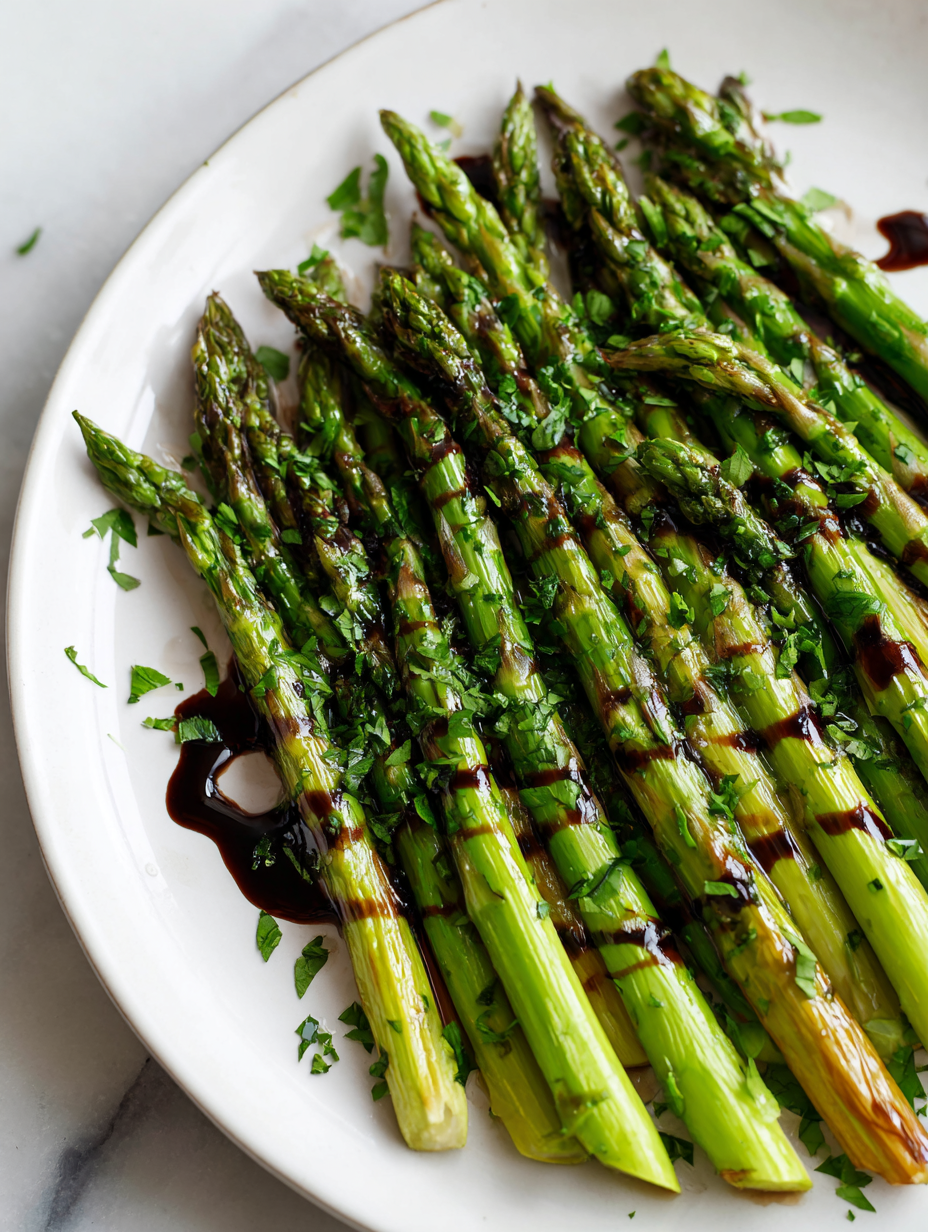
Roasted Asparagus with Balsamic Glaze
Ingredients
Equipment
Method
- Preheat your oven to 220°C (430°F). Line a baking sheet with parchment paper to ensure easy cleanup and crisp edges.
- Trim the woody ends off the asparagus by snapping or cutting about 2 inches from the bottom of each spear. Aim for thick, sturdy stalks that will develop a deep caramelization.
- In a small bowl, whisk together the balsamic vinegar and olive oil. Add a pinch of flaky sea salt and, if using, the minced garlic, stirring until combined.
- Arrange the asparagus on the prepared baking sheet in a single layer, spacing them out to prevent overcrowding. Drizzle the balsamic mixture evenly over all the spears, tossing gently with tongs or spatula to coat thoroughly.
- Place the baking sheet in the oven and roast for 12 to 15 minutes. During cooking, you'll hear a gentle sizzling and see the tips start to turn a golden brown, with some charred edges forming.
- Check the asparagus around the 10-minute mark; they should be tender, and the tips should be caramelized and slightly crisp. Shake the pan gently halfway through to promote even roasting.
- Once done, transfer the roasted asparagus to a serving platter. Drizzle with additional balsamic glaze if you like more shine and tang, and sprinkle with a little extra flaky salt for flavor enhancement.
- Let the asparagus rest for about 2 minutes so the flavors meld and the glaze thickens slightly. This final touch accentuates the smoky sweetness and gives the dish a beautiful shine.
- Serve immediately while warm, enjoying the tender stalks with their caramelized tips and the rich balsamic aroma. This simple yet elegant side is perfect for celebrating spring greens or a quick weeknight dinner.
Notes
Pro tips for perfect roasted asparagus
- High heat: → Roast at 220°C (430°F) for crisp edges and smoky flavor, ensuring quick caramelization.
- Even coating: → Toss asparagus in balsamic and oil thoroughly to achieve a glossy, flavorful finish.
- Watch the timing: → Check around 10 minutes; tips should be golden and slightly charred, stalks tender but not mushy.
- Avoid overcrowding: → Space spears apart on the pan; crowded pan steams them, dulling the caramelization.
- Finish with flair: → Drizzle extra balsamic glaze hot off the oven for a shiny, tangy glaze that clings beautifully.
Common mistakes and how to fix them
- FORGOT to check asparagus size → use uniform, thick spears for even roasting.
- DUMPED balsamic too early → wait until it thickens into a glaze for better flavor.
- OVER-TORCHED the asparagus → remove once edges are deeply caramelized, not burnt.
- SKIPPED resting step → let asparagus sit 2 minutes for flavor to settle and glaze to set.
Quick fixes and pantry swaps
- When asparagus is slimy → splash with lemon juice to brighten and refresh.
- If glaze is too thick → gently warm and stir to loosen it.
- DUMPED balsamic too early → wait until it reduces into a syrupy glaze for better flavor.
- Overcooked asparagus → remove early, aiming for tender stalks and charred tips.
- Splash extra balsamic glaze after roasting for a shiny, tangy finish.
Prep, store, and reheat tips
- Trim and prep the asparagus a day ahead; keep refrigerated in a paper-towel-lined container for up to 24 hours to prevent moisture buildup.
- Mix balsamic glaze ingredients in advance; store in an airtight jar in the fridge for up to 3 days, the flavors intensify overnight.
- Roast the asparagus just before serving; reheat gently in a 180°C (350°F) oven for 5-7 minutes until warmed through, keeping an eye on browning and aroma.
- Refrigerated roasted asparagus may lose some crispness; reheat until edges shimmer with slight caramelization and the smell of balsamic is warm and inviting.
Top questions about roasted asparagus with balsamic glaze
1. How do I choose the best asparagus?
Look for thick, vibrant green spears with firm tips. They roast evenly and develop a smoky char without turning mushy.
2. What kind of balsamic vinegar should I use?
Use aged balsamic for a thick, sweet-tart glaze that clings to the spears. It’s rich and slightly oaky, which enhances the caramelization.
3. What’s the perfect roasting time?
Roast at 220°C (430°F) for 12-15 minutes until tips are charred and stalks are tender. Check around 10 minutes for doneness.
4. How do I fix soggy asparagus?
If the asparagus is soggy or limp, increase the oven temperature slightly or extend roasting by a few minutes, watching for caramelization.
5. Can I add cheese or nuts?
Yes, add a sprinkle of Parmesan or toasted nuts after roasting for extra texture, but keep it simple if you want pure veggie flavor.
6. How long does leftovers last?
Store roasted asparagus in an airtight container in the fridge for up to 1 day. Reheat in a hot oven or skillet for crispness.
7. How can I tweak the balsamic glaze?
Add a splash of lemon juice or a pinch of sugar to the balsamic glaze to brighten or balance the flavors before serving.
8. What’s a common roasting mistake?
Overcooking causes mushiness and loss of flavor. Remove from oven once edges are deeply caramelized, but not burnt.
9. How do I add extra glaze?
Splash extra balsamic glaze after roasting for shine, or drizzle more if you want a tangier, glossier finish.
10. What equipment do I need?
Use a heavy sheet pan for even heat and avoid overcrowding. This prevents steaming and promotes crisp, caramelized edges.
This roasted asparagus with balsamic glaze is a simple, honest dish that celebrates seasonal produce. Its balance of smoky caramelization and tangy sweetness makes it a versatile side for any meal, especially as spring turns to early summer.
Sometimes, the beauty of a recipe lies in its imperfections—overly charred tips or a slightly thick glaze only add character. It’s a reminder that the best flavors often come from a little chaos in the kitchen, making every plate uniquely yours. So, embrace the process, and enjoy the honest, unpolished pleasure of this humble vegetable turned special.

Hi, I’m Anjali Arora — the curious heart behind Feast Chase.
To be honest, I’ve always felt most at ease in my own company. I’m not exactly a people-person (small talk still makes me cringe), but there are two things I’ve always loved deeply: animals and food.