 Anjali Arora
This recipe for pea and spinach pasta is all about making the most of fresh herbs and greens, but in a way that’s sneaky and subtle. I love tossing herbs straight into the boiling water—gives the pasta a gentle, aromatic lift that you don’t get from just tossing herbs on top. It’s simple, honest, and somehow feels a little indulgent, even though it’s just a handful of greens and a quick blend.
What really makes this dish sing is how the herbs and greens blend into the pasta, coating each strand with a fresh, slightly grassy flavor that’s not overpowering. It’s perfect for those nights when you want something quick but doesn’t taste like it. Plus, it’s a reminder that sometimes, the simplest ingredients—peas, spinach, herbs—come together to create something unexpectedly satisfying.
Focusing on the often overlooked technique of blending fresh herbs directly into the pasta water, creating a subtle, aromatic infusion that elevates the simple pea and spinach combo without overpowering it.
The story behind this recipe
- This dish came about on a quiet Sunday when I was rummaging through my fridge, looking for something green and fresh, but quick. I remembered how my grandma used to toss herbs into her pasta water, claiming it was a secret that made everything taste brighter. That little trick stuck with me, and now I do it whenever I want a subtle herbal boost without fussing over complicated sauces.
- One afternoon, I was experimenting with blending greens directly into the cooking water—just a handful of spinach and a few peas—thinking it might add a fresh, vibrant layer to the pasta. Turns out, the greens release their color and flavor into the water, infusing the pasta with a gentle, grassy aroma. It’s honest, unpolished, and oddly comforting, like a small secret I keep in my kitchen.
- heading
- story_type
Ingredient breakdown
- Frozen peas: I love the bright, sweet pop of fresh peas, but frozen works in a pinch—just rinse before adding. Their color and sweetness stay vivid, giving the dish a lively burst.
- Fresh spinach: I toss in big handfuls right at the end, letting the residual heat wilt it gently. If you prefer softer greens, add a minute earlier; for more bite, toss in last second.
- Pasta: I use a good-quality, slightly thicker spaghetti—something that holds onto the herbs and greens. Cook it al dente, so it’s just tender but still has a slight chew.
- Herbs: Fresh basil or parsley, chopped fine. I add them at the very end for maximum flavor and aroma—think about that bright, herbal scent filling your kitchen.
- Olive oil: Drizzle generously, especially after draining the pasta. It gives a silky finish and helps the herbs and greens cling to each strand, making each bite fragrant and lush.
- Lemon: A squeeze at the end brightens everything—think zesty, fresh citrus aroma that lifts the greens and peas into something more vibrant. Skip if you prefer a milder profile.
- Garlic: I sauté minced garlic in a little oil before tossing in the greens and peas—adds a mellow, toasted aroma that anchors the dish with warmth.
Highlight on key ingredients
Frozen peas:
- I love their bright, sweet pop—rinsed well before adding, they stay vivid and burst with flavor.
- Their color and sweetness remain intact even after cooking—perfect for that fresh, lively hit in every bite.
- They turn a lively green quickly, providing a contrast to the pasta’s golden hue and adding a juicy texture.
Fresh spinach:
- I toss it in at the end, letting residual heat wilt it softly, keeping its vibrant green and tender bite.
- If you want softer greens, add a minute earlier; for more bite, toss it in right before serving to keep some crunch.
- It adds a gentle grassy aroma that infuses the dish with freshness, and wilts quickly without losing its color.
Notes for ingredient swaps
- Dairy-Free: Nutritional yeast or a splash of coconut milk can add creaminess. Expect a nuttier, less cheesy flavor.
- Gluten-Free: Use rice or corn pasta instead of wheat. It cooks slightly differently but still holds onto flavors well.
- Vegan: Substitute olive oil for butter, and skip cheese or use a plant-based alternative. The dish remains fresh and bright.
- Fresh Peas: If you don’t have frozen, fresh peas work great—just blanch them briefly in boiling water first.
- Spinach: Kale or arugula can replace spinach. Kale needs a longer wilt time; arugula adds a peppery punch.
- Herbs: Cilantro or chives can introduce a different aroma—less traditional, but equally vibrant and fresh.
- Lemon: Lime or vinegar can brighten the dish if lemon isn’t available, adding a different citrus note.
Equipment & Tools
- large pot: boiling pasta
- colander: draining pasta
- skillet: sautéing peas, garlic, and greens
- wooden spoon: stirring ingredients
- measuring cups and spoons: measuring ingredients
- sharp knife: chopping herbs and garlic
- chopping board: preparing ingredients
Step-by-step guide to pea and spinach pasta
- Equipment & tools: large pot for boiling, colander for draining, skillet for sautéing, wooden spoon for stirring, measuring cups and spoons, sharp knife, chopping board.
- Fill a large pot with water—about 4 liters (quarts). Salt generously, like sea water—about 1-2 tablespoons. Bring to a rolling boil, 100°C (212°F).
- Add the pasta. Cook according to package instructions—usually 8-10 minutes—until just al dente. Stir occasionally to prevent sticking.
- While pasta cooks, heat a tablespoon of olive oil in the skillet over medium heat (around 160°C/320°F). Add minced garlic, sauté until fragrant—about 30 seconds—avoid burning.
- Add frozen peas directly to the skillet. Cook, stirring frequently, until they release their sweetness and turn bright green—about 2-3 minutes. If peas stick, splash a little hot pasta water.
- Once pasta is al dente, reserve a cup of pasta water, then drain the pasta in the colander. Do not rinse—keep that starchy water for later.
- Toss drained pasta into the skillet with peas and garlic. Add chopped fresh spinach—big handfuls—stir until wilted, about 1 minute. If too dry, splash reserved pasta water.
- Stir in freshly chopped herbs—basil or parsley—and a squeeze of lemon for brightness. Drizzle with extra olive oil if needed. Mix well to coat everything.
- Taste and adjust salt or lemon as needed. Keep the heat on low for a quick minute to meld flavors—just enough to see a gentle shimmer on the greens.
- Rest for a minute. Serve immediately on warm plates, with a final drizzle of olive oil and a sprinkle of grated cheese if desired. Enjoy the aromatic, vibrant dish.
Serve immediately while hot. Drizzle with olive oil and sprinkle cheese if desired. Garnish with extra herbs for color. Enjoy the fresh aroma with every bite.
How to Know It’s Done
- Pasta is tender but holds shape, with a slight bite (al dente).
- Greens are wilted but still vibrant and fresh-looking.
- Peas are bright green, sweet, and slightly softened, not mushy.
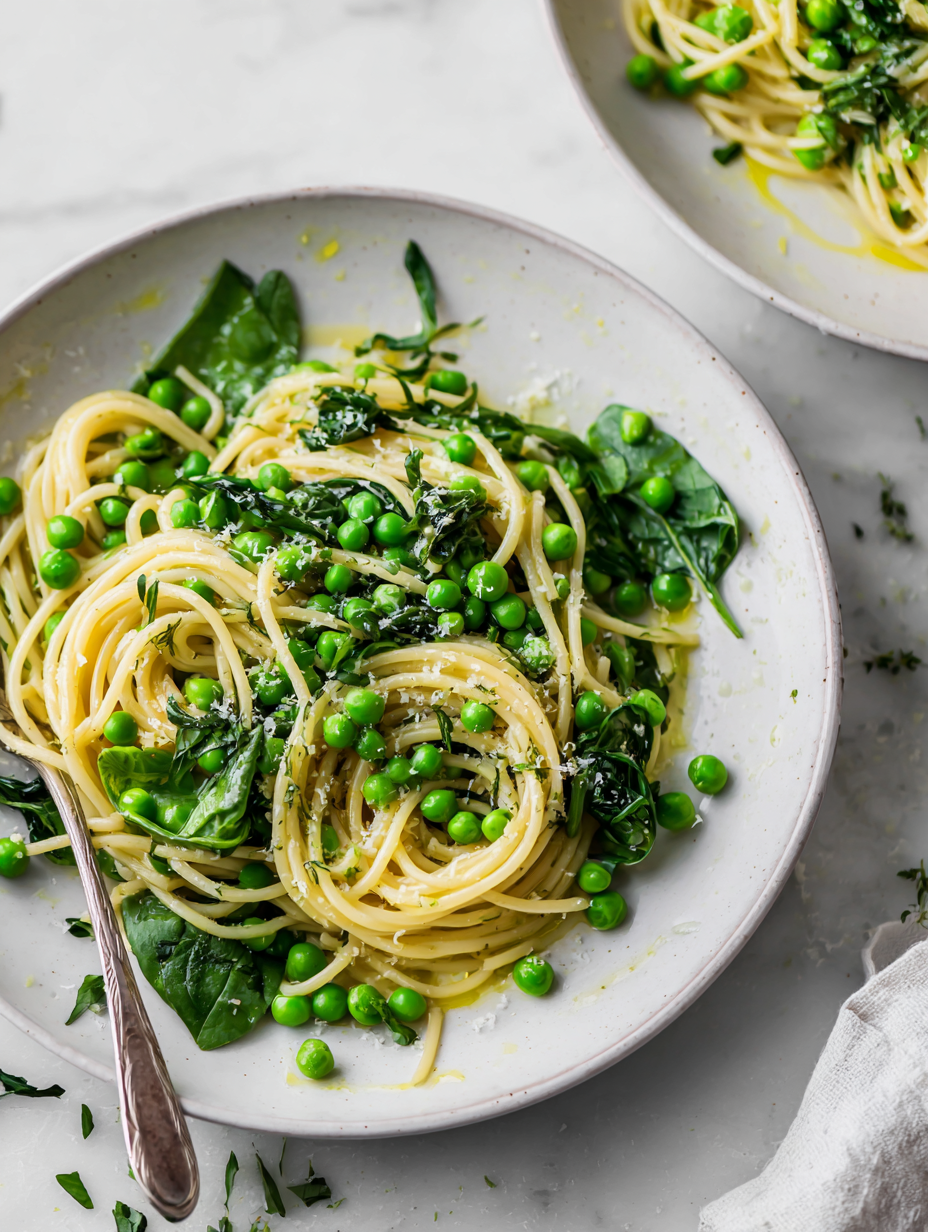
Pea and Spinach Herb Pasta
Ingredients
Equipment
Method
- Fill a large pot with water, add a generous pinch of salt, and bring to a rolling boil. Add the spaghetti and cook according to package instructions until just al dente, about 8-10 minutes.
- While the pasta cooks, heat 1 tablespoon of olive oil in a skillet over medium heat. Add the minced garlic and sauté until fragrant, about 30 seconds, until it turns golden and releases a warm aroma.
- Add the rinsed frozen peas directly to the skillet. Cook, stirring frequently, until they turn bright green and release their sweetness, about 2-3 minutes.
- Once the pasta is cooked, reserve 1 cup of the starchy pasta water, then drain the pasta in a colander. Do not rinse; set aside.
- Immediately add the drained pasta to the skillet with peas and garlic. Toss gently to coat the pasta in the garlic-infused oil.
- Stir in the chopped spinach and cook for about 1 minute until it wilts and turns a vibrant green. If the mixture seems dry, splash in a little of the reserved pasta water to loosen it up.
- Add the chopped herbs and a generous squeeze of lemon juice, then toss everything together. Drizzle with the remaining 1 tablespoon of olive oil for a silky finish.
- Taste and season with more salt or lemon as needed. Give everything a final toss to combine all the flavors beautifully.
- Serve immediately, garnished with extra herbs and a drizzle of olive oil for an aromatic, vibrant dish that’s fresh and satisfying.
Quick tips for perfect pea and spinach pasta
- Use a large pot to give pasta room to move—less sticking, more even cooking.
- Salt your water generously—like the sea—this is your first flavor boost.
- Add greens at the last minute to keep their color vibrant and textures fresh.
- Reserve pasta water—it’s starchy and perfect for loosening the sauce or adjusting consistency.
- Toss herbs in right at the end to preserve their aroma and bright flavor.
- Cook peas until bright green and just tender—overcooking dulls their sweetness.
- Finish with a drizzle of good olive oil for silky richness and flavor.
Common mistakes and how to fix them
- FORGOT to check pasta texture → Test a strand for firm, tender bite.
- DUMPED greens too early → Add spinach just before serving to keep color and texture.
- OVER-TORCHED peas → Cook until bright green and just tender, avoid mushy peas.
- SKIPPED reserved pasta water → Use it to loosen sauce or adjust consistency as needed.
Quick fixes and pantry swaps
- When sauce is too thick, splash in hot pasta water and stir until silky.
- If peas turn mushy, immediately drain and rinse under cold water to halt cooking.
- Splash lemon juice when greens look dull to revive their vibrancy and flavor.
- Patch over-seasoned dish with a splash of plain pasta water to mellow intense flavors.
- Shield delicate greens from overcooking by adding them last and removing from heat quickly.
Prep, store, and reheat tips
- Prep the greens and herbs in advance—wash, chop, and store in airtight containers for up to 2 days. The fresh aroma is brighter when used soon.
- Cook the pasta ahead of time, then cool quickly and store in a sealed container—best consumed within 24 hours for optimal texture.
- Blanch peas separately, then refrigerate for up to 2 days. Reheat briefly in hot water or microwave until just warm; they should remain lively and sweet.
- Reheat leftovers gently in a skillet with a splash of reserved pasta water or olive oil, stirring until heated through and fragrant.
- For best flavor, add fresh herbs and a squeeze of lemon after reheating. The greens may lose some vibrancy, but the overall freshness remains.
Top questions about pea and spinach pasta
1. Can I use frozen peas instead of fresh?
Fresh peas are sweeter and more vibrant, but frozen peas are a convenient, equally tasty substitute. Rinse frozen peas before adding to remove any ice glaze.
2. Can I substitute other greens for spinach?
Yes, you can swap spinach for kale or arugula. Kale needs a bit longer to wilt, arugula adds a peppery flavor. Adjust cooking time accordingly.
3. Why add herbs to the pasta water?
Adding herbs to the boiling water infuses the pasta gently with aroma. Use basil, parsley, or cilantro depending on your flavor preference.
4. How do I know when peas are cooked properly?
Overcooking peas makes them mushy and dull in color. Cook until bright green and just tender, about 2-3 minutes after they’re heated through.
5. What kind of olive oil should I use?
Using good-quality olive oil adds a silky finish and enhances flavor. Drizzle generously after draining the pasta for the best aroma and texture.
6. Can I skip the lemon or substitute it?
Adding lemon juice brightens the dish with a fresh, citrusy aroma that balances the greens’ earthiness. Squeeze just before serving.
7. How much salt should I add to the water?
Salt the pasta water liberally—think of the sea—this is your first flavor layer. It helps the pasta absorb seasoning from the inside out.
8. Why do I need to save pasta water?
Reserve some pasta water before draining. Its starchy quality helps loosen the sauce and cling the greens and peas to the pasta.
9. When should I add herbs to the dish?
Add fresh herbs at the very end to preserve their bright aroma and flavor. Stir in just before serving for maximum impact.
10. How do I reheat this dish without losing flavor?
Reheat leftovers gently in a skillet with a splash of reserved pasta water or olive oil. Stir until warmed through and fragrant, avoiding overcooking the greens.
This dish isn’t just about the greens and pasta; it’s about that quiet moment when you realize how simple ingredients can come together so quickly, filling your kitchen with fresh, herbal aromas. It’s a reminder to keep things honest and unpolished—no fuss, just flavor.
In a busy week, this pasta offers a bit of relief—a step back to the basics, bright and satisfying. Sometimes, the simplest meals are the ones that stay with you long after the last bite is gone.

Hi, I’m Anjali Arora — the curious heart behind Feast Chase.
To be honest, I’ve always felt most at ease in my own company. I’m not exactly a people-person (small talk still makes me cringe), but there are two things I’ve always loved deeply: animals and food.