 Anjali Arora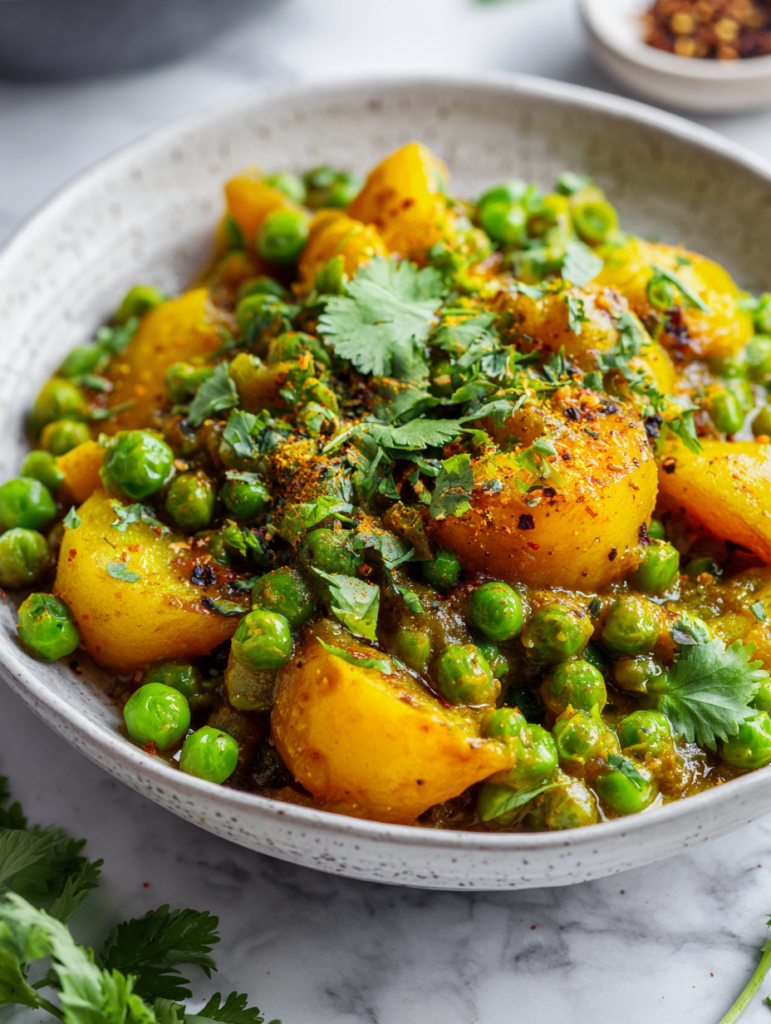
This humble pea and potato curry is more than just a quick meal; it’s a playground for spice experimentation. I love how it starts with simple ingredients but invites you to tweak and play with flavors, making each batch uniquely yours. It’s a dish that feels familiar yet always offers a new twist, depending on what spices or textures you choose to highlight.
Cooking this curry has become my go-to when I need comfort but also crave a bit of kitchen improvisation. The way the potatoes soften and soak up the spices, paired with the bright pop of peas, makes it feel like a cozy hug in a bowl. Plus, it’s forgiving—perfect for when you want to experiment but don’t want to mess up.
Focusing on how this humble pea and potato curry can be a canvas for experimenting with spice blends and textures, making it both a comforting staple and an exciting test of your kitchen improvisation.
The story behind this recipe
- This recipe sprouted from a rainy Sunday afternoon, when I opened my pantry and found only peas and potatoes. Instead of feeling limited, I saw potential—a simple, honest dish that could warm both body and mind. It’s become a little ritual to turn those humble ingredients into something comforting and flavorful, especially when I need a quick lift.
- Every time I make this curry, I remember my grandmother’s kitchen—her gentle hum, the scent of cumin in the air, and the way she’d toss in a handful of peas with a flourish. It’s a reminder that simple ingredients, treated with care, can carry stories, memories, and a lot of love.
- heading: The story behind this recipe
Key ingredients and tips
- Green peas: I love the pop of sweetness they add, especially when fresh. If frozen, just toss them in frozen—no need to thaw, they’ll cook quickly and keep their vibrant color.
- Potatoes: I prefer waxy potatoes here—they hold shape better and soak up those spices. Russets can work, but they turn mealy faster, so keep an eye on your timing.
- Curry powder: I always use a good-quality blend, but feel free to customize. Toast it lightly in oil first for a richer, smoky aroma before adding the other ingredients.
- Tomatoes: I use canned chopped for convenience, but if you have fresh, ripe ones, chop and simmer for a brighter, more zesty flavor. The sauce should be thick and glossy, not watery.
- Onion and garlic: I sauté until they’re golden and fragrant, about 5-7 minutes. If they brown too quickly, turn down the heat—burned garlic turns bitter fast.
- Oil: I favor neutral oils like canola or sunflower, but coconut oil adds a subtle sweetness and tropical note that pairs beautifully with the spices.
- Spice blend: I keep it simple with cumin, coriander, and turmeric, but a pinch of chili flakes ramps up the heat if you like it spicy. Adjust to your taste and your patience for heat.
Spotlight on key ingredients
Peas:
- Green peas: I love their pop of sweetness, especially when fresh. Frozen peas work just as well—no need to thaw, they’ll cook quickly and keep their vibrant color.
- Potatoes: Waxy potatoes like Yukon Gold or red potatoes hold shape better and absorb spices beautifully. Russets can turn mealy if overcooked, so keep an eye on timing.
Potatoes:
- I prefer waxy varieties here—they soak up flavors without falling apart. Rinse them well to remove excess starch for a cleaner texture.
- Peas: Bright green and slightly firm when fresh, they add a fresh burst. Frozen peas keep their sweetness and are super convenient, just toss them in frozen.
Notes for ingredient swaps
- Dairy-Free: Swap coconut milk for cream—adds richness, but with a tropical twist that’s less creamy and more fragrant.
- Fresh Peas: Use fresh peas in season for a sweeter, crisper bite. Frozen peas are reliable and quick.
- Potatoes: Waxy potatoes like red or new potatoes hold shape better. Russets go mushy faster, so watch your timing.
- Canned Tomatoes: Ripe fresh tomatoes can be diced for a brighter, zesty flavor—add at the same stage as canned.
- Oil: Neutral oils like canola work well, but a splash of ghee adds a nutty aroma and richer taste.
- Spice Blend: Customize with garam masala or curry powder. Toast your spices first for a smoky, layered aroma.
- Herbs: Fresh cilantro or mint brighten the dish. Dried herbs can be used but lack the same vibrant punch.
Equipment & Tools
- Large heavy-bottomed pan: Distributes heat evenly for simmering
- Wooden spoon or spatula: Stirs ingredients without scratching the pan
- Sharp knife: Chops potatoes, onions, and garlic efficiently
- Measuring cups: Ensures accurate liquid quantities
- Lid or foil: Partially covers for gentle simmering
Step-by-step guide to pea and potato curry
- Equipment & Tools: Use a large, heavy-bottomed pan or Dutch oven to evenly distribute heat. Have a wooden spoon or spatula for stirring, a sharp knife for chopping, and a measuring cup for liquids ready.
- Sauté aromatics: Heat 2 tbsp oil over medium heat (around 160°C/320°F). Add 1 diced onion and cook for 5-7 minutes until golden and fragrant, stirring often. Add 2 minced garlic cloves and cook for another minute until aromatic.
- Toast spices: Stir in 1 tsp cumin, 1 tsp coriander, and ½ tsp turmeric. Cook for 30 seconds until spices release aroma, stirring constantly to prevent burning. If spices turn too dark, lower the heat.
- Add potatoes: Toss in 3 cups of diced waxy potatoes. Stir to coat with spices and aromatics. Cook for 3-4 minutes, letting potatoes absorb flavors and develop a slight sheen.
- Pour in liquids: Add 1 can (400g) chopped tomatoes and 1 cup water or broth. Bring to a simmer, then reduce heat to low (around 90°C/194°F). Cover partially and cook for 15 minutes, stirring occasionally.
- Incorporate peas: Stir in 1 cup frozen peas directly from the freezer. Cook uncovered for another 5-7 minutes until potatoes are tender and sauce thickens slightly. Check that peas are vibrant and cooked through.
- Adjust seasoning: Taste and add salt or chili flakes if desired. If sauce is too thick, stir in a splash more water; if too watery, simmer uncovered for a few more minutes.
- Rest and serve: Remove from heat. Let the curry rest for 2-3 minutes to allow flavors to meld. Serve hot, garnished with fresh herbs if desired, alongside rice or flatbread.
Let the curry sit off-heat for 2-3 minutes before serving. Garnish with chopped cilantro or a squeeze of lemon for brightness. Serve with rice or bread, making sure to scoop up every bit of the flavorful sauce.
How to Know It’s Done
- Potatoes are tender and easily pierced with a fork.
- Sauce is glossy and coats the back of a spoon.
- Peas are bright and slightly tender, not mushy.
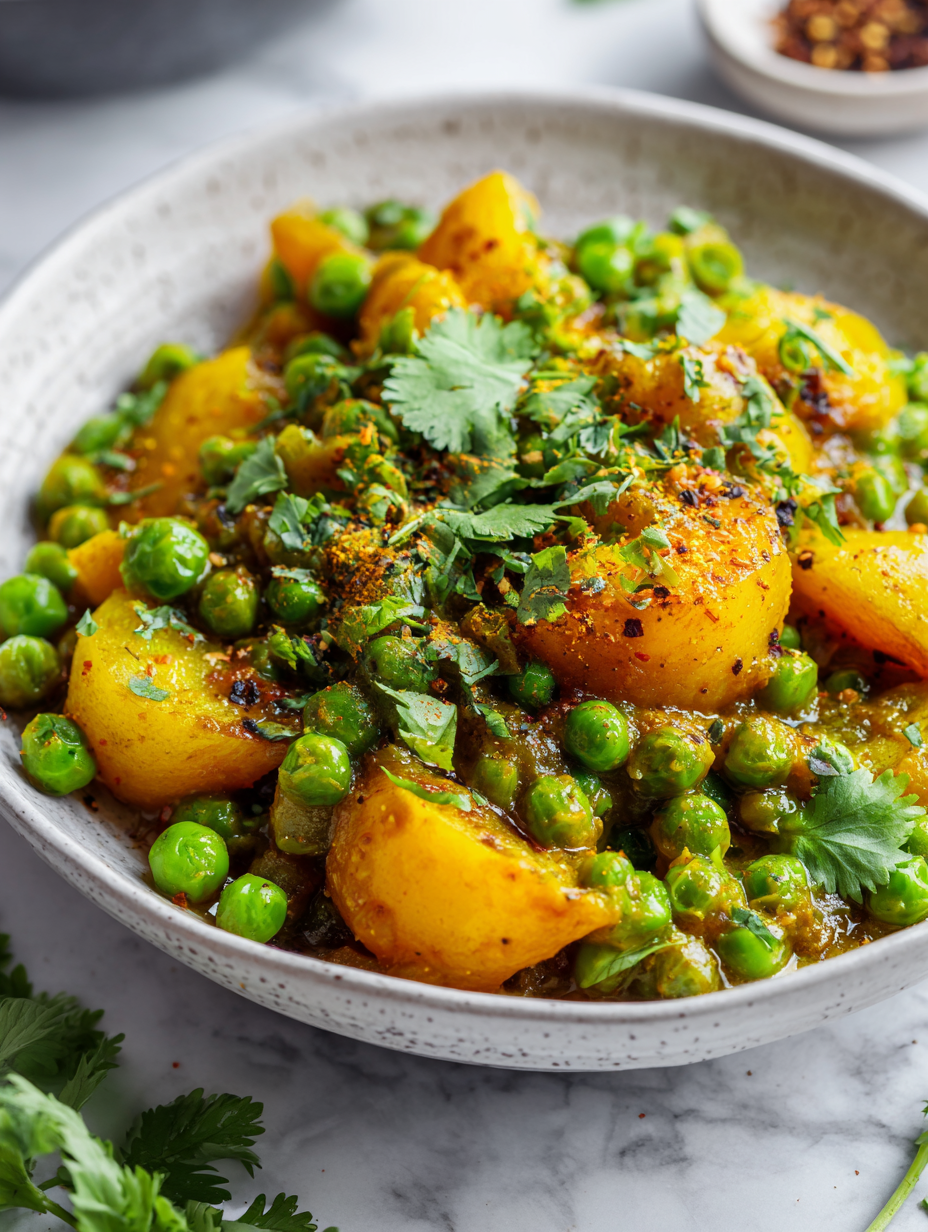
Pea and Potato Curry
Ingredients
Equipment
Method
- Heat oil in a large heavy-bottomed pan over medium heat until shimmering and just starting to smoke slightly.
- Add the diced onion and cook, stirring often, until golden and fragrant, about 5-7 minutes. You should hear a gentle sizzle and see the onions turn a rich amber color.
- Stir in the minced garlic and cook for about 1 minute until fragrant, making sure it doesn't brown too quickly to avoid bitterness.
- Add the toasted cumin, coriander, and turmeric, stirring constantly for about 30 seconds until the spices release their aroma and turn a shade darker.
- Toss in the diced potatoes and stir well to coat them with the spices and aromatics. Cook for 3-4 minutes, allowing the potatoes to start absorbing the flavors and developing a slight sheen.
- Pour in the chopped tomatoes along with water or broth, stirring to combine. Bring the mixture to a gentle simmer, then cover partially with a lid or foil and reduce the heat to low.
- Let the curry simmer gently for about 15 minutes, stirring occasionally, until the potatoes are tender and the sauce has thickened slightly, coating the ingredients with a glossy finish.
- Stir in the frozen peas and cook uncovered for another 5-7 minutes, until the peas are bright green and heated through, and the sauce is thickened to your liking.
- Season with salt and chili flakes, tasting and adjusting the seasoning to your preference.
- Remove the curry from heat and let it rest for a couple of minutes, allowing the flavors to meld beautifully.
- Garnish with freshly chopped cilantro or mint, then serve hot alongside rice or flatbread for a cozy, flavorful meal.
Pro tips for perfect pea and potato curry
- Bolded mini-head: Toast spices lightly in oil first for a richer aroma and deeper flavor.
- Bolded mini-head: Use frozen peas straight from the freezer—no need to thaw, they cook quickly and keep color vibrant.
- Bolded mini-head: Diced waxy potatoes absorb flavors better and hold shape, so choose these varieties for texture.
- Bolded mini-head: Cook aromatics until golden and fragrant; if they brown too fast, lower the heat to prevent bitterness.
- Bolded mini-head: Stir in peas near the end to keep their bright color and fresh texture, avoiding mushiness.
- Bolded mini-head: When simmering, keep the lid slightly ajar to prevent excess water and achieve a glossy sauce.
- Bolded mini-head: Taste and adjust salt or chili flakes at the end—building layers of flavor is key to balance.
Common mistakes and how to fix them
- FORGOT to check spice levels → Taste early and adjust seasoning accordingly.
- DUMPED too much water → Keep an eye on sauce consistency, simmer longer if needed.
- OVER-TORCHED spices → Toast spices gently and stir constantly to prevent burning.
- MISSED resting time → Let the curry sit off-heat for flavors to meld before serving.
Quick fixes and pantry swaps
- When in doubt, splash a bit of water to mellow spicy heat.
- If sauce thickens too much, add a splash of broth and simmer briefly.
- DUMPED too many peas? Stir in a little lemon juice for brightness.
- When spices burn, immediately lower heat and add a splash of water to cool.
- Splash in a teaspoon of sugar if the acidity from tomatoes feels too sharp.
Prep, store, and reheat tips
- You can prep the curry ingredients—chop potatoes, onion, and garlic—a day ahead. Keep them in airtight containers in the fridge; they’ll stay fresh for up to 24 hours, and the flavors will deepen overnight.
- The cooked curry can be stored in an airtight container in the fridge for up to 3 days. The sauce may thicken, so stir in a splash of water or broth when reheating to loosen it up, and simmer gently until warmed through.
- For longer storage, freeze the curry in portions for up to 2 months. Thaw overnight in the fridge, then reheat on the stove or microwave. Expect the texture of potatoes to soften slightly after freezing, but the flavors remain rich.
- Reheat the curry slowly over low heat, stirring occasionally. The smell will intensify as it warms, with the peas popping and the sauce steaming. Check that potatoes are heated through and the sauce is piping hot before serving.
Top questions about pea and potato curry
1. Can I use frozen peas instead of fresh?
Use fresh or frozen peas; frozen are convenient and keep their bright color with quick cooking.
2. How do I know when potatoes are cooked?
Potatoes should be tender but not mushy; start checking around 15 minutes of simmering, depending on size.
3. How spicy should the curry be?
Adjust the spice levels by taste; add more chili flakes or curry powder gradually to avoid overpowering the dish.
4. My sauce is too thin—what do I do?
If the sauce gets too watery, simmer uncovered for a few more minutes until it thickens and coats the ingredients well.
5. Which potatoes are best for this curry?
Use waxy potatoes like Yukon Gold or red potatoes; they hold shape better and absorb flavors without falling apart.
6. How do I reheat leftovers properly?
Reheat gently on the stove over low heat, stirring occasionally, until steaming hot and the sauce is bubbly.
7. Can I prepare this curry in advance?
This dish can be made a day ahead; keep refrigerated and reheat gently to preserve texture and flavor.
8. Can I add dairy or coconut milk?
For added richness, stir in a splash of coconut milk or a dollop of yogurt just before serving.
9. What if my spices burn during toasting?
Over-torched spices will turn bitter; toast spices gently over medium heat and stir constantly to prevent burning.
10. How can I enhance the flavor at the end?
Stir in a squeeze of lemon or lime at the end to brighten the flavors and add a fresh note.
This simple pea and potato curry is one of those dishes that sneaks into your weekly rotation without fuss. It’s comforting, quick, and somehow feels like a small act of kindness in a bowl. When those peas burst with a bright, sweet pop, I remember why I keep coming back to this humble recipe.
In the end, it’s not just about the ingredients—it’s about the quiet joy of making something nourishing with what’s at hand. Every time I serve it, I’m reminded that good food doesn’t have to be complicated, just honest and full of flavor.

Hi, I’m Anjali Arora — the curious heart behind Feast Chase.
To be honest, I’ve always felt most at ease in my own company. I’m not exactly a people-person (small talk still makes me cringe), but there are two things I’ve always loved deeply: animals and food.