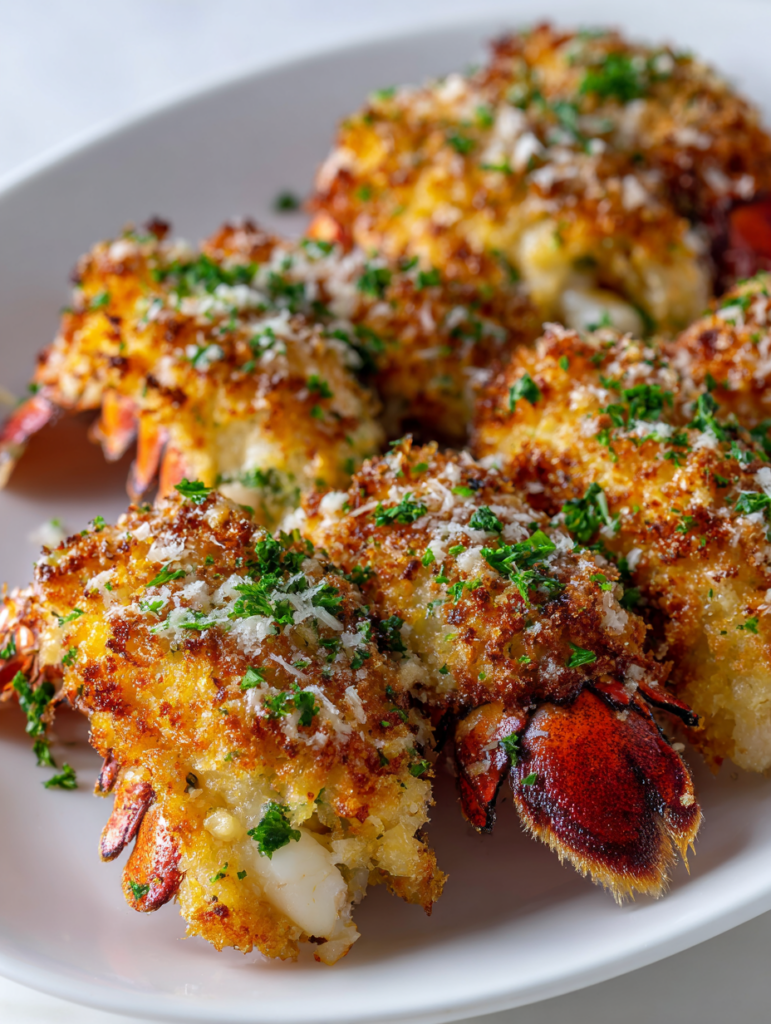
This Parmesan crusted lobster tail recipe is my way of turning a fancy seafood dinner into something a bit more playful and texturally satisfying. There’s a weird joy in biting into that crispy, cheesy exterior and discovering tender, sweet lobster underneath. It’s like giving a classic a little unexpected crunch, a salty, cheesy shell that makes every bite feel special, even if you’re just cooking for yourself on a weeknight.
What sold me on this idea was the contrast—the richness of lobster paired with the sharp, salty bite of Parmesan, all coated in a crispy crust. It’s a simple way to elevate what might seem indulgent into something approachable and fun. Plus, it’s surprisingly easy to pull off with a few pantry staples, making it perfect for when you want a show-stopper without the fuss.
This recipe takes the luxurious lobster tail and gives it a crispy, savory twist with a Parmesan crust, inspired by the idea that even the most decadent seafood benefits from a bit of crunchy, cheesy goodness. It’s about elevating a classic into a sharable, crave-worthy dish that’s unexpectedly approachable, yet indulgent.
The story behind this recipe
- I first came across the idea of Parmesan crusted lobster during a chaotic holiday dinner where everything that could go wrong did—except this dish. The crunch of that cheesy crust, paired with the sweet, tender lobster, somehow made the mess worth it. It became a comfort food I keep coming back to, especially when I want something special but straightforward.
- One winter evening, I was craving something indulgent yet simple, and I remembered a seafood market visit where I watched lobsters being cracked open with a satisfying crack. That moment sparked the idea to add a crispy Parmesan crust—something that would mimic that satisfying sound and texture, but with a cheesy, savory twist. It’s become my go-to for quick luxury, especially on nights when I need a reminder that good food doesn’t have to be complicated.
- heading
- story_type
Key ingredients and tips
- Lobster tails: I love the sweet, briny aroma of fresh lobster; make sure they’re thawed completely for even cooking. Swap with scallops if you want a milder, quicker option.
- Parmesan cheese: The sharp, salty kick of aged Parmesan is key. If you don’t have it, Pecorino offers a similar saltiness, but skip the milder grated cheese—won’t get that crispy crust vibe.
- Breadcrumbs: I prefer panko for extra crunch, but regular dried breadcrumbs work fine. Toast them lightly in butter first for a richer, nuttier flavor.
- Butter: Unsalted is my go-to—it allows control over salt. For a lighter touch, try olive oil, but your crust might be less crispy and more delicate.
- Garlic: Fresh minced garlic brings that punch of aroma and flavor—smell it sizzling and you’ll know it’s right. Dried garlic powder can work in a pinch, but loses that fresh zing.
- Lemon zest: Brightens everything with a citrus hit—use organic to avoid wax. Skip if you’re not a fan, but it really lifts the richness.
- Herbs (parsley or thyme): Fresh herbs add a pop of color and freshness. Dried herbs are fine but don’t deliver the same vibrant aroma and flavor.
Spotlight on key ingredients
Lobster Tails:
- Their sweet, briny aroma intensifies as they cook, and the meat becomes tender yet firm. Make sure they’re fully thawed for even cooking.
- Lobster meat: When cooked, it should be opaque and slightly firm to the touch. During baking, it jiggles gently and releases a buttery scent that’s hard to resist.
Parmesan Cheese:
- Its sharp, salty aroma becomes more pungent as it melts and crisps. During baking, it forms a golden, crispy crust that crackles when pressed.
- During cooking, it develops a slightly oozy texture inside and a deeply savory, umami-rich flavor that defines the dish’s crisp exterior.
Notes for ingredient swaps
- Dairy-Free: Use a nut-based cheese or nutritional yeast for that cheesy umami kick, but expect a slightly different flavor profile.
- Gluten-Free: Swap panko with crushed almonds or gluten-free breadcrumbs for crunch, though texture may vary slightly.
- Low-Sodium: Opt for low-sodium Parmesan or skip added salt in the crust to keep it from becoming too salty.
- Vegan Option: Substitute with vegan Parmesan-style cheese and use olive oil instead of butter for a plant-based crust.
- Herb Variations: Replace parsley or thyme with basil or tarragon for a different aromatic note—fresh herbs make the biggest impact.
- Citrus Twist: Use lime zest instead of lemon for a slightly different brightness, especially if you want a more tropical vibe.
- Breadcrumbs: For extra chew, try crushed-up crackers or even crushed cereal—think texture, not traditional crunch.
Equipment & Tools
- Baking sheet with parchment: Holds the lobster for baking and prevents sticking.
- Small mixing bowl: Prepares the Parmesan crust mixture.
- Basting brush: Evenly coats lobster with butter and helps apply crust.
- Kitchen shears: Cuts down the lobster shell for easier meat removal.
- Meat thermometer: Checks internal temperature to prevent overcooking.
Step-by-step guide to Parmesan crusted lobster
- Equipment & Tools: Get a baking sheet lined with parchment, a small bowl for cheese mixture, a basting brush, and a meat thermometer for accuracy.
- Preheat your oven to 200°C (390°F). Ensure the oven rack is in the middle for even heat.
- Prepare the lobster: Using kitchen shears, cut down the top shell of each tail lengthwise, exposing the meat but keeping it attached at the base.
- Remove the lobster meat: Gently lift the meat out of the shell, keeping the tail intact, and set it on top of the shell for easier crusting.
- Make Parmesan crust: Mix grated Parmesan, panko breadcrumbs, minced garlic, chopped herbs, and lemon zest in the small bowl. Drizzle with a little melted butter and stir until combined.
- Apply the crust: Use the basting brush to coat the lobster meat with melted butter, then press the Parmesan mixture onto the top, forming a thick, even crust.
- Bake: Place the lobster tails on the prepared baking sheet. Bake for 12–15 minutes, until the crust is golden and the lobster meat is opaque and firm.
- Check doneness: Use a meat thermometer; the internal temperature should reach 60°C (140°F). The crust should be crispy and fragrant, with a slight crackle when pressed.
- Rest & serve: Let the lobster rest for 2 minutes outside the oven. Plate carefully to keep the crust intact, garnishing with extra herbs or lemon if desired.
Let the lobster rest for 2 minutes to settle juices. Serve hot, garnished with fresh herbs or lemon wedges for brightness.
How to Know It’s Done
- Parmesan crust is golden and crispy.
- Lobster meat is opaque, with a slight bounce when pressed.
- Internal temperature hits 60°C (140°F) for perfect doneness.
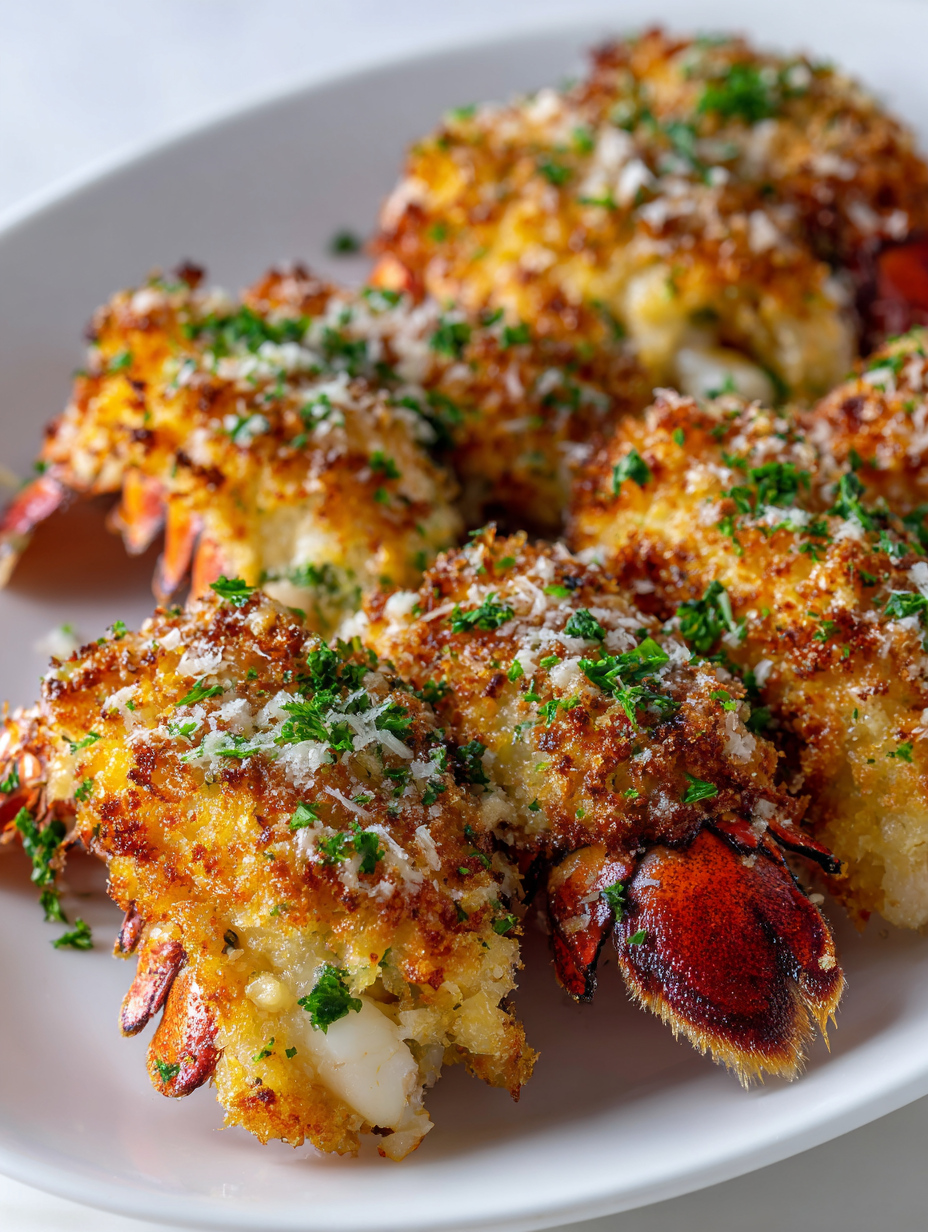
Parmesan Crusted Lobster Tails
Ingredients
Equipment
Method
- Preheat your oven to 200°C (390°F) and line a baking sheet with parchment paper.
- Using kitchen shears, carefully cut along the top shell of each lobster tail lengthwise, exposing the meat while keeping it attached at the base.
- Gently lift the lobster meat out of the shell, keeping it connected at the tail end, and rest it on top of the shell for easy crusting.
- In a small bowl, combine grated Parmesan, panko breadcrumbs, minced garlic, chopped herbs, and lemon zest. Drizzle with melted butter and mix until well combined.
- Use a basting brush to coat the exposed lobster meat with some melted butter, then press the Parmesan mixture onto the meat, forming a thick, even crust.
- Place the prepared lobster tails on the lined baking sheet, crust side up, and bake in the preheated oven for 12–15 minutes, or until the crust is golden and the lobster meat is opaque and firm.
- Check the internal temperature with a meat thermometer; it should reach 60°C (140°F). The crust should be crispy and fragrant, with a slight crackle when pressed.
- Remove from the oven and let rest for 2 minutes. Serve hot, garnished with extra herbs or lemon wedges for added brightness.
Pro tips for crispy Parmesan crust
- Bolded mini-head: Use a light hand with butter → A little goes a long way, and excess melts away, preventing sogginess.
- Bolded mini-head: Toast breadcrumbs lightly → Enhances crunch and nutty flavor, giving your crust a richer finish.
- Bolded mini-head: Keep the oven hot → Ensures the Parmesan crust crisps up quickly without overcooking the lobster meat.
- Bolded mini-head: Apply crust evenly → Press it firmly onto the lobster for a uniform, crackly coating that won’t fall off.
- Bolded mini-head: Rest before serving → Resting for a couple of minutes helps juices settle and keeps crust crisp when sliced.
Common mistakes and how to fix them
- FORGOT to preheat oven → Always preheat for even crust browning.
- DUMPED lobster shells in the crust → Remove shells first for clean presentation.
- OVER-TORCHED crust → Lower oven temp or cover with foil if crust browns too quickly.
- MISSED resting time → Let lobster rest 2 minutes before serving to retain juices.
Quick kitchen fixes for Parmesan lobster
- When sauce shimmers and smells nutty, it’s ready — splash in a little more butter for richness.
- If crust isn’t crispy, bump oven to high broil for 1-2 minutes—watch closely to prevent burning.
- DUMPED in too much salt? Rinse crust briefly in cold water, then pat dry to tone down saltiness.
- When lobster meat sticks to shell, lightly score the shell before baking for easier removal.
- Splash a few drops of lemon juice if crust turns bland or dry—brightens and refreshes the flavor.
Prep, store, and reheat tips
- You can prep the Parmesan crust mixture a day ahead; keep it in an airtight container in the fridge. The flavors meld beautifully overnight, making assembly quicker.
- Thaw frozen lobster tails in the fridge for 12-24 hours before cooking. Keep them covered to prevent drying out and absorb any seafood smells.
- Raw lobster can be stored in the coldest part of your fridge for up to 24 hours. Once cooked, eat within 2 days for best texture and flavor.
- Reheating lobster is tricky—avoid microwaving. Instead, gently warm in a low oven (around 150°C/300°F) for 8-10 minutes until just heated through. The crust won’t be as crispy but will still be tender and flavorful.
FAQs about Parmesan Crusted Lobster Tail
1. How can I tell if lobster tails are fresh?
Look for lobster tails that are firm and have a bright, slightly translucent shell. The meat should be opaque and smell sweet and briny. If they smell off or are slimy, avoid them.
2. How do I prepare lobster tails for baking?
Use a sharp pair of kitchen shears to cut along the top shell. Be careful not to cut into the meat. Gently lift the meat out, keeping it attached at the base.
3. What’s the ideal baking time and temperature?
Bake at 200°C (390°F) for about 12-15 minutes. The crust should turn golden and crispy, and the lobster meat should be opaque and firm. Use a meat thermometer to check for 60°C (140°F).
4. How do I get a crispy Parmesan crust?
If the crust isn’t browning, turn up the oven or briefly broil for a minute or two. Keep a close eye to prevent burning. For a crispier crust, toast the breadcrumbs before mixing.
5. What type of Parmesan works best?
Use freshly grated Parmesan for the best flavor and melting quality. It melts into a golden, slightly oozy layer that crackles when you bite into it.
6. How do I know when the lobster is done?
To prevent overcooking, keep an eye on the lobster’s color and texture. The meat should be opaque and slightly bounce back when pressed. The crust should be golden and fragrant.
7. Can I make parts of this ahead?
You can prepare the Parmesan topping a day in advance and store it in the fridge. Thaw lobster tails in the fridge for 12-24 hours before baking. Reheat gently in a low oven if needed.
8. What if my crust isn’t crispy enough?
When the crust turns dull or soggy, sprinkle a little lemon juice or brush with butter to refresh flavor and shine. If the crust is too dark, cover with foil or lower the oven temp.
9. How do I ensure even cooking?
Avoid overcrowding the oven, which can cause uneven cooking. Use a rack in your baking sheet for better heat circulation and crispier results.
10. How can I prevent the lobster meat from sticking?
If the lobster meat sticks or tears when removing from the shell, score the shell lightly before baking. This helps the meat release easily and keeps the presentation neat.
This dish is a reminder that even the most luxurious ingredients can be made approachable with a bit of honest effort. The crispy Parmesan crust adds a satisfying crunch and salty depth that turns lobster into something truly memorable.
When you take that first bite, with the crackle of cheese and the tender, sweet lobster, it’s like a small celebration in your mouth. It’s simple, indulgent, and perfect for when you want to treat yourself without fuss.

I’m Mayank, the creator, cook, and writer behind this blog. FeastChase is not just a collection of recipes — it’s a journey through tastes, memories, and moments that bring people together at the table.