 Anjali Arora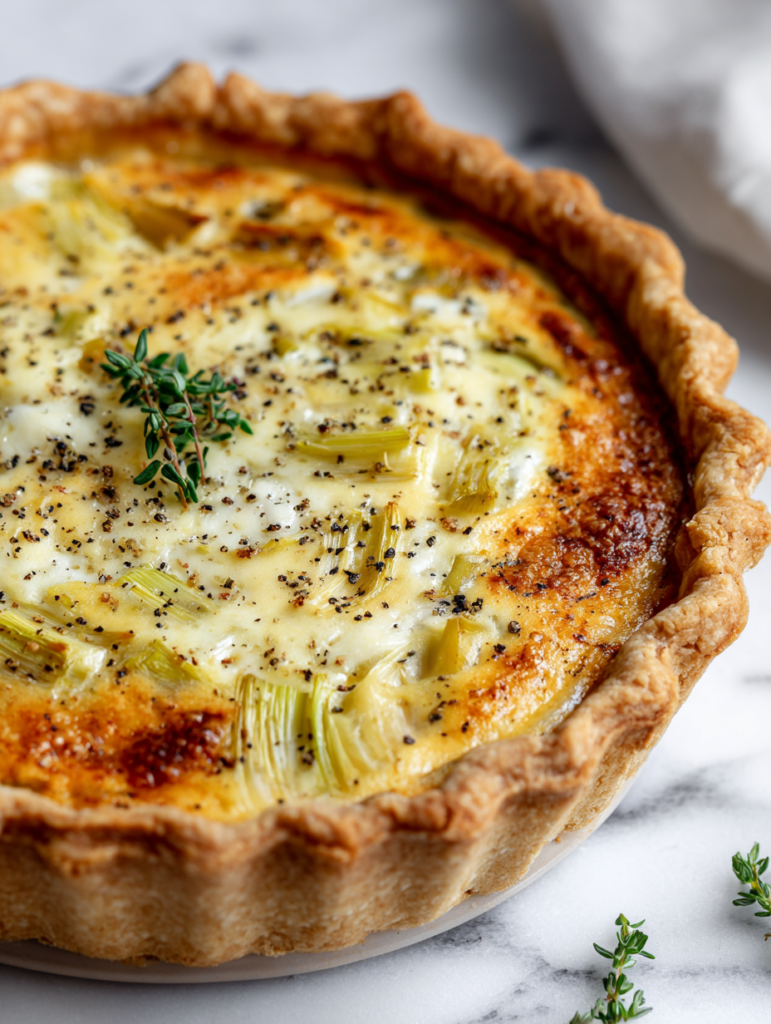
This leek and cheese quiche is a reminder that simplicity often yields the most satisfying results. I love how slow-cooked leeks develop a natural sweetness, almost caramelized, which balances perfectly with sharp, tangy cheese in a flaky crust. It’s not fancy, just honest food that feels like a warm hug at the end of a busy day.
There’s a kind of quiet pride in making a good quiche from scratch, especially when you get that moment right—golden, crispy edges, a silky custard filling, and leeks that smell sweet and savory as they bake. It’s one of those dishes I keep coming back to because it’s forgiving, adaptable, and always comforting, no matter the season.
This recipe is inspired by how leeks can be both humble and surprisingly sweet when cooked down slowly, bringing out a caramelized depth that pairs beautifully with sharp cheese in a rustic, no-fuss quiche.
The story behind this recipe
- This quiche recipe started as a way to capture the gentle sweetness of slow-cooked leeks, something I learned from a French neighbor long ago. It’s a humble vegetable, often overlooked, but cooked right, it transforms into something deeply savory and tender. I like to think of it as a quiet reminder that simple ingredients, treated with patience, can surprise you.
- Every time I make this, I remember my grandmother’s kitchen—her way of tossing everything into a pan and letting it do its thing. The smell of leeks caramelizing in butter, mingling with the sharp tang of good cheese, always takes me back. It’s a dish rooted in nostalgia but perfect for a busy weekday or a lazy weekend brunch.
- heading:
Key ingredients and tips
- Leeks: I love how they soften into a sweet, tender bed of flavor when slowly cooked. Skip the quick sauté—trust me, patience here makes all the difference.
- Cheddar cheese: Sharp, slightly nutty, and melts into a gooey richness. Feel free to mix in a little Gruyère for a smoky kick that’s addictive.
- Pie crust: I prefer a flaky, buttery homemade crust, but a good store-bought works too. Keep it cold to get those perfect layers of crispness.
- Eggs: They bind everything together with a silky custard. Whisk until just combined—overmixing can make it rubbery.
- Cream: Adds a lush body, making each slice rich but smooth. Heavy cream is traditional, but you can swap in half-and-half if you want lighter.
- Salt & pepper: Season generously—leeks are mild, so don’t be shy. Freshly cracked pepper adds a nice peppery punch.
- Nutmeg: Just a pinch brightens the custard with a subtle warmth. It’s small but makes a noticeable difference—don’t skip it.
Spotlight on key ingredients
Leeks:
- I love how they soften into a sweet, tender bed of flavor when slowly cooked. Skip the quick sauté—trust me, patience here makes all the difference.
- They develop a rich, caramelized aroma that fills the kitchen—almost smoky, with a hint of sweetness that balances the savory custard.
Cheddar cheese:
- Sharp, slightly nutty, and melts into a gooey richness. Feel free to mix in a little Gruyère for a smoky kick that’s addictive.
- It turns golden and bubbling on top, with a tangy, cheesy scent that makes the dish irresistible as it bakes.
Notes for ingredient swaps
- Dairy-Free: Swap heavy cream for coconut cream or cashew cream. Keeps it rich, but with a subtle nutty flavor.
- Cheese: Use Gruyère or Swiss instead of cheddar for a nuttier, more complex flavor. Or go vegan with plant-based cheese.
- Pie Crust: Almond flour crust works well if you’re gluten-free, though it’s a bit denser and nuttier.
- Leeks: Shallots or finely chopped onions make a decent stand-in, but they’ll bring a sharper bite and less sweetness.
- Eggs: Silken tofu blended with a splash of plant milk can mimic custard—less binding, more subtle flavor.
- Herbs & Spices: Fresh thyme or a pinch of smoked paprika can add depth—skip nutmeg if you prefer a different warmth.
- Salt & Pepper: Sea salt and freshly cracked black pepper are classic—feel free to experiment with everything from smoked salt to Aleppo pepper.
Equipment & Tools
- 9-inch tart pan with removable bottom: To bake the crust evenly and easily remove the finished quiche.
- Rolling pin: To roll out the dough to an even thickness.
- Parchment paper and pie weights: To blind bake the crust without shrinking or puffing.
- Sauté pan: To slowly cook and caramelize the leeks.
- Whisk: To blend the custard ingredients smoothly.
Step-by-step guide to making the quiche
- Gather your equipment: a 9-inch tart pan with a removable bottom, a sharp knife, a mixing bowl, a whisk, a sauté pan, and a pastry brush. Preheat your oven to 190°C (375°F).
- Prepare the crust: Roll out your chilled pie dough on a floured surface to about 3 mm thickness. Fit it into the tart pan, trim excess, and prick the bottom with a fork. Chill in the fridge for 15 minutes.
- Blind bake the crust: Line the crust with parchment paper, fill with pie weights or dried beans, and bake for 15 minutes until the edges are just starting to set. Remove weights and parchment, bake for another 5 minutes until lightly golden. Set aside.
- While the crust bakes, clean and slice the leeks: trim the dark green tops and roots, slice the white and light green parts thinly. Rinse thoroughly to remove dirt. Pat dry.
- Cook the leeks: Heat a tablespoon of butter in the sauté pan over medium-low heat. Add leeks with a pinch of salt. Cook slowly, stirring occasionally, for about 20–25 minutes until soft, sweet, and caramelized. They should smell rich and slightly smoky.
- In a mixing bowl, whisk together 3 eggs, 150 ml (⅔ cup) heavy cream, a pinch of freshly grated nutmeg, salt, and pepper. Set aside.
- Layer the cooked leeks evenly over the pre-baked crust. Pour the custard mixture over the leeks, ensuring they are mostly covered. Gently tap the pan to settle the filling.
- Bake the quiche: Place in the oven and bake at 190°C (375°F) for 30–35 minutes. The top should be golden and slightly puffed, and the custard set with a slight jiggle in the center.
- Check for doneness: The crust should be crisp, the filling firm but tender, and the edges beautifully golden. If the top browns too quickly, tent with foil.
- Rest the quiche: Remove from oven and let it sit for 10 minutes before slicing. This helps the custard set fully and makes serving neater.
Let the quiche rest for 10 minutes on a wire rack. Slice with a sharp knife, serving warm or at room temperature with a simple side salad.
How to Know It’s Done
- Crust edges are golden and crisp.
- Custard is just set with a slight wobble in the center.
- Leeks are tender and caramelized, smelling sweet and smoky.
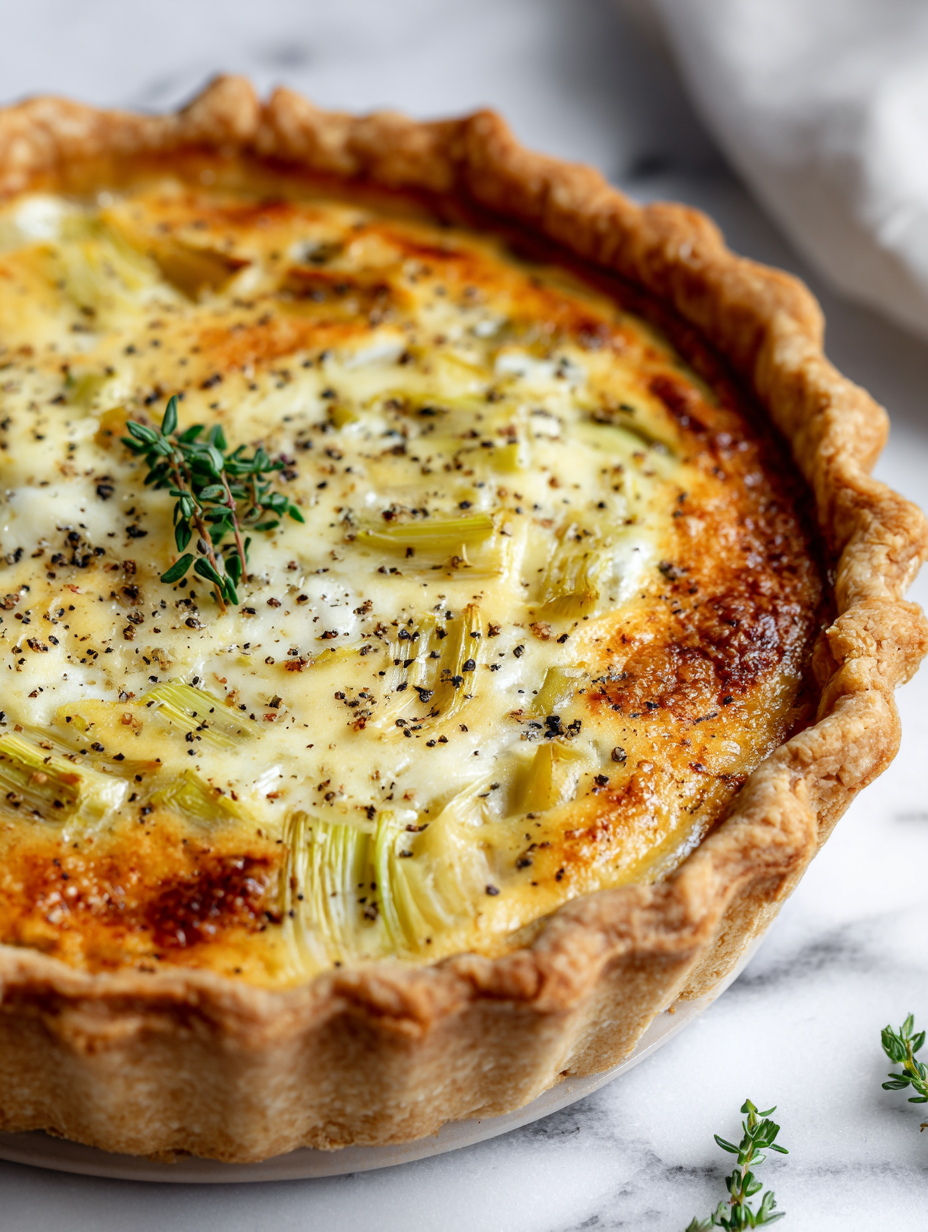
Leek and Cheese Quiche
Ingredients
Equipment
Method
- Preheat your oven to 375°F (190°C). Roll out your chilled pie crust on a floured surface to about 3 mm thick and fit it into a 9-inch tart pan. Trim the edges, prick the bottom with a fork, and chill in the fridge for 15 minutes.
- Line the chilled crust with parchment paper, fill with pie weights or dried beans, and blind bake for 15 minutes until the edges start to set. Remove the weights and parchment, then bake for another 5 minutes until lightly golden. Let it cool slightly.
- While the crust bakes, clean the leeks thoroughly and slice them thinly. In a sauté pan, melt the butter over medium-low heat, then add the leeks and a pinch of salt. Cook slowly, stirring occasionally, for 20–25 minutes until they are soft, sweet, and caramelized, filling the kitchen with a rich, smoky aroma.
- In a mixing bowl, whisk together the eggs, heavy cream, nutmeg, salt, and pepper until smooth and just combined. Set aside.
- Spread the caramelized leeks evenly over the cooled crust. Pour the custard mixture over the leeks, gently tilting the pan to distribute evenly and settle the filling.
- Bake the quiche in the oven for 30–35 minutes until the top is golden, bubbling slightly, and the custard is set with a slight jiggle in the center. Keep an eye on the edges; if they brown too quickly, tent with foil.
- Remove the quiche from the oven and let it rest for 10 minutes on a wire rack. This allows the custard to set completely, making it easier to slice cleanly.
- Slice the quiche with a sharp knife, revealing the tender leeks, golden crust, and creamy filling. Serve warm or at room temperature, perhaps with a side salad for a complete meal.
Notes
Pro tips for perfect quiche
- Boldly caramelize: Cook the leeks slowly over low heat until they develop a deep, sweet aroma and rich golden color.
- Use chilled crust: Keep your pie dough cold before baking to achieve crisp, flaky layers that hold up during filling.
- Layer carefully: Arrange the caramelized leeks evenly to ensure each slice has a balanced flavor and texture.
- Watch the edges: Tent the crust with foil if it browns too quickly, preventing burning while the filling finishes.
- Test for doneness: The quiche is ready when the top is golden, slightly puffed, and the custard jiggles just slightly in the center.
- Rest for perfection: Let the baked quiche sit for at least 10 minutes; this helps the custard set and makes slicing neater.
- Incorporate cheese last: Sprinkle cheese on top during the final minutes of baking for a gooey, bubbling crust that’s irresistible.
Common mistakes and how to fix them
- FORGOT to preheat the oven → Always preheat to ensure even baking.
- DUMPED filling into a hot crust → Let crust cool slightly before filling to prevent sogginess.
- OVER-TORCHED crust → Shield edges with foil or a crust protector if browning too fast.
- SKIPPED resting time → Rest for at least 10 minutes to set the custard properly.
Quick fixes and pantry swaps
- When sauce is too thin, splash in a pinch of cornstarch and simmer for 1–2 minutes, shimmer thickens.
- If crust is soggy, patch with a quick brush of egg wash and bake 2 more minutes until crisp.
- Dumped filling into a hot crust? Shield edges with foil to prevent burning while finishing baking.
- When cheese isn’t melting well, sprinkle on partway through baking to avoid overbrowning.
- Splash a little lemon juice or vinegar if the custard tastes flat—brighten with a quick tang.
Prep, store, and reheat tips
- Prepare the crust and blind bake it a day ahead; store wrapped in foil at room temperature for up to 24 hours, preserving its crispness.
- Caramelize the leeks the day before; cool completely and refrigerate in an airtight container for up to 2 days, which intensifies their sweetness.
- Assemble the filled quiche (without baking) a few hours in advance; keep refrigerated for up to 24 hours, but let it come to room temp before baking for even heat distribution.
- Reheat slices in a moderate oven (around 180°C/350°F) for 10–15 minutes until warmed through, watching for bubbling and a slightly crispy top.
- The quiche is best enjoyed within 2 days of baking. Reheat until fragrant and custard is hot but not overcooked, ensuring it retains a tender, creamy texture.
Top questions about leek and cheese quiche
1. How do I clean leeks properly?
Use firm, white leeks with minimal green parts for the best sweetness and tenderness. Rinse thoroughly to remove dirt and grit.
2. Can I use a pre-made pie crust?
A flaky, buttery crust works best, but store-bought is fine. Keep it cold before baking to prevent sogginess.
3. How long should I cook the leeks?
Slow-cook the leeks over low heat until caramelized—about 20-25 minutes. They should smell sweet and smoky.
4. How do I know when the quiche is done?
Bake the quiche at 375°F (190°C) until golden and the custard just jiggles in the center, about 30-35 minutes.
5. What if the crust over-browns?
If the crust browns too quickly, tent with foil. Overbaking can dry out the custard, so keep an eye on the color and jiggle.
6. How long does leftover quiche last?
Refrigerate leftovers in an airtight container for up to 3 days. Reheat in a moderate oven until warm and fragrant.
7. Can I make this dairy-free?
For a dairy-free version, swap heavy cream for coconut milk or cashew cream. It’s richer than you might expect.
8. What cheese can I substitute?
Use shredded Gruyère or Swiss cheese instead of cheddar for a nuttier flavor. Vegan cheese can work too, with some adjustments.
9. How do I enhance the leek flavor?
To intensify leek sweetness, cook slowly over low heat until deeply caramelized—this takes patience but is worth it.
10. Why did my custard crack?
If the custard cracks, it’s overbaked. Remove from oven once it’s just set and slightly jiggles in the middle.
This dish isn’t just about the flavors, but the process—taking the time to slowly caramelize leeks makes all the difference. It’s a reminder that patience in the kitchen rewards you with depth and warmth in each bite.
In these busy days, I find that simple, honest recipes like this keep me grounded. Plus, the smell of melting cheese and cooked leeks filling the house is a small comfort that’s hard to beat.

Hi, I’m Anjali Arora — the curious heart behind Feast Chase.
To be honest, I’ve always felt most at ease in my own company. I’m not exactly a people-person (small talk still makes me cringe), but there are two things I’ve always loved deeply: animals and food.