 Anjali Arora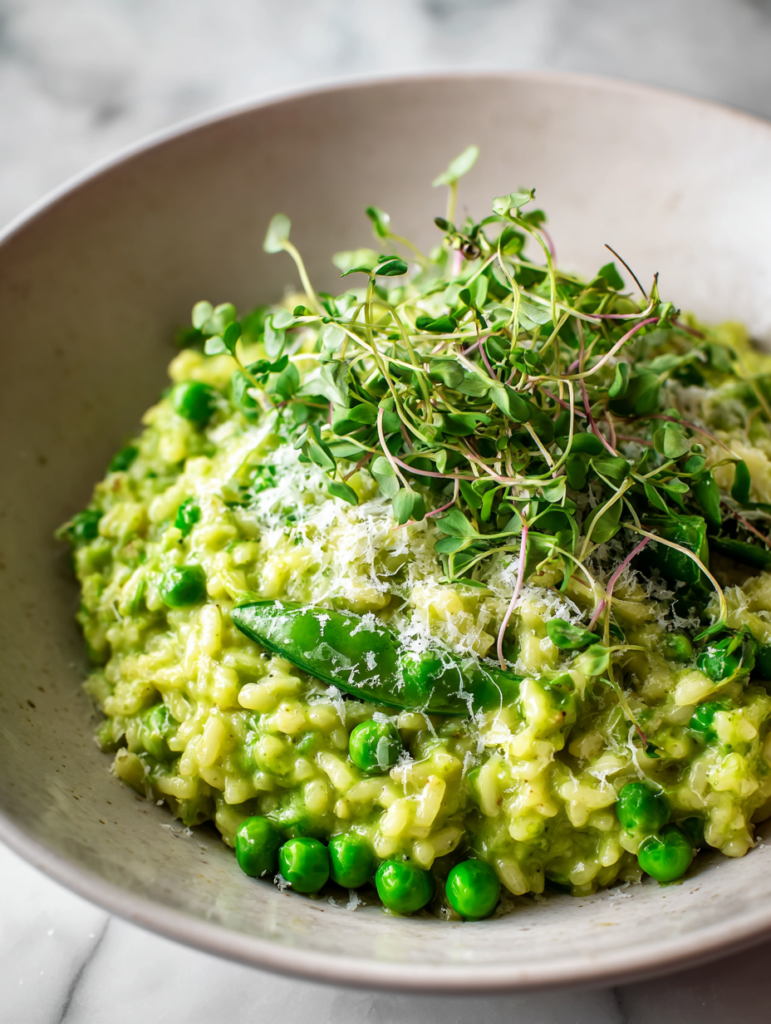
When I think of spring, I picture bright green peas, still slightly icy when picked, bursting with a sweet, almost grassy flavor. I love how they add a pop of color and freshness to a risotto, transforming what could be a rich, creamy dish into something lively and vibrant. This recipe is a way to celebrate those first tender peas, letting their natural sweetness shine through each spoonful.
Cooking this risotto feels like a gentle dance—adding broth gradually, listening for that first crackle of starch, watching the color deepen from pale to a lush, inviting green. It’s a dish that rewards patience, but not fussiness, capturing the essence of fresh peas and balancing it with the salty bite of Parmesan. It’s simple, honest, and perfect for those days when you want to keep things straightforward but with a little something special.
This isn’t about perfection or presentation alone; it’s about capturing a moment of seasonal brightness and making it feel homemade and comforting. The way the peas turn from icy crunch to tender, almost buttery bites is a quiet miracle. I find that this dish reminds me that good ingredients and a little care can make everyday cooking feel a little more special.
Focusing on the vibrant, almost raw freshness of green peas, this risotto celebrates their bright sweetness and the way they transform from icy crunch to tender, lush bites. I want to show how to coax maximum flavor into each spoonful, turning a simple vegetable into a star ingredient that brightens the whole dish.
The story behind this recipe
- This recipe came from a lazy Sunday afternoon, when I had a handful of fresh peas and a craving for something bright and simple. I wanted a dish that reflected the fleeting sweetness of spring, something that felt both nourishing and lively. Ever since, it’s become my go-to when I need a reminder that good ingredients speak for themselves, even with minimal fuss.
- I remember the first time I made it—peering into the pot as the vibrant green turned just a shade deeper, smelling that sweet, grassy aroma mingling with toasty Parmesan. It was one of those moments where everything felt right, like the dish was whispering, ‘Stay a while.’ Now, I keep a stash of frozen peas in the freezer, so I can chase that freshness anytime, no matter the season.
- heading: ‘The story behind this recipe’
Key ingredients for vibrant risotto
- Green peas: I love how their sweet, grassy aroma fills the kitchen as they cook. Use fresh if you can—freezing doesn’t dull their flavor much, but fresh gives that burst of brightness.
- Parmesan: I prefer a good, aged Parmesan for that nutty, umami punch. Grate it fresh for maximum flavor—pre-grated tends to be less vibrant and more powdery.
- Arborio rice: The creamy, almost chewy texture comes from this rice. Avoid long-grain varieties; they won’t give you the same starchy silkiness.
- Vegetable broth: I always simmer my own or use a good-quality store-bought version. It adds depth—skip this and the risotto feels flat, especially with the peas’ delicate sweetness.
- Olive oil: A splash of good extra virgin makes all the difference. It coats each grain with a glossy shine and enhances the overall richness.
- Butter: I toss in a little at the end—adds a velvety finish. If you want vegan, try a splash of vegan margarine or skip entirely, but it loses some of that silky feel.
- Lemon zest (optional): Just a hint brightens the dish unexpectedly. Use a microplane and avoid the pith; it can turn bitter fast.
Spotlight on key ingredients
Green peas:
- I love how their sweet, grassy aroma fills the kitchen as they cook. Use fresh if you can—freezing doesn’t dull their flavor much, but fresh gives that burst of brightness.
- Parmesan: I prefer a good, aged Parmesan for that nutty, umami punch. Grate it fresh for maximum flavor—pre-grated tends to be less vibrant and more powdery.
Parmesan:
- Its nutty, salty bite melts into the risotto, creating that creamy, savory backbone. Freshly grated makes a noticeable difference in flavor and texture.
- Green peas: Their vibrant green color and sweet, slightly crunchy bite contrast beautifully with the creamy rice, adding a fresh, lively note to each spoonful.
Notes for ingredient swaps
- Dairy-Free: Substitute Parmesan with nutritional yeast or a dairy-free cheese. It won’t have that nutty, umami punch but adds a cheesy flavor.
- Vegan: Use vegan butter or olive oil instead of butter and skip the Parmesan. You’ll get a lighter, slightly less rich dish.
- Fresh Peas: If you can’t find fresh, frozen peas work just as well—just rinse before adding to keep them bright and tender.
- Rice: Arborio rice is best for creaminess, but Carnaroli or Vialone Nano are good alternatives if you want slightly different textures.
- Broth: Homemade vegetable broth adds depth. Store-bought works fine, but look for low-sodium versions to control salt.
- Lemon Zest: Skip if you prefer a milder flavor, or add a splash of lemon juice at the end for extra brightness.
- Oil: Use avocado oil for a milder, buttery flavor, or olive oil for a more pronounced fruitiness and richness.
Equipment & Tools
- Wide heavy-bottomed pan: Ensures even heat and proper starch release.
- Wooden spoon: Gentle stirring to release starch without damaging rice.
- Ladle: To add hot broth gradually.
- Microplane: For zesting lemon or Parmesan, adding bright aroma.
Step-by-step guide to green pea risotto
- Equipment & Tools: Use a wide, heavy-bottomed pan for even heat. A wooden spoon for stirring, a ladle for broth, and a microplane for zest.
- Heat 1 tbsp olive oil over medium heat (around 160°C / 320°F). Add 1 small diced onion, cook until translucent, about 5 minutes, with gentle crackling.
- Stir in 200g Arborio rice. Toast for 2 minutes until the edges look slightly translucent, and smell nutty. If it starts to turn brown, reduce heat immediately.
- Pour in 150ml dry white wine, stir until mostly evaporated, about 1-2 minutes. The rice should shimmer and smell slightly sweet.
- Begin ladling hot vegetable broth (around 80°C / 176°F), about 1 cup at a time. Stir constantly until the liquid nearly disappears before adding more. Continue for 18-20 minutes.
- In the last 5 minutes, add 150g frozen peas directly from the freezer. Stir and let them cook until tender, the risotto turns a lush, vibrant green, and the starches release a creamy sheen.
- Check the risotto’s texture: it should be creamy but still slightly al dente, with a gentle jiggle when stirred. If too thick, add a splash more broth; if too runny, cook a minute longer.
- Remove from heat, stir in 50g freshly grated Parmesan and a knob of butter (optional). Add lemon zest if desired. Cover loosely and let rest for 2 minutes to meld flavors.
- Serve immediately, garnished with extra Parmesan or a drizzle of olive oil. The grains should be tender yet hold their shape, and the peas bright and juicy.
Rest the risotto uncovered for 2 minutes after removing from heat. Serve immediately, spooned into bowls, garnished with extra Parmesan, a drizzle of olive oil, or fresh herbs if desired.
How to Know It’s Done
- Risotto should look glossy with a slight jiggle when stirred.
- Peas should be tender but not mushy, with a vibrant green color.
- The rice grains are al dente—firm but not hard, and creamy.
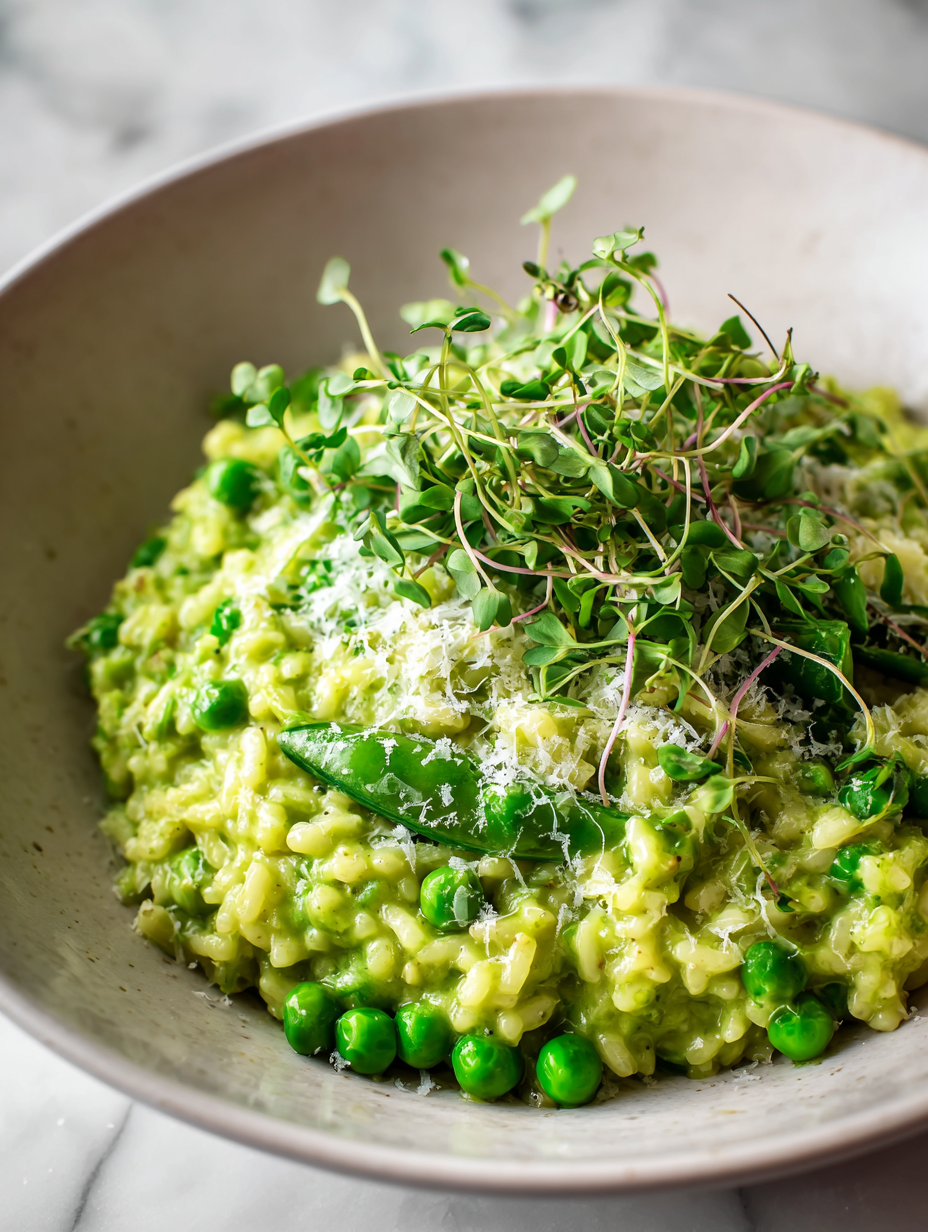
Spring Green Pea Risotto
Ingredients
Equipment
Method
- Heat a wide pan over medium heat and add olive oil. Once shimmering and fragrant, add the diced onion and cook, stirring occasionally, until translucent and soft, about 5 minutes, filling the kitchen with a gentle aroma.
- Add the Arborio rice to the pan and stir to coat each grain with oil. Toast for about 2 minutes until the edges look slightly translucent and it smells nutty, making sure not to brown the rice.
- Pour in the white wine and stir until it mostly evaporates, about 1-2 minutes. The rice should shimmer and smell subtly sweet as the alcohol cooks off.
- Begin ladling in the warm vegetable broth, about 1 cup at a time. Stir constantly and wait until the liquid is nearly absorbed before adding the next ladle. Repeat this process, stirring gently, for about 18-20 minutes, until the rice is tender but still has a slight bite and the mixture is creamy.
- In the last 5 minutes, add the frozen peas directly from the freezer, stirring to incorporate. Continue cooking until the peas are tender and the risotto is a vibrant green, with a glossy, luscious consistency.
- Remove the pan from heat, then stir in the grated Parmesan, butter (if using), and lemon zest for a bright finish. Mix until the cheese and butter melt into the creamy rice, and the dish looks glossy and inviting.
- Let the risotto rest, uncovered, for about 2 minutes. This helps the flavors meld and the texture settle into a perfect, slightly thickened consistency.
- Spoon the vibrant green risotto into bowls, garnished with extra Parmesan or a drizzle of olive oil if desired. Serve immediately while hot, with the peas still bright and the grains tender yet al dente.
Pro tips for perfect risotto
- Bolded mini-head: Use a wide pan → Ensures even heat distribution and better starch release for creaminess.
- Bolded mini-head: Stir constantly → Releases maximum starch, resulting in a silkier texture and prevents sticking.
- Bolded mini-head: Add broth gradually → Keeps temperature gentle and rice cooking evenly, avoiding mushiness.
- Bolded mini-head: Taste for doneness → Rice should be tender but still slightly al dente, with a slight jiggle.
- Bolded mini-head: Finish with cheese off heat → Preserves flavor and prevents cheese from becoming stringy or greasy.
- Bolded mini-head: Add peas at the end → Maintains their bright color and fresh, sweet crunch.
- Bolded mini-head: Rest before serving → Let the risotto sit for 2 minutes to allow flavors to meld and thicken slightly.
Common mistakes and how to fix them
- FORGOT to stir constantly → Stir frequently to release starch and prevent sticking.
- DUMPED all broth at once → Add broth gradually for creamy, even cooking.
- OVER-TORCHED rice → Keep heat medium; rice should be tender and not browned.
- MISSED the cheese step → Mix in Parmesan off heat for maximum flavor and creaminess.
Quick fixes and pantry swaps
- When sauce shimmers, splash a bit of water to calm bubbling. Adds shine and prevents burning.
- If rice sticks, adjust heat to medium-low and stir vigorously for 10 seconds.
- Splash extra broth if risotto is too thick and gloopy. Keeps it creamy and well-coated.
- Patch over too-salty risotto with a dollop of plain yogurt or a squeeze of lemon for brightness.
- Shield from over-torched rice by reducing heat immediately and stirring in cold water for quick cool-down.
Prep, store, and reheat tips
- Pre-chop the onion and grate the Parmesan a day ahead. Keep refrigerated in separate airtight containers. The flavors will deepen overnight.
- Frozen peas can be measured out and kept in the freezer; they retain their bright sweetness for up to 3 months. Rinse briefly before adding.
- Cook the risotto until just tender, then cool and store in an airtight container. It will keep in the fridge for up to 2 days, but the texture softens slightly.
- Reheat gently in a pan over low heat, stirring constantly. Add a splash of broth or water to restore creaminess and bring back vibrancy—look for a gentle shimmer and aroma of toasted rice and peas.
- For best flavor, serve immediately after reheating. The rice may lose some of its initial silkiness, but a quick stir restores comfort and brightness.
Common questions about green pea risotto
1. Can I use frozen peas instead of fresh?
Fresh peas give a brighter, slightly crunchy bite and sweeter flavor, but frozen peas work well too. Just rinse before adding.
2. Can I skip Parmesan or use a different cheese?
Yes, use a good quality Parmesan and grate it at home for the most flavor. Pre-grated tends to be less vibrant.
3. Why is my risotto grainy or gluey?
Stirring constantly helps release starch, making the risotto creamy. If you stop, it might turn clumpy or stick.
4. How do I get the perfect creamy texture?
Add broth gradually and keep the heat medium. Rushing the process causes uneven cooking and less creaminess.
5. How do I know when the risotto is ready?
Risotto is done when the grains are tender but still slightly firm, with a glossy, slightly jiggle appearance.
6. How do I keep the peas bright and vibrant?
To keep the bright green color, add peas at the end of cooking and don’t overcook them.
7. Can I make this ahead and reheat?
Reheat gently over low heat, stirring constantly and adding a splash of broth or water to restore creaminess.
8. What’s the best pan for risotto?
Use a wide pan for even heat and good starch release. Keep your stove at medium to avoid burning.
9. My risotto is sticking or overcooked—what now?
If rice sticks or burns, reduce heat immediately and stir vigorously. A splash of cold water can also help.
10. Should I add lemon or acidity?
Adding lemon zest at the end lifts the dish with a fresh, bright aroma that balances the richness.
This risotto is a reminder that simple ingredients, when treated with care, can shine brightly. The fresh peas and sharp Parmesan come together in a dish that’s both comforting and invigorating, perfect for those spring days when everything feels just a little more alive.
Cooking it feels like a quiet celebration of seasonal bounty—an honest, unpretentious dish that makes the most of what’s at hand. It’s a humble bowl that somehow captures the fleeting sweetness of early green peas, turning a straightforward meal into a small, joyful ritual.

Hi, I’m Anjali Arora — the curious heart behind Feast Chase.
To be honest, I’ve always felt most at ease in my own company. I’m not exactly a people-person (small talk still makes me cringe), but there are two things I’ve always loved deeply: animals and food.