 Anjali Arora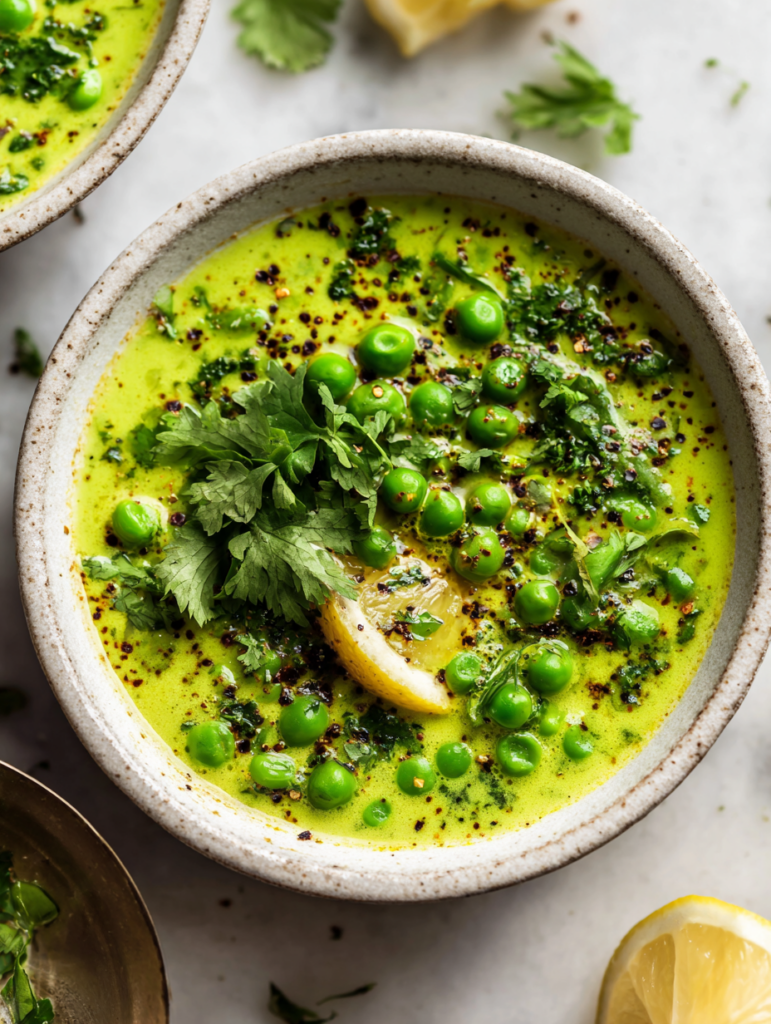
This green pea curry recipe is inspired by my grandmother’s technique of using fresh, garden-picked peas, capturing the essence of summer in every bite. I love how the vibrant, sweet peas balance the spiced, creamy sauce, reminding me of lazy afternoons in her backyard. It’s a humble dish, but packed with nostalgia and a lesson in savoring simplicity.
Making this curry isn’t about precision or fuss. It’s about tasting the freshness of those peas, letting their natural sweetness shine through a gentle, spiced coconut gravy. Each time I cook it, I feel like I’m bringing a little piece of her garden into my own kitchen, with just a handful of ingredients and a lot of love.
It’s perfect for when you want something comforting but not heavy, and it’s surprisingly quick to throw together. The aroma of cumin and garlic filling the air as the peas cook makes the whole house smell like a cozy, sunny afternoon. This dish is a reminder that sometimes, the simplest ingredients can create the most memorable meals.
This green pea curry recipe is inspired by my grandmother’s technique of using fresh, garden-picked peas, capturing the essence of summer in every bite. I love how the vibrant, sweet peas balance the spiced, creamy sauce, reminding me of lazy afternoons in her backyard. It’s a humble dish, but packed with nostalgia and a lesson in savoring simplicity.
The story behind this recipe
- This recipe actually started from a tiny garden I had one summer. I’d go out at dawn just to pick the freshest peas, their sweet aroma still lingering in my hands. Cooking this dish feels like capturing that moment of pure, unspoiled freshness — a little bit of summer’s quiet magic in every bite.
- I remember the first time I added a dash of coconut milk to the peas and watched the vibrant green turn luscious and silky. It was a small experiment that turned into a staple, especially on busy weeknights when I wanted comfort with minimal fuss. Now, it’s a dish that reminds me that simplicity often has the deepest flavor.
- heading
- story_type
Key ingredients and tips
- Frozen peas: I love the burst of sweetness they bring, even after a quick thaw. If your peas are starchy or dull, try blanching fresh ones briefly to brighten their flavor.
- Coconut milk: I prefer the creamy richness it adds, but a splash of plain yogurt works too—just keep the heat gentle to prevent curdling.
- Spices (cumin, turmeric, coriander): Toasting these briefly in oil awakens their aroma. If your spices seem flat, toast them longer until fragrant, but watch for burning.
- Garlic and ginger: They form the fragrant base. If you want more punch, grate them finely; for milder flavor, slice thinly and cook gently.
- Onion: Adds depth and sweetness. Caramelize it slowly over medium-low heat until golden, which will deepen the curry’s flavor.
- Oil: Use a neutral oil like vegetable or coconut; I keep it light at first, then add a little more if the spices stick or the sauce needs body.
- Lemon or lime juice: Brightens the dish just before serving. If you want a subtler tang, add it in small increments and taste as you go.
Spotlight on key ingredients
Frozen peas:
- I love the burst of sweetness they bring, even after a quick thaw. If your peas are starchy or dull, try blanching fresh ones briefly to brighten their flavor.
- Coconut milk: I prefer the creamy richness it adds, but a splash of plain yogurt works too—just keep the heat gentle to prevent curdling.
- Spices (cumin, turmeric, coriander): Toasting these briefly in oil awakens their aroma. If your spices seem flat, toast them longer until fragrant, but watch for burning.
Coconut milk:
- It’s silky, sweet, and fragrant, adding a luscious body to the curry. If you want a lighter version, try coconut cream or even blended cashews for creaminess.
- Spices: Toasted cumin and turmeric lend warmth and depth. If you prefer milder flavor, use less or skip the toasting step, but the depth might be reduced.
Notes for ingredient swaps
- Frozen peas: I love the burst of sweetness they bring, even after a quick thaw. If your peas are starchy or dull, try blanching fresh ones briefly to brighten their flavor.
- Coconut milk: I prefer the creamy richness it adds, but a splash of plain yogurt works too—just keep the heat gentle to prevent curdling.
- Spices (cumin, turmeric, coriander): Toasting these briefly in oil awakens their aroma. If your spices seem flat, toast them longer until fragrant, but watch for burning.
- Garlic and ginger: They form the fragrant base. If you want more punch, grate them finely; for milder flavor, slice thinly and cook gently.
- Onion: Adds depth and sweetness. Caramelize it slowly over medium-low heat until golden, which will deepen the curry’s flavor.
- Oil: Use a neutral oil like vegetable or coconut; I keep it light at first, then add a little more if the spices stick or the sauce needs body.
- Lemon or lime juice: Brightens the dish just before serving. If you want a subtler tang, add it in small increments and taste as you go.
Equipment & Tools
- Medium saucepan: Cook and simmer the curry sauce
- Wooden spoon: Stir ingredients and prevent sticking
- Knife: Prep the aromatics and vegetables
- Cutting board: Provide a safe surface for chopping
Step-by-step guide to green pea curry
- Gather your equipment: a medium-sized saucepan, a wooden spoon, a knife, and a cutting board. The saucepan will be your curry base, the spoon for stirring, and the knife and board for prepping the aromatics.
- Heat 1 tablespoon of oil over medium heat (about 160°C / 320°F). Add a teaspoon of cumin seeds and toast until fragrant, about 30 seconds, listening for the crackle and smelling the nutty aroma.
- Dice one small onion finely. Add it to the pan and cook, stirring occasionally, until translucent and just beginning to caramelize, about 5 minutes. The onions should be soft and slightly golden.
- While the onions cook, mince 2 cloves of garlic and 1-inch piece of ginger. Add to the pan and cook for another 1-2 minutes until fragrant, stirring often to prevent burning.
- Add 1 teaspoon of turmeric and 1 teaspoon of ground coriander to the pan. Stir well and cook for 30 seconds until the spices release their aroma. Be careful not to burn the spices.
- Pour in 200 ml (about ¾ cup) of coconut milk and stir to combine. Bring to a gentle simmer, then add 300 grams (about 2 cups) of frozen green peas straight from the freezer. Stir well and let it simmer for 5 minutes, or until peas are tender and the sauce has thickened slightly.
- Check the curry: the peas should be plump and bright green, and the sauce creamy yet vibrant. If the sauce is too thin, simmer a bit longer until it coats the back of a spoon. If too thick, add a splash of water or more coconut milk.
- Finish with a squeeze of fresh lemon or lime juice, about 1 teaspoon, to brighten the flavors. Taste and adjust salt if needed.
- Remove from heat. Let it rest for 2 minutes to allow flavors to meld. Serve hot, ideally with warm rice or crusty bread.
Let the curry sit for 2 minutes off the heat to settle. Serve in bowls with a wedge of lemon or lime on the side for an extra zing. Garnish with a sprinkle of fresh herbs if you like, then dig in while warm.
How to Know It’s Done
- The peas are bright and tender, with a slight jiggle when stirred.
- The sauce is creamy, fragrant, and coats the peas evenly.
- A quick squeeze of lemon brightens the dish without overpowering.
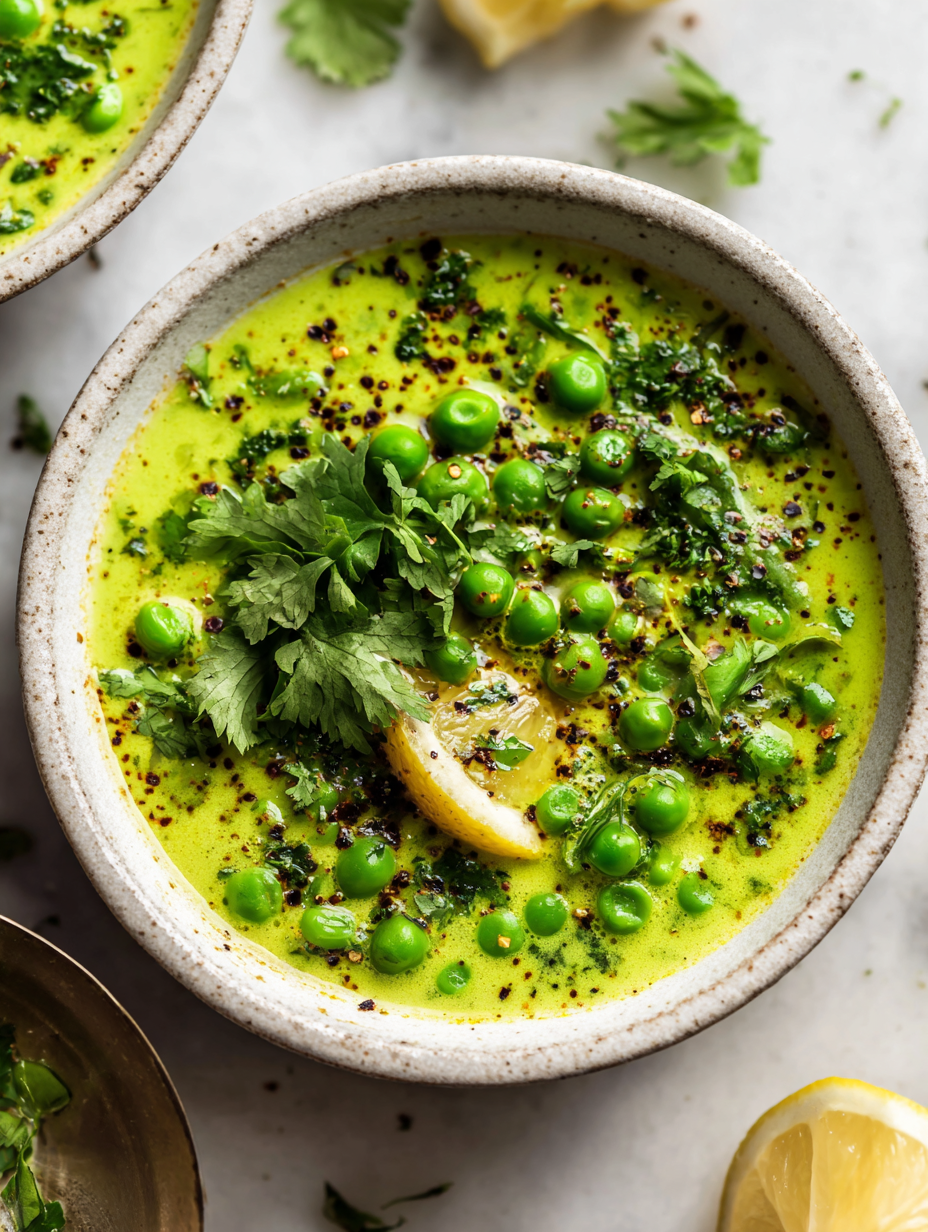
Green Pea Curry
Ingredients
Equipment
Method
- Heat a tablespoon of oil in your medium saucepan over medium heat until shimmering and fragrant. Add the cumin seeds and toast for about 30 seconds until they crackle and release their aroma.
- Add the finely chopped onion to the pan and cook, stirring occasionally, until translucent and just beginning to turn golden, about 5 minutes. The kitchen will fill with a sweet, caramelized smell.
- Stir in the minced garlic and ginger, cooking for another 1-2 minutes until fragrant. Be careful not to burn the garlic; the mixture should smell warm and spicy.
- Add the turmeric and ground coriander to the pan, stirring well to coat the aromatics. Let them toast for about 30 seconds until fragrant, which deepens their flavor.
- Pour in the coconut milk, stirring to combine with the spices and aromatics. Bring the mixture to a gentle simmer, allowing the flavors to meld and the sauce to warm through.
- Add the frozen green peas directly from the freezer into the sauce. Stir well, then let everything simmer gently for about 5 minutes until the peas are tender and the sauce slightly thickened.
- Check the seasoning and add salt to taste. Squeeze in the lemon or lime juice to brighten the flavors, then stir to combine. The sauce should be creamy and vibrant green.
- Remove the curry from heat and let it rest for a couple of minutes. The sauce will thicken slightly and the flavors will meld beautifully. Serve hot with rice or bread for a cozy, satisfying meal.
Pro tips for perfect green pea curry
- Bolded mini-head: Use fresh peas when possible. Their sweet, crisp bite makes all the difference in flavor and texture.
- Bolded mini-head: Toast spices in oil until fragrant. It enhances aroma and deepens the curry’s warmth, avoiding burnt bits by stirring constantly.
- Bolded mini-head: Add coconut milk slowly and simmer gently. Keep the heat low to prevent curdling and preserve that silky, luscious texture.
- Bolded mini-head: Season with salt and citrus at the end. Brightens flavors and prevents the dish from tasting flat or dull.
- Bolded mini-head: Adjust thickness by simmering longer or adding water. The sauce should coat the peas smoothly without being soupy or gloopy.
- Bolded mini-head: Finish with a squeeze of lemon or lime. It lifts the entire dish, adding a fresh, zesty brightness that balances the spices.
Common mistakes and how to fix them
- FORGOT to add salt? Always taste and adjust seasoning at the end for balance.
- DUMPED in too many peas at once? Add in batches to avoid overcrowding and uneven cooking.
- OVER-TORCHED spices? Lower heat immediately and add a splash of water to cool the pan.
- MISSED the lemon? Brighten the curry with a squeeze just before serving to lift flavors.
Quick fixes and pantry swaps
- If the curry is too thick, splash in some hot water and stir until smooth.
- When the peas are dull, add a pinch of lemon juice to brighten their color and flavor.
- Splash a little more oil if spices stick or burn—keep the pan gently sizzling.
- Patch overcooked peas by adding fresh ones and simmering briefly for extra crunch.
- Shield the coconut milk from curdling by lowering heat immediately and stirring constantly.
Prep, store, and reheat tips
- Prep the curry ingredients: chop onions, garlic, and ginger in advance; refrigerate for up to 1 day to save time.
- Freeze cooked curry in airtight containers for up to 3 months; reheating will deepen the flavors and intensify aroma.
- Reheat gently on the stove over low heat, stirring often, until steaming hot and fragrant—about 5-7 minutes. Expect a rich, inviting smell.
- Cooked curry tastes best within 2-3 days in the fridge; the flavors mellow and the texture stays tender, with a slightly thicker sauce.
Top questions about green pea curry
1. Can I use frozen peas instead of fresh?
Fresh peas make a noticeable difference; their sweetness is vibrant and crisp. Frozen peas work well, but fresh are better if you can find them.
2. Can I substitute coconut milk?
Yes, coconut milk adds creaminess and a slight sweetness, balancing the spices. Use light coconut milk for a less rich version.
3. How long should I toast the spices?
Cooking the spices until fragrant, about 30 seconds, releases their essential oils and deepens flavor. Don’t skip this step.
4. When should I add citrus?
Adding a squeeze of lemon or lime right before serving brightens the dish, enhancing the sweetness of the peas and spices.
5. How long do I cook the peas?
Simmering for 5 minutes allows the peas to become tender and the sauce to thicken slightly, coating the peas nicely.
6. When should I season the curry?
Adjust the seasoning at the end, tasting for salt and citrus brightness. This balances the flavors perfectly.
7. What equipment do I need?
Use a medium saucepan to evenly cook the sauce and prevent sticking. A wooden spoon helps control stirring gently.
8. How do I toast spices properly?
For a richer flavor, toast the cumin and turmeric longer until fragrant, but avoid burning as it will turn bitter.
9. How do I reheat leftovers?
Reheat gently on the stove, stirring often, until steaming hot. The flavors will deepen, making leftovers even tastier.
10. What if the sauce thickens too much?
If the sauce gets too thick, stir in a little hot water or coconut milk to loosen it without diluting flavor.
Cooking this green pea curry reminds me that simplicity often holds the most honest flavor. The fresh peas’ sweetness and the gentle spice make it a dish I keep returning to, especially on busy nights when comfort is needed. It’s a humble reminder that good, honest ingredients can turn into something memorable without fuss.
Whenever I make this, I feel a little more connected to the seasons and the small moments of joy in everyday cooking. It’s a dish that’s quick, satisfying, and full of the kind of flavor that sticks with you long after the last spoonful. Sometimes, that’s exactly what a good meal should do.

Hi, I’m Anjali Arora — the curious heart behind Feast Chase.
To be honest, I’ve always felt most at ease in my own company. I’m not exactly a people-person (small talk still makes me cringe), but there are two things I’ve always loved deeply: animals and food.