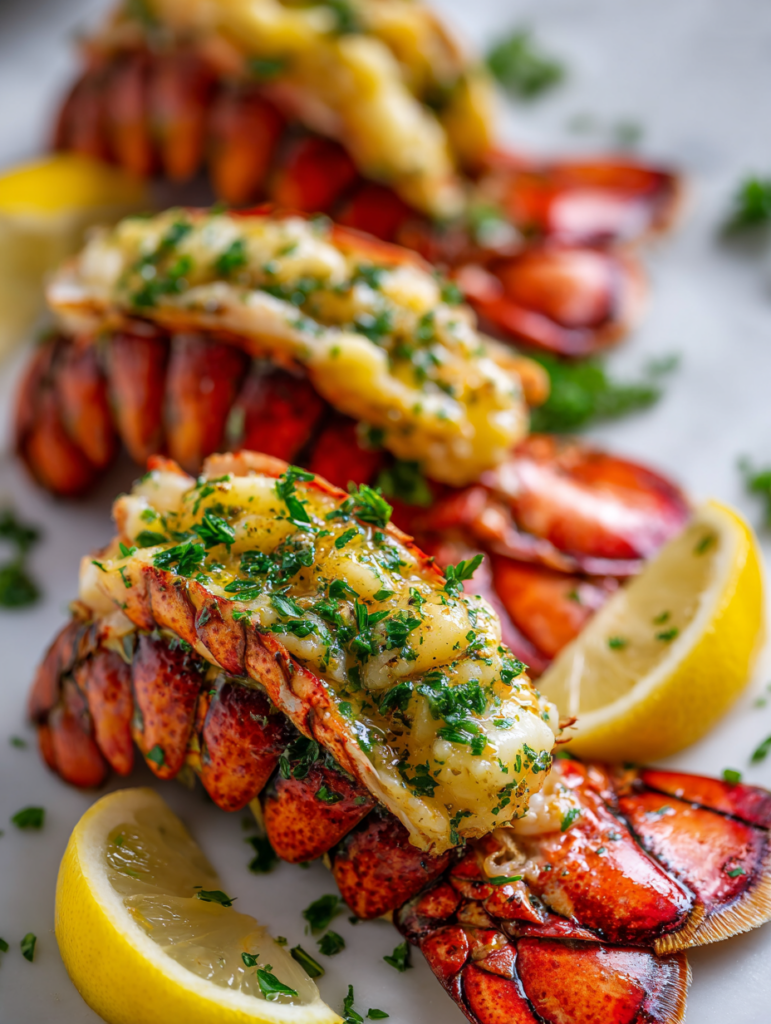
Lobster tails are already special, but when you infuse them with garlic and herbs, they become something more fragrant, more layered. It’s that simple step that turns a fancy seafood piece into a fragrant, cozy dish you’ll want to make again and again. No fancy tools needed, just a bit of patience and a good sniff of that garlic butter simmering away.
This recipe is about highlighting the overlooked finesse of garlic and herbs, turning what could be a straightforward lobster dinner into an aromatic experience. It’s perfect for quiet nights when you want something indulgent but not overly complicated. Plus, the smell of sizzling garlic and fresh herbs fills the kitchen, making the meal feel like a special occasion even if it’s just for yourself.
Focusing on the overlooked finesse of infusing lobster tails with garlic and herbs, turning a simple seafood dish into a fragrant, flavorful experience that elevates special occasions or quiet nights alike.
The story behind this recipe
- I first tried lobster with garlic and herbs on a spontaneous outdoor grill night, and that smoky aroma stuck with me. It was one of those moments where simplicity hit hard—just good ingredients, cooked right, filling the air with something irresistible. Since then, I’ve been chasing that perfect balance of buttery richness and fragrant herbs.
- This dish reminds me of summer evenings spent with friends, cracking shells and passing around bowls of melted butter. It’s a dish that feels special but isn’t fussy—something I can throw together quickly when I want a luxurious touch without the fuss. Each time I make it, I’m reminded how a few good ingredients can turn a simple dinner into a celebration.
- heading: ‘The story behind this recipe’
Key ingredients and tips
- Lobster tails: I love the firm, slightly sweet meat that holds up well to butter and herbs. Make sure they’re fully thawed for even cooking, and look for that bright pinkish hue.
- Garlic: Fresh garlic is a game-changer here—its pungent, spicy scent when sliced releases that umami aroma. Skip pre-minced if you can; it’s never quite the same.
- Herbs: I swear by fresh thyme and parsley—they add brightness and complexity. If fresh isn’t available, good dried herbs can work, but use half the amount for potency.
- Butter: Use unsalted butter for control over saltiness. When melted, it turns silky and fragrant, carrying the garlic and herbs beautifully. Don’t skimp—this is flavor’s foundation.
- Lemon: Bright, zesty lemon juice cuts through the richness, leaving a lingering citrus note. Fresh lemon zest can be a nice touch if you want extra punch.
- Olive oil: A drizzle of good-quality olive oil before roasting adds a subtle fruity note and helps spread the herbs evenly. Use sparingly to avoid greasiness.
- Salt & Pepper: I season generously but taste as I go—remember, lobster is naturally sweet, so aim for balanced seasoning that enhances, not masks.
Spotlight on key ingredients
Lobster tails:
- I love how their firm, slightly sweet meat holds up to butter and herbs. Look for a bright pinkish hue, and ensure they’re fully thawed for even cooking.
- Garlic: Fresh garlic releases that pungent, spicy aroma when sliced, infusing the butter with umami. Skip pre-minced; it never quite hits the same intensity.
Herbs & Butter:
- Herbs: I swear by fresh thyme and parsley—they add brightness and a complex aroma. If fresh isn’t available, dried herbs work, but use half the amount for potency.
- Butter: Unsalted butter melts into a silky, fragrant base for the garlic and herbs. It’s crucial for that rich, luxurious flavor that coats the lobster.
Notes for ingredient swaps
- Dairy-Free: Swap butter for coconut oil or a dairy-free butter substitute. The flavor will be slightly less rich but still fragrant.
- Herbs: If fresh herbs aren’t available, use dried thyme and parsley—half the amount. They’re more concentrated, so don’t overdo it.
- Lemon: Use bottled lemon juice in a pinch, but fresh lemon zest and juice give a brighter, more vibrant flavor.
- Garlic: Roasted garlic paste can be a milder alternative, but fresh minced garlic provides that pungent, aromatic punch.
- Olive Oil: Substitute with avocado oil for a neutral, slightly fruity note that won’t overpower the garlic and herbs.
- Seafood: If lobster isn’t available, large shrimp or scallops can be a quick, tasty alternative, cooked similarly with garlic and herbs.
- Salt & Pepper: Use flavored salts or freshly cracked pepper for a more nuanced seasoning that enhances natural sweetness.
Equipment & Tools
- Boning knife: For precise shell cuts and meat separation.
- Baking sheet with rack: To hold lobster upright and allow even heat circulation.
- Basting brush: To coat lobster with garlic herb butter evenly.
- Meat thermometer: To ensure perfect doneness without overcooking.
Step-by-step guide to garlic herb lobster
- Equipment & Tools: Gather a sharp boning knife for precise cuts, a baking sheet with a rack to elevate the lobster, a basting brush for garlic butter, and a meat thermometer to check doneness.
- Preheat your oven to 200°C (390°F). Set the lobster tails on the rack, shell side down, on the baking sheet. Pat dry with paper towels to ensure the butter sticks well.
- Using the boning knife, carefully cut through the top shell of each lobster tail lengthwise, from base to tip, exposing the meat but keeping the shell intact. Pry open slightly to loosen the meat, if needed.
- Prepare garlic herb butter: melt ½ cup butter over low heat, then add 4 minced garlic cloves, a teaspoon of chopped thyme, and parsley. Stir until fragrant, about 2 minutes. Season with a pinch of salt and lemon juice.
- Brush the lobster meat generously with the garlic herb butter, ensuring it’s well coated. Let any excess drip into the shell for extra flavor.
- Bake in the oven for 12-15 minutes. Baste with more butter halfway through. The lobster is done when it turns opaque and the meat is firm but tender.
- Check for doneness: meat should jiggle slightly, shell should be bright and red, and it should smell fragrant and buttery. Use a meat thermometer — 60°C (140°F) at the thickest part is ideal.
- Remove from oven and let rest for 2 minutes. Drizzle with a little fresh lemon juice, then serve hot straight from the shell, garnished with extra herbs if desired.
Let the lobster rest for 2 minutes after baking. Plate directly in the shell, drizzle with lemon, and sprinkle with extra herbs if desired. Serve immediately while fragrant and hot.
How to Know It’s Done
- Lobster meat turns opaque and firms up without becoming rubbery.
- Shells are bright red and aromatic, not dull or burnt.
- Internal temperature reaches 60°C (140°F) for safe, juicy meat.
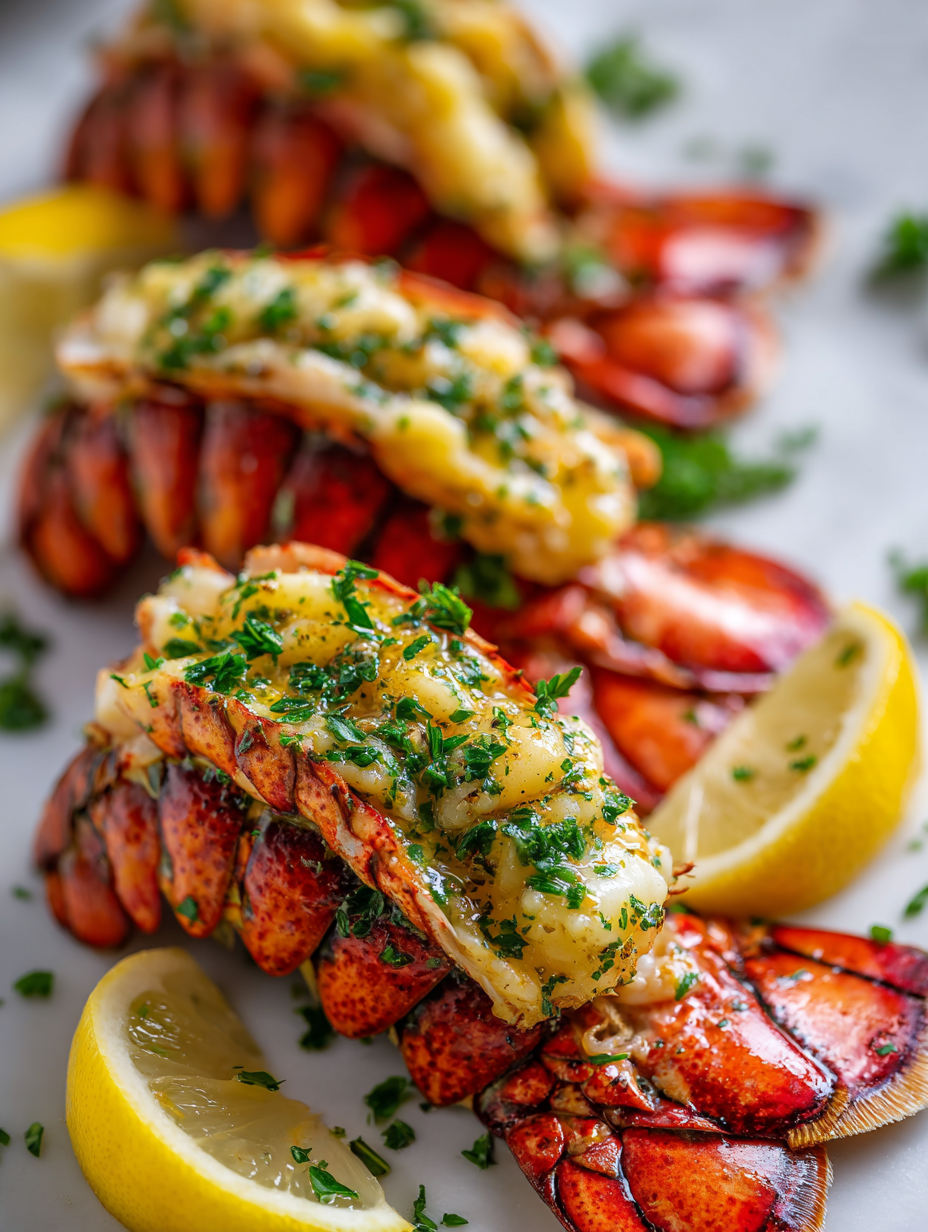
Garlic Herb Lobster Tails
Ingredients
Equipment
Method
- Preheat your oven to 200°C (390°F). Place a rack inside a baking sheet to lift the lobster tails off the base, then set the tails on the rack and pat them dry with paper towels for even seasoning.
- Using a boning knife, carefully cut through the top shell of each lobster tail lengthwise from the base to the tip, exposing the meat. Gently pry the shell apart and loosen the meat, keeping it attached at the base.
- Melt the butter in a small saucepan over low heat, then add the minced garlic, chopped thyme, and parsley. Stir until fragrant, about 2 minutes, creating a fragrant herb butter. Remove from heat and stir in lemon juice, then season with salt and pepper to taste.
- Brush the exposed lobster meat generously with the garlic herb butter using a basting brush, making sure to coat all sides evenly. Let any excess butter drip into the shell for extra flavor.
- Place the lobster tails in the oven and bake for 12-15 minutes, basting with more butter halfway through. The lobster is ready when the meat turns opaque and the shells are bright red, filling the kitchen with a fragrant aroma.
- Check the internal temperature with a meat thermometer; it should read about 60°C (140°F). Once cooked, remove from the oven and let rest for 2 minutes to allow the juices to settle.
- Squeeze fresh lemon over the lobster for a bright finish, garnish with extra parsley if desired, and serve immediately in the shell for an elegant presentation.
Pro tips for perfect lobster
- Bolded mini-head: Use room temperature butter to ensure quick, even melting and rich flavor infusion.
- Bolded mini-head: Slice garlic thinly to maximize surface area, releasing more pungent aroma during cooking.
- Bolded mini-head: Baste the lobster mid-bake to keep the meat moist and coat it evenly with herbs and butter.
- Bolded mini-head: Keep an eye on the shell color; bright red indicates proper doneness and vibrant presentation.
- Bolded mini-head: Check internal temperature at 60°C (140°F); it guarantees juicy, perfectly cooked lobster meat.
- Bolded mini-head: Finish with a squeeze of fresh lemon to brighten the herbs and cut through the richness.
- Bolded mini-head: Rest the lobster for 2 minutes after baking to let the juices redistribute before serving.
Common mistakes and how to fix them
- FORGOT to adjust cooking time for smaller lobsters → check doneness earlier.
- DUMPED the butter mixture before basting → baste frequently for maximum flavor.
- OVER-TORCHED the lobster shell → watch closely to prevent shell from burning or cracking.
- MISSED resting time → let lobster rest 2 minutes for juices to settle.
Quick fixes and pantry swaps
- When sauce shimmers and smells intensely garlicky, it’s ready for the lobster. Don’t rush—patience pays off.
- Splash a bit of lemon juice if the garlic aroma is dull—brighten up the flavor instantly.
- Patch a crackling shell with a tiny dab of butter—seals small cracks and prevents burning.
- When lobster meat is rubbery, overcooked—reduce oven time by 2 minutes next round.
- For a quick rescue, brush shells with olive oil before roasting—shimmer and prevent sticking.
Prep, store, and reheat tips
- Prep the garlic herb butter ahead: melt and mix, then store in the fridge for up to 2 days. It’ll be fragrant and slightly solid, but easy to spoon onto the lobster.
- Thaw frozen lobster tails overnight in the fridge. Keep them in a sealed container; the meat turns firm and juicy, ready to cook.
- You can cut and prepare the lobster shells up to a day in advance. Keep them covered in the fridge to prevent drying out.
- Reheat leftovers gently in a warm oven (about 150°C/300°F) for 5-7 minutes. The butter will shimmer, and the meat will stay tender if you don’t overdo it.
- Store cooked lobster in an airtight container in the fridge for up to 2 days. The meat might lose a bit of its initial succulence but will still be flavorful.
Top questions about garlic herb lobster
1. Can I use frozen lobster tails?
Use fresh lobster if possible; it’s firmer and sweeter. Frozen works in a pinch, just thaw completely before cooking.
2. Can I swap the herbs?
Yes, you can substitute parsley with basil or cilantro for a different herbal note, but the flavor will change.
3. How do I prepare frozen lobster tails?
Make sure the lobster is fully thawed and pat dry before cooking. This prevents steaming and helps the butter stick better.
4. How do I know when lobster is done?
Overcooking makes the meat rubbery and dry. Check for an opaque, firm texture and a bright red shell.
5. Is there a safe internal temperature for lobster?
Use a meat thermometer to check for 60°C (140°F) at the thickest part. It’s the safest way to avoid overcooking.
6. What if the garlic butter burns?
If the garlic butter starts to burn, lower the oven temperature slightly or baste more frequently to keep it moist.
7. Can I make the garlic butter ahead?
Yes, you can prepare the garlic herb butter ahead and keep it refrigerated for up to 2 days. Bring to room temp before using.
8. How do I reheat leftovers?
Reheat gently in a low oven or covered in the microwave. The lobster will stay juicy if warmed slowly for about 5 minutes.
9. What are visual cues for doneness?
When shells turn bright red and the meat is opaque and firm, your lobster is perfectly cooked.
10. Should I baste the lobster during cooking?
Baste the lobster mid-cook to keep the meat moist and enhance flavor. Use the garlic herb butter for best results.
This garlic herb lobster tail is a reminder that simple ingredients, when handled with care, create something truly memorable. It’s the kind of dish that makes you pause and savor each bite, especially when the garlic aroma still lingers on your fingertips.
No matter if it’s a quiet night alone or a small gathering, this recipe offers a moment of indulgence that’s straightforward but feels special. It’s messy, fragrant, and honest—just like good cooking should be.

I’m Mayank, the creator, cook, and writer behind this blog. FeastChase is not just a collection of recipes — it’s a journey through tastes, memories, and moments that bring people together at the table.