 Anjali Arora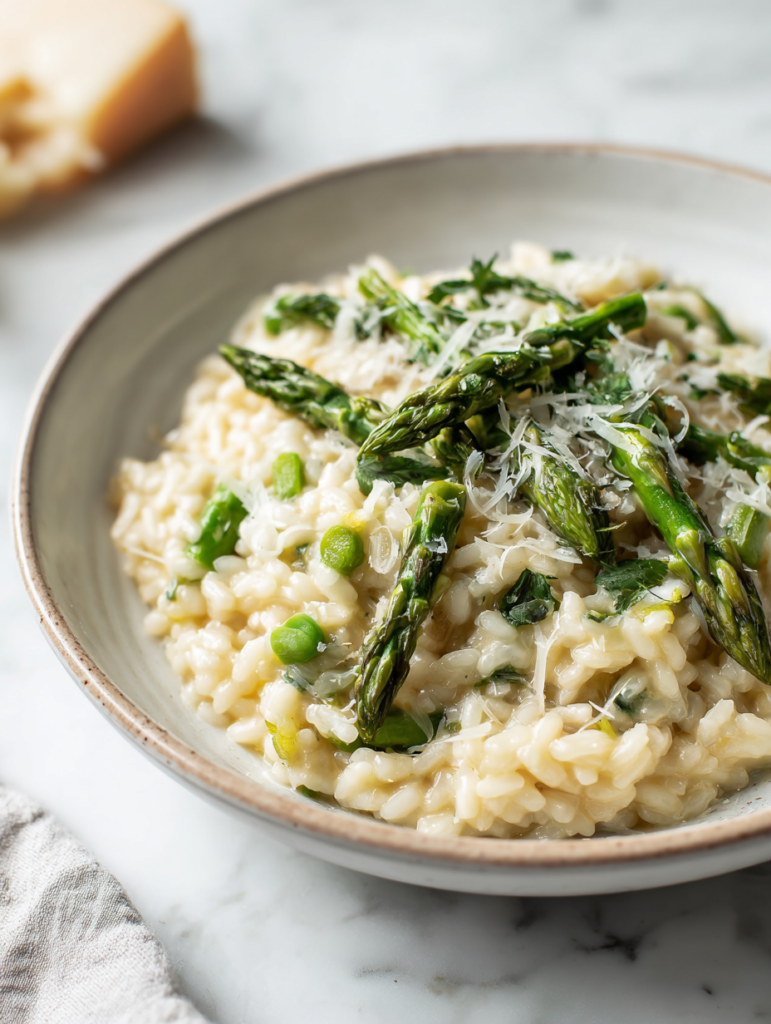
This creamy asparagus risotto isn’t about rushing through. It’s about slow, layered flavor building—each step adding depth and richness that make the dish feel like a small, satisfying victory. The gentle stir, the aroma of toasted rice, and the tender green spears all come together in a quiet symphony of patience.
I love how this dish captures spring in a bowl, with bright, fresh asparagus balanced by the nutty sharpness of Parmesan. It’s the kind of meal that feels comforting but still celebrates the fleeting freshness of the season. Making it reminds me that sometimes, good things only come when you’re willing to take your time and listen to what the ingredients are telling you.
Focusing on the overlooked technique of slowly building flavor through layered sautéing, this risotto emphasizes the importance of patience and attention to detail in creating a deeply satisfying dish.
The story behind this recipe
- This recipe came together on a rainy afternoon when I had a bunch of fresh asparagus and a quiet craving for comfort. I wanted something that felt indulgent but still bright and fresh, like spring in a bowl. The trick was balancing that creaminess with the crisp snap of the asparagus, all layered with a depth of Parmesan that’s almost chewy in its salty richness.
- It’s a dish that reminds me of lazy weekends in my childhood, helping my mom stir risotto while the whole kitchen filled with a warm, cheesy aroma. I’ve tweaked it over the years, trying to keep that nostalgic feel but making it a bit more refined, a little more grown-up, without losing its soul.
- heading
- story_type
Key ingredients and tips
- Arborio rice: I love the creamy texture it develops, but make sure to stir consistently to release that starchy goodness. You can try short-grain sushi rice if you’re out; just expect a slightly different creaminess.
- Fresh asparagus: The snap and bright green color make all the difference. Blanch briefly before adding for extra vibrancy, or sauté a bit longer if you want a more tender bite.
- Parmesan: I prefer aged Parmesan for that sharp, nutty punch. If you want a milder flavor, try Pecorino Romano but reduce the salt slightly, as it’s saltier.
- Vegetable broth: Use homemade if you can—more depth, less salt. Store-bought works fine, just warm it gently so it doesn’t cool down your risotto when added.
- Butter: Adds richness and gloss—don’t skimp. For a vegan twist, try a splash of olive oil or vegan butter, but the texture will be a touch lighter.
- Garlic & shallots: Their aroma is magic—toast gently until translucent, not browned, to keep that sweet, mellow flavor. Overcooking can turn them bitter, so watch closely.
- Lemon zest (optional): Brightens the dish without overpowering. Just a teaspoon right at the end lifts all those creamy, cheesy notes with a zing.
Spotlight on key ingredients
Asparagus:
- I love how it turns vibrantly green and slightly tender when cooked; it adds freshness and a subtle sweetness that balances creaminess. During sautéing, it develops a smoky edge if overcooked, so watch for that bright color and crisp-tender bite.
- Parmesan: The aged cheese melts into the risotto, creating a gooey, nutty, umami-rich sauce. It becomes intensely fragrant as it heats, so grate it finely and add it off heat for maximum flavor and smoothness.
Parmesan:
- Arborio rice: Its plump grains absorb liquid slowly, releasing starchy goodness that makes the risotto luxuriously creamy. When toasted, it smells like toasted bread—just the right moment to add liquid before it browns too much.
- The sharp, crystalline bits of aged Parmesan add texture and bursts of salty richness. During cooking, it becomes glossy, almost like a sauce, when stirred in at the end—don’t skimp on the cheese for that perfect finish.
Notes for ingredient swaps
- Dairy-Free: Swap Parmesan for a nutty, aged vegan cheese or nutritional yeast. It won’t melt quite the same but adds umami.
- Vegetable Broth: Use mushroom or tomato broth for a deeper, earthier flavor. Keep in mind, it will alter the overall brightness.
- Rice: Short-grain sushi rice can work in a pinch; expect slightly less creaminess and a different texture, but still tasty.
- Butter: Olive oil or vegan butter can replace butter here. The dish will be lighter and less rich but still delicious.
- Fresh Asparagus: Frozen asparagus spears can be used if fresh isn’t available. Just drain well and sauté briefly to revive some crispness.
- Lemon Zest: Skip it or add a splash of white wine vinegar for a subtle tang. The brightness is key, so don’t omit entirely if you can help it.
- Garlic & Shallots: Shallots can be replaced with finely chopped leeks or onions for a milder, sweeter onion note.
Equipment & Tools
- Medium heavy-bottomed pan: Even heat distribution for controlled simmering
- Wooden spoon: Gentle stirring and scraping to prevent sticking
- Small saucepan: Heating broth separately to keep it warm
- Tongs: Handling asparagus efficiently
- Grater: Freshly grating Parmesan
Step-by-step guide to creamy risotto
- Equip a medium-sized heavy-bottomed pan (about 20cm/8in diameter) and a wooden spoon. Prepare all ingredients beforehand for smooth cooking.
- Heat 1 tablespoon of olive oil over medium heat (around 160°C/320°F). Add 1 small diced shallot and 1 minced garlic clove. Sauté until translucent, about 2 minutes, until fragrant but not browned.
- Stir in 1 cup (200g) Arborio rice. Toast for 2-3 minutes, stirring constantly, until the edges are slightly translucent and it smells nutty. If rice starts to crackle loudly, lower heat.
- Pour in 1/2 cup (120ml) dry white wine. Stir until mostly absorbed, about 1-2 minutes. If you don’t have wine, skip and proceed with broth.
- Begin adding warm vegetable broth, about 1/2 cup (120ml) at a time, stirring continuously. Wait until most of the liquid is absorbed before adding more. Keep heat at medium-low (around 130°C/265°F), maintaining a gentle simmer.
- Continue adding broth and stirring steadily for about 18-20 minutes. The rice should become tender yet slightly firm to the bite (al dente). Check texture and add more broth if needed. The mixture should be creamy but not soupy.
- While risotto cooks, prepare asparagus: trim 1 bunch (about 250g), then blanch in boiling salted water (about 2 minutes). Drain, then sauté in a little olive oil until tender-crisp, about 3 minutes. Set aside.
- When rice is just tender, stir in 2 tablespoons of unsalted butter, 1/2 cup grated Parmesan, and the sautéed asparagus. Cook for another minute, stirring, until everything is glossy and well combined.
- Remove from heat. Add lemon zest if using, and season with salt and freshly ground black pepper to taste. Let rest for 2 minutes to let flavors meld.
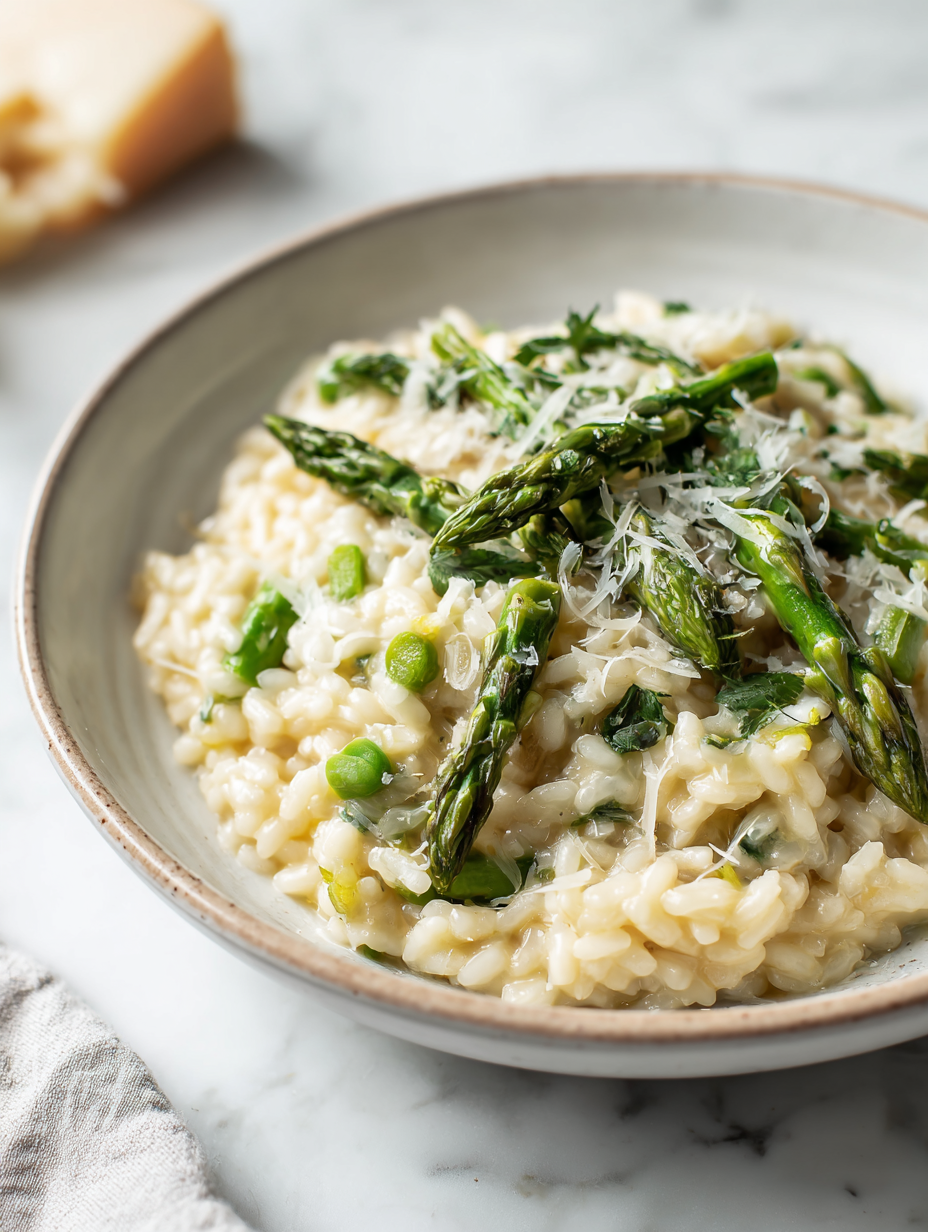
- Serve immediately, garnished with extra Parmesan and a drizzle of olive oil if desired. The risotto should be creamy, with a slight chew and bright asparagus pops.
Let the risotto rest for 2 minutes off heat. Finish with a pat of butter, squeeze of lemon if using, and a sprinkle of Parmesan. Serve immediately to enjoy the creamy texture and vibrant asparagus.
How to Know It’s Done
- Rice is tender but not mushy, with a creamy consistency.
- Asparagus maintains a vibrant green and slight bite, not limp or overcooked.
- Parmesan is melted in, creating a glossy, cheesy sauce with a nutty aroma.
Creamy Asparagus Risotto with Parmesan
Ingredients
Equipment
Method
- Heat olive oil in a medium heavy-bottomed pan over medium heat. Add the finely chopped shallot and cook until translucent, about 2 minutes, filling the kitchen with a gentle aroma.
- Add the minced garlic and cook for another 30 seconds until fragrant, being careful not to brown. Stir in the Arborio rice and toast, stirring constantly, until the edges turn lightly golden and smell nutty, about 2-3 minutes.
- Pour in the white wine and stir until mostly absorbed, about 1-2 minutes. The rice will release starch, creating a slightly sticky texture.
- Begin adding warm vegetable broth, about half a cup at a time, stirring continuously. Wait until most of the liquid is absorbed before adding more. Maintain a gentle simmer and keep stirring to release creaminess, cooking for about 18-20 minutes.
- While the risotto cooks, trim the asparagus and blanch in boiling salted water for 2 minutes until vibrant green and tender-crisp. Drain and sauté briefly in a splash of olive oil until slightly caramelized, about 3 minutes.
- Once the rice is tender but still slightly firm to the bite, stir in the butter and grated Parmesan cheese. Mix until glossy and well combined, then gently fold in the sautéed asparagus.
- Remove the pan from heat, add lemon zest if using, and season with salt and freshly ground black pepper to taste. Let the risotto rest for 2 minutes to allow flavors to meld and achieve a creamy consistency.
- Serve immediately, garnished with extra Parmesan and a drizzle of olive oil if desired. The risotto should be velvety, vibrant green accents from the asparagus, and steaming hot, ready to enjoy.
Notes
Pro tips for perfect risotto
- Consistent stirring: Keep the rice moving to release maximum starch for that creamy texture.
- Gradual broth addition: Pour in warm broth slowly, about half a cup at a time, for even cooking and flavor buildup.
- Toasting rice: Sauté until lightly golden and fragrant—this step adds depth and prevents sticking later.
- Taste as you go: Adjust salt and seasoning during cooking to avoid over-salting the final dish.
- Finish with butter and cheese: Off heat, stir in butter and Parmesan for a glossy, rich finish.
- Asparagus timing: Blanch then sauté to keep vibrant color and crisp-tender bite, avoiding limp spears.
- Lemon zest finale: Brightens the dish—add right at the end for a fresh contrast to the creamy richness.
Common mistakes and how to fix them
- FORGOT to stir continuously → Stir more often to release starch and prevent sticking.
- DUMPED all broth at once → Add broth gradually for better creaminess and flavor control.
- OVER-TORCHED rice → Lower heat if rice starts to crackle or burn, stir gently to cool.
- SKIPPED resting time → Let risotto sit for 2 minutes for flavors to meld and texture settle.
Quick Fixes and Pantry Swaps
- When rice is too stiff → Splash in hot broth and stir gently to loosen texture.
- If Parmesan isn’t melting → Grate finer or add off heat for better creaminess.
- When asparagus turns limp → Patch with quick sauté to revive bright flavor and texture.
- Forgot to stir often → Shield rice from burning by stirring continuously for even starch release.
- When the dish separates → Rescue with a splash of hot broth and vigorous stirring to re-emulsify.
Prep, store, and reheat tips
- Prepare vegetable broth and keep it warm on the stove; cold broth will slow down cooking. Shelf life: up to 1 week refrigerated.
- Trim and blanch the asparagus ahead; store in an airtight container in the fridge for up to 2 days. Brightness and crunch remain intact if kept chilled.
- Grate Parmesan cheese in advance and store in a sealed jar. It keeps well for about a week; aroma intensifies over time.
- Cook and stir the risotto up to the final step, then cool quickly and store in an airtight container in the fridge for up to 1 day. The texture may firm up slightly, so plan to reheat gently.
- Reheat gently on the stove with a splash of broth or water, stirring constantly until creamy and heated through. Watch for the risotto to shimmer and loosen to the original consistency.
Top questions about creamy asparagus risotto with parmesan
1. How fresh should the asparagus be?
Use fresh, firm asparagus with tightly closed tips for the best crunch and flavor. Frozen works in a pinch but may lose some snap.
2. Why is stirring so important?
Stirring continuously helps release starch, creating that signature creamy texture. Don’t rush this step.
3. When should I add the Parmesan?
Add the Parmesan off heat to prevent it from becoming stringy and to keep the sauce glossy and smooth.
4. Can I use cold broth?
Use warm broth to keep the cooking gentle and consistent. Cold broth can cool the risotto and slow down cooking.
5. Is lemon necessary in this dish?
A splash of lemon zest brightens the richness and balances the creaminess with a fresh, zingy note.
6. Should I season the risotto during cooking?
Adjust seasoning at the end—taste for salt and pepper, especially after adding cheese, for the perfect balance.
7. How do I know when the risotto is ready?
Risotto is done when the grains are tender but still slightly firm, with a creamy but not soupy consistency.
8. Can I make this ahead and reheat?
Reheat gently on the stove with a splash of broth to loosen it up and bring back its creamy texture.
9. What if my risotto gets too thick?
If the risotto becomes too thick, stir in a little hot broth until it reaches your preferred consistency.
10. What pan size should I use?
Use a wide, shallow pan to allow even heat distribution and easier stirring, crucial for consistent cooking.
This dish feels like a quiet celebration of spring, with each bite delivering a balance of fresh asparagus and cheesy richness. It’s simple, honest cooking that reminds me to slow down and savor the process. Sometimes, the best meals are those made with patience and a little love.
In the end, it’s not just about the ingredients but how they come together—creamy, bright, and comforting all at once. That’s what makes this risotto worth the effort, especially when shared around a table that’s full of good conversation and laughter. It’s a reminder that good food is about the small, mindful moments we take in the kitchen.

Hi, I’m Anjali Arora — the curious heart behind Feast Chase.
To be honest, I’ve always felt most at ease in my own company. I’m not exactly a people-person (small talk still makes me cringe), but there are two things I’ve always loved deeply: animals and food.