 Anjali Arora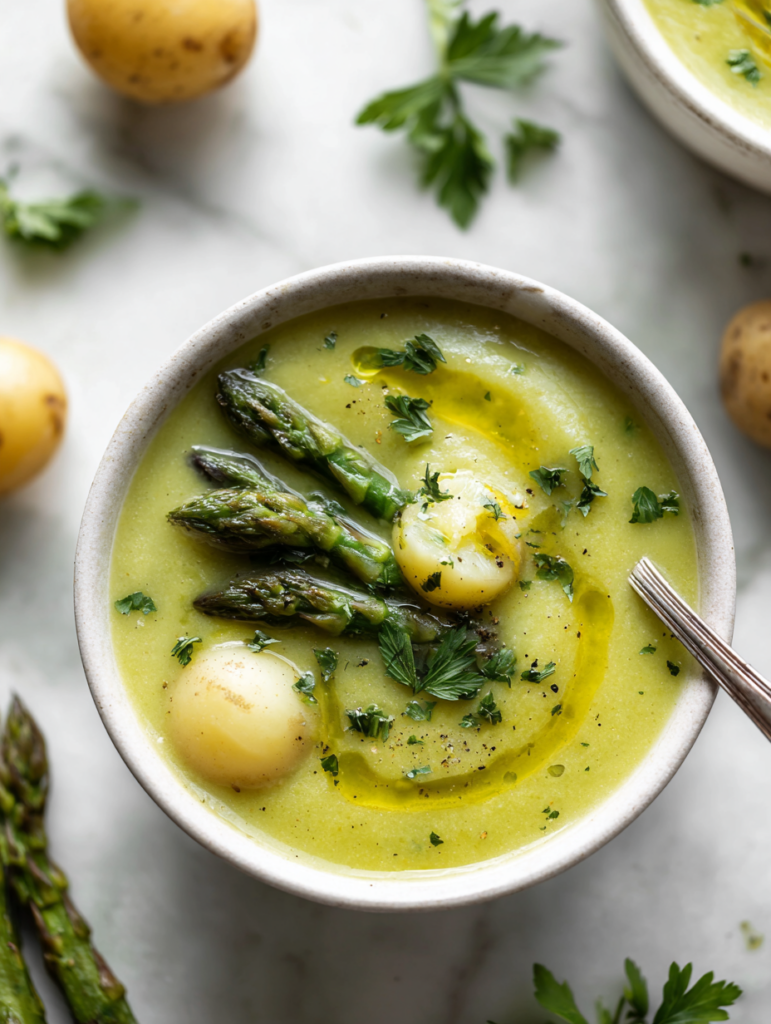
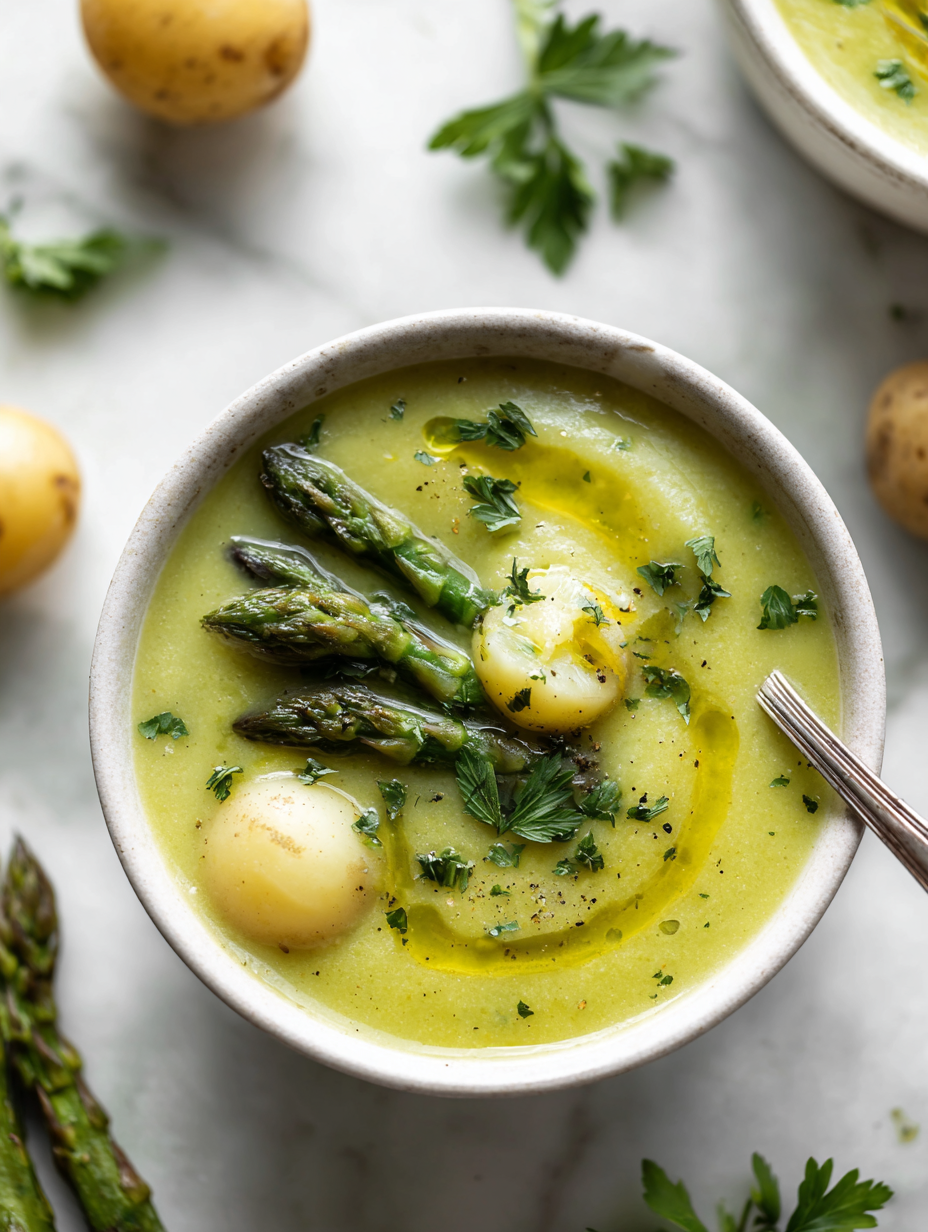
This asparagus potato soup is a little ode to the less-than-perfect vegetables that often get overlooked. I love using slightly overgrown asparagus and rustic potatoes because they bring a depth of flavor and earthiness that’s hard to find in the shiny, pristine produce. It’s honest cooking, turning what might seem like scraps into something warm and satisfying, especially when the garden is giving you a little wild bounty.
There’s something satisfying about creating a dish that feels unpolished but rich in flavor. I’ve made this soup on chaotic mornings when I need comfort and simplicity, and it somehow always hits that spot. The aroma of roasted garlic and simmering asparagus fills the kitchen, making it feel like a little retreat from the rush of daily life.
Focusing on the overlooked charm of using slightly overgrown asparagus and rustic potatoes, this soup embraces imperfect produce, turning what might be discarded into a comforting, earthy bowl. It’s about celebrating the beauty of wild, wilder, and less-than-perfect ingredients—transforming them into a dish that feels honest and unpretentious.
The story behind this recipe
- This soup started as a quest to use up the overgrown asparagus lurking in my garden. I’ve always loved how a bit of wildness in vegetables can add a surprising depth. One rainy afternoon, I threw together some rustic potatoes, a handful of asparagus, and what I had in the fridge—turned out to be a cozy, earthy bowl that felt like a hug.
- It’s a dish born from those moments when you look at imperfect ingredients and think, ‘Why not?’. That slightly overgrown asparagus, with its more intense flavor, makes every spoonful feel a little more special. It’s honest, simple, and a reminder that beauty is often in the less-than-perfect.
- heading: The story behind this recipe
Ingredient breakdown
- Asparagus: I love using slightly overgrown asparagus because it develops a more intense, earthy flavor that really shines in the soup. If yours are too woody, trim the tough ends and focus on the tender tips.
- Potatoes: Rustic, earthy potatoes like Yukon Gold or red-skinned ones add a creamy texture and a comforting body to the soup. If you only have starchy potatoes, expect a slightly fluffier, less velvety result.
- Garlic: Roasted garlic imparts a sweet, mellow aroma that balances the asparagus’s green brightness. If you’re short on time, sauté fresh garlic until fragrant instead, but don’t burn it—smoky bitterness is no good.
- Vegetable broth: Using homemade broth or a good-quality store-bought one makes all the difference—rich, savory, and deeply flavorful. If you’re in a pinch, a splash of soy sauce can add umami without extra fuss.
- Olive oil: I prefer a good extra-virgin oil for roasting and finishing, as it adds a fruity, rich note. If you only have a milder oil, use a little more to boost flavor and shine.
- Lemon juice: A squeeze right at the end brightens everything—think zesty, fresh, and just a hint of tang that lifts the earthy base. Skip it if you prefer a more mellow, creamy profile.
- Optional toppings: Crumbled cheese, fresh herbs, or a drizzle of cream add texture and visual appeal. If you want to keep it vegan, a sprinkle of toasted seeds works beautifully.
Spotlight on key ingredients
Asparagus:
- I love using slightly overgrown asparagus because it develops a more intense, earthy flavor that really shines in the soup. If yours are too woody, trim the tough ends and focus on the tender tips.
- Potatoes: Rustic, earthy potatoes like Yukon Gold or red-skinned ones add a creamy texture and a comforting body to the soup. If you only have starchy potatoes, expect a slightly fluffier, less velvety result.
Garlic & Broth:
- Garlic: Roasted garlic imparts a sweet, mellow aroma that balances the asparagus’s green brightness. If you’re short on time, sauté fresh garlic until fragrant instead, but don’t burn it—smoky bitterness is no good.
- Vegetable broth: Using homemade broth or a good-quality store-bought one makes all the difference—rich, savory, and deeply flavorful. If you’re in a pinch, a splash of soy sauce can add umami without extra fuss.
Notes for ingredient swaps
- Dairy-Free: Swap milk or cream for coconut milk or cashew cream. Expect a richer, slightly sweeter flavor with a hint of tropical aroma.
- Vegan: Omit butter and cheese, replace with olive oil or a plant-based butter. The soup remains hearty but loses some creamy richness.
- Gluten-Free: Ensure broth is gluten-free, and skip any bread-based toppings. The soup keeps its earthy, clean profile.
- Potato Variants: Use sweet potatoes for a sweeter, more vibrant color and flavor. Yukon Golds give a buttery, smooth texture.
- Herb Boost: Add fresh dill or tarragon for a bright, slightly anisey note. These herbs lift the earthy base beautifully.
- Acid Touch: Use lime juice instead of lemon for a more citrusy, less tart brightness. It pairs well with green vegetables.
- Spice Level: Incorporate a pinch of red pepper flakes or a dash of smoked paprika for warmth and smoky depth.
Equipment & Tools
- Large heavy-bottomed pot: For simmering and blending the soup
- Blender or immersion blender: To puree the soup until smooth
- Knife: For chopping vegetables
- Chopping board: Surface for vegetable prep
- Oven: For roasting garlic and vegetables
Step-by-step guide to asparagus potato soup
- Gather all your equipment: a large heavy-bottomed pot for simmering, a blender for smoothness, a knife, and a chopping board. Preheat your oven to 200°C (390°F) for roasting garlic and vegetables.
- Prepare the vegetables: trim the woody ends of the asparagus, chop into 3-inch pieces, and peel the potatoes into chunks roughly the same size for even cooking. Roast garlic by wrapping whole heads in foil with a drizzle of olive oil for about 30 minutes until soft and fragrant.
- In a large pot, heat a splash of olive oil over medium heat (around 150°C/300°F). Add the potatoes and cook, stirring occasionally, for about 5 minutes until they start to soften and turn slightly golden.
- Add the chopped asparagus to the pot, along with the roasted garlic (squeeze out the softened cloves). Cook for another 3-4 minutes, until the asparagus begins to wilt and pick up color.
- Pour in 1.5 liters (6 cups) of vegetable broth. Bring to a simmer over medium heat (around 90°C/194°F). Cover and cook for 20-25 minutes, until the potatoes are tender and the asparagus is soft.
- Use an immersion blender or transfer the soup in batches to a blender. Puree until smooth and velvety. If the soup is too thick, add a splash more broth or water to loosen it. Taste and adjust salt if needed.
- Return the soup to a gentle simmer for 5 minutes, allowing flavors to meld. Check the seasoning—add a squeeze of lemon juice for brightness, or a pinch of pepper if you like. The aroma should be fresh and slightly earthy.
- Ladle the hot soup into bowls. Finish with a drizzle of good olive oil, a sprinkle of cracked black pepper, or fresh herbs if desired. Serve immediately, steaming and inviting.
Serve the soup hot, with a drizzle of olive oil or a few fresh herbs. No need to rest—it’s best enjoyed immediately for maximum freshness and aroma.
How to Know It’s Done
- The potatoes are fork-tender and easily mashable.
- The asparagus is fully cooked, tender but not mushy.
- The soup has a vibrant green hue and a fragrant aroma.
Asparagus Potato Soup
Ingredients
Equipment
Method
- Preheat your oven to 180°C (350°F). Wrap the whole garlic head in foil with a drizzle of olive oil and roast for about 30 minutes until soft and fragrant.
- Trim the woody ends from the asparagus, focusing on tender tips and slightly overgrown stalks. Chop into 3-inch pieces.
- Peel the potatoes and cut them into evenly sized chunks for even cooking.
- In a large pot, heat a tablespoon of olive oil over medium heat until it shimmers. Add the potato chunks and cook for 5 minutes, stirring occasionally, until they start to turn golden and release a toasty aroma.
- Add the chopped asparagus to the pot, along with the roasted garlic (squeeze out the softened cloves). Cook together for another 3-4 minutes, until the asparagus begins to wilt and pick up color.
- Pour in the vegetable broth, bringing the mixture to a gentle simmer. Cover and cook for 20-25 minutes until the potatoes are fork-tender and the asparagus is soft.
- Use an immersion blender or transfer the soup in batches to a blender, then puree until silky smooth. If it’s too thick, stir in a little more broth or water to achieve your desired consistency.
- Return the soup to a gentle simmer for 5 minutes, then squeeze in fresh lemon juice to brighten the flavors. Taste and adjust salt or acidity as needed.
- Ladle the hot soup into bowls, finishing with a drizzle of olive oil, a sprinkle of herbs or cheese if desired, and serve immediately while steaming and fragrant.
Notes
Pro tips for perfect asparagus potato soup
- Use a heavy-bottomed pot to prevent scorching and promote even heat distribution.
- Roast garlic slowly until soft and fragrant—this deepens its mellow, sweet flavor and avoids bitterness.
- Sauté potatoes first to develop a subtle golden crust and enhance their sweetness before adding liquids.
- Puree the soup until silky smooth for a luxurious texture—an immersion blender makes quick work of it.
- Add lemon juice at the end to brighten the earthy flavors—don’t skip this step for a fresh lift.
- Keep an eye on simmering; gentle bubbles prevent splatters and help flavors meld without overcooking.
- Taste and adjust seasoning before serving—sometimes a pinch more salt or a squeeze of lemon makes all the difference.
Common mistakes and how to fix them
- FORGOT to trim woody asparagus ends → Focus on tender tips to avoid bitterness.
- DUMPED in cold broth too early → Sauté potatoes and asparagus first for better flavor.
- OVER-TORCHED garlic → Roast garlic slowly at 180°C (350°F) until fragrant and soft.
- FAILED to taste and adjust seasoning → Always taste before serving; add lemon or salt as needed.
Quick fixes and pantry swaps
- When asparagus is too woody, splash with lemon juice to mask the bitterness.
- If soup is too thick, add a splash of broth and simmer briefly for a silky texture.
- DUMPED in cold broth too early? Roast vegetables longer for richer flavor before blending.
- Splash extra olive oil if the soup lacks shine and feels dull on the spoon.
- Patch over under-seasoned soup with a pinch of salt or a squeeze of lemon for brightness.
Prep, store, and reheat tips
- You can prep the vegetables: trim, chop, and roast the garlic a day in advance. Keep in airtight containers in the fridge for up to 24 hours. The aroma of roasted garlic stored overnight makes a noticeable difference in depth of flavor.
- Store any leftovers in an airtight container in the fridge for up to 3 days. The soup will thicken slightly; stir in a splash of broth or water when reheating to loosen it up. The flavors mellow and deepen overnight, so expect a richer taste.
- Reheat gently on the stove over medium-low heat, stirring frequently. The soup should shimmer and steam without boiling vigorously—this preserves its smooth texture and fresh aroma. Taste and adjust seasoning if needed.
- For longer storage, freeze the soup in freezer-safe containers for up to 2 months. Thaw overnight in the fridge, then reheat slowly, watching for bubbling and aroma—avoid overheating to prevent separation or loss of brightness.
Top questions about asparagus potato soup
1. Can I use regular asparagus instead of overgrown ones?
Use slightly overgrown asparagus for a more intense, earthy flavor. Trim woody ends for tenderness.
2. Should I peel the potatoes?
Yes, peel potatoes if they’re very rustic or earthy to avoid gritty texture. Russets make a fluffier soup.
3. When should I add lemon juice?
Add lemon juice at the end to brighten the soup’s earthy tones. Adjust to taste for a fresh kick.
4. How do I prepare roasted garlic?
Roast garlic slowly until soft and fragrant—about 30 minutes at 180°C (350°F). It deepens flavor and sweetness.
5. How smooth should the soup be?
Puree until silky smooth using an immersion blender or regular blender. Add broth if it feels too thick.
6. Can I make this ahead?
Store in airtight containers for up to 3 days in the fridge. Reheat gently over low heat, stirring often.
7. How long does it keep in the freezer?
Yes, freeze in freezer-safe containers for up to 2 months. Thaw overnight and reheat on low, stirring frequently.
8. What if the soup is too thick?
If the soup is too thick, add a splash of broth or water and simmer briefly to loosen it up.
9. How do I know when it’s done?
Ensure the potatoes are tender and the asparagus is soft but not mushy. The aroma should be fresh and green.
10. How do I perfect the flavor?
Adjust seasoning before serving—taste for salt, acidity, and balance. Finish with a drizzle of olive oil.
This soup feels like a quiet celebration of the overlooked, especially when asparagus is just past its prime. The earthy aroma and vibrant color remind me that imperfect produce still holds beauty and flavor. It’s a simple dish, but one that nourishes more than just the body.
Whenever I make this, I think about how sometimes the less-polished ingredients turn out to be the most memorable. It’s honest cooking—flavorful, unpretentious, and just a little wild. That’s what makes it perfect for right now, when comfort feels more necessary than ever.

Hi, I’m Anjali Arora — the curious heart behind Feast Chase.
To be honest, I’ve always felt most at ease in my own company. I’m not exactly a people-person (small talk still makes me cringe), but there are two things I’ve always loved deeply: animals and food.